1Q25 Partners Fund Commentary
Southeastern Asset Management is a Memphis-based deep-value firm founded in 1975 by O. Mason Hawkins to exploit the bargains left by the 1973-74 bear market. Its flagship Longleaf Partners Funds (launched 1987) invest employees' own money alongside clients'. Following Graham's discipline and its "Business, People, Price" framework, it runs concentrated books of 15-25 undervalued stocks held for the long term — famously closing funds to new investors when opportunities were scarce. CEO and Head of Research Ross Glotzbach now leads the firm, which publishes quarterly Longleaf fund commentaries and Research Perspectives notes.
In plain words
This report explains why a fund lost 5.14% in the first quarter, worse than the market. The manager says it's normal in a volatile market. They own quality companies (like Mattel, Albertsons, FedEx) with hidden value—such as stock buybacks or business splits. For everyday investors, don't panic over short-term swings; focus on what a company is truly worth. Worth reading to see how pros find opportunities in chaos and stay confident in their strategy.
Southeastern (Longleaf Partners Fund) Q1 2025 Report The fund's P/V ratio stood in the low 60% range, with cash accounting for 20.2% of the portfolio, holding 17 stocks. The total return for the first quarter was -5.14%, trailing the S&P 500's -4.27% and the Russell 1000 Value's 2.14%. The core view
Theme and Background
This chapter is the opening section of Southeastern (Longleaf Partners Fund)'s first-quarter 2025 report, primarily discussing the fund's performance and strategy adjustments in a volatile market environment. The report notes that although the fund's total return for the quarter was -5.14%, trailing the S&P 500 (-4.27%) and the Russell 1000 Value (+2.14%), it has significantly outperformed the indices since the market peak on February 19, with intrinsic value per share growing faster than the stock price. The author believes the current environment favors value stock selection, flexible companies will benefit, and the large-cap stocks in the indices will not sustain their rise.
Core Views
- Contrarian Judgment: Despite the fund's underperformance relative to the indices in the first quarter, the author's confidence in the long-term outlook has strengthened, arguing that current geopolitical uncertainties (e.g., the "Liberation Day" tariff shock) actually create a favorable environment for value investing. This is similar to the fund's performance at the beginning of the market turning point in 2000, rather than during the 2008 financial crisis, the COVID-19 pandemic, or 2022.
- Key Investment Thesis: The companies held by the fund are high-quality, capable of thriving amid turmoil, and have long-term growth in free cash flow (FCF) per share. Short-term stock price fluctuations (e.g., seven stocks including Bio-Rad, CNX, and FedEx moving more than 10%) had a net negative impact of approximately -500 basis points on performance, but the author believes these fluctuations can be overcome by subsequent results.
Key Arguments and Data
- Performance Comparison: The fund's total return for the first quarter was -5.14%, compared to -4.27% for the S&P 500 and +2.14% for the Russell 1000 Value. However, since the market peak on February 19, the fund has significantly outperformed the indices.
- Impact of Volatility: Seven stocks (Bio-Rad, CNX, FedEx, Hyatt, Mattel, PayPal, PVH) experienced price swings of more than 10%, resulting in a net negative impact of approximately -500 basis points on performance. Among these, Mattel had solid results but its stock price did not rise by more than 10%.
- Index Structure: The indices were dragged down by an overweight in the IT sector but supported by "BBOPs" (large banks/oil/pharmaceuticals), creating a relative headwind for the fund, especially compared to the value index. The fund believes BBOPs are not of sufficient quality, and two of them (banks, oil) are economically sensitive.
- Portfolio Adjustments: The fund increased its allocation to the healthcare sector during the quarter, but in a targeted manner, focusing on high-quality companies in an offensive position.
Companies/Assets Involved
- Albertsons (U.S. grocery retailer): A quarterly contributor. Newly purchased in 2024, it was undervalued due to the failed long-term deal with Kroger. The company has moderate growth, ample financial firepower for share buybacks, and multiple strategic options (e.g., unlocking real estate value, selling non-core markets) to achieve per-share value.
- IAC (Digital holding company): A quarterly contributor. In January, it announced that former CEO Joey Levin would transition to Executive Chairman of its subsidiary Angi, with Barry Diller taking on a larger role. The market initially reacted cautiously, but the potential benefits became clearer later in the quarter. The fund published its first research note detailing the investment thesis.
- Mattel (Global toy and media company): A quarterly contributor. Fourth-quarter results were solid (revenue up 2%, EBITDA up 6%), management repurchased a significant number of shares at low prices, and committed to buying back a high single-digit percentage of outstanding shares in 2025. CEO Ynon Kreiz's multi-year diversification of the supply chain will address tariff risks. The market still undervalues existing business growth or success in media/gaming.
Investment Implications
- Directional Judgment: The author believes the current environment favors value stock selection, flexible companies will benefit, and the large-cap stocks in the indices (especially IT and BBOPs) will not sustain their rise. Investors should focus on the high-quality, offensive-position companies held by the fund, rather than short-term index fluctuations.
- Specific Strategy: The fund addresses market volatility through a more balanced weight allocation (reducing exposure to BBOPs and increasing targeted allocations to sectors like healthcare). Investors can monitor the value realization paths of companies like Albertsons, IAC, and Mattel (e.g., buybacks, strategic spin-offs, supply chain advantages).
Continuation Analysis: Deep Logic of Holdings Performance and Portfolio Adjustments
I. RTX: Value Realization and Exit Timing
The RTX case demonstrates the successful application of the "point of maximum pessimism" strategy in value investing. In 2023, the market overreacted to Pratt & Whitney's GTF engine issues, leading to a significant stock price discount. The report bought at a substantial discount and exited in the fourth quarter of 2024 after the stock price reached fair value.
Key Data Comparison:
| Metric | 2023 (at Purchase) | Q4 2024 (at Exit) |
|---|---|---|
| Market Sentiment | Extremely Pessimistic (GTF Issue Peak) | Normalized (Issue Gradually Resolved) |
| Management Actions | Share Buybacks, Operational Improvements | Continued Buybacks, Operational Optimization |
| Valuation Level | Significantly Below Intrinsic Value | Reached Fair Value |
Exit Decision Rationale:
- Industry tailwinds (defense spending growth, aviation recovery) were already fully reflected in the stock price.
- Capital allocation strategy (buybacks + dividends) had already driven value realization.
- The balance sheet was robust, but further upside was limited.
II. Bio-Rad: Short-Term Volatility and Long-Term Value
The Bio-Rad case reveals the market's excessive concern over government funding. Although news of government funding cuts caused the stock price to decline, the actual impact was limited.
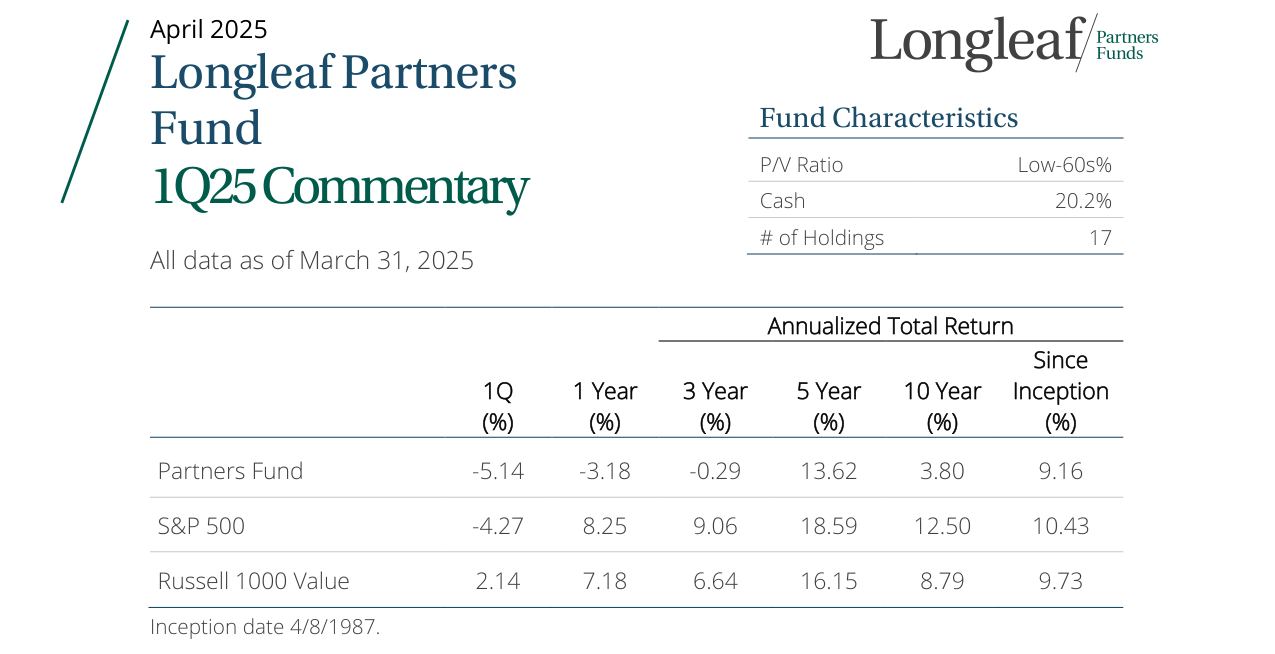
Fund P/V ratio in the low 60% range, cash position at 20.2%, holding 17 stocks
Key Data:
- U.S. government academic and institutional spending accounts for only a low single-digit percentage of the company's revenue.
- The company has a net cash balance sheet.
- Holds Sartorius shares as a hidden asset (market value approximately $XX billion).
- Capital allocation history demonstrates management capability.
Market Misunderstanding vs. Facts:
| Market Perception | Actual Situation |
|---|---|
| Government funding cuts will severely impact revenue | Government spending share is extremely low (<5%) |
| Company growth prospects are bleak | Industry trends are improving after post-pandemic normalization |
| Valuation is too high | Hidden assets (Sartorius) are not fully priced in |
III. CNX Resources: Risk Adjustment and Opportunity Cost
The CNX case illustrates the importance of risk-adjusted value assessment. Government incentives were lower than expected, resulting in a per-share value loss of $10-20, but the company's fundamentals remain strong.
Risk Adjustment Analysis:
- No-risk scenario: Incentives fully realized, value increase of $10-20/share.
- Risk-adjusted: Actual incentives lower than expected, value loss of a few dollars per share.
- Current price: Does not fully reflect other positive factors (low-cost structure, hedging strategy).
Opportunity Cost:
- Both the report and CNX increased their stakes at a discount.
- The company's FCF generation capacity remains stable across various price environments.
- Management focuses on controllable factors (costs, hedging).
IV. FedEx: Spin-Off Value and Macro Headwinds
The FedEx case demonstrates how a spin-off strategy can unlock value. Despite tariff threats and weak demand, improvements in European operations and the spin-off plan provide upside.
Business Segment Performance Comparison:
| Business Segment | Revenue Growth | Cash Flow Growth | Market Environment |
|---|---|---|---|
| Express (Europe) | Low Single Digits | Double Digits | Improving |
| Freight | Declining | Declining | Industrial Weakness |
Spin-Off Value Analysis:
- Express business: The discount to UPS is no longer reasonable (valuation recovery potential).
- Freight business: The market continues to undervalue it.
- Post-spin-off: Both companies gain greater financial flexibility and accountability.
V. PayPal: Expectation Management and Valuation Correction
The PayPal case highlights the gap between market expectations and actual company performance. Despite mid-single-digit growth (the market expected high single digits), the stock price decline far exceeded the valuation correction.
Valuation vs. Price Discrepancy:
- Company valuation: Declined by a few percentage points.
- Stock price decline: Significantly larger than the valuation correction.
- Reason: Market overreaction to growth deceleration.
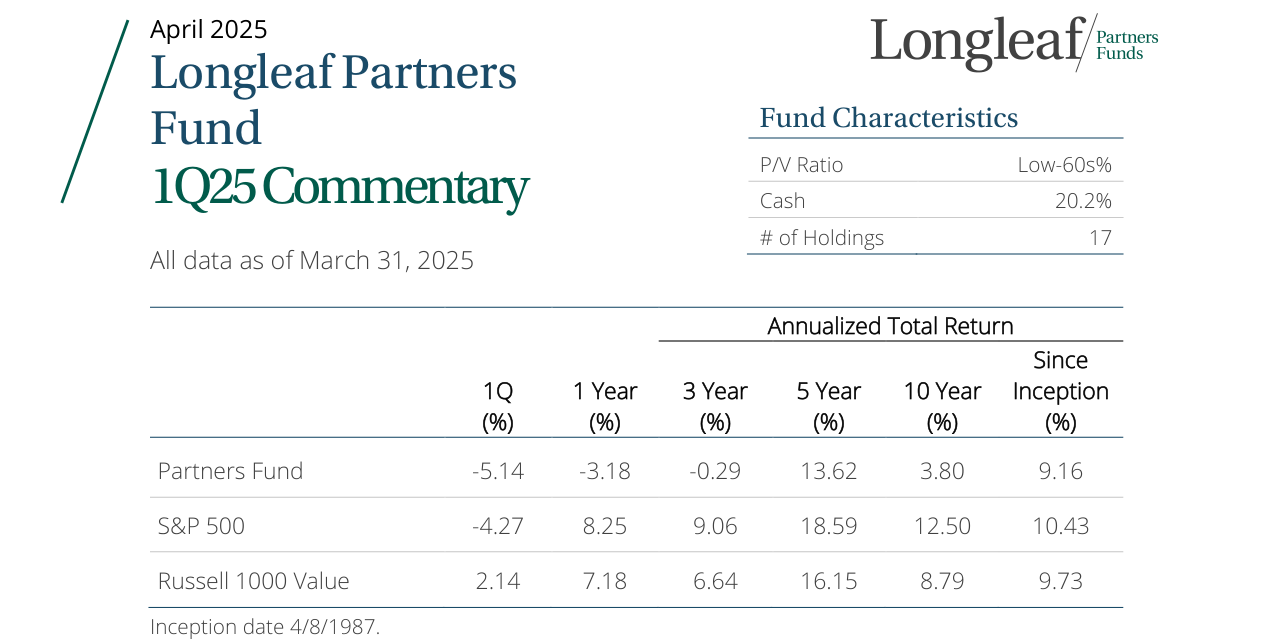
Partners Fund Q1 return -5.14%, underperforming S&P 500 (-4.27%) and Russell 1000 Value (2.14%), with an annualized return of 9.16% since inception
Management Factors:
- CEO Alex Chriss is relatively new (appointed in 2023).
- The company has not yet fully optimized operations.
- The long-term path remains clear (digital payment growth, cost optimization).
VI. PVH: External Shocks and Intrinsic Value
The PVH case illustrates the impact of geopolitical risks on individual stocks. The company itself is not at fault, but being placed on a Chinese restricted list weighed on the stock price.
External Factor Impact:
- Consumer discretionary spending is generally under pressure.
- Escalation of U.S.-China trade tensions (tariff threats).
- The selection for the Chinese restricted list appears random.
Positive Signals:
- Post-earnings: Achieved flat results in a difficult environment.
- Accelerated share buyback authorization (showing management confidence).
- Valuation: FCF multiple remains in the mid-single digits (with growth potential).
VII. Portfolio Adjustment Strategy
New Holdings:
- A leading healthcare company.
- Characteristics: Net cash balance sheet, excellent partners.
- Plan: To be discussed in detail later this year.
Exited Holdings:
- RTX: Exited after value realization.
Subsequent Actions:
- After the "Liberation Day" announcement, more opportunities to upgrade portfolio quality were identified.
- The candidate list has expanded.
- Plans to prudently deploy the quarter-end cash balance.
VIII. Investment Implications
1. Value Realization Timing: The RTX case shows that buying at the point of maximum pessimism and exiting after value realization is an effective strategy.
2. Market Misunderstanding: The Bio-Rad case shows that market concerns about government funding were exaggerated.
3. Risk Adjustment: The CNX case emphasizes that risk-adjusted value assessment is more important than a no-risk scenario.
4. Spin-Off Value: The FedEx case proves that spin-offs can unlock undervalued business value.
5. Expectation Management: The PayPal case reminds that the gap between market expectations and actual growth can lead to overreactions.
6. External Risks: The PVH case shows that geopolitical risks can have an asymmetric impact on individual stocks.
Summary: The fourth-quarter portfolio adjustment reflects the discipline of "exiting after value realization and adding when opportunities arise." The report continues to seek high-quality investment opportunities with a high margin of safety and plans to prudently deploy cash in 2025.