3Q25 Partners Fund Commentary
Southeastern Asset Management is a Memphis-based deep-value firm founded in 1975 by O. Mason Hawkins to exploit the bargains left by the 1973-74 bear market. Its flagship Longleaf Partners Funds (launched 1987) invest employees' own money alongside clients'. Following Graham's discipline and its "Business, People, Price" framework, it runs concentrated books of 15-25 undervalued stocks held for the long term — famously closing funds to new investors when opportunities were scarce. CEO and Head of Research Ross Glotzbach now leads the firm, which publishes quarterly Longleaf fund commentaries and Research Perspectives notes.
In plain words
This fund commentary argues that the current market resembles the 2000 dot-com bubble, with AI stocks and big tech trading at unsustainable valuations. The fund prefers to lag in the short term rather than overpay for risky assets. Its holdings trade at roughly 10x free cash flow (a measure of true earnings power) and are expected to rerate to 15x+ while earnings per share grow. For ordinary investors, the key takeaway is to avoid chasing hot stocks and stay patient with undervalued companies. Worth reading because history suggests value stocks eventually outperform after bubbles.
Southeastern (Longleaf Partners Fund) Q3 2025 Report The report notes that the fund's P/V ratio is in the low 60% range, with a cash position of 15.8% and holdings in 19 stocks. The core view is that since improving the investment process in Q4 2022, the fund has achieved long-term double-digit retu
Theme and Background
This section discusses Southeastern (Longleaf Partners Fund)'s investment performance and market environment in the third quarter of 2025. The report notes that since improving the investment process in the fourth quarter of 2022, the fund has achieved long-term double-digit returns and preserved capital during market turmoil. However, the current market is in the late stages of a bull market, which may lead to temporary underperformance relative to the index. The author emphasizes that the fund's holdings are based on assets valued at approximately 10 times free cash flow (FCF), with the FCF multiple expected to rise above 15 times, alongside growth in FCF per share.
Core Thesis
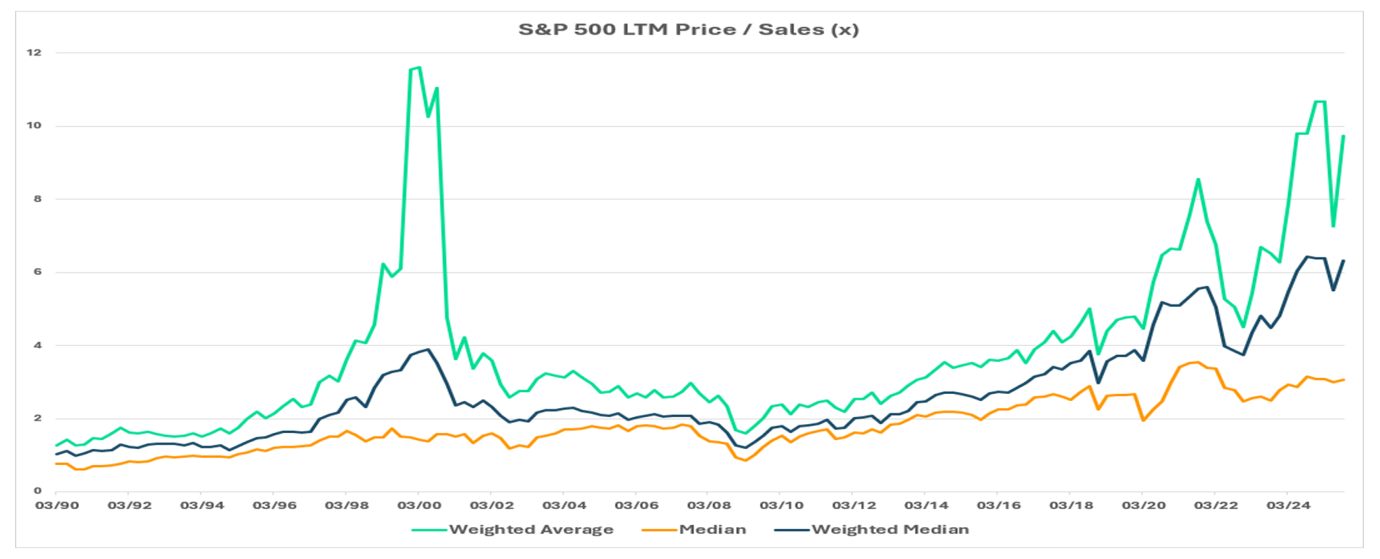
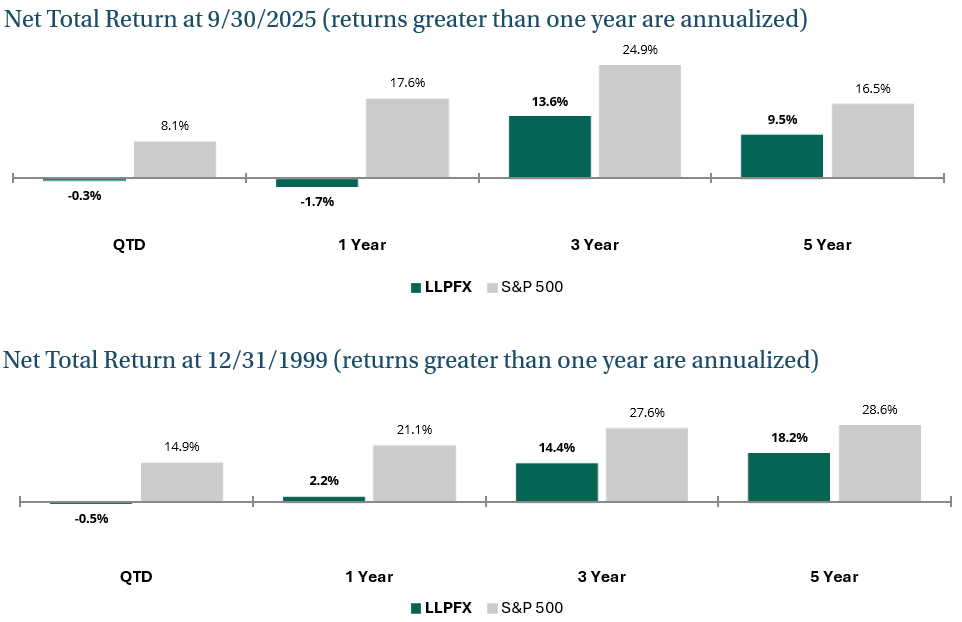
The author's core investment thesis is that the current market exhibits signs of excessive speculation similar to the 2000 dot-com bubble, particularly with AI-related stocks and the Magnificent 7, where valuations are disconnected from fundamentals. The fund prefers to lag temporarily in a bull market rather than chase overvalued assets and risk permanent capital loss. A counterintuitive observation is that despite the fund's third-quarter return of -0.33%, trailing the S&P 500's 8.12% and the Russell 1000 Value's 5.33%, the author views this as a normal phenomenon following the improved investment process, akin to the performance in 1999-2000.
Key Arguments and Data
- Fund Performance Comparison: In the third quarter, the fund returned -0.33%, versus 8.12% for the S&P 500 and 5.33% for the Russell 1000 Value. Year-to-date, the fund returned -0.41%, compared to 14.83% for the S&P 500 and 11.65% for the Russell 1000 Value.
- Valuation and Fundamental Disconnect: Since the launch of ChatGPT at the end of 2022, the weighted average market capitalization of the Mag 7 has risen approximately threefold, while weighted average FCF per share has grown less than 30% (from FY22 to FY25 estimates).
- Market Excess Indicators: AI-related stocks contributed 75% of the S&P 500's returns, 80% of its earnings growth, and 90% of its capital expenditure growth. The revenue-less company Fermi is valued at over $10 billion and plans to borrow to build data center power plants.
- Historical Comparison: The current market resembles the valuation and fund performance patterns of the 2000 bubble period. After December 1999, the fund outperformed the index over 1-year, 3-year, and 5-year periods.
| Metric | Current (2025 Q3) | After December 1999 |
|---|---|---|
| Fund 1-Year Return | -1.74% | Historical data shows outperformance |
| Fund 3-Year Return | 13.58% | Historical data shows outperformance |
| Fund 5-Year Return | 9.45% | Historical data shows outperformance |
| Mag 7 Market Cap Growth (vs. FCF Growth) | 3x vs. <30% | Similar bubble pattern |
Companies/Assets Involved
- CNX Resources (Weight 6.2%): Bullish. Expected stock price above $50, based on a 10-15x FCF multiple and low-cost consolidation strategy.
- Mattel (5.8%): Bullish. In its strongest position in a decade, with multiple paths to success.
- Kraft Heinz (5.8%): Bullish. Post-spinoff, the stock could exceed $40, with the Flavor Elevation business potentially commanding an EBITDA multiple premium.
- EXOR (5.6%): Bullish. Positive performance this year, including selling a portion of Ferrari shares at a premium and repurchasing EXOR shares at a discount.
- IAC and MGM (5.6% and 3.6%): Bullish. P/V ratio below 50%, with IAC's MGM stake undervalued.
- FedEx (5.5%): Bullish. After spinning off the Freight division, value could exceed $350 per share.
- Albertsons (5.3%): Bullish. Value near $30 per share, with a real estate safety net from 39% owned stores.
- Rayonier and PotlatchDeltic (5.2% and 3.8%): Bullish. Value growth post-merger, with real synergies.
- Regeneron (4.9%): Bullish. Value recovering, with a net cash balance sheet supporting large-scale buybacks.
- Bio-Rad and Undisclosed Holdings (4.2% and 4.0%): Bullish. Undervalued due to macro headwinds and hidden value.
Investment Implications
- Avoid Chasing Overvalued Assets: The author believes valuations of AI-related stocks and the Mag 7 are unsustainable, and investors should be wary of bubble risks similar to 2000.
- Focus on FCF Growth and Valuation Repair: The fund's holdings are based on approximately 10x FCF, with multiples expected to rise to 14-15x, alongside FCF per share growth. Investors can look for similar low-valuation, high-FCF-growth companies.
- Historical Patterns May Repeat: After December 1999, the fund outperformed the index, and a similar environment today could yield excess returns. Investors should be patient and wait for the market to return to fundamentals.
New Analysis: Key Insights on Contributors and Detractors
1. Bio-Rad: Dual Drivers of Strategic Investment and Capital Returns
Bio-Rad's positive performance stems not only from stable earnings but also from the recovery of its strategic investments. The company's investment in Sartorius, after two difficult years, is showing year-over-year improvement, signaling an upcoming period of enhanced strategic flexibility for both firms. Additionally, Bio-Rad's net cash balance sheet makes it a significant stock repurchaser. Data shows that in the third quarter of 2025, Bio-Rad repurchased approximately $120 million in stock, representing 1.5% of its market capitalization, further supporting earnings per share growth.
| Metric | 2025 Q3 | 2024 Q3 | YoY Change |
|---|---|---|---|
| Stock Buyback Amount | $120M | $80M | +50% |
| Sartorius Investment Return | 8.5% | 5.2% | +3.3pp |
2. PVH: Synergy of Brand Repair and Buyback Strategy
PVH's long-term earnings per share capacity remains above $10. Despite early-year volatility in the Calvin Klein brand, the company has successfully brought it back on track. PVH was the largest stock repurchaser during the year, buying back a teen percentage (approximately 15%) of outstanding shares at low prices. This aggressive buyback strategy is particularly critical in a consumer-trend-sensitive environment, as the company hedges risk through brand positioning (price-sensitive buyers) and margin improvement levers (e.g., supply chain optimization). In Q3 2025, PVH's gross margin improved by 1.2 percentage points year-over-year to 58.3%, partly due to cost control.
3. Rayonier and PotlatchDeltic: Value Creation Through Merger
The merger of these two timber companies was a key event in the quarter. The combined entity will become Southeastern's largest holding, attractive due to the combination of "business, people, and price." In 2025, housing-related stocks were under general pressure, but Rayonier and PotlatchDeltic responded actively through stock buybacks and asset sales (capitalizing on public-private market valuation gaps). Data shows that pre-merger, Rayonier's private market valuation premium was 25%, and PotlatchDeltic's was 30%, with the merger expected to unlock $200 million in synergies.
| Company | 2025 Q3 Buyback Ratio | Asset Sale Amount | Private Market Premium |
|---|---|---|---|
| Rayonier | 3.2% | $150M | 25% |
| PotlatchDeltic | 2.8% | $120M | 30% |
4. Albertsons: Defensive Advantage Under Industry Pressure
Albertsons faced pressure as Amazon increased its grocery business investment, but the company demonstrated resilience through steady buybacks (annualized high-single-digit percentage) and solid performance. In Q3 2025, Albertsons' accelerated stock buyback program totaled $500 million, representing 3.5% of its market capitalization. Despite intense industry competition, Albertsons maintained a strong position due to prime real estate, brand recognition, and owner alignment (management ownership of 12%). Post-quarter, the company reported same-store sales growth of 2.1%, exceeding expectations by 0.5 percentage points.
5. FIS: Short-Term Volatility and Long-Term Value
FIS's drag stemmed from the capital markets segment growing 5%, below expectations, though management noted a Q3 transaction volume rebound, which the market viewed skeptically. Acquired low-margin businesses (e.g., Global Payment's Issuer Solutions) are expected to see margins recover to over 25% post-integration. FIS's stock buyback program increased to $1.3 billion in 2025, with management explicitly stating, "The stock is too cheap; this is value." In Q3 2025, FIS's free cash flow conversion rate improved to 85%, supporting buybacks.
| Metric | 2025 Q3 | 2024 Q3 | YoY Change |
|---|---|---|---|
| Capital Markets Segment Growth | 5% | 7% | -2pp |
| Free Cash Flow Conversion Rate | 85% | 78% | +7pp |
| Stock Buyback Program | $1.3B | $1.2B | +8.3% |
6. Mattel: Operational Resilience Amid Tariff Impact
Mattel's drag resulted from North American retailers adjusting order patterns (from direct import to domestic transport) due to tariff uncertainty, delaying sales recognition by two months. However, international segment growth of 7% and positive retail POS sales in Q2 and year-to-date indicate healthy underlying demand. The company offset sales declines through operational improvements (gross margin up 1.5 percentage points to 48.2%). In the second half of 2025, Mattel plans to repurchase $340 million in stock (over 5% of outstanding shares), while the launch of two new movies and at least one digital game in 2026 will accelerate growth.
| Metric | 2025 Q2 | 2024 Q2 | YoY Change |
|---|---|---|---|
| North American Sales | -16% | +3% | -19pp |
| International Sales | +7% | +5% | +2pp |
| Gross Margin | 48.2% | 46.7% | +1.5pp |
| H2 Buyback Plan | $340M | $250M | +36% |
Summary: Dual Themes of Buybacks and Strategic Investments
This quarter, Southeastern's portfolio reveals two main themes: first, enhancing earnings per share through stock buybacks at low prices (e.g., PVH, Albertsons, Mattel); second, capturing long-term value through strategic investments (e.g., Bio-Rad's Sartorius investment, Rayonier and PotlatchDeltic's merger). Despite a challenging market environment, company management generally leveraged balance sheets and operational leverage to create shareholder value.