2Q23 Partners Fund Commentary
Southeastern Asset Management is a Memphis-based deep-value firm founded in 1975 by O. Mason Hawkins to exploit the bargains left by the 1973-74 bear market. Its flagship Longleaf Partners Funds (launched 1987) invest employees' own money alongside clients'. Following Graham's discipline and its "Business, People, Price" framework, it runs concentrated books of 15-25 undervalued stocks held for the long term — famously closing funds to new investors when opportunities were scarce. CEO and Head of Research Ross Glotzbach now leads the firm, which publishes quarterly Longleaf fund commentaries and Research Perspectives notes.
In plain words
This report says the 2023 stock market rally is driven by a few mega-cap stocks (huge, trendy companies), similar to the early dot-com bubble. The fund managers avoided those stocks and still beat the market by buying undervalued companies with strong finances. For everyday investors, the lesson is not to chase hot stocks—focus on real value and good management instead. It's worth reading because it shows how to stay calm and profitable when the market gets frothy.
Southeastern (Longleaf Partners) July 2023 Report The fund posted a 5.15% return in the second quarter, bringing its year-to-date gain to 17.42%, outperforming the S&P 500 (16.89%) and the Russell 1000 Value (5.12%). The core thesis is that the market is dominated by a handful of mega-cap growth sto
Theme and Background
This chapter is the opening overview of Southeastern (Longleaf Partners Fund)'s second-quarter 2023 report. The report reviews the fund's performance in the first half of 2023 and analyzes the current market environment—where a handful of mega-cap growth stocks dominate, resembling the early stages of the dotcom bubble. The fund returned 5.15% in the second quarter and 17.42% year-to-date (YTD), outperforming the S&P 500 (16.89%) and the Russell 1000 Value (5.12%).
Core Thesis
The author's core investment thesis is that the current market is driven by a few mega-cap growth stocks, which have rebounded over 40% from their October 2022 lows but face peaking profit margins, intensifying competition, and regulatory risks, potentially leading to another sharp decline, similar to the post-dotcom bubble trajectory. However, the fund can achieve relative returns without relying on a market correction, as its holdings boast strong balance sheets and pricing power.
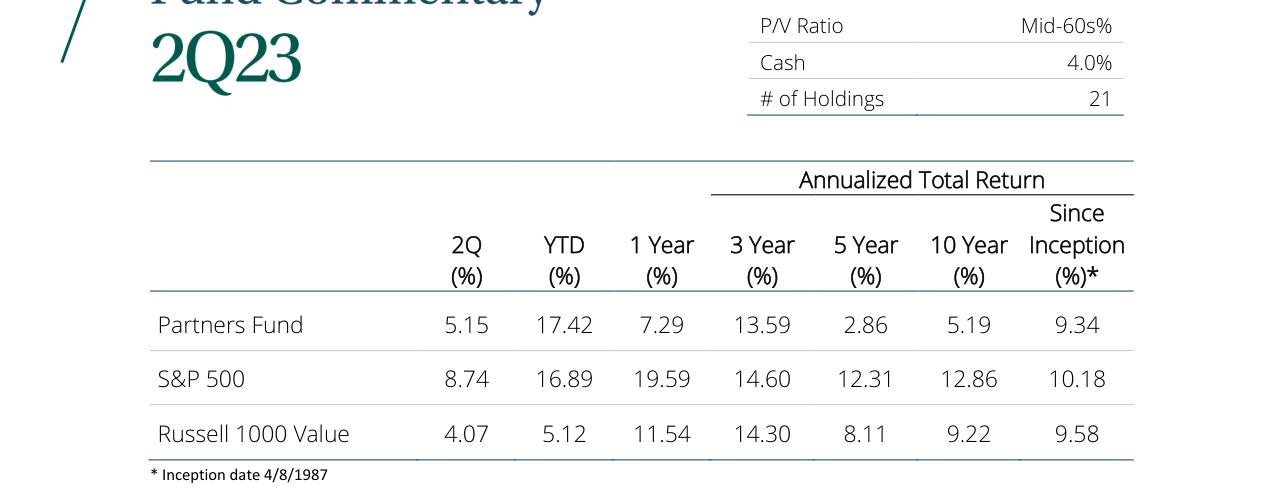
Longleaf Partners Fund returned 5.15% in Q2, 17.42% YTD, and 9.34% annualized since inception; over the same period, the S&P 500 returned 8.74% in Q2 and 16.89% YTD
Contrarian/anti-consensus views:
- The market believes mega-cap growth stocks have recovered, but the author argues they are in the early stages of a bubble and could fall another 80%.
- The fund has zero exposure to the information technology sector and is overweight consumer discretionary, yet it outperformed the S&P 500 in the first half, demonstrating that value strategies remain effective in a growth-dominated market.
Key Arguments and Data
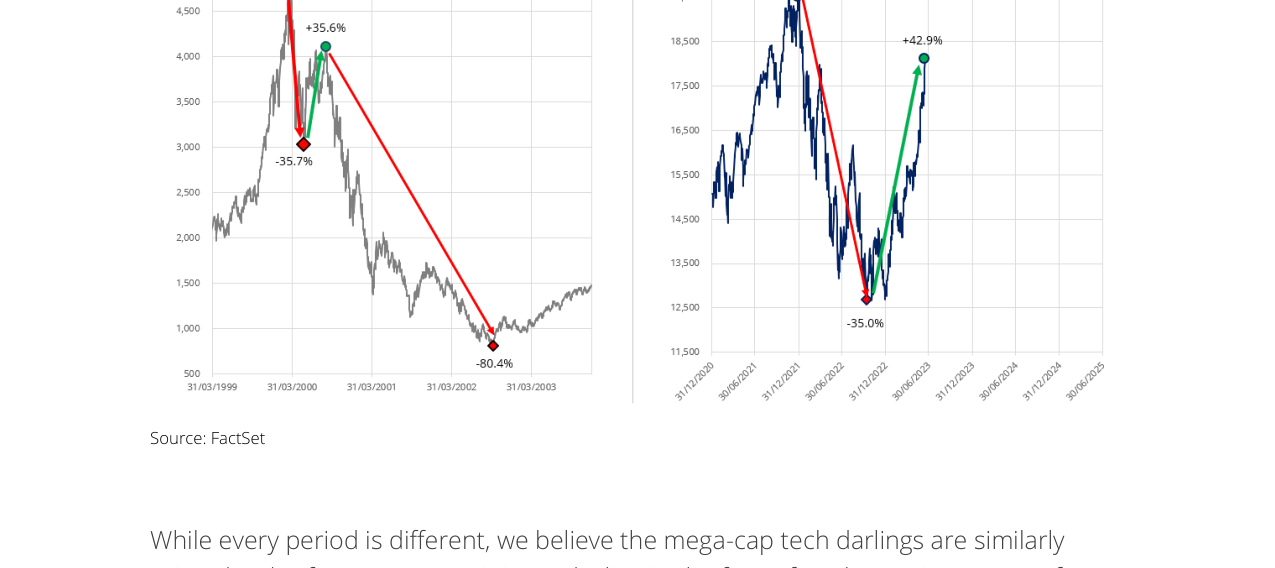
During the 2000-2002 bear market, the NASDAQ Composite fell 35.7% from its peak, briefly rebounded 35.6%, and then declined another 80.4% over the subsequent 25 months
- Market Comparison: The report compares the current trajectory of mega-cap growth stocks to the dotcom bubble. After peaking in March 2000, the Nasdaq fell over 35%, rebounded 36% in Q2 2000, and then dropped another 80% over the next 25 months. Currently, these stocks fell about 30% from January to October 2022 and have since rebounded over 40%, which the author views as an early bubble stage.
- Fund Performance:
- Q2 return: 5.15%; YTD: 17.42%.
- Outperformed the S&P 500 (YTD 16.89%) and Russell 1000 Value (YTD 5.12%).
- Fund P/V ratio in the mid-60% range, cash at 4.0%, holding 21 stocks.
- Portfolio Contributions:
- Top five contributors: Live Nation Entertainment (+31%, weight 4.4%), IAC (+21%, weight 6.2%), Fortune Brands (+23%, weight 3.5%), Fairfax Financial (+12%, weight 5.5%), CNX Resources (+10%, weight 6.2%).
- Top five detractors: Warner Bros Discovery (-17%, weight 4.8%), Warner Music Group (-21%, weight 4.5%), Lumen (-17%, weight 0.0%), PVH (-5%, weight 4.8%), Liberty Broadband (-2%, weight 4.5%).
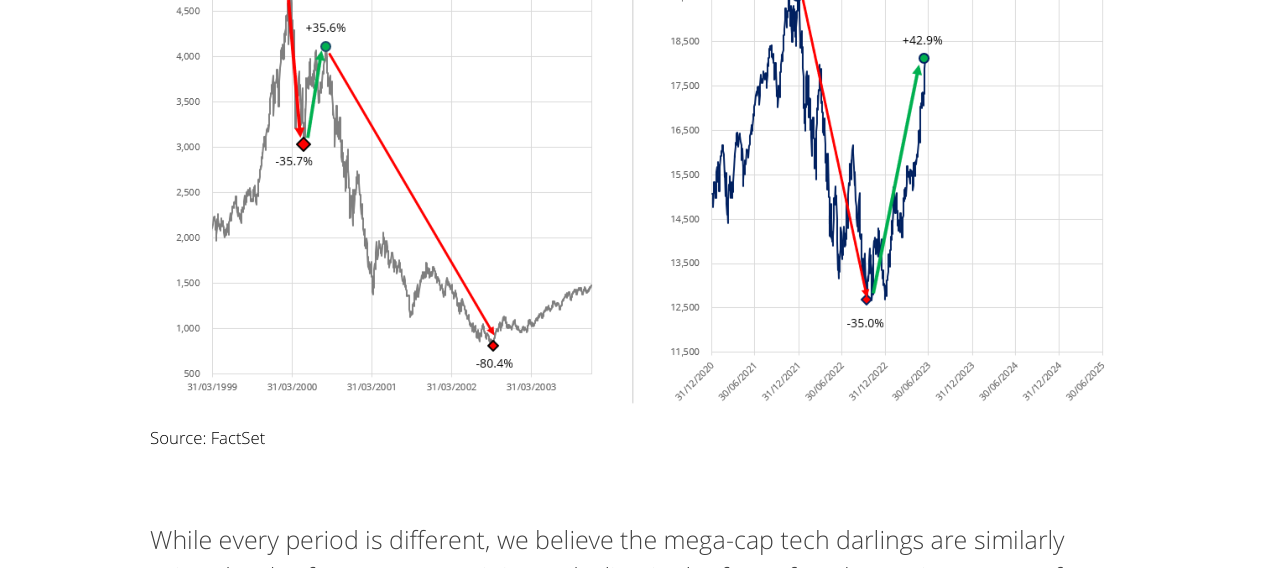
During the 2020-2023 bear market, the NASDAQ Composite fell 35.0% from its peak and had rebounded 42.9% as of June 2023
| Metric | Fund | S&P 500 | Russell 1000 Value |
|---|---|---|---|
| Q2 Return | 5.15% | 8.74% | 4.07% |
| YTD Return | 17.42% | 16.89% | 5.12% |
| 1-Year Return | 7.29% | 19.59% | 11.54% |
| 3-Year Annualized Return | 13.59% | 14.60% | 14.30% |
| 5-Year Annualized Return | 2.86% | 12.31% | 8.11% |
| 10-Year Annualized Return | 5.19% | 12.86% | 9.22% |
| Annualized Return Since Inception | 9.34% | 10.18% | 9.58% |

Among the top five contributors in Q2, Live Nation Entertainment and IAC each led with a contribution of 1.17%, while Fortune Brands contributed 0.70%
Companies/Assets Involved
- Live Nation Entertainment (Bullish): Newly purchased, bought amid Ticketmaster controversy; concert demand is strong, accelerating further in 2023. Liberty Media still holds over 30% of shares, with favorable views on capital allocation.
- IAC (Bullish): A digital holding company; MGM's profits are growing at double digits, making it one of the largest repurchasers; Angi and Dotdash Meredith businesses are stable. IAC has increased its buyback pace, and the parent company still has net cash.
- Warner Bros Discovery (Bullish): A detractor in Q2 but still among the top five contributors in the first half. The company is deeply undervalued, with management driving FCF growth; the worst is believed to be over. CNN management changes are viewed positively.
- Warner Music Group (Bearish): Fell 21% in Q2, dragging on the fund.
- Lumen (Bearish): Fully exited. New management's strategy is unclear, financial targets are weak, and bond prices have deteriorated, leading to permanent capital loss. The author reflects on lessons regarding leverage and position sizing.
- Alphabet (Neutral): Fully exited. Purchased in 2022 due to undervaluation amid AI competition concerns, but sold for profit after the market narrative reversed. The author believes competition and regulatory outlook have worsened.
- New Purchases: Kellogg (consumer goods, planning to spin off cereal business), Hasbro (toys, bought at a discount), Fiserv and Fidelity Information Services (fintech, bought after the banking crisis), Fortune Brands (housing-related business).
Investment Implications
- Beware of the Mega-Cap Growth Stock Bubble: The current market is driven by a few stocks, similar to the early dotcom bubble. Investors should avoid chasing these stocks, especially amid peaking profit margins and rising competition and regulatory risks.
- Value Strategy Remains Effective: The fund outperformed the index with zero exposure to information technology and an overweight in consumer discretionary, showing that select value stocks (e.g., Live Nation, IAC) can generate alpha in unfavorable environments.
- Focus on Management and Balance Sheets: The report emphasizes management teams' offensive capabilities (pricing power, buybacks) in difficult markets. Investors should prioritize companies with strong balance sheets and proactive management.
- Avoid Leverage and Concentration Risk: The permanent loss from Lumen highlights that high leverage and excessive concentration can lead to significant losses. Investors should limit individual stock weights and continuously reassess fundamental changes.