1Q24 Asia Pacific Commentary
Southeastern Asset Management is a Memphis-based deep-value firm founded in 1975 by O. Mason Hawkins to exploit the bargains left by the 1973-74 bear market. Its flagship Longleaf Partners Funds (launched 1987) invest employees' own money alongside clients'. Following Graham's discipline and its "Business, People, Price" framework, it runs concentrated books of 15-25 undervalued stocks held for the long term — famously closing funds to new investors when opportunities were scarce. CEO and Head of Research Ross Glotzbach now leads the firm, which publishes quarterly Longleaf fund commentaries and Research Perspectives notes.
In plain words
This report from Southeastern explains how they found hidden value in Hong Kong-listed companies that actually do most of their business outside China—like Samsonite (luggage) and L'Occitane (skincare). Even though Hong Kong stocks were down, these picks earned over 12% in a quarter. The idea? Look for global firms that trade at a discount just because they're listed in Hong Kong. Big Chinese tech firms like Alibaba and Tencent are also buying back their own shares heavily (like giving money back to investors). Worth reading because it shows how pessimism can create opportunities.
Southeastern (Longleaf Partners) Asia Pacific UCITS Fund Q1 2024 Report The fund posted a net return of 4.69% for the first quarter of 2024, slightly underperforming the FTSE Asia Pacific Index (4.90%). Japan and India contributed 90% of the index's returns, while Hong Kong and China were the bigges
Theme & Background
This chapter discusses the investment performance and strategy of the Southeastern (Longleaf Partners) Asia Pacific UCITS Fund in the first quarter of 2024. The report notes that Japan and India contributed 90% of the benchmark index's returns, while Hong Kong and China were the largest drags. Through stock selection, the fund largely kept pace with the index despite being significantly underweight Japan (14% vs. 36% in the index) and overweight China + Hong Kong (51% vs. 17%).
Core Thesis
The author's core investment thesis is: There are severely undervalued world-class companies listed in Hong Kong whose businesses have limited exposure to mainland China but suffer from depressed valuations due to the Hong Kong listing discount. The counter-intuitive judgment is that despite foreign capital broadly fleeing the Hong Kong and China markets, the fund achieved excess returns through selective stock picking (especially those companies that "do not belong" to the Hong Kong Stock Exchange) — the China portfolio (Hong Kong-listed and US-listed Chinese ADRs) contributed over 100% of the quarter's returns.
Key Arguments & Data
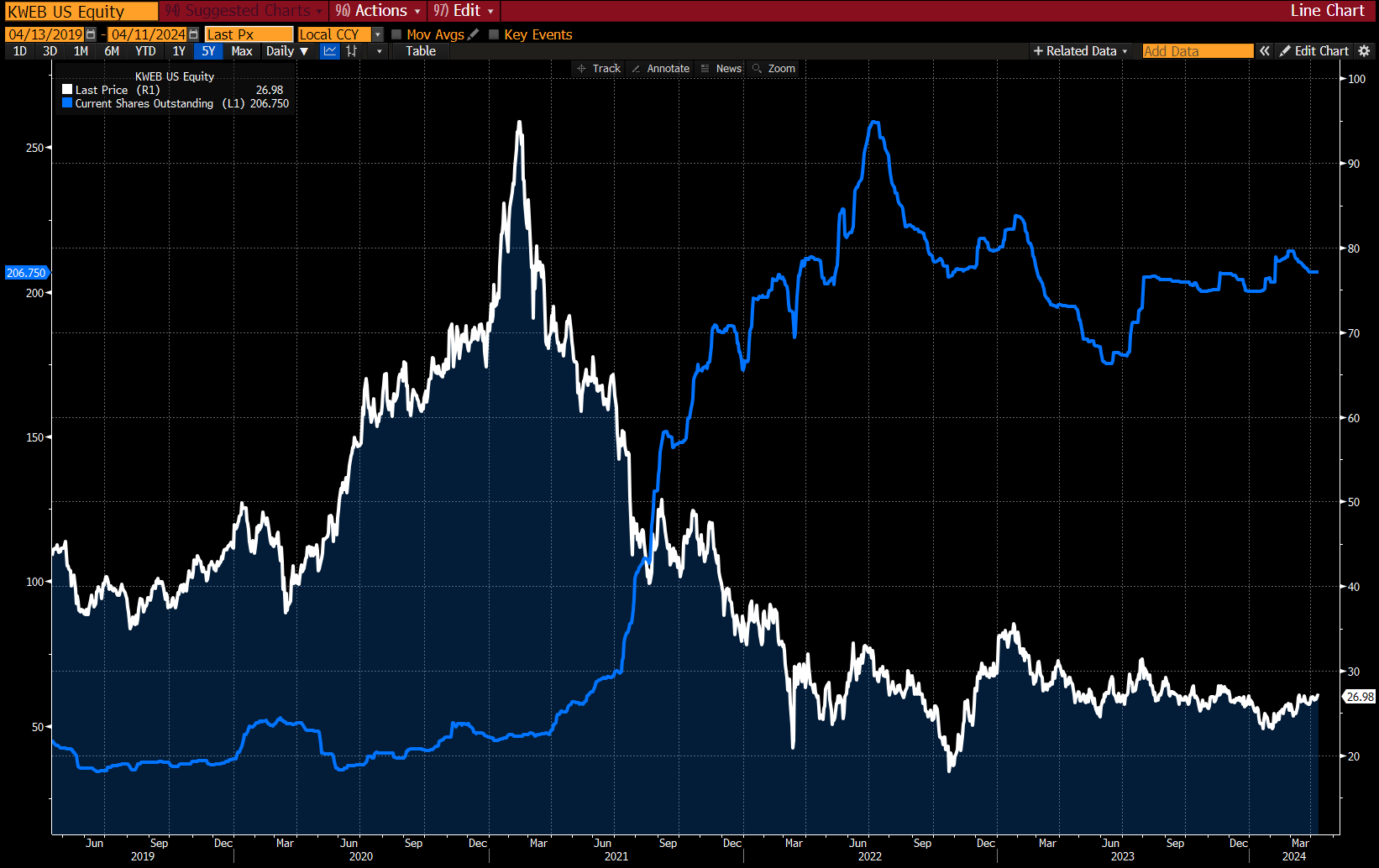
- China Portfolio Performance: The Hong Kong/China basket in the index fell by 2.74%, while the fund's basket rose by 12.5%, contributing 6.3% to the quarterly return (total quarterly return was 5.9%).
- Foreign Capital Flows: Over the past 12 months (through March), foreign capital saw a net outflow of $67.5 billion from China, compared to net inflows of $59.5 billion into Japan and $25.4 billion into India.
- Local Investors Buying the Dip: Mainland investors' holdings of the Hang Seng Tech Index ETF rose from 5% in November 2022 to a record 45%.
- Share Buybacks & Dividends:
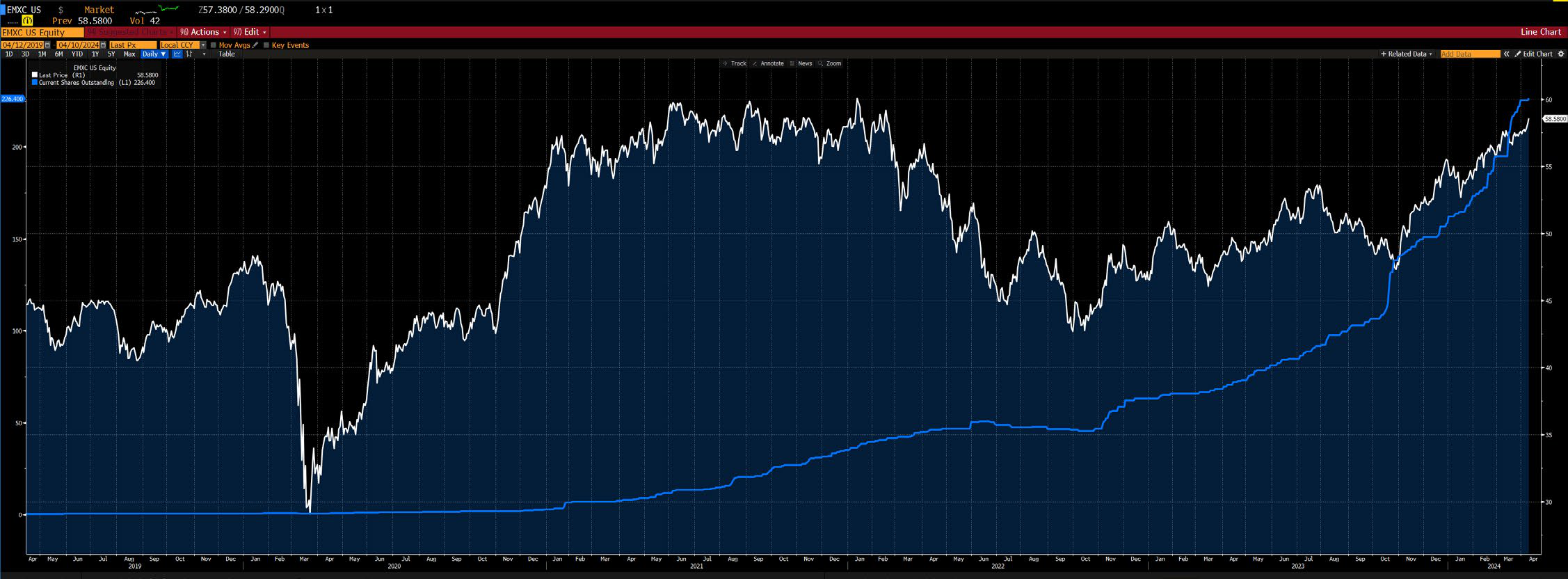
- Alibaba: Repurchased $12.5 billion (approx. 5.1% of shares) over the past 12 months, plus a dividend yield of ~8%; remaining repurchase authorization is $31.9 billion (over 15% of market cap).
- Tencent: Repurchased $6.3 billion in 2023, and accelerated to $2.6 billion in repurchases from the start of 2024 through April 10.
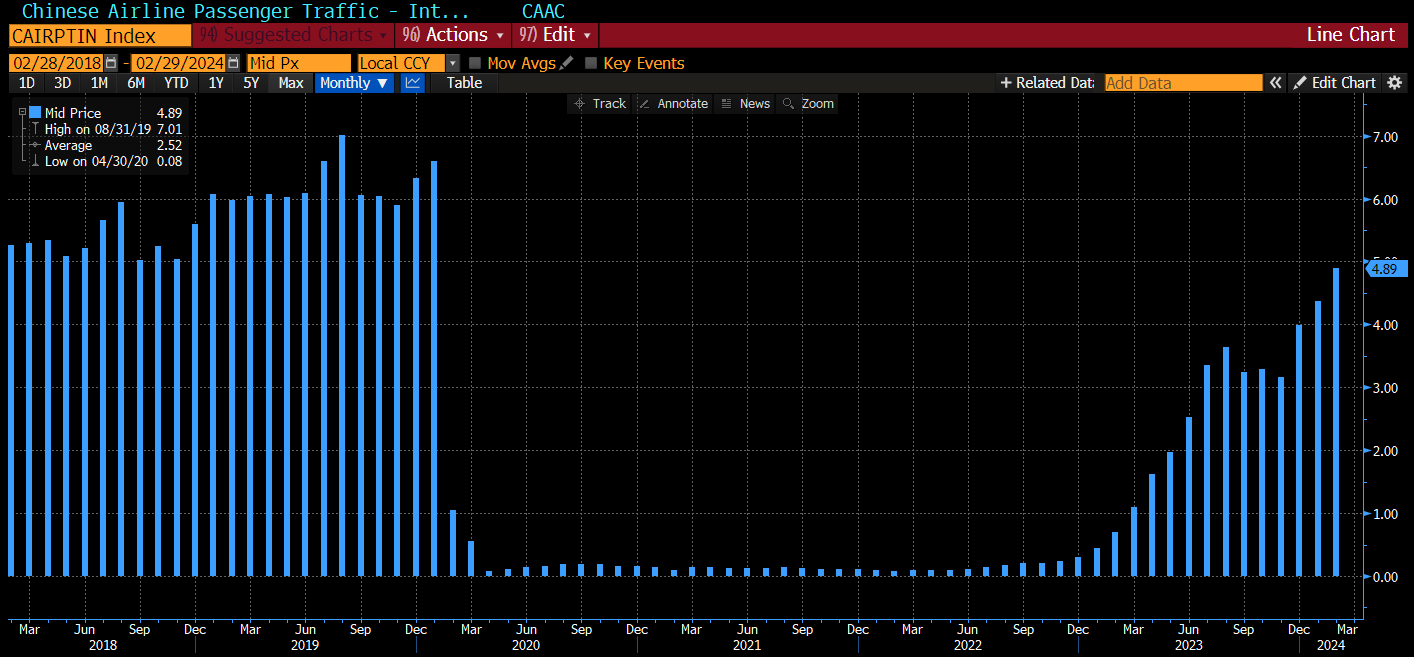
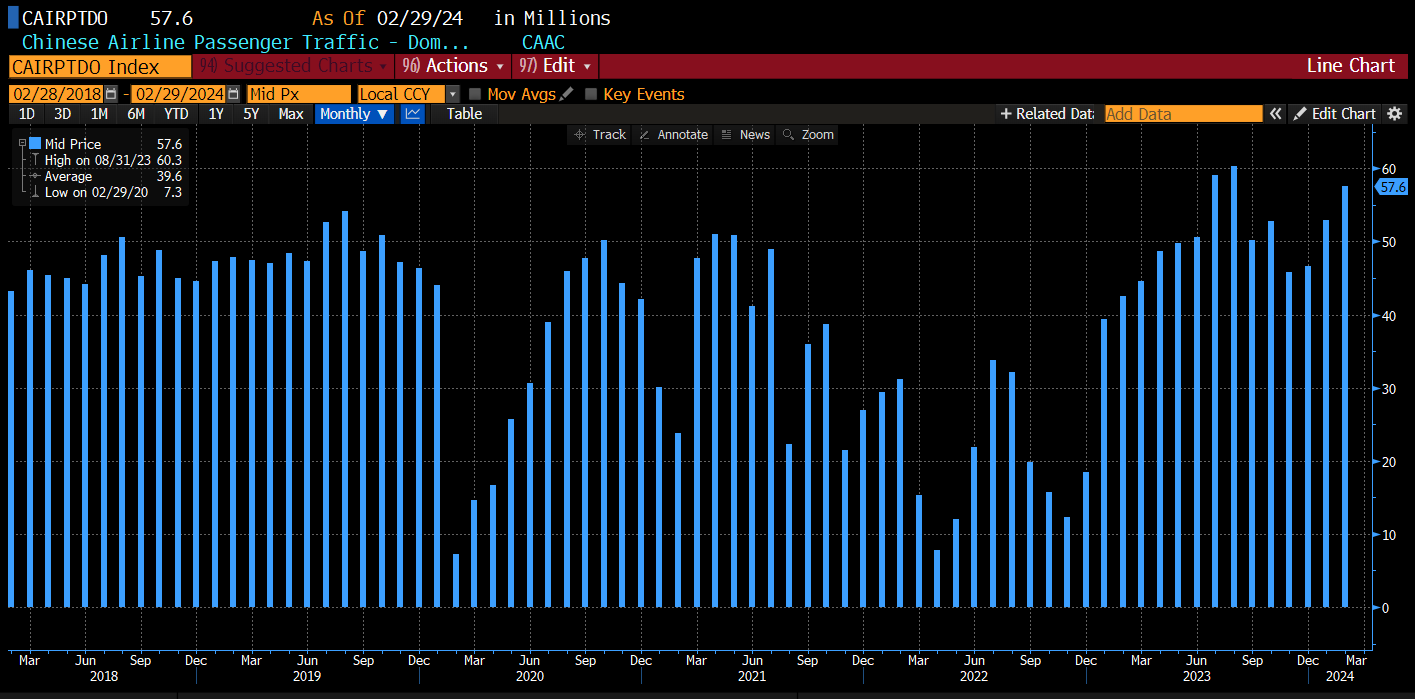
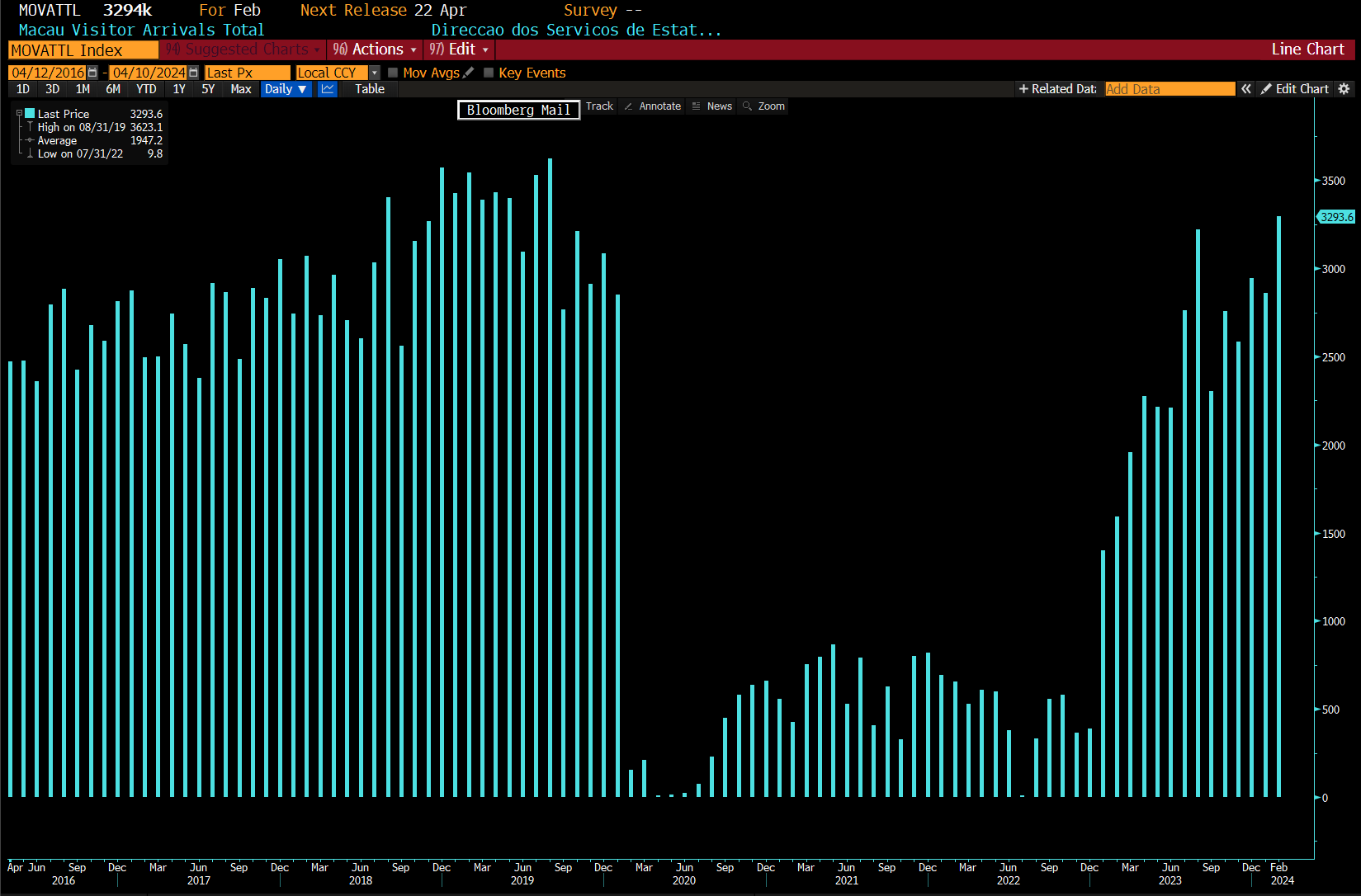
- China Travel Recovery: Both international and domestic air passenger traffic have rebounded strongly (see chart data below).
| Metric | Data |
|---|---|
| China Portfolio (Fund) Quarterly Return | +12.5% |
| Hong Kong/China Basket in Index Quarterly Return | -2.74% |
| Foreign Net Outflow from China (12 months) | -$67.5 billion |
| Foreign Net Inflow to Japan (12 months) | +$59.5 billion |
| Alibaba Buybacks (FY2024) | $12.5 billion (5.1% of shares) |
| Alibaba Remaining Buyback Authorization (through March 2027) | $31.9 billion (over 15% of market cap) |
| Tencent 2023 Buybacks | $6.3 billion |
| Tencent Buybacks (2024 through April 10) | $2.6 billion |
Companies/Assets Involved
- L'Occitane: Headquarters in Geneva, largest market is the US, China sales <13%, China revenue grew 21.9% in the first 9 months of 2023. The controlling shareholder is considering privatization; subsidiary Sol De Janeiro may IPO (operating margin is over twice that of the core brand, with triple-digit revenue growth).
- Samsonite: Headquarters in Massachusetts, 2023 revenue grew 17.5% vs. 2019, profit grew 81%; mainland China revenue <8%, only 21% of Asia revenue. Seeking a dual listing to enhance valuation.
- Techtronic Industries: Largest customer Home Depot accounts for 44% of revenue, China revenue exposure <10%, revenue grew 10% in H2 2023.
- JS Global: Case study reference — after spinning off SharkNinja to a US listing and distributing 100% of shares, the combined market cap more than doubled compared to pre-spin-off.
- Alibaba, Tencent, Baidu: Chinese tech stocks held by the fund, expected to significantly increase shareholder returns (buybacks + dividends).
- H World Group, Tongcheng Travel, MGM China: Beneficiaries of China's travel and leisure recovery while also gaining market share.
Investment Implications
- Long "Hong Kong-listed but non-China business" companies: Focus on companies whose business is primarily outside China, suffer from depressed valuations due to the Hong Kong listing discount, and whose management has the willingness to unlock shareholder value through inorganic means like privatization, dual listing, or spin-offs.
- Long Chinese Tech Giants: Massive buybacks and dividends from Alibaba, Tencent, and Baidu at depressed valuations provide substantial shareholder returns (Alibaba's implied yield ~8%), with ample repurchase authorization.
- Long China Travel Recovery: Revenge travel demand remains robust, and related companies (H World, Tongcheng, MGM China) are gaining market share, unlike other consumer sectors that cooled rapidly after reopening.
New Arguments & Data Analysis
1. Structural Shift and Sustainability of Macau Gaming
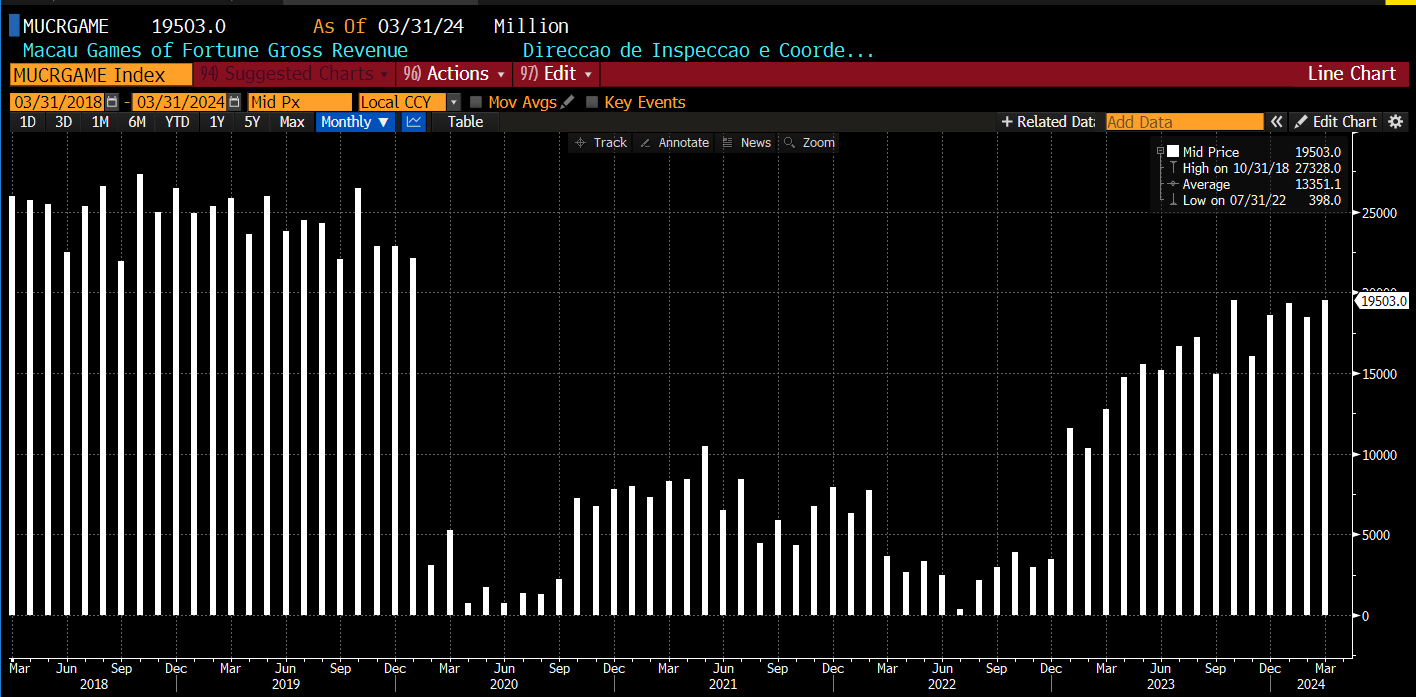
- Increased Market Concentration: MGM China achieved a 20% GGR market share in January 2024, double its pre-pandemic level, and management expects to sustainably maintain a "mid-teens" (approx. 15-17%) share. This growth is primarily driven by a strong recovery in the mass market segment (reaching 110% of pre-pandemic levels and hitting all-time highs), while the VIP junket business has virtually disappeared. This indicates Macau's gaming industry has shifted from reliance on high-end VIPs to a more stable mass-consumption model.
- Capital Structure Optimization: Melco Resorts successfully issued $750 million in bonds due 2032 (initial size $500 million, oversubscribed 6x) and extended a $1.9 billion revolving credit facility to 2027, addressing the $1.4 billion debt repayment pressure in 2025. This shows a return of investor risk appetite, particularly US investor confidence in Macau credit.
- Comparative Data: Macau GGR grew 53% YoY in March 2024, recovering to 75% of pre-pandemic levels, while the mass market has already surpassed pre-pandemic levels. In comparison, Las Vegas (Nevada) achieved record gaming revenue in 2023, indicating a synchronized global gaming recovery.
| Metric | Macau (March 2024) | Las Vegas (2023) |
|---|---|---|
| GGR YoY Growth | +53% | Record (specific data not provided) |
| Mass Market Recovery Level | 110% of 2019 | Not specified |
| Market Share (MGM) | 20% (Jan 2024) | N/A |
2. China Consumer Market: High-End Resilience vs. Macro Weakness
- Strong High-End Consumption: Despite weak macro consumer sentiment, China's high-end consumer base (net worth ≥ $100k) is large and growing rapidly. UBS data shows China accounts for 36% (894 million people) of the middle two tiers of the global wealth pyramid ($100k-$1 million). Assuming 30% are high-end consumers, this represents ~200 million people. UBS forecasts the number of Chinese millionaires will grow by 112% from 2022 to 2027.
- Luxury Retail Performance: Las Vegas Sands Corp.'s luxury retail mall in Macau's Cotai Strip achieved TTM sales per square foot of $8,667 in March 2024, up 43% from March 2019. This confirms the resilience of high-end consumption, contrasting with weak mass consumption.
- Travel Consumption Recovery: China's international passenger traffic has recovered to 80% of pre-pandemic levels, improving month-over-month in 2024. Japanese cosmetics company Kobayashi Pharmaceuticals' inbound tourist revenue has recovered to pre-pandemic levels, and Samsonite's China revenue grew 20% YoY in Q1, indicating strong demand for Chinese outbound travel.
3. Japan Market: Structural Opportunities Coexisting with Consumption Weakness
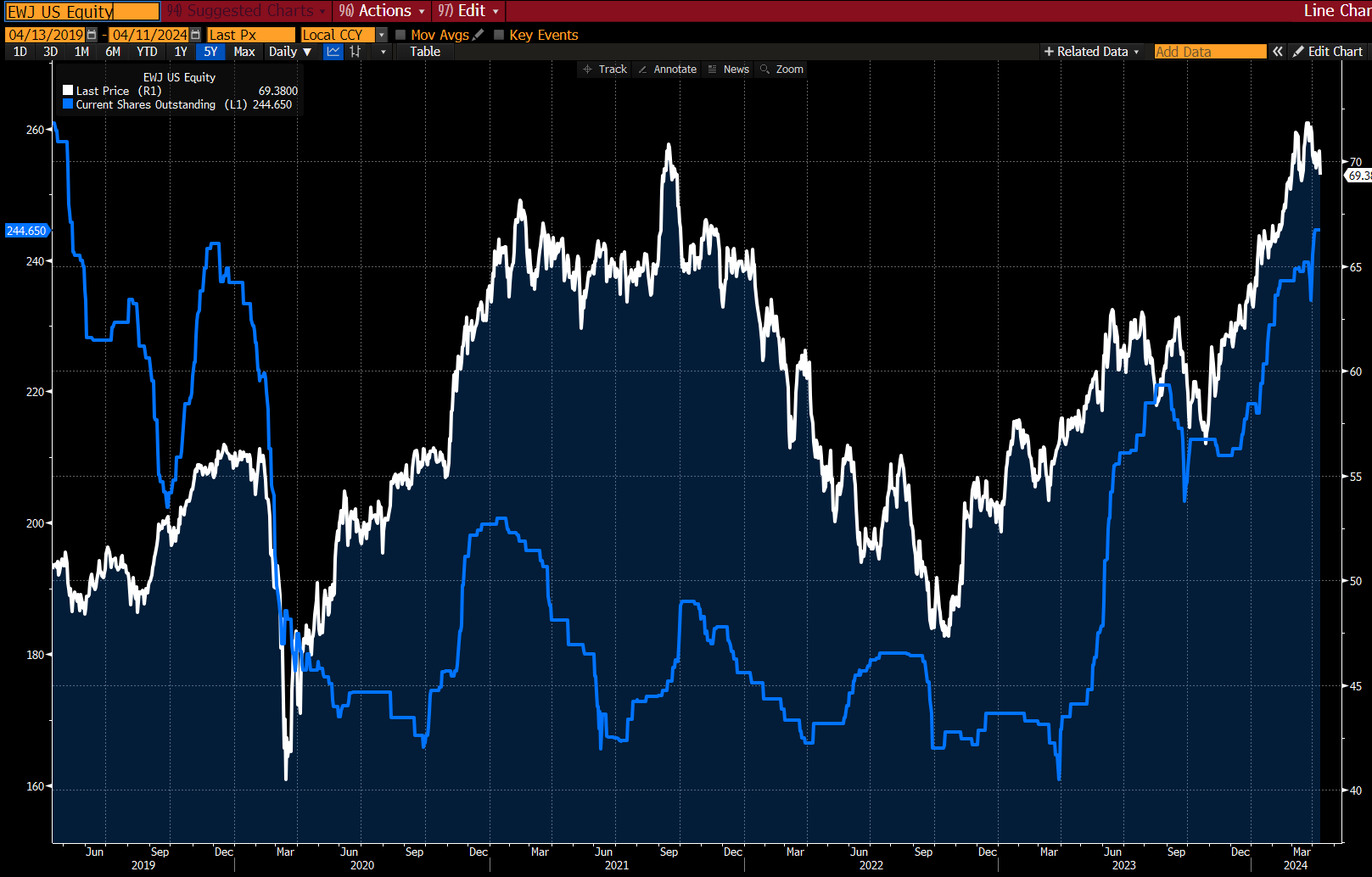
- Market Performance: The TOPIX index rose 41% over the past 12 months and 18% in Q1, with sustained foreign inflows since mid-2023. However, Japan's consumer sector is weak, with inflation and a weak yen suppressing retail sales.
- Investment Case: Descente: Through a hostile takeover led by Itochu (acquiring 40% equity in 2019), Descente completed management restructuring and established a joint venture (JV) with Anta in China. In 2023, the China JV's revenue grew 50% (primarily from same-store sales growth), with an operating margin exceeding 20%, more than double that of its Japan and Korea operations. Management targets opening ~300 stores in China by end-2026 (187 at end-2023). The analysis suggests that the value of Descente's 40% stake in the China JV alone equals its current market cap, making the Japan and Korea businesses (which are improving) essentially free.
- Comparative Data: Descente's China business margin (mid-20s) is significantly higher than Japan and Korea (approx. 10-12%), highlighting the high growth and high-profit potential of the China market.
| Business Region | 2023 Revenue Growth | Operating Margin |
|---|---|---|
| China (JV) | +50% | mid-20s |
| Japan | Not specified (restructuring) | ~10-12% |
| Korea | Recovering (post-2018 boycott) | ~10-12% |
4. Portfolio Performance & Key Drivers
- Top 5 Contributors: MGM China (+2.46%), L'Occitane (+2.29%), Tongcheng Travel (+1.48%), Hitachi (+1.19%), SharkNinja (+0.93%). MGM China and L'Occitane benefited from the Macau gaming recovery and demand for premium cosmetics (Sol de Janeiro brand grew 214%), respectively.
- Bottom 5 Detractors: Naver Corp (-1.02%), HDFC Bank (-0.86%), Baidu (-0.63%), CK Asset Holdings (-0.62%), China MeiDong (-0.43%). These companies were mostly impacted by macro weakness or industry competition (e.g., Baidu under AI investment pressure, HDFC Bank affected by Indian regulatory changes).
- Key Event: L'Occitane was suspended on April 9, 2024, as controlling shareholder Reinold Geiger seeks a management buyout (MBO), reflecting his view that the stock is undervalued. This further validates the long-term value of premium consumer brands.
Summary
- Macau Gaming: Structural shift (mass market dominance) and capital structure optimization (debt refinancing) support a sustainable recovery, with MGM China and Melco Resorts as primary beneficiaries.
- China Consumption: High-end consumption (luxury, travel) shows significant resilience, forming a "K-shaped divergence" with weak mass consumption. UBS data indicates a large and rapidly growing high-end consumer base in China, providing long-term growth space for related brands (e.g., Descente, L'Occitane).
- Japan Investment: Despite a weak consumer sector, undervalued structural opportunities can be uncovered through management reforms and cross-border collaborations (e.g., Descente with Anta).
New Arguments & Data Analysis
1. Tongcheng Travel's Competitive Moat & User Stickiness
- User Growth & Conversion Efficiency: Annual paying users (APU) reached 235 million in 2023, up 25% YoY, an all-time high. Among them, high-end "Black Whale" members reached 47 million, accounting for 20% of total paying users, indicating improved retention of high-value users. Compared to the industry trend of rising customer acquisition costs (CAC), Tongcheng's advantage in low-cost user acquisition via the WeChat ecosystem is significant.
- Performance Comparison: Compared to Trip.com Group's ~30% growth in hotel booking revenue in Q4 2023, Tongcheng's hotel revenue grew 42%, leading the pace. However, Tongcheng's air ticket booking volume grew only 16% (vs. pre-pandemic), lower than Trip.com's ~25%, possibly due to its greater focus on the domestic short-haul market.
| Metric | Tongcheng Travel (Q4 2023 vs. Pre-Pandemic) | Trip.com Group (Q4 2023 vs. Pre-Pandemic) |
|---|---|---|
| Hotel Room Nights | +70% | +45% |
| Air Ticket Bookings | +16% | +25% |
| Annual Paying Users | 235M (+25%) | ~150M (+15%) |
- Management Shareholder Returns: Initiated a maiden dividend of HKD 0.15 per share (payout ratio 20%). Compared to Trip.com, which has not yet resumed dividends, Tongcheng's shareholder-friendly strategy may attract long-term capital. However, its Q1 2024 guidance (OTA core business growth of 20-25%) is based on a high base in 2023; growth could face pressure if the macro economy slows.
2. Hitachi's Green Transition & Order Structure
- Order Quality: Energy orders grew 72% YoY, far outpacing the decline in railway system orders (expected -10%). This reflects Hitachi's accelerated strategic shift from traditional infrastructure to green energy (e.g., hydrogen, grid digitalization). Compared to Siemens Energy's 15% growth in energy orders in 2023, Hitachi's growth advantage is clear.
- Margin Concerns: Despite adjusted operating profit reaching JPY 200 billion (above expectations), the margin was only ~8.5% (based on ~JPY 2.4 trillion revenue), lower than GE's energy business margin of 12%. Hitachi needs to improve operational efficiency through management team restructuring (adding global executives), otherwise high growth may be accompanied by margin dilution.
3. SharkNinja's European Expansion & North American Inventory Cycle
- Regional Divergence: European revenue grew +70.5% YoY, while North America grew only +3.3%. North American retailer destocking (FY2023 sell-in/sell-out ratio of only 8%) was the main cause, but this is expected to normalize to 15-20% in FY2024. Compared to Dyson's ~5% global revenue growth in 2023, SharkNinja's European growth rate was 14 times higher, primarily benefiting from low-penetration markets like France and Germany.
- Category Innovation: The Shark FlexStyle (hair styling tool) enters a new category, but this market is dominated by Dyson (~40% market share) and Panasonic (~20%). SharkNinja needs to achieve at least 5% market share in 2024 to prove its category expansion capability.
4. Naver's Competitive Pressure & Valuation Safety Margin
- Chinese E-commerce Impact: AliExpress's GMV in Korea grew 130% YoY (Dec 2023), with a market share of ~2%; TEMU's MAU surged from 500k (Aug 2023) to 5.7 million (Feb 2024). However, together they account for only ~3% of the Korean e-commerce market, far below Naver's ~20% share. Naver's search market share (60-70%) and digital ad share (40-50%) form a moat.
- Valuation Analysis: Naver's current NTM P/E is 20x, near the bottom of its 10-year valuation range (historical average ~30x). Excluding the LY Corp investment, the core earnings multiple is only low double-digits (~12-14x), below the Korean internet industry average of 18x. If AliExpress/TEMU increase their advertising spend (estimated to exceed $500 million combined in 2024), Naver, as a search advertising platform, would directly benefit.
5. HDFC Bank's Merger Pains & Long-Term Logic
- Loan-to-Deposit Ratio Risk: Post-merger, the loan-to-deposit ratio rose to ~110% (industry healthy level is 80-90%), mainly because HDFC Ltd, as an NBFC, relied on wholesale funding. The bank plans to repair this by accelerating deposit growth (targeting a ratio below 100% by 2024), but tight system liquidity in India (interbank rates above 6.5%) could slow progress.
- Synergies: Cross-selling opportunities post-merger (e.g., converting HDFC Ltd's mortgage customers to the bank's retail products) are expected to boost revenue by 5-8%. Additionally, replacing HDFC Ltd's high-cost borrowings (rate ~8%) with low-cost deposits (cost ~4%) could reduce funding costs by ~50bps, but this will take 2-3 years to achieve.
6. Baidu's AI Commercialization & Buyback Intensity
- AI Revenue Contribution: Generative AI revenue reached several hundred million RMB in Q4 2023, expected to grow to several billion RMB in 2024, but this is still less than 5% of core search revenue (~RMB 20 billion). Compared to Microsoft's Azure AI services (~$5 billion revenue in Q4 2023), Baidu's AI commercialization is still in its early stages.
- Buyback Efficiency: Repurchased $669 million in Q4 2023, accounting for 67% of the 2023 buyback plan (~$1 billion). The remaining $4 billion buyback authorization (as of March 2024), at the current stock price (~$100/ADS), could repurchase ~40 million shares (~5% of total shares). However, Baidu's core margin is only 22.5%, lower than Google's 30%, and AI investments (e.g., GPU procurement) could further compress margins.
7. CK Asset's Dividend Cut & Asset Quality
- Reason for Dividend Cut: The final dividend for 2023 was reduced by 12%, mainly due to management's pessimistic outlook for the Hong Kong property market (expecting a further 5-10% decline in home prices in 2024). However, the company's recurring income (e.g., infrastructure, utilities) grew 9.7% in 2023 and is expected to maintain positive growth in 2024, supporting dividend stability.
- Buyback Opportunity: The company's net debt-to-equity ratio is only ~5%, with ~HKD 50 billion in cash. If the stock price continues to decline (current P/B ~0.4x), management may increase buybacks (repurchased ~HKD 2 billion in 2023), but one must be wary of asset impairment risks (e.g., downward valuation of mainland commercial real estate).