Robotti & Company Advisors YE 2019 Letter
Robotti & Company is a New York deep-value boutique founded by Bob Robotti in 1983, specializing in left-for-dead cyclical industries — energy services, building products, shipping — with multi-year holding periods and occasional activist letters. It manages about $650m; Bob is regarded as one of the most steadfast Graham-tradition cyclical value hunters.
In plain words
This report looks back at the 2010s, calling it a unique decade: the weakest economic recovery on record, ultra-low interest rates, and algorithms taking over markets. The author warns that many bonds, especially those with negative yields, are actually risky bets, not safe investments. For regular people, the key lesson is to avoid the trap of thinking 'this time is different' and to distinguish real investing from gambling on finding a bigger fool. Worth reading because it uses historical data to show that when everyone is pessimistic, opportunities often hide in plain sight.
Robotti & Company's 2019 annual client letter reviews the "unique" decade of the 2010s: the United States experienced its first recession-free decade, the weakest recovery on record, the lowest interest rate environment in history, and the dominant influence of algorithms on economic decision-making
Theme and Background
This chapter reviews the 2010s, a decade the author describes as "unique." The report notes that this period experienced the first recession-free economic cycle in the US, the weakest recovery on record, the lowest interest rate environment in history, and the dominant influence of algorithms on economic decision-making. The author emphasizes that while investment trends shift every decade, the combination of low interest rates and algorithmic prevalence in this decade is unprecedented, and investors must heed historical lessons.
Core Thesis
The author's core investment argument is: The 2010s were a "unique" decade, characterized by an unprecedented low-interest-rate environment and algorithm-driven market structure. Investors must distinguish speculation from investment and avoid falling into the "greater fool theory" trap. Counterintuitive judgments include:
- Although the bond market is widely regarded as "risk-free," approximately one-third of sovereign debt currently trades at negative yields, effectively offering "return-free risk."
- Many investors profit from trading low-yield fixed-income products not by holding to maturity, but by relying on finding even less rational buyers. This is essentially speculation, not investment.
Key Arguments and Data
The author supports the thesis with the following data and cases:
- Comparison of Economic Recovery Strength: Since the recession ended in June 2009, US GDP growth has been 4.1%, compared to an average of 8.6% across the previous ten recoveries. This recovery is also the longest on record (over 10 years), while the average duration of the previous ten recoveries was 5 years.
- Interest Rate Environment: On February 9, 2012, yields on 1-year, 10-year, and 30-year US Treasuries were 0.15%, 2.04%, and 3.2%, respectively. By the end of 2019, these yields had become 1.59%, 1.92%, and 2.39%. The author emphasizes that this decade had the lowest interest rates in history.
- The Austrian 100-Year Bond Case: This bond had an initial coupon of 2.1%. An investor who purchased it for €1,000 in 2017 would receive €21 annually and the principal after 100 years. However, yields subsequently fell to 1.2%, pushing the bond price to €1,600. This means the investor must pay a €600 premium (a 60% premium) to receive only €21 per year, requiring 30 years just to recoup the premium. The author argues this trade is inherently speculative, as the return is far too low for the risk.
- Global Negative-Yielding Debt: Approximately one-third of sovereign debt trades at negative yields, meaning investors lend money to governments while guaranteeing to receive less back in the future. The author considers this worse than storing cash under a mattress.
| Metric | 2010s | Average of Previous Ten Recoveries |
|---|---|---|
| GDP Growth Rate | 4.1% | 8.6% |
| Recovery Duration | Over 10 years | 5 years |
| 10-Year Treasury Yield (Feb 2012) | 2.04% | - |
| 10-Year Treasury Yield (End 2019) | 1.92% | - |
Companies/Assets Involved
- Austrian Government: As the issuer of the 100-year bond, this case is used to illustrate speculative behavior in a low-rate environment. The author is bearish on such assets, deeming their pricing irrational.
- Warren Buffett: The report cites his 2012 Fortune article, where he stated that "bonds are promoted as offering risk-free returns, but are now priced to deliver return-free risk." The author agrees with this assessment and believes the current market has confirmed his warning.
- Facebook, Twitter: Used as examples of algorithm-dominated information flows, the author implies these algorithms distort investor decision-making.
Investment Implications
- Beware of the Fixed-Income Bubble: The author believes the current situation where ~1/3 of sovereign debt yields negative is "irrational" and should not be accepted as a "new normal." Holding such assets risks principal loss, especially when interest rates normalize.
- Distinguish Speculation from Investment: The author emphasizes that trades relying on the "greater fool theory" (expecting to sell at a higher price to an even less rational buyer) are speculation, not investment. Investors should return to fundamental analysis and valuation, avoiding trend-chasing.
- Heed Historical Lessons: Citing Ben Graham's Santayana warning, the author reminds investors not to ignore long-term risks due to short-term market behavior. The next decade will be different again, and few companies can sustain leadership across decades.
Sequel Analysis: From "Housing is Dead" to "Energy is Dead" – The Logic and Data Validation of Cyclical Investing
1. The Divergence Between Market Narrative and Reality: The "Priced for Failure" Logic in Energy
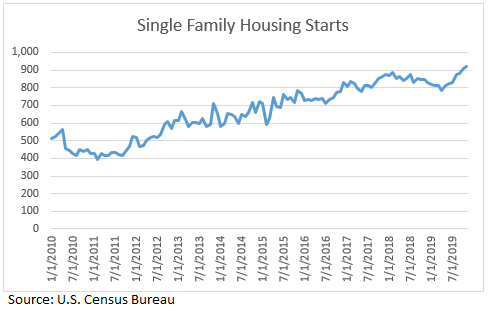
In the sequel, Robotti draws an analogy between current market sentiment toward the energy sector and the housing sector in 2009. The core argument is that market pessimism toward energy (e.g., demand stagnation, EV displacement, regulatory crackdowns) has been excessively priced in, leaving related companies valued as if "priced for failure," thereby creating asymmetric risk-reward opportunities.
Key Data Comparison:
| Metric | 2009 Housing Sector | 2019 Energy Sector |
|---|---|---|
| Market Narrative | "Housing is dead forever" (urbanization, sharing economy, millennials not buying) | "Traditional energy ends immediately" (EVs, efficiency gains, climate regulation) |
| Actual Fundamentals | Population growth, rigid housing demand, supply shortage | Natural gas consumption growth, emerging market energy demand, coal-to-gas switching |
| Valuation Status | Priced for "permanent doom" | Priced for "terminal decline" |
| Investment Outcome | Builders FirstSource fell from $3.50 to $1.25 before rebounding, eventually becoming a major winner | Companies like Tidewater are at cash breakeven, but asset values are undervalued |
Supporting Data:
- EV Count: As of 2019, there were only 3.3 million EVs globally, representing 0.33% of the total vehicle fleet. With an average vehicle lifespan of 10 years, even rapid EV growth has limited short-term impact on traditional energy.
- Fuel Efficiency: New car fuel efficiency has nearly doubled over the past 40 years, but this trend has existed across multiple energy cycles without causing a collapse in energy demand.
- Natural Gas Advantage: Natural gas CO2 emissions are only half those of coal and 30% lower than oil. The growth in US natural gas consumption is "the most under-discussed environmental improvement."
2. The "Asymmetric Return" Mechanism in Cyclical Sectors
Robotti emphasizes that a hallmark of cyclical sectors (e.g., housing, energy) is that when the market broadly believes "this time is different," it is often the moment of greatest investment opportunity. The core logic is:
- Priced for Failure: Company valuations already reflect the worst-case scenario, so if "a few things improve," the investment can succeed.
- Consolidation Effect: Cyclical troughs often coincide with industry consolidation, where leading companies achieve cost savings and market share gains through M&A.
- Case: Builders FirstSource acquired its largest competitor in 2016, saving approximately $120 million annually. The announcement added $600 million to its market cap, nearly doubling the stock price.
- Case: Tidewater merged with Gulfmark in 2018, significantly cutting costs and enabling the company to achieve cash breakeven in a competitive environment.
Comparison Data:
| Consolidation Event | Cost Savings | Market Cap Impact | Timeframe |
|---|---|---|---|
| Builders FirstSource Acquisition | ~$120mm/year | +$600mm | Days after announcement |
| Tidewater-Gulfmark Merger | Significant cash savings | Gross margin nearly doubled | 2018 |
3. The "Double-Edged Sword" Effect of Climate Change
Robotti acknowledges climate change as a real threat but points out:
- Stricter regulation could paradoxically benefit some traditional energy companies (e.g., natural gas producers), as natural gas serves as a substitute for coal.
- While solar and wind power are growing (US solar share projected to rise from 2.5% in 2019 to 10% by 2030), natural gas's role as a "transition fuel" is underestimated.
- Economic growth in emerging markets (e.g., China) will drive continued energy demand, offsetting efficiency gains in developed countries.
Data Supplement:
- US Solar Share Projection: 2.5% in 2019 → 10% by 2030 (based on solar company management forecasts).
- Natural Gas CO2 Emissions: 50% lower than coal, 30% lower than oil.
4. Active Investing and "Noise Filtering"
Robotti emphasizes that they do not invest in "the market" but in specific companies. Their methodology involves:
- Focusing on "knowable factors": e.g., population growth, rigid housing demand, energy consumption rigidity.
- Ignoring short-term noise: e.g., in housing investing, even when the stock price fell from $3.50 to $1.25, they continued to add positions.
- Leveraging "recency bias": The market overweights recent events (e.g., the 2008 financial crisis), leading to misjudgments of long-term trends.
Key Conclusions:
- The energy sector's current valuation already reflects the "worst-case scenario," analogous to the housing sector in 2009.
- Natural gas consumption growth, industry consolidation, and emerging market demand are positive factors not fully priced in.
- Companies like Tidewater are in a favorable position with "undervalued asset values + financial stability + consolidation potential."
5. Summary: The "Time Asymmetry" of Cyclical Investing
Robotti concludes with Dornbusch's famous quote: "In economics, things take longer to happen than you think they will, and then they happen faster than you thought they could." This perfectly captures the essence of cyclical investing:
- Long-term trends (e.g., housing recovery, energy transition) take time to materialize, but once they do, the pace far exceeds expectations.
- Investors need patience and contrarian thinking, positioning themselves during "priced for failure" moments and waiting for the payoff when "a few things improve."
Final Data Comparison:
| Investment Phase | Housing Investment (2009-2019) | Energy Investment (2019-) |
|---|---|---|
| Initial Price | $3.50 (Builders FirstSource) | Current valuations at historical lows |
| Maximum Drawdown | Fell to $1.25 (-64%) | Potentially similar volatility |
| Final Return | Became a "huge success" | Expected asymmetric return |
| Key Catalysts | Population growth, housing supply shortage, industry consolidation | Natural gas demand, emerging markets, industry consolidation |
Core Insight: When market consensus declares "an industry is dead," it is often the optimal time for contrarian investors to position themselves. The key is to identify companies that are "priced for failure" but still have resilient fundamentals, and patiently wait for the moment when "a few things improve."