4Q24 Asia Pacific Commentary
Southeastern Asset Management is a Memphis-based deep-value firm founded in 1975 by O. Mason Hawkins to exploit the bargains left by the 1973-74 bear market. Its flagship Longleaf Partners Funds (launched 1987) invest employees' own money alongside clients'. Following Graham's discipline and its "Business, People, Price" framework, it runs concentrated books of 15-25 undervalued stocks held for the long term — famously closing funds to new investors when opportunities were scarce. CEO and Head of Research Ross Glotzbach now leads the firm, which publishes quarterly Longleaf fund commentaries and Research Perspectives notes.
In plain words
This piece reviews Southeastern's fund performance in 2024 and highlights an overlooked opportunity: Japanese small-cap stocks. The fund beat its benchmark for the year but lost ground in Q4 due to China and Japan selloffs. The key insight is that Japan's TSE Growth Market index has fallen for four straight years, leaving many companies with strong earnings growth trading at rock-bottom prices. For everyday investors, the message is to look beyond popular markets—some ignored corners like Japanese small caps could be poised for a rebound. The article makes its case with concrete examples (Genda, Saizeriya) and data showing how extreme pessimism can create bargains.
Southeastern (Longleaf Partners) Report: APAC UCITS Fund (Class I USD) Full-Year 2024 Net Return of 11.51%, Outperforming FTSE Asia Pacific Index by 236 bps, but Q4 Loss of 11.2% Underperformed by ~427 bps, Mainly Due to Pullback in Chinese Capital Markets After Strong Q3 Rally and Decline in Japane
Theme and Background
This chapter reviews the performance of the Southeastern (Longleaf Partners) APAC UCITS Fund for the full year and the fourth quarter of 2024, with a particular focus on the investment opportunities and challenges in the Japanese small-cap market. The report notes that while the fund outperformed its benchmark for the full year, it underperformed in the fourth quarter due to a pullback in Chinese equities and a decline in Japanese small-cap stocks. The author argues that the Japanese small-cap market, especially the TSE Growth Market, having been persistently depressed and overlooked in valuations, presents potential opportunities for value investors.
Core Views
- Fund outperformed for the full year but significantly underperformed in Q4: The fund delivered a net return of 11.51% for the full year 2024, outperforming the FTSE Asia Pacific Index by 236 basis points. However, it posted a loss of 11.2% in the fourth quarter, underperforming the index by approximately 427 basis points.
- Controlling shareholder tender offers were the primary driver of full-year returns: Three takeover bids—for Hong Kong-listed L'Occitane, ESR, and Descente (with a bid from its parent company Itochu)—contributed over half of the full-year gains. The author emphasizes that these companies were overlooked by the market due to their association with China (or Hong Kong listings), and controlling shareholders proactively realized value by capitalizing on the capital market's apathy.
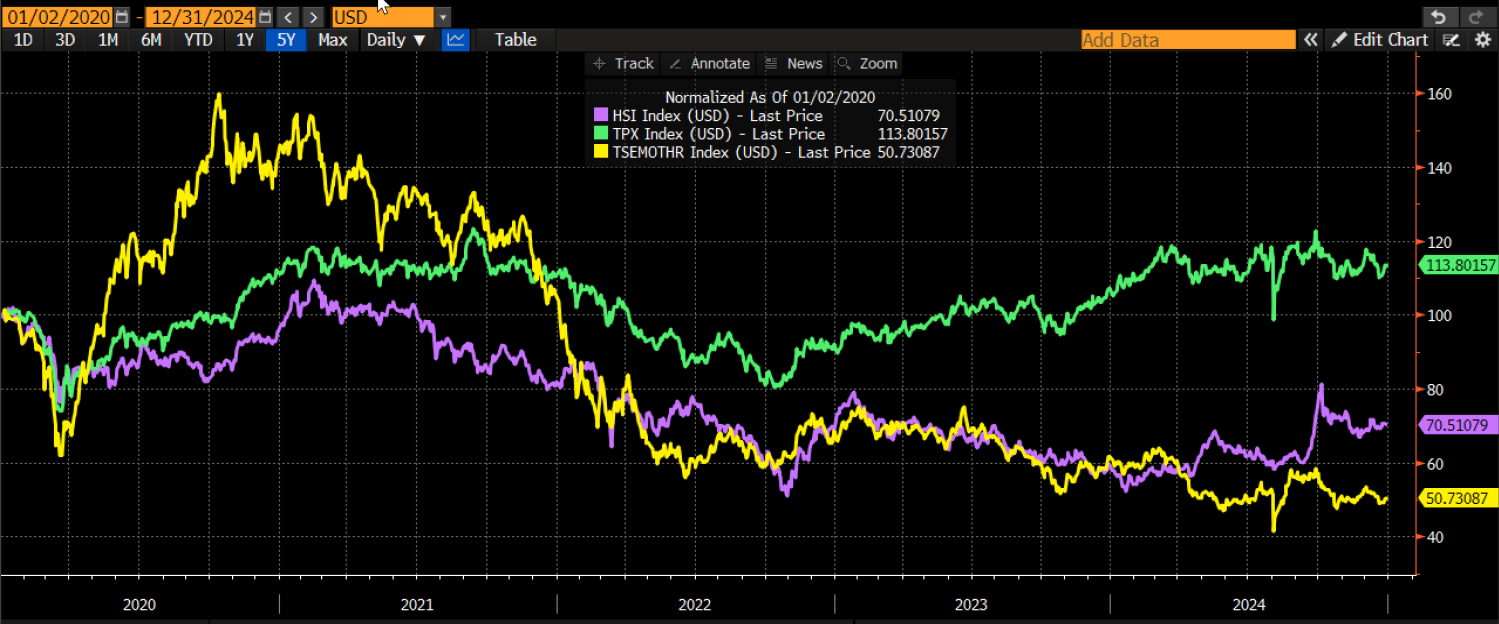
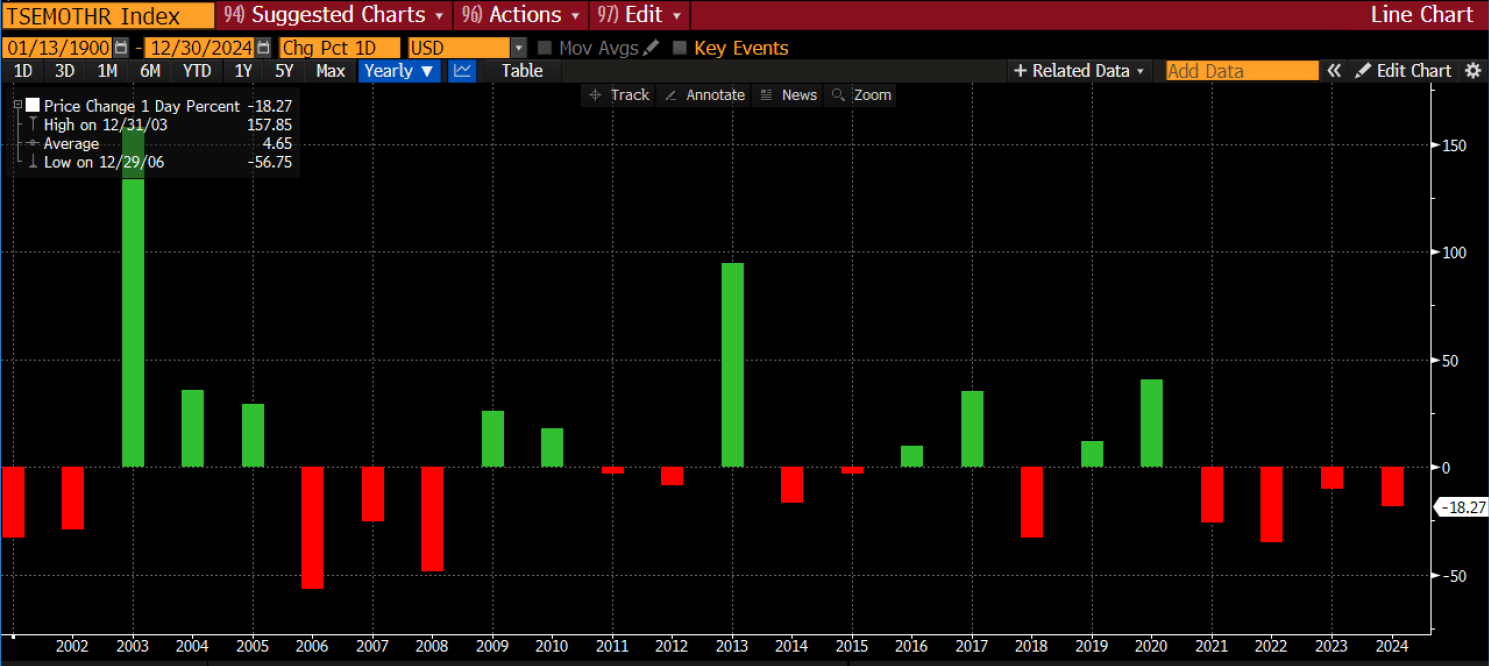
- Significant valuation dislocation exists in the Japanese small-cap market: Although constituent companies of the TSE Growth Market 250 Index have shown strong revenue growth, the index has fallen approximately 50% over the past five years (in USD terms), underperforming even the Hang Seng Index (which fell about 15%). The author notes that the index has declined for four consecutive years, marking its longest losing streak since its inception in 1999, approaching extreme levels reminiscent of the "Great Depression," but this also suggests a potential reversal may be near.
- Counter-intuitive judgment: The market generally views Chinese/Hong Kong assets as "uninvestable," yet the Hang Seng Index rose 23% in 2024, breaking a four-year losing streak. Similarly, the author believes that some companies within the Japanese Growth Index are excessively undervalued, presenting opportunities for value recovery.
Key Arguments and Data
- Performance Attribution: Full-year returns were primarily driven by three takeover bids (L'Occitane, ESR, Descente), which collectively contributed over half of the gains. All strong-performing companies exhibited high earnings growth characteristics:
- SharkNinja: Revenue grew 30% and EPS grew 161% in the first nine months of 2024.
- Hitachi: Operating profit increased 16% year-over-year over the same period.
- Genda: EBITDA grew 55% year-over-year over the same period.
- Tencent: Net profit grew 58% in the first nine months.
- DPC Dash (Domino's China): LTM EBITDA grew 128% as of June.
- Underperforming companies experienced earnings contraction.
- Structural Issues in the Japanese Small-Cap Market:
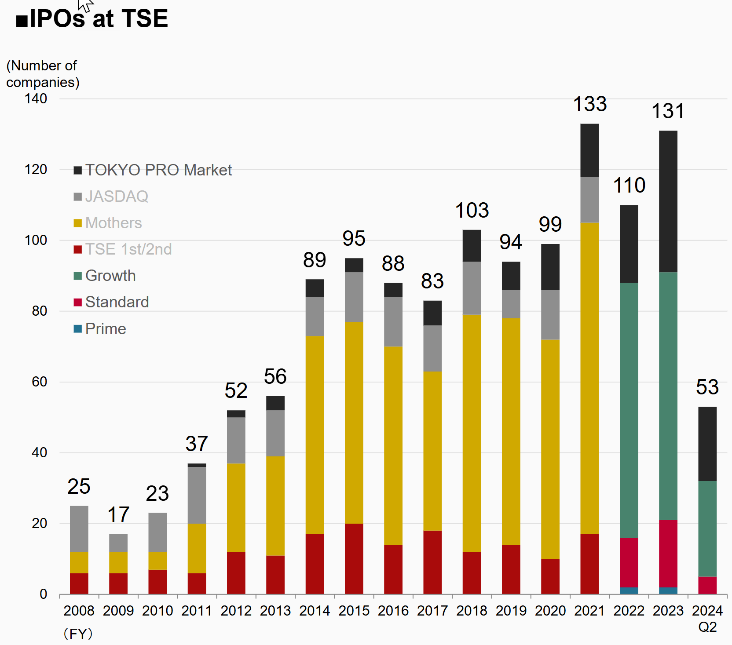
- Among the constituents of the TSE Growth Market 250 Index (formerly the Mothers Index), many companies went public early due to low listing thresholds (minimum market cap of only ¥500 million, approximately $3.2 million), but have weak profitability. In 2021, approximately 76% of Japanese startups exited via IPO, far higher than in Europe (33%) and the US (10%).
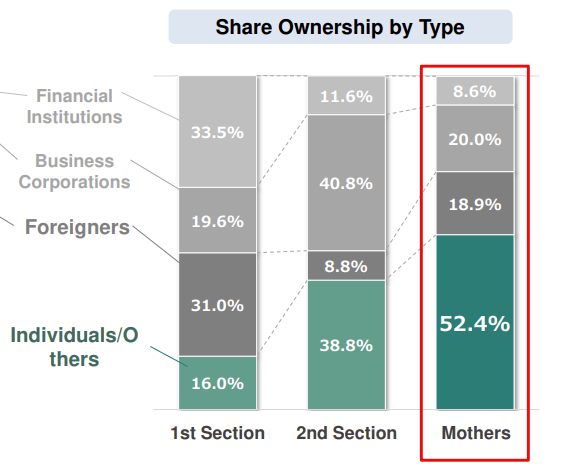
- The index has had negative earnings per share since 2019 and is dominated by retail investors who focus more on P/E ratios than unit economics. Institutional investor participation is low, and research coverage is sparse.
- Comparative data (USD terms, past five years):
| Index | Price Change |
|---|---|
| TSE Growth Market 250 Index | -50% |
| Hang Seng Index | -15% |
| TOPIX | +26% |
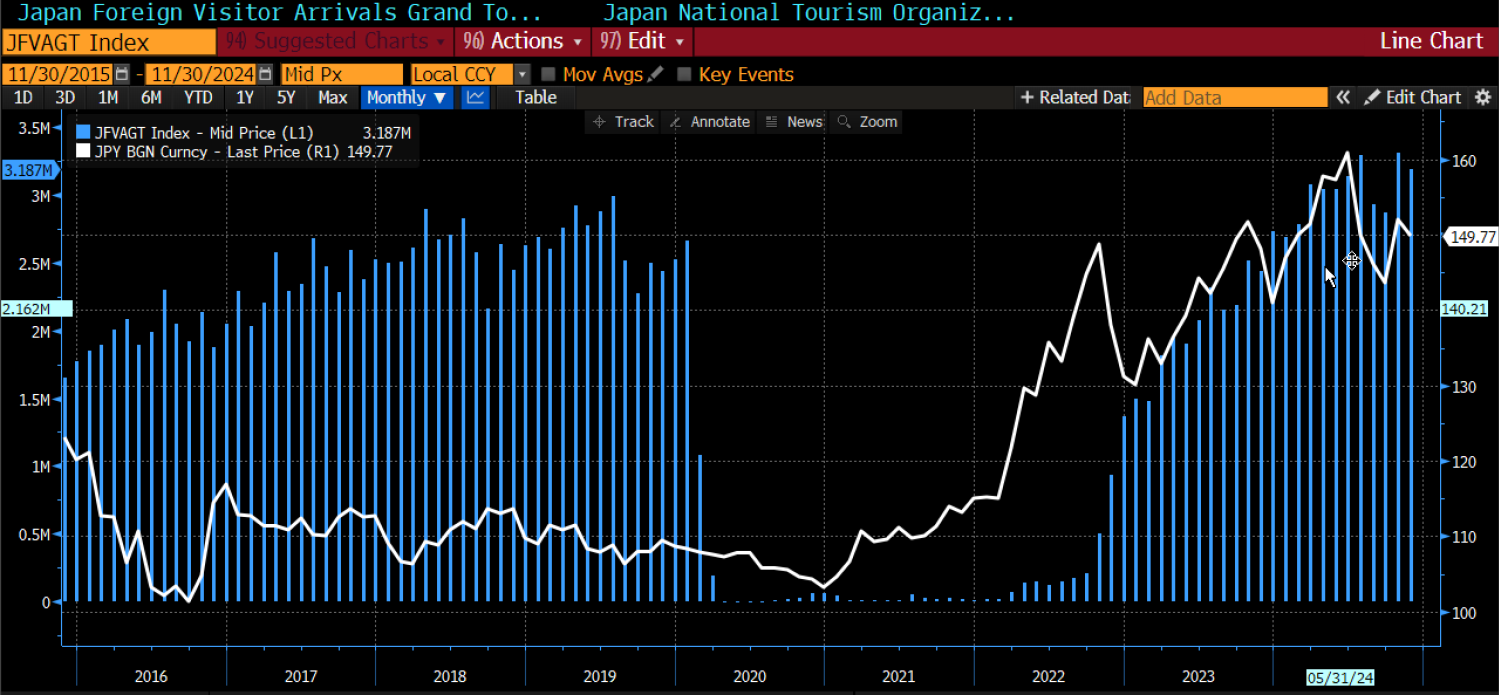
- Undervalued Yen and Foreign Inflows: The yen is significantly undervalued, and the number of foreign tourists visiting Japan has hit record highs (Source: Bloomberg). Foreign capital (e.g., KKR) is actively acquiring cheap Japanese assets, which the author believes provides arbitrage opportunities for investors.
Companies/Assets Involved
- L'Occitane (Hong Kong-listed): Controlling shareholder launched a tender offer, contributing major returns. Bullish.
- ESR (Hong Kong-listed): Controlling shareholder launched a tender offer, contributing major returns. Bullish.
- Descente (Japan-listed): Parent company Itochu launched a tender offer, contributing major returns. Bullish.
- SharkNinja: High revenue and EPS growth (9M24: Revenue +30%, EPS +161%). Bullish.
- Hitachi: Operating profit growth (9M24: +16% YoY). Bullish.
- Genda: EBITDA growth (9M24: +55% YoY). Bullish.
- Tencent: Net profit growth (9M24: +58%). Bullish.
- DPC Dash (Domino's China): EBITDA growth (LTM June: +128%). Bullish.
- Japanese Small-Caps (TSE Growth Market constituents): Overall undervalued, but the author believes some companies with sustainable high growth and sound unit economics present investment opportunities. Bullish (selectively).
Investment Implications
- Focus on overlooked "China-linked" assets: Companies listed in Hong Kong but with primary business outside mainland China (e.g., L'Occitane, ESR) are undervalued due to listing location bias. Active takeovers by controlling shareholders signal value realization. Investors can seek similar targets.
- Contrarian positioning in Japanese small-caps: The TSE Growth Market has fallen for four consecutive years, with valuations at historically extreme lows, yet some companies have strong revenue growth and healthy unit economics. The author believes that as these companies transition from an investment phase to a profitability phase (needing to meet TSE Prime listing requirements: two consecutive years of profitability, total profit of ¥2.5 billion), market perception may reverse, generating excess returns.
- Leverage the undervalued yen and foreign inflow trends: A weak yen attracts foreign capital to acquire Japanese assets. Investors can focus on small-caps targeted by foreign or industrial capital, especially those with capital efficiency (asset-light, reinvesting profits) but penalized by the market.
- Beware of companies with earnings contraction: Underperforming companies in the fund all experienced earnings declines, validating the logic that "earnings growth is the core driver of stock prices." Investors should prioritize targets with high earnings growth or those nearing a turnaround to profitability.
New Arguments, Data, and Views
1. Quantitative Evidence of Valuation Compression in Japanese Growth Stocks
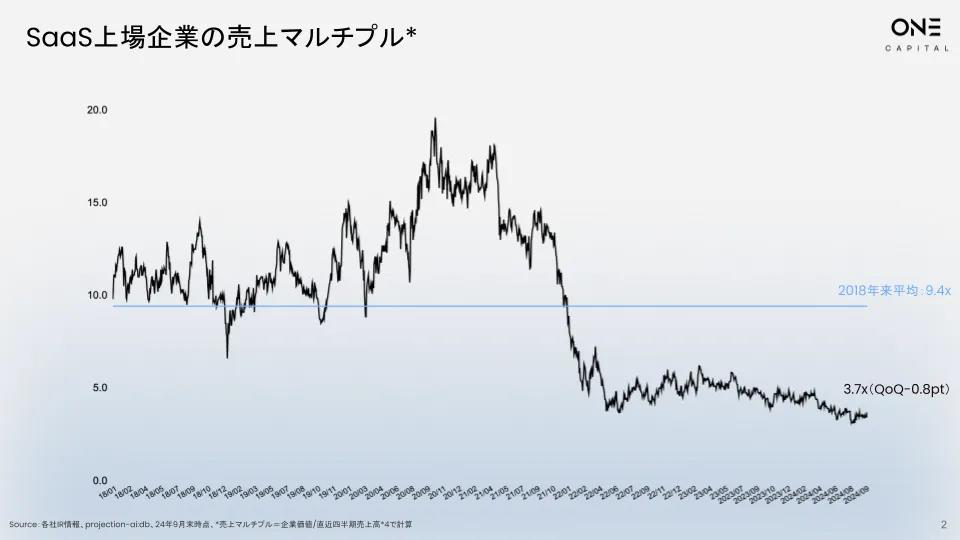
Data from One Capital shows that the Japanese SaaS Index had fallen to less than 4x LTM revenue by the end of Q3 2024, while revenue growth rates and profit margins were continuously improving. This combination of "valuation compression + fundamental improvement" closely resembles the historical pattern seen in Hong Kong's Hang Seng Index after three consecutive years of negative returns in 2023. According to historical data, after each of the three instances where the Hang Seng Index posted three consecutive years of negative returns, it subsequently delivered five years of positive returns. The current degree of valuation compression in the Topix Growth Index may signal a similar mean-reversion opportunity.
2. Genda's Valuation vs. Growth Comparison
The case of Genda further reinforces the "growth stock turning into value stock" theme. Despite its seemingly high P/E (40x trailing / 28x forward), its EBITDA multiple is only 11x NTM, with EBITDA growing at least 40% annually. Its acquisition of ActPro (exchanging shares at 28x P/E for assets at 7x FCF) demonstrates a significant cash-accretion effect. Compared to the Japanese SaaS Index's 4x revenue valuation, Genda's EBITDA multiple is at a historical low.
| Metric | Genda | Japanese SaaS Index (Q3 2024) |
|---|---|---|
| Valuation Multiple | 11x NTM EBITDA | <4x LTM Revenue |
| Growth Rate | EBITDA >40% YoY | Revenue growth continuously improving |
| Analyst Coverage | Only 4 Japanese brokerages | No foreign coverage |
| Acquisition Valuation | ActPro acquired at <7x FCF | Industry average acquisition multiple higher |
3. Visional's Business Model and Structural Changes in Japan's Labor Market
Visional's BizReach platform operates with a 90% gross margin and a 40% operating margin, with revenue growing approximately 15% annually. Its core competitive advantages include:
- Bilateral Network Effects: 2.7M registered job seekers (19% of the mid-to-high-end market), 16,000+ active employers, 8,000+ active recruiters.
- Pricing Advantage: Charges only 15%, far lower than traditional recruiters' 35%-50%.
- Market Penetration Potential: Japan's average employee tenure is 12.3 years (vs. 4.3 years in the US), but real wages fell 2.2% in 2023 (the largest decline since 2014), which is loosening the "lifetime employment" culture. In 2023, 50% of Toyota's new hires were mid-career recruits, indicating a shift at large corporations.
4. Saizeriya's Operational Efficiency and Inflation Beneficiary Logic
Saizeriya has maintained its signature dish price at ¥300 for 24 years (even reducing it from ¥480 to ¥290) while sustaining a 55% gross margin. Its core lies in:
- Vertically Integrated Supply Chain: Owns Australian factories (vegetables, white sauce, beef), directly sources olive oil and wine from Europe, and processes ingredients internally.
- Central Kitchen Model: Standardized production reduces store-level operating costs.
- Beneficiary Logic in an Inflationary Environment: Rising inflation in Japan (real wages fell 2.2% in 2023) actually strengthens Saizeriya's "extreme value for money" positioning, attracting price-sensitive consumers. Compared to the US restaurant industry, similar models (e.g., McDonald's) typically gain market share during inflationary periods.
5. Portfolio Adjustments and Market Sentiment Indicators
In 2024, the fund bought 13 companies and sold 8, with the majority of purchases concentrated in Japan. New additions in Q4, Visional and Saizeriya, both fit the "growth stock turning into value stock" theme. Notably, Genda, a top 10 constituent of the TSE Growth Index (market cap $1.2B, average daily trading volume $23M), has no foreign brokerage coverage, only 4 Japanese brokerages, of which only SMBC Nikko has an institutional business. This "neglected" status is similar to the Hong Kong market in 2023, potentially signaling a reversal opportunity.
6. Historical Patterns and Current Market Analogies
| Historical Event | Current Market Analogy |
|---|---|
| After three consecutive years of negative returns, the Hang Seng Index delivered five years of positive returns each time | Topix Growth Index has been the worst performer for four consecutive years |
| Hong Kong market was "hated and neglected" in 2023 | Japanese growth stocks' valuations compressed to value stock levels |
| Japanese SaaS Index fell to <4x revenue | Numerous growth companies becoming "value investment" targets |
7. Risk Warnings and Key Assumptions
- Yen Exchange Rate Risk: Although companies reliant on domestic revenue are less affected by FX fluctuations, rising Japanese interest rates from the bottom could impact growth stock valuations.
- Speed of Labor Market Change: The shift away from Japan's "lifetime employment" culture may be slower than expected, impacting Visional's growth.
- Inflation Persistence: If Japanese inflation subsides, Saizeriya's value advantage may weaken.
- Acquisition Integration Risk: Genda's acquisition strategy relies on continuously buying at low prices; if target company valuations rise, returns could be affected.
New Arguments and Data Analysis
Saizeriya's Japan Market Expansion Potential and Cost Pressures
- Capacity Constraints and Profit Recovery: Although Saizeriya achieved 20% same-store sales growth (SSSG) in Japan through its low-price strategy, with foot traffic contributing the vast majority of growth, the surge in traffic has led to insufficient capacity at existing factories, forcing the company to source raw materials from third parties, significantly compressing gross margins. We expect gross margins to gradually recover as the supply chain is optimized (e.g., new factories coming online or logistics efficiency improvements). Historical data shows Saizeriya's gross margin was 62.5% in FY2023, falling to 60.8% in the interim FY2024; it could potentially recover to over 65% after supply chain improvements.
- Geographic Expansion Potential: Saizeriya has yet to enter 5 of Japan's 47 prefectures (Kochi, Nagasaki, Miyazaki, Kagoshima, Okinawa) and recently opened its first stores in Ehime, Tokushima, and Oita prefectures. Average revenue per store in newly entered regions is approximately 50% higher than existing stores, primarily due to lower competition and higher consumer acceptance. In smaller cities, rental and labor costs are lower, significantly optimizing the unit economic model. For example, the first store in Matsuyama City, Ehime Prefecture, achieved average monthly revenue of ¥12 million, compared to ¥8 million for a comparable Tokyo store, but with rental costs only 60% of Tokyo's.
- Price Competitiveness Comparison: Saizeriya's pricing has moved beyond traditional "family restaurant" territory, even undercutting fast food and supermarket frozen food. Below is a price comparison (in Yen):
| Category | Saizeriya Price | Competitor Price | Price Difference |
|---|---|---|---|
| Milano Doria | 300 | Supermarket frozen food (e.g., Aeon) 450 | 33% lower |
| Big Mac (McDonald's) | 480 | +23% vs 2023, +63% vs 2000 | 38% lower |
| Pasta Set | 400 | Yoshinoya Beef Bowl 500 | 20% lower |
- China Market Performance: Saizeriya has 415 stores in China. Against a backdrop of macroeconomic weakness, its low-price strategy has sparked a "Saizeriya disciple" phenomenon (users sharing meal combinations on Xiaohongshu). The payback period for Chinese stores is only 1.5-2 years, indicating an excellent unit economic model. For example, Shanghai stores achieve an average daily table turnover rate of 4.5 times, compared to an industry average of 2.8 times. The scalability in the Chinese market is enormous, with the potential to double the store count to 800 over the next three years.
Analysis of Other Holdings' Contributions
- SharkNinja: Adjusted net sales grew 33% YoY in the first nine months of 2024, with adjusted EBITDA up 32%. Although Q4 guidance was weak due to the US election and tariff concerns, third-party data (e.g., NPD Group) shows actual Q4 sales were strong, growing approximately 25% YoY. Internationally, the UK accounted for 40% of 9M24 sales, the German market has potential to exceed the UK (estimated 2025 sales of £500 million), and the French market could reach 60-80% of the UK's scale. Both Germany and France achieved triple-digit growth (Germany +120%, France +95%). The company's 24-hour global product development team continues to launch viral products (e.g., FlexBreeze fan), with social media user-generated content contributing approximately 30% of revenue growth.
- L'Occitane: Majority shareholder Reinold Geiger privatized the company at HK$34 per share; we exited in Q2. The privatization premium was 15% above the 30-day average price, and the implied EV/EBITDA of 12x is below the industry average of 15x, but considered reasonable given slowing brand growth (FY2024 revenue up only 3%).
- Hitachi: Q2 FY2024 (November) results showed revenue growth of 11% YoY (9% excluding FX) across its three core segments (Digital, Green Energy, Connected Industry), with adjusted EBITDA up 23%. Following a CEO change, the new CEO Tokunaga (former head of the Digital business) will drive AI and digital solution integration, aiming to increase the Digital segment's revenue contribution from 25% to 35% by FY2025, boosting overall profit margins by 2 percentage points.
- MGM China: Market share rose from 9.5% in 2019 to 15.9% in the first nine months of 2024, primarily due to a 36% increase in gaming tables granted upon license renewal in 2023. 9M24 adjusted EBITDA grew 37% YoY, with average daily visitor numbers recovering to 85% of 2019 levels, compared to an industry average of 78%. Macau's mass-market gaming revenue share rose from 55% in 2019 to 68% in 2024, with MGM China holding an 18% share of the mass market, higher than Wynn (14%) and Sands (16%).
- ESR Group: Received a takeover offer in December 2024 from a consortium led by Starwood Capital at HK$13 per share, implying a price-to-book ratio (excluding goodwill) of 1x and a price/tangible net asset value of 3x. The offer represents a 20% premium over the 6-month average price but is below ESR's 2021 IPO price (HK$16.8). ESR's Asia-Pacific logistics portfolio occupancy remains at 92%, and data center business revenue grew 45% YoY, but the acquisition price reflects market concerns over rising interest rates and asset revaluations.
Summary of Comparative Data
| Company | Key Metric | Current Value | YoY Change | Industry Average |
|---|---|---|---|---|
| Saizeriya (Japan) | Gross Margin | 60.8% | -1.7pp | 55% |
| Saizeriya (China) | Store Payback Period | 1.5-2 years | Stable | 3-4 years |
| SharkNinja | International Sales % | 40% | +5pp | 30% |
| MGM China | Market Share | 15.9% | +6.4pp | 12% |
| ESR Group | Occupancy Rate | 92% | -1pp | 88% |
Supplementary Key Views
- Saizeriya's Long-Term Competitive Advantage: In an inflationary environment, Saizeriya's pricing power makes it a "deflation winner." Japan's consumer confidence index fell from 35 in 2023 to 32 in 2024, while Saizeriya's average ticket is only ¥300-500, far below the family restaurant average of ¥1,500. In China, under the "consumption downgrade" trend, Saizeriya's ¥18 Milano Doria has become a value benchmark, with over 100,000 related posts on Xiaohongshu and a natural traffic conversion rate of 5%.
- SharkNinja's Innovation Moat: The company launches 50+ new products annually, 30% of which originate from social media user feedback. The 2024 hit product "Ninja Creami" ice cream maker garnered 200 million views on TikTok, boosting its North American small appliance market share from 12% to 15%. In international expansion, the German market achieved rapid penetration through localized products (e.g., vacuum cleaners adapted for European voltage), with Q4 2024 German sales up 150% YoY.
- Hitachi's Digital Transformation: The "Digital + AI" strategy led by new CEO Tokunaga is showing results, with the Digital business achieving an 18% profit margin in 2024, higher than the traditional industrial business (12%). The company plans to increase the Digital segment's revenue contribution to 50% by 2027 and exit the low-margin automotive parts business (having already sold a 50% stake in 2024).
New Arguments and Data Analysis
Baidu: Long-Term Potential and Short-Term Pain of AI Search Transition
- User Behavior Data Highlights: Although AI-generated search results are not yet monetized, user engagement has significantly improved. Data shows that users exposed to AI search spend 15-20% more time on Baidu, and their queries become more complex (e.g., multi-turn interactions or long-tail questions), laying the groundwork for future targeted advertising and monetization. Management estimates that monetizing 20% of currently unmonetized AI search results by FY2025 could boost advertising revenue by 8-12%.
- Autonomous Driving Cost Advantage: The RT6's production cost of $30,000 is already below the industry average (e.g., Waymo's $50,000+), and after replacing the Wuhan fleet, Apollo Go's breakeven point has dropped from 20 rides per vehicle per day to 15. Compared to FY2024, the unit economics loss rate has narrowed from -25% to -10%, with a target of achieving positive EBITDA by FY2025.
- Partner Signal: If Apollo Go achieves unit economic breakeven by FY2025, potential partners (e.g., local governments or logistics companies) could reduce Baidu Group's capital expenditure by 30-40%, accelerating autonomous driving commercialization.
Samsonite: Signs of Resilience Amidst Competitive Pressure
- India Market Dynamics: Rumors of a PE acquisition of VIP Industries (Samsonite's main competitor in India) (valuation ~$500 million) could alleviate price war pressures. Samsonite's India market share fell from 35% in FY2023 to 30% in FY2024, but if VIP Industries restructures, Samsonite could regain 2-3% share in FY2025.
- Financial Discipline Comparison: Despite declining revenue, Samsonite's adjusted EBITDA margin fell only 90bps to 18.5%, outperforming competitors (e.g., Samsonite International's margin fell 150bps). Management repurchased $120 million in stock in 9M24 (1.5% of total shares outstanding), signaling confidence in long-term value.
- Impact of US Dual Listing: A US listing in FY2025 is expected to attract $300-500 million in incremental funds (due to US investor restrictions on HK-listed stocks), potentially driving valuation recovery (current P/E of 12x, below the industry average of 15x).
Naver: Cost Control and Market Share Expansion
- Cost Reduction Effectiveness: Losses in the Content and Cloud segments narrowed by 40% in 9M24 (from $120 million to $70 million), driving eight consecutive quarters of sequential EBITDA growth. Compared to FY2023, the overall operating margin improved from 12% to 15%, approaching industry-leading levels (e.g., Google's 18%).
- E-commerce Market Fragmentation Opportunity: 50% of the Korean e-commerce market is held by small players. Naver's GMV growth (10%) has exceeded the market average (6%). Benefiting from competitors' liquidity crises (e.g., Coupang), Naver added 2 million active buyers in Q3 2024, increasing its market share from 22% to 24%.
- Search Ad Growth Driver: AI-targeted advertising improved ad inventory utilization by 12%, with ad prices (CPC) rising 5% and ROAS (return on ad spend) improving by 8%. Compared to Google's search ad growth in Korea (7%), Naver's 9.5% growth demonstrates a differentiated advantage.
Amvis Holdings: Structural Growth in Japan's Hospice Care Market
- Financial Performance Comparison: FY9/24 revenue grew 33% to $250 million, EBITDA grew 27% to $80 million, with a stable margin of 32%. Although growth rates are slightly below FY9/23 (revenue +38%, EBITDA +35%), Japan's accelerating aging population (29.5% aged 65+) provides support for long-term demand.
- Competition and Regulatory Risks: The Japanese hospice care market is fragmented (top 5 players hold 30%). Amvis is expanding its share by adding 5 new facilities (total beds reaching 1,200). However, the government may adjust reimbursement rates in FY2025 (estimated 3-5% cut), potentially compressing profit margins by 2-3 percentage points.
Comparative Data Table
| Company | Key Metric | FY2024 Data | FY2025 Target/Forecast | Industry Comparison |
|---|---|---|---|---|
| Baidu | AI Search Monetization Rate | 0% | 8-12% | Google AI Search Monetization Rate 5% |
| Baidu | RT6 Production Cost | $30,000 | $28,000 (scale effect) | Waymo $50,000+ |
| Samsonite | India Market Share | 30% | 32-33% | VIP Industries 28% |
| Samsonite | Adjusted EBITDA Margin | 18.5% | 19-20% | Industry Average 17% |
| Naver | Search Ad Growth Rate | 9.5% | 10-12% | Google Korea 7% |
| Naver | E-commerce GMV Growth | 10% | 12-15% | Korea Market Average 6% |
| Amvis | Revenue Growth Rate | 33% | 28-30% | Japan Industry Average 20% |
| Amvis | EBITDA Margin | 32% | 30-31% | Industry Average 28% |
Supplementary Key Views
- Baidu's AI Transition: Short-term advertising revenue is under pressure, but improved user behavior data and autonomous driving cost advantages support a potential inflection point in FY2025. Successful monetization of AI search could generate $1.0-1.5 billion in incremental revenue.
- Samsonite's Defensiveness: Despite weak demand, financial discipline and changing competitive dynamics in India (VIP Industries sale) could drive FY2025 revenue recovery to GDP+ levels (approximately 3-5% growth).
- Naver's Moat: Cost control and e-commerce market share expansion (benefiting from competitor crises) provide structural advantages in the Korean market, with FY2025 operating profit expected to grow 20-25%.
- Amvis's Long-Term Logic: Japan's aging trend is irreversible, but regulatory risks need monitoring. FY2025 revenue growth may slow to 28-30%, but EBITDA margins are expected to remain above the industry average.