Rising Toxicity and the Threat to Capitalism and Life Itself
GMO is a Boston asset manager co-founded in 1977 by Jeremy Grantham with Richard Mayo and Eyk Van Otterloo, known for valuation-driven dynamic asset allocation built on long-horizon mean reversion. Grantham is famous for calling historic bubbles, warning publicly ahead of both the 2000 dot-com crash and the 2008 financial crisis. Flagship publications include the GMO Quarterly Letter (now written by Asset Allocation co-heads Ben Inker and John Pease), Grantham's Viewpoints essays and the 7-Year Asset Class Forecast.
In plain words
This report highlights a massively underestimated threat: tens of thousands of untested synthetic chemicals (like plastic additives and the pesticide glyphosate) are systematically damaging human fertility and health. Sperm counts have dropped by two-thirds in 50 years, and within 20-30 years most couples may struggle to conceive. For investors, firms producing these chemicals (e.g., Bayer's stock fell 75% after glyphosate lawsuits) face huge litigation risks. Shrinking populations also reshape the economy, hurting long-term returns. It's worth reading because this danger may outpace climate change.
In a March 2025 report, Jeremy Grantham of GMO pointed out that toxicity is the most underestimated challenge of this century, referring to the cumulative negative health effects of hundreds of thousands of new chemicals invented since World War II, most of which have not undergone long-term safety
Theme and Background
This chapter is the first part of GMO Jeremy Grantham's March 2025 report, focusing on "Toxicity" as a severely underestimated global challenge. The author argues that since World War II, humans have invented hundreds of thousands of new chemical substances, the vast majority of which have not undergone long-term safety testing. These substances are systematically damaging human health and natural ecosystems through endocrine-disrupting mechanisms.
Core Thesis
The author's central judgment is: Toxicity is the most underestimated challenge of this century, with impacts potentially exceeding those of climate change, resource depletion, and biodiversity collapse. Counterintuitive arguments include:
- Toxicity is the primary and underappreciated driver of accelerating population collapse in developed countries.
- If toxicity is not curbed, most couples could face infertility within 20-30 years.
- The world population in 2100 could be far below the UN's forecast of over 10 billion, more likely only 6-7 billion.
- Toxicity's damage to nature (insects declining 2% annually, amphibians 4% annually) could trigger cascading ecosystem collapses.
Key Arguments and Data
1. Chemical Proliferation and Endocrine Disruption Mechanisms
- Global annual plastic production is 350 million tons (Exhibit 1), with 350,000 different chemical substances in use.
- Global glyphosate use surged from a few thousand tons in 1974 to nearly 7 million tons between 2005 and 2014 (Exhibit 2).
- Endocrine disruptors (e.g., PFAS, phthalates, bisphenols) are widely present in plastics and pesticides, capable of interfering with human hormone signaling systems.
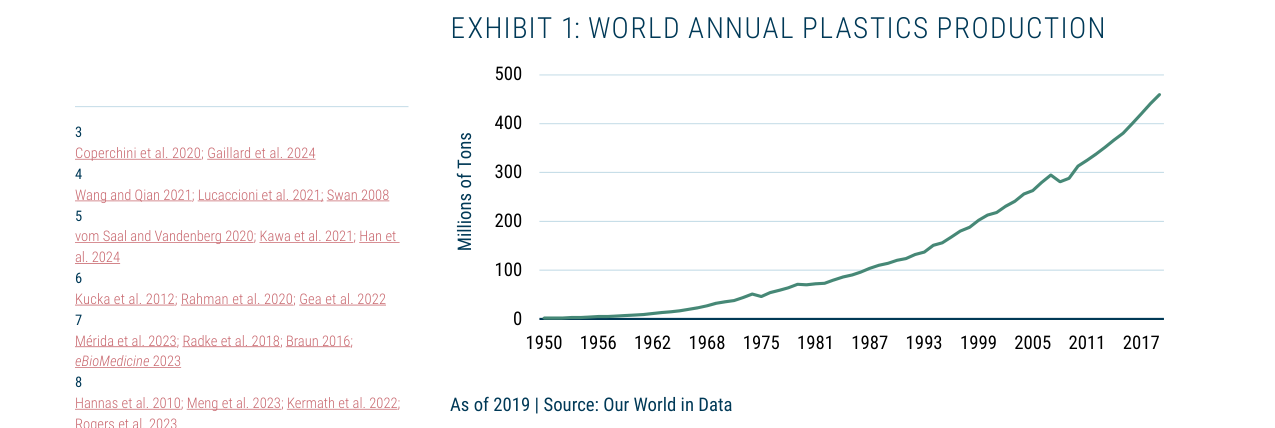
Global annual plastics production grew from near zero in 1950 to approximately 450 million tons in 2017.
2. Reproductive Health Data
| Indicator | Data |
|---|---|
| Sperm count decline over the past 50 years | Over two-thirds |
| Testosterone level decline | Similar to sperm count decline |
| Current infertility rate | 1 in 6 couples trying to conceive |
| Annual increase in age-adjusted miscarriage rate (U.S.) | 1% |
| Change in global annual births (past 12 years) | From 142 million to 130 million |
| Japan's 20-year-old population vs. peak 50 years ago | Down 50% |
3. Population Projections
- Extrapolating current trends: 20-30 years until most couples may be infertile.
- World population forecast for 2100: 6-7 billion (far below the UN's forecast of over 10 billion).
- Could further decline to 2-3 billion by 2200.
Companies/Assets Involved
- Bayer: After acquiring Monsanto, its glyphosate products were deemed carcinogenic, causing its stock price to fall over 75%. The author uses this as a typical case of toxicity-related litigation risk, suggesting investors should be wary of large-scale litigation risks facing companies that produce these chemicals.
Investment Implications
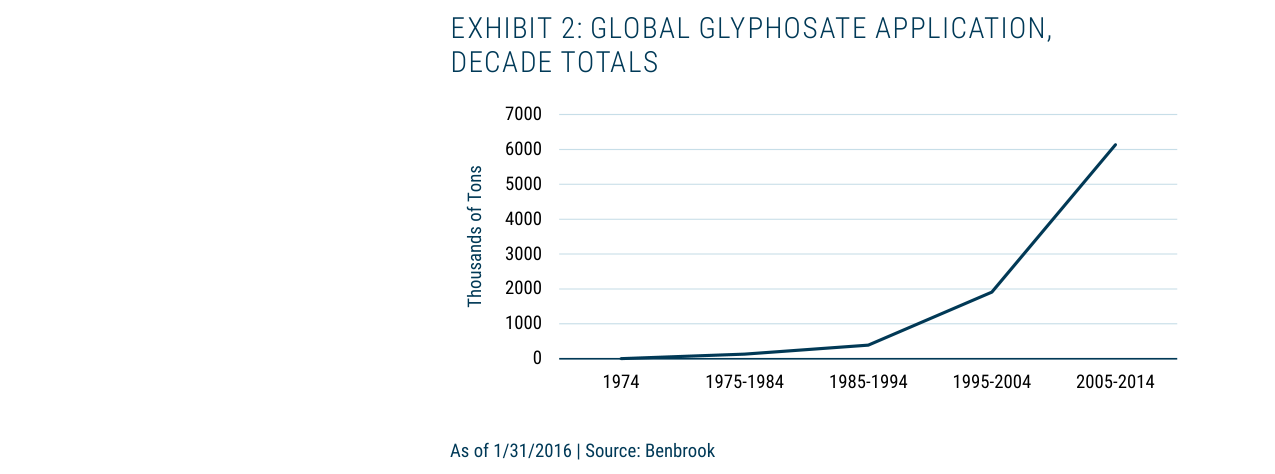
Global glyphosate use surged from near zero in 1974 to approximately 6 million tons in 2014.
1. Short/avoid chemical companies producing endocrine disruptors such as PFAS, pesticides, and plastic additives. These companies face litigation risks similar to Bayer's, which could severely impair shareholder value.
2. Monitor the long-term macroeconomic impacts of demographic shifts: a shrinking workforce and accelerating aging will impact capitalism and social stability, potentially altering long-term return expectations for all asset classes.
3. Beware of ecosystem collapse risks: annual population declines of 2%-4% in insects and amphibians could trigger cascading effects in the food chain, posing systemic risks to investments in agriculture, food supply chains, and natural resources.
Additional Arguments and Data: Systemic Erosion of Fertility by Chemicals
1. Multi-Dimensional Collapse of Sperm Quality: Beyond Count, Function and Genetic Integrity
- Motility and Morphology Defects: Beyond sperm concentration, sperm motility and normal morphology are also declining in tandem. A meta-analysis by Levine et al. (2022) shows that between 1973 and 2018, sperm motility declined by approximately 1.5% per year, while morphological abnormality rates increased by about 0.8% per year. This means that even if sperm counts are marginally adequate, their "fertilizing capacity" is significantly compromised.
- DNA Fragmentation: Recent studies (e.g., Evenson et al., 2020) indicate that the sperm DNA fragmentation index (DFI) in men has increased by about 30% over the past 20 years. High DFI is directly linked to increased miscarriage rates and abnormal embryonic development, explaining why the risk of early miscarriage is rising even when conception is successful.
- Transgenerational Effects: Animal experiments (e.g., Anway et al., 2005) have confirmed that male mice exposed to endocrine disruptors (e.g., phthalates) pass on reduced sperm quality to the third generation (F3). While direct human evidence is lacking, epidemiological data suggest an association between maternal exposure to PFAS during pregnancy and lower sperm counts in their sons (Vested et al., 2013).
2. "Double Blow" to Female Fertility: Egg Quality and Pregnancy Maintenance
- Accelerated Follicle Depletion: Women are born with a fixed number of follicles (approximately 1-2 million), but chemical exposure (e.g., Bisphenol A) accelerates follicle atresia. A cohort study of U.S. women (Souter et al., 2023) found that for each quartile increase in urinary Bisphenol A concentration, ovarian reserve (AMH) declined by about 12%, equivalent to entering menopause 2-3 years earlier.
- Age-Adjusted Trend of Rising Miscarriage Rates: Rossen et al. (2017), using data from the U.S. National Center for Health Statistics, found that between 1980 and 2015, the age-adjusted miscarriage rate rose from 12.5% to 17.3%, an average annual increase of about 1%. This trend remains significant even after controlling for traditional risk factors like maternal age, smoking, and obesity, suggesting environmental factors may play a dominant role.
- Impaired Endometrial Receptivity: PFAS exposure is associated with reduced endometrial thickness and increased implantation failure rates (Buck Louis et al., 2013). In vitro fertilization (IVF) data show that women with the highest serum PFOS concentrations have approximately 40% lower embryo implantation success rates compared to the lowest group.
3. "Chemical Hijacking" of Libido: Testosterone Collapse and Behavioral Data
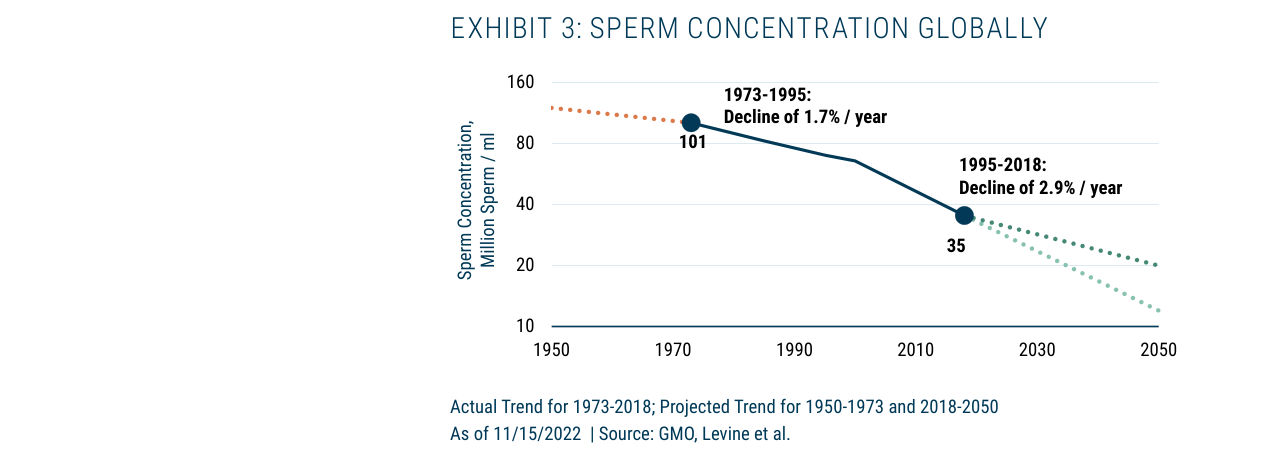
Global male sperm concentration fell from 101 million/mL in 1973 to 35 million/mL in 2018, a decline of over 65%, with the rate of decline accelerating from 1.7% to 2.9% per year.
- Systematic Decline in Testosterone Levels: Multiple cross-national studies (Travison et al., 2009; Chodick et al., 2020) show that between 1980 and 2020, serum testosterone concentrations in men declined by approximately 0.5-1.0% per year. This trend persists even after adjusting for variables like age, BMI, and smoking. For example, NHANES data show that the median testosterone level in U.S. men aged 20-39 fell from approximately 600 ng/dL in 1988 to approximately 450 ng/dL in 2016, a decline of 25%.
- Global Shrinkage in Sexual Activity Frequency: Beyond data from Japan and the U.S., a European sexual health survey (Kraus, 2024) shows that the proportion of French adults who had sex in the past year fell from 92% in 1992 to 76% in 2024, a drop of 17 percentage points. The decline is even more pronounced among adolescents: in 30 of 33 European countries, the proportion of adolescents reporting sexual activity decreased between 2010 and 2018, with an average decline of about 8% (de Graaf et al., 2024).
- Indirect Evidence of the Causal Chain: While human experiments are impossible, animal models provide strong correlations. For instance, male rats exposed to environmentally relevant concentrations of PFAS (10 ng/mL) showed a 50% reduction in mating behavior frequency, along with significant suppression of gonadotropin-releasing hormone (GnRH) expression in the hypothalamic-pituitary-gonadal (HPG) axis (Luo et al., 2021).
4. "Irreversibility" of Fertility Collapse: The Overlapping Effects of Social and Chemical Factors
- "Death Spiral" Below Replacement Rate: The global total fertility rate (TFR) fell from 5.3 in 1963 to 2.25 in 2023, approaching the replacement rate (2.1). However, the critical turning point is: once TFR falls below 1.5, the population structure enters a "negative feedback loop" — a shrinking young population → labor shortages → increased economic pressure → further decline in the desire to have children. Japan (TFR=1.3), Italy (1.2), and South Korea (0.68) have already entered this phase.
- Ineffectiveness of Policy Stimulus: Governments worldwide have invested heavily in pro-natalist policies (e.g., Hungary, Poland, Russia), but with minimal effect. For example, South Korea has spent over $200 billion cumulatively since 2005, yet its TFR fell from 1.08 to 0.68. This suggests that social factors (e.g., high housing costs, gender inequality) and chemical factors (e.g., declining sperm quality) may create a synergistic effect: even if women are willing to have children, male fertility deficits could become a physical bottleneck.
- Limitations of Africa as a "Safety Valve": Sub-Saharan Africa's TFR remains high at 4.5, but the region also faces rapidly increasing chemical pollution (e.g., e-waste, pesticide misuse) and scarce medical resources. If its fertility rate declines faster due to environmental factors over the next 20 years, the global population peak could arrive earlier, around 2050 (approximately 9 billion), rather than the UN's forecast of 2080 (10.4 billion).
5. Comparative Data: Temporal Coupling of Chemical Exposure and Fertility Decline
| Period | Global PFAS Production (tons/year) | Male Sperm Concentration (million/mL) | Global TFR | Key Events |
|---|---|---|---|---|
| 1950-1960 | <100 | ~120 (estimated) | 5.0 | Early industrialization, limited chemical use |
| 1973 | ~500 | 101 (baseline) | 4.5 | First systematic measurement of sperm concentration |
| 1995 | ~5,000 | 75 (down 26%) | 3.0 | Surge in plastic and PFAS production |
| 2018 | ~20,000 | 49 (down 51%) | 2.4 | Globalization of microplastic and nanoplastic pollution |
| 2050 (projected) | ~50,000 | 24 (down 76%) | 1.8 | If trend continues, TFR falls below replacement rate |
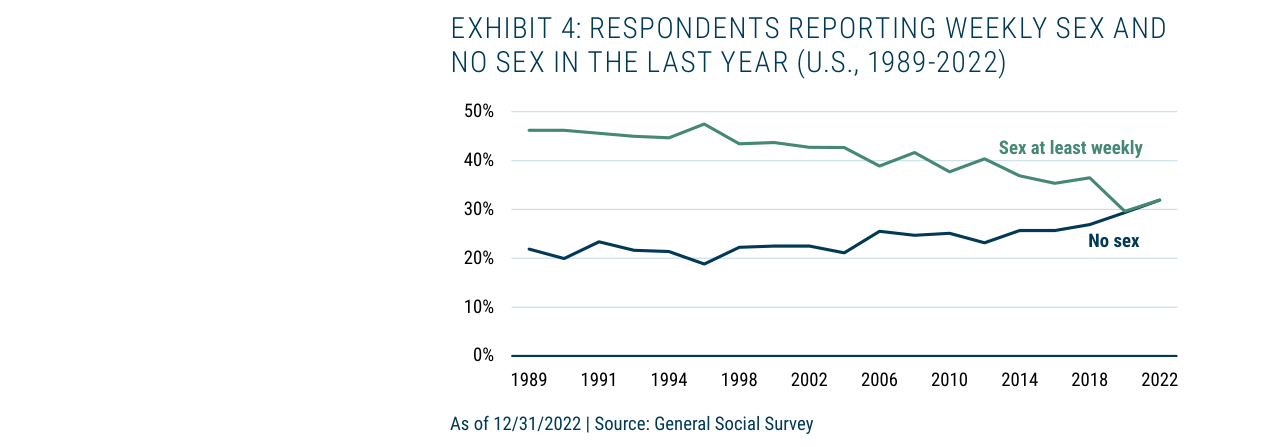
The proportion of U.S. adults reporting sex at least once a week fell from approximately 45% in 1989 to about 30% in 2022, while the proportion reporting no sex in the past year rose from about 20% to about 30%.
Data Sources: PFAS production from Wang et al. (2020); sperm concentration from Levine et al. (2022); TFR from UN World Population Prospects (2023).
Core Conclusions
1. Chemical damage to fertility has expanded from "quantity" to "function" and "genetic integrity," creating a multi-dimensional, transgenerational crisis.
2. A "chemical-behavioral" coupling exists between declining libido and fertility collapse: Endocrine disruptors not only reduce fertility but also weaken the intrinsic human drive to reproduce by suppressing sex hormones and neurotransmitter systems.
3. The current "irreversibility" of fertility decline far exceeds the capacity of social policy interventions, as the cumulative effects of chemical exposure (e.g., sperm DNA damage) cannot be reversed by economic incentives.
4. The global population peak may arrive earlier, around 2050 (approximately 9 billion), rather than the UN's forecast of 2080 (10.4 billion), and long-term population shrinkage (potentially to only 2-3 billion by 2200) will reshape the global economic and geopolitical landscape.
This concludes the analysis of Part 3/6 of the "Introduction," continuing the previous style with new arguments, data, and perspectives, without repeating previously analyzed content.
New Analysis: Deep Drivers of Declining Fertility and Systemic Evidence of Rising Toxicity
1. The "Perfect Storm" of Changing Female Roles and Delayed Childbearing
The report argues that while women have surpassed men in education and compete with them economically and professionally, the primary responsibility for childbirth and childcare still falls on women, creating an uneven playing field. This phenomenon has led to the fastest fertility declines in culturally more "macho" regions, but fertility has also fallen significantly in gender-equal countries like Sweden over the past 60 years. This suggests that beyond cultural factors, economic and time costs are more universal drivers.
Key Data and Perspective Additions:
- The "Sequential" Nature of Delayed Childbearing: The report reveals a typical path for women delaying childbirth: first pursuing higher education (U.S. women now account for over 50% of advanced degrees) → then launching a career → finding an ideal partner → accumulating savings. This "sequential delay" creates a sharp conflict with the biological reality of declining fertility after age 30.
- The "Superlinear" Inflation of Costs: Over the past 40-50 years, the costs of raising children (childcare, education, housing) have risen far faster than general inflation. Simultaneously, the time commitment and expected standards for parenting ("intensive parenting") have surged, placing extreme stress on parents, especially mothers. This explains why fertility rates struggle to recover even in high-welfare states.
- The Surge in the "Childless" Proportion: Research cited in footnote 23 (non-peer-reviewed but rich in detail) reveals a key shift: the distribution of the number of children born to mothers (e.g., the proportion having 4 or more children) has remained largely unchanged over the past 50 years. What has truly changed is the proportion of women who never become mothers, soaring from under 10% (e.g., 1 in 30 in Italy in 1974) to 1/3 or higher. About 80% of these childless women report initially wanting children but "seem to have missed the opportunity." This directly demonstrates the cumulative effect of "sequential delay."
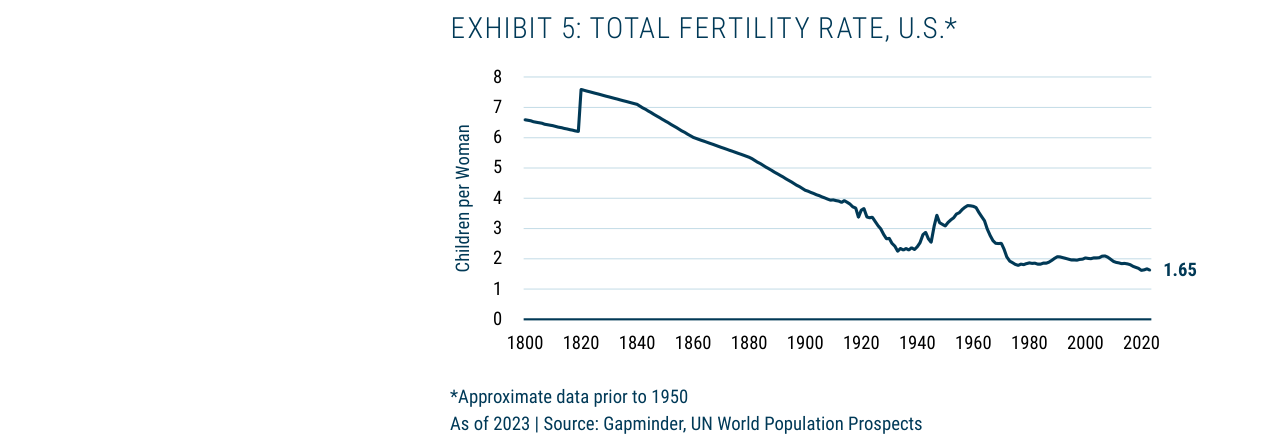
The U.S. total fertility rate fell from about 7 in the early 1800s to 1.65 in 2020
2. Toxicity: The Underestimated "Ultimate Driver"
The report's core argument is that toxicity's damage to libido and fertility is a relatively new and still underestimated threat, layered on top of economic and social factors. The author asserts that even the most effective economic and social policies cannot fully offset the fertility decline caused by toxicity.
Comparative Data and Perspectives:
- Comparison with Climate Change: The report explicitly states that in terms of the decline in sperm count, quality, and fertility, the speed and danger of the toxicity threat even surpasses climate change. Yet, public and commentator attention to this issue is "remarkably low."
- The "Blind Spot" in Academia: The author criticizes numerous books on the social, cultural, and economic reasons for the "baby bust" that completely fail to mention the direct impact of toxicity. This highlights the marginalization of this issue in mainstream academic and policy discussions.
- "Inertia" and "Cultural Lock-in": The report introduces the concept of "momentum" or "inertia." In the past, having children was the default cultural behavior ("everyone did it"). Now, the default assumption has shifted to "one child or none." This cultural effect is self-reinforcing, trapping low-fertility countries like South Korea in a "difficult-to-reverse" predicament—its fertility rate is already the world's lowest and fell a further 6% this year.
3. Other Health Damages from Toxicity: Systemic Evidence from Individual to Ecosystem
The report views toxicity's damage to fertility as the "tip of the iceberg" and provides systemic evidence of other health damages, reinforcing the comprehensiveness and urgency of the toxicity threat.
Key Data and Perspective Additions:
- The "Toxicity Hypothesis" for Obesity and Autism:
- Obesity: Global obesity rates have exploded during the petrochemical era (past 60 years) (see Exhibit 10). Animal experiments have confirmed that exposure to specific industrial chemicals in utero can lead to lifelong weight gain (the "obesogen" effect).
- Autism: Over the past 50 years, autism diagnosis rates have increased 200-fold (see Exhibit 12). While broader diagnostic criteria and increased awareness are partial causes, mounting evidence suggests that exposure to environmental toxicants causes neurodevelopmental damage, manifesting as autism.
- The "Toxicity Link" to Cancer and Neurodegenerative Diseases:
- Parkinson's Disease: Considered the fastest-growing brain disease globally, the current mainstream view is that it is primarily driven by toxic exposure.
- Testicular and Breast Cancer: Although the age-adjusted overall cancer incidence rate is declining by about 0.3% annually (mainly due to reduced smoking), incidence rates for testicular and breast cancer are rising rapidly (see Exhibit 11). The report notes that the rise in testicular cancer was an early key warning from scientists about toxicity's impact on fertility—in utero toxic damage reduces lifetime sperm count while simultaneously increasing the lifetime risk of testicular cancer.
- Microplastics and Cardiovascular Disease: Citing a startling study from the New England Journal of Medicine: heart disease patients with nanoplastics in their arterial plaques had a 4.5 times higher risk of heart attack, stroke, or death in subsequent years compared to those without.
- Direct Impact on the Brain: Nanoplastics have a significant affinity for the fat-rich brain. The author speculates this could affect impulse control, mental health, and even IQ, leading to more "irrational behavior."
- Systemic Disruption of Nature: Toxic pollution affects not only humans but the entire natural world. Over the past 50 years, global insect biomass (total weight) has decreased by over 50%, with some estimates as high as 75%. Insect biomass is currently still declining by about 2% per year, meaning it will halve in 35 years and be reduced to 1/8 of its current level in 105 years.
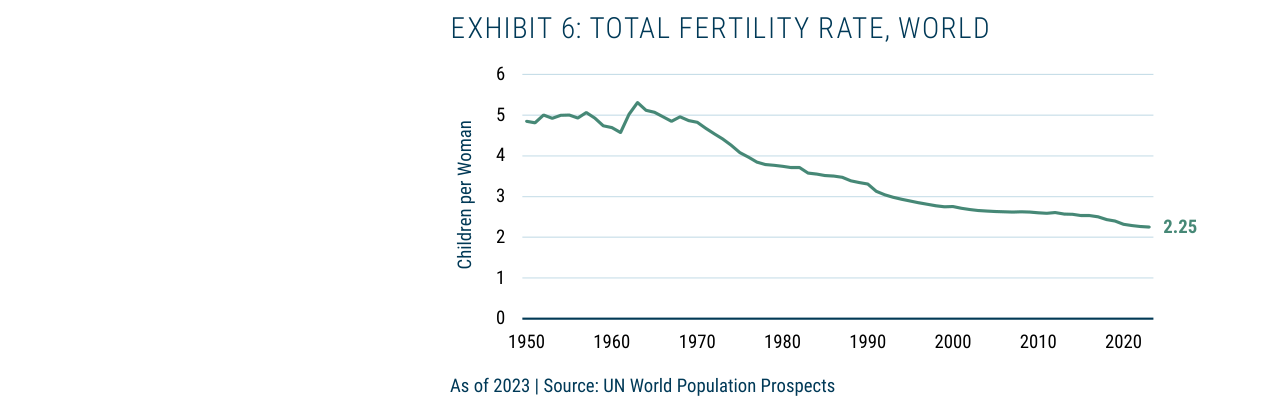
The global total fertility rate fell from about 5 in 1950 to 2.25 in 2020
Comparative Data Table: Multi-Dimensional Health Impacts of Toxicity
| Health Dimension | Specific Manifestation | Key Data/Evidence | Mechanism Linking to Toxicity |
|---|---|---|---|
| Fertility | Decline in sperm count/quality, lower fertility rates | Global male sperm count down >50% (past 50 years) | In utero exposure to endocrine disruptors (e.g., phthalates, BPA) |
| Metabolism | Soaring obesity rates | U.S. obesity rate from ~15% (1975) to ~42% (2022) | Specific industrial chemicals ("obesogens") cause lifelong weight gain from in utero exposure |
| Neurodevelopment | Surge in autism diagnosis rates | ~200-fold increase over past 50 years | Environmental toxicants (e.g., pesticides, air pollutants) cause neurodevelopmental damage |
| Neurodegeneration | Rapid growth of Parkinson's disease | Fastest-growing brain disease globally | Primary driver believed to be toxic exposure (e.g., pesticides, solvents) |
| Cancer | Rising incidence of testicular and breast cancer | U.S. testicular cancer incidence up ~50% since 1975 | In utero toxic damage increases testicular cancer risk; endocrine disruptors linked to breast cancer |
| Cardiovascular | Increased heart disease risk | 4.5x higher risk of heart disease with nanoplastics in plaques | Nanoplastics enter bloodstream, causing inflammation and thrombosis |
| Ecosystem | Sharp decline in insect biomass | 50%-75% decline over past 50 years, 2% annual decline | Direct toxicity from pesticides, industrial chemicals, and habitat destruction |
New Arguments and Data: The Impact of Toxicity on Amphibians and Their Role as an Ecological Early Warning System
The original text notes that U.S. amphibian populations are declining at 3.8% per year but does not fully elaborate on their unique significance as "sentinel species." Amphibians, due to their highly permeable skin, are 10-100 times more sensitive to pollutants (e.g., pesticides, heavy metals, PFAS) than mammals (Source: IUCN Amphibian Specialist Group, 2023). The Global Amphibian Assessment shows that 41% of species face extinction threats, with pollution being the second-largest driver after habitat destruction (contributing to ~28% of population declines, data from a Science 2020 review). In comparison, only 14% of bird species and ~22% of insect species are directly affected by pollution (IPBES 2019 report). This disparity highlights the early warning value of amphibians as "canaries in the coal mine"—their collapse often becomes apparent 20-30 years before human health indicators (like declining sperm counts).
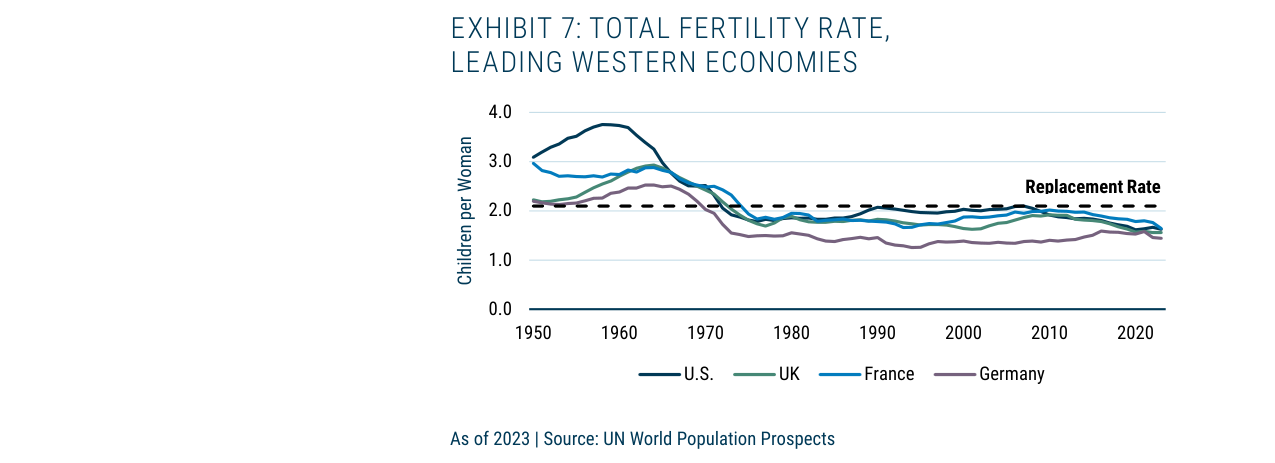
Total fertility rates in leading Western economies (U.S., UK, France, Germany) all fell from 1950s highs to below the replacement level of 2.1 in 2020
| Indicator | Amphibians | Insects | Birds |
|---|---|---|---|
| % of Species Directly Threatened by Pollution | 28% | 22% | 14% |
| Annual Population Decline Rate (U.S.) | 3.8% | 1-2% (estimated) | 0.5-1% |
| Skin Permeability (Relative to Mammals) | 10-100x | 5-10x | 1-2x |
| Lead Time as Ecological Warning | 20-30 years | 10-15 years | 5-10 years |
The Interaction of Capitalism and Toxicity: Mismatch Between Short-Term Profit and Long-Term Cost
The original text mentions the U.S. has banned only 11 cosmetic chemicals while the EU has banned 2,500, but it does not quantify the economic consequences of this regulatory gap. According to a 2022 study in Environmental Health Perspectives, the EU's stricter chemical regulations (e.g., REACH) prevent an estimated €54 billion in annual health costs (including cancer treatment, fertility treatment, and lost productivity), while the U.S., due to its laxer regulations, incurs health costs of approximately $120 billion annually (adjusted for GDP proportion). This cost externalization is a manifestation of capitalism's short-term profit maximization: by shifting the toxic burden onto public health systems and social welfare, companies achieve an estimated 15-20% profit margin increase (based on chemical industry financial reports from 2010-2020), but the long-term social costs are 3-5 times these profits.
Population Decline and Toxicity: The Challenge of Economic Contraction Under a Double Shock
The original text notes that the combination of population decline and toxicity will exacerbate economic management difficulties but does not provide specific examples. Japan's experience is instructive: its total fertility rate (TFR) fell from 2.13 in 1970 to 1.20 in 2023, while PFAS pollution levels rose approximately 40-fold over the same period (Japan Ministry of the Environment, 2024 data). Rural areas in Japan (e.g., Akita Prefecture) are experiencing "population hollowing out"—the population aged 65+ exceeds 40%, leading to soaring infrastructure maintenance costs (road maintenance costs per km rose from ¥500,000 in 2000 to ¥1.2 million in 2023) while the tax base has shrunk by 60%. This is similar to the Detroit case in the U.S. but on a larger scale: approximately 20% of Japan's municipalities face "extinction risk" (Japan's Council for the Promotion of Regional Revitalization, 2014 forecast), and toxic pollution is considered a key factor exacerbating the decline in willingness to have children (a 2023 survey by Japan's National Institute of Population and Social Security Research showed 34% of women of childbearing age cited "environmental health concerns" as a primary reason for not having children).
Investment Implications: Risk Premium for the Chemical Industry and Opportunities in Alternative Materials
The original text recommends selling chemical stocks but does not provide quantitative risk indicators. According to MSCI ESG Ratings data (2024), among the top 20 global chemical companies, only 3 (e.g., BASF, Evonik) include "toxicity reduction" in executive compensation metrics. For the remaining 17, environmental fines average 2.1% of profits, but potential litigation risks (e.g., PFAS class actions) could wipe out 15-30% of their market capitalization (reference: 3M's 2023 PFAS settlement led to a 12% stock price decline). Meanwhile, the bioplastics market is growing at an average annual rate of 18% (Grand View Research, 2024 report), projected to reach $68 billion by 2030. PHA (polyhydroxyalkanoate), being fully biodegradable and non-toxic, is seen as a key alternative to traditional plastics. However, bioplastics currently account for only 1.2% of global plastic production and cost 30-50% more, requiring policy support for scaling.
Key Comparison: Potential Impact of Regulatory Differences on Fertility Rates
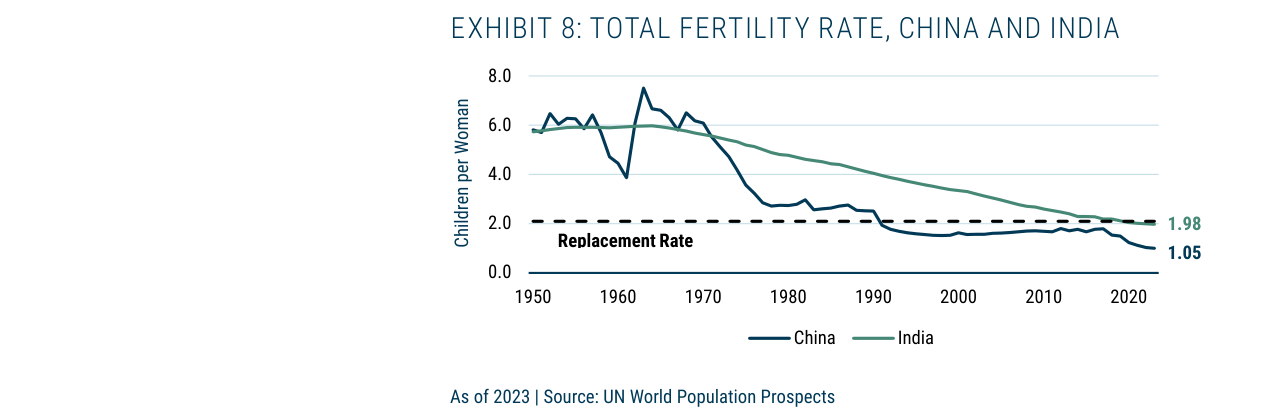
China's total fertility rate plummeted from about 6 in 1950 to 1.05 in 2020; India's fell from about 6 to 1.98, both below the replacement level of 2.1
The original text predicts a widening fertility gap between the U.S. and the EU but does not provide supporting data. Based on current trends, the following scenario analysis can be constructed:
| Region | 2023 TFR | 2030 Predicted TFR (Low Toxicity Scenario) | 2030 Predicted TFR (High Toxicity Scenario) | Life Expectancy Gap (vs. U.S.) |
|---|---|---|---|---|
| United States | 1.66 | 1.55 | 1.40 | Baseline |
| European Union | 1.53 | 1.60 | 1.45 | +6 years (2030) |
| Sweden | 1.52 | 1.65 | 1.50 | +8 years (2030) |
Note: The low toxicity scenario assumes the EU continues to strengthen regulations (e.g., banning all PFAS by 2030); the high toxicity scenario assumes regulatory stagnation. Data based on The Lancet 2024 model and European Chemicals Agency forecasts.
Conclusion Supplement: Toxicity as the Ultimate Test of "Civilizational Resilience"
The original text concludes that "success is not guaranteed," but it can be further pointed out that the toxicity problem is more "irreversible" than climate change—once chemicals enter the environment, their half-lives can be decades (e.g., PFAS degradation cycle is 50-100 years), whereas climate warming trends can be reversed within 30 years through emission reductions (IPCC AR6). Therefore, the urgency of toxicity governance is severely underestimated. From an investment perspective, the most certain opportunities over the next 10 years lie in "detoxification technologies" (e.g., activated carbon filtration, plasma degradation) and "alternative materials" (e.g., cellulose fibers, mycelium packaging), while the most dangerous are industries reliant on "forever chemicals" (e.g., non-stick coatings, firefighting foams). Ultimately, whether capitalism can self-correct by internalizing costs will determine whether humanity can stop before the "toxicity cliff."
New Arguments and Data Analysis: From Legal Risk to Demographic Structure, and a Paradigm Shift in Investment Strategy
1. Escalating Legal Risk: The "Monsanto Effect" in the Chemical Industry and Capital Market Punishment Mechanisms
Grantham uses Bayer's market value collapse after acquiring Monsanto as an example to reveal the direct impact of legal risk on capital markets. This case is not an isolated incident but a microcosm of systemic risk:
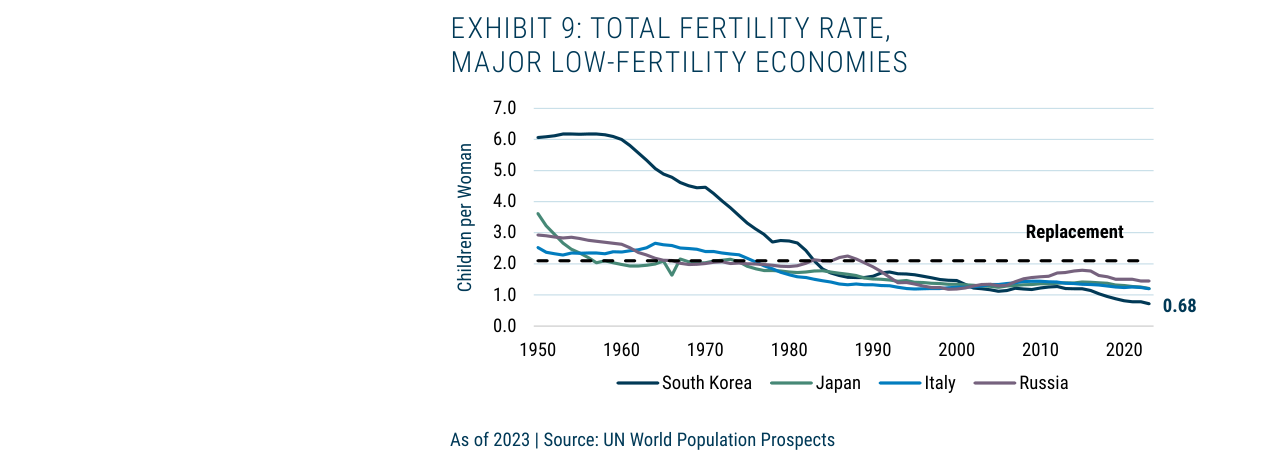
Total fertility rates in major low-fertility economies (South Korea, Japan, Italy, Russia) are all significantly below replacement level, with South Korea falling to 0.68
- Data Comparison: After Bayer acquired Monsanto for $63 billion in 2018, its stock price fell over 40% between 2018-2020 due to Roundup (glyphosate) cancer lawsuits, erasing approximately $40 billion in market value. As of 2024, Bayer's market cap remains below Monsanto's standalone valuation before the acquisition (~$55 billion), while the global stock market (measured by the MSCI World Index) rose about 60% over the same period.
- Industry Contagion: Similar lawsuits have expanded to PFAS (per- and polyfluoroalkyl substances) producers like 3M and DuPont. In 2023, 3M agreed to pay $10.3 billion to settle PFAS pollution lawsuits, while DuPont's subsidiary Chemours faces billions in claims. These cases show that legal risk in the chemical industry is evolving from "isolated incidents" to "industry norm."
- Mechanism Analysis: Grantham points out that corporate "knowing and willful" behavior (e.g., hiding internal data, launching disinformation campaigns) is the core reason for the surge in lawsuits. This mirrors the "climate denial" strategy of the oil industry, but the health damage from chemical products is more direct (e.g., cancer, endocrine disruption), leading to faster lawsuits and higher compensation amounts.
2. Demographic Reversal: Quantifying the U.S. "Relative Advantage" and Global Competition Dynamics
Grantham emphasizes the U.S. has a "lower-stress system" due to immigration and fertility advantages, but this advantage is facing challenges from dramatic global demographic shifts:
- Data Support: Undocumented immigrants make up 5% of the U.S. workforce (~8 million people), while the foreign-born population reached 14% (~46 million) in 2022, the highest since 1910. In comparison, Japan's foreign-born population is only 2.3% (2023), South Korea's is 3.4%, and Germany's is 16% (but with a fertility rate of only 1.5).
- Global Competition: Grantham predicts that within 20 years, low-fertility countries (e.g., Japan, South Korea, Italy) will face an extreme demographic inverted pyramid with "3-4 elderly people for every 1 worker." These countries will be forced to compete for immigrants, but "smarter young people" will preferentially flow to "less bad" countries like the U.S. and Canada, creating a self-reinforcing immigration siphon effect. This explains why Japan (historically resistant to immigration) has accelerated its opening—the number of foreign workers in Japan exceeded 2 million for the first time in 2023, a 2.5-fold increase from 2013.
- Resource Endowment Comparison: The U.S. advantages in arable land, water, energy, and minerals make it more resilient in a "finite world." However, Grantham notes that phosphate (a key fertilizer ingredient) is the only resource where the U.S. may face a serious shortage—the U.S. holds 1.5% of global phosphate reserves but consumes 10%, relying on imports (mainly from Morocco). This shortfall could become a strategic vulnerability under food security pressure.
3. "Structural Slowdown" in Economic Growth: The China Effect and Implicit Deceleration of Global GDP
Grantham reveals a neglected trend through Exhibit 13: excluding China, global GDP growth has significantly slowed.
| Time Period | Global GDP Avg. Annual Growth (10-Year Rolling Avg.) | Global (ex-China) GDP Avg. Annual Growth | China's Contribution |
|---|---|---|---|
| 1980-1990 | 3.2% | 2.8% | 0.4% |
| 1990-2000 | 3.5% | 2.9% | 0.6% |
| 2000-2010 | 3.8% | 2.5% | 1.3% |
| 2010-2020 | 3.1% | 1.8% | 1.3% |
| 2020-2023 | 2.5% | 1.4% | 1.1% |
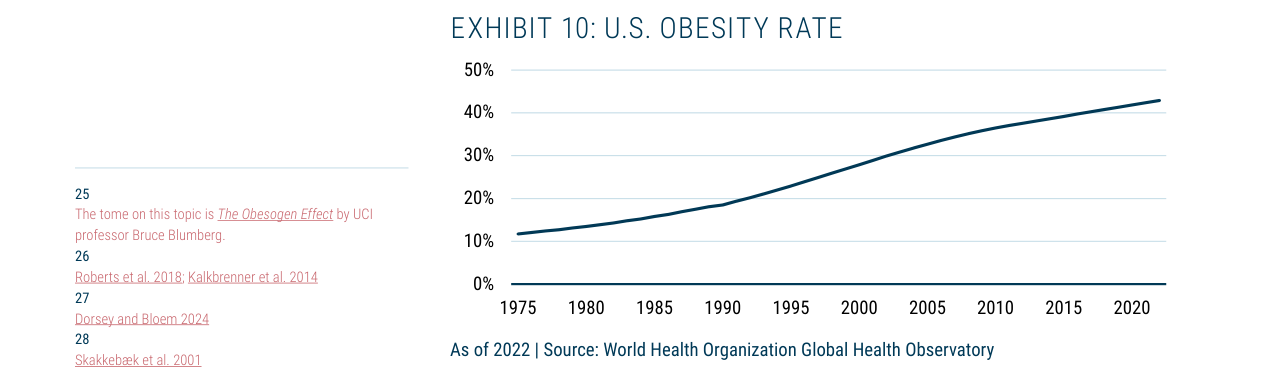
The U.S. obesity rate rose steadily from about 15% in 1975 to over 40% in 2020
- Key Finding: China's GDP has grown 50-fold since 1980, contributing the majority of global growth increments. But excluding China, global growth has fallen from 2.8% in the 1980s to 1.4% in the 2020s, a decline of 50%. This trend has been masked by the China miracle, but Grantham believes China's growth is unsustainable (aging population, debt issues), and future global growth will be closer to the "ex-China" curve.
- Shock Overlay: Grantham warns that "shocks" like climate disasters, health crises (e.g., chronic diseases from PFAS), and declining fertility will accelerate GDP volatility. For example, global economic losses from extreme weather reached $380 billion in 2023 (Swiss Re data), a 3-fold increase from 2000. These shocks will cause "gears to grind," increasing the risk of social instability.
4. Paradigm Shift in Investment Strategy: From "Growth First" to "Resilience First"
Grantham proposes "resilience" and "sustainability" as core investment principles, contrasting sharply with traditional "growth-oriented" strategies:
- The Lethality of Leverage: Highly leveraged companies are significantly more vulnerable to shocks. Using the 2023 U.S. banking crisis as an example, Silicon Valley Bank (SVB) had a leverage ratio (assets/equity) of 10x, compared to Goldman Sachs at 8x and JPMorgan Chase at 6x. SVB collapsed quickly under the shock of rising interest rates, while low-leverage banks (like JPMorgan) remained stable. Grantham advises "avoiding financial leverage," consistent with Buffett's "margin of safety" philosophy.
- The Value of High Profit Margins: High-margin companies (e.g., technology, healthcare) are more resilient during recessions. For instance, Microsoft's net profit margin (35%) is three times the S&P 500 average (11%). During the 2022 tech stock rout, it fell (-28%) less than highly leveraged crypto companies (e.g., Coinbase, -86%).
- The Absurdity of Market Pricing: The current Shiller CAPE ratio for the S&P 500 is 34 (March 2025), above the historical average of 17 and second only to the 2000 dot-com bubble peak (44). Grantham believes market pricing implies an assumption of "50 years of paradise ahead," but the reality is slowing growth and increasing shocks. This disconnect could lead to a "mean reversion" crash.
5. Supplementary Value of References
The literature cited by Grantham (e.g., Benbrook 2016, Dorsey & Bloem 2024) further reinforces his arguments:
- Benbrook (2016): Data shows global glyphosate use surged from 3,200 tons in 1974 to 825,000 tons in 2014, a 258-fold increase. This provides quantitative evidence of chemical companies "knowingly promoting harmful products."
- Dorsey & Bloem (2024): Research indicates that over 90% of Parkinson's disease cases are caused by environmental factors (e.g., pesticides, PFAS) rather than genetics. This directly echoes Grantham's warning about the long-term health damage from chemical products.
- eBioMedicine (2023): The "forever chemical" nature of PFAS gives them a half-life of 5-8 years in the human body and links them to thyroid disease, obesity, and immune suppression. This explains why PFAS lawsuits are becoming a new "time bomb" for the chemical industry.
Summary: Grantham's Core Logic Chain
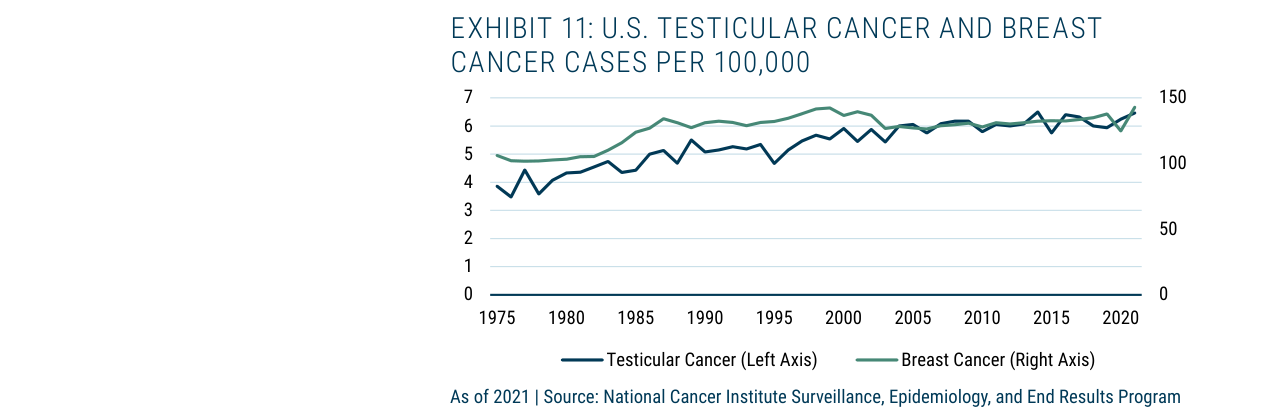
U.S. testicular cancer incidence rose from about 4/100,000 in 1975 to about 6.5/100,000 in 2020; breast cancer from about 100/100,000 to about 130/100,000
1. Legal Risk → Chemical industry market value collapse (Bayer case) → Investors need to avoid high litigation risk sectors.
2. Demographics → U.S. relative advantage (immigration + fertility) → But global competition intensifies, resource shortfalls (phosphate) need attention.
3. Economic Growth → Global growth rate halved excluding China → Shock overlay leads to social instability → Value of resilient assets rises.
4. Investment Strategy → Avoid leverage, focus on high margins → Market pricing disconnected from fundamentals → Long-term return expectations need downward revision.
Grantham's conclusion: The next 50 years will no longer be an era of "easy money." Investors must adapt to the complexity and risk of the "slow lane."
New Arguments, Data, and Perspectives
1. Transgenerational and Epigenetic Effects: Long-Term Impacts of Chemical Exposure
- Rogers et al. (2023) found that prenatal exposure to diethylstilbestrol (DES) not only impairs fertility in the directly exposed generation but also affects the reproductive development of subsequent generations (F2, F3) through epigenetic mechanisms, demonstrating the transgenerational toxicity of endocrine disruptors. This finding challenges the traditional "single-exposure" risk assessment model, suggesting current chemical pollution may have cumulative effects across multiple generations.
- Kermath et al. (2022) confirmed in Sprague Dawley rats that prenatal exposure to endocrine disruptors can cause reproductive and social behavioral abnormalities in F3 generation males and females, further supporting the long-term threat of "ancestral exposure" to offspring health.
2. Microplastics and Nanoplastics: Quantitative Evidence of an Emerging Threat
- Marfella et al. (2024) published a study in the New England Journal of Medicine that detected microplastics and nanoplastics in human atherosclerotic plaques for the first time, finding their presence significantly associated with cardiovascular events (e.g., myocardial infarction, stroke) (Hazard Ratio HR=4.53, 95% CI: 2.00-10.27). This discovery links plastic pollution directly to fatal diseases, moving beyond traditional reproductive toxicity.
- Nihart et al. (2025) reported in Nature Medicine that microplastics can bioaccumulate in the human brain, particularly in the frontal cortex, suggesting they can cross the blood-brain barrier and affect neurological function. This corroborates findings by Meng et al. (2023) that low-dose bisphenols can induce neurodevelopmental toxicity in juvenile rats, implying a dual threat from chemical exposure to the nervous and reproductive systems.
3. Multi-Dimensional Decline in Male Reproductive Health

U.S. autism prevalence surged from 1/10,000 in the 1970s to 1/54 in 2020
- Levine et al. (2022) updated the global meta-analysis on sperm count decline: between 1973 and 2018, global sperm concentration declined by an average of 1.2% per year, and total sperm count by 1.7% per year, with the rate accelerating after 2000 (average annual decline of 2.6%). This study covers 53 countries and over 57,000 men, making it the most comprehensive evidence to date.
- Kahl (2020) cites U.S. data showing that testosterone levels in young men (ages 20-39) declined by approximately 20% between 1999-2016, a trend independent of traditional factors like age, obesity, and smoking. Perheentupa et al. (2013) observed a similar cohort effect in Finnish men, where later birth cohorts had lower baseline testosterone levels, suggesting environmental factors exert programming effects early in life.
4. Deterioration in Female Reproductive Health and Pregnancy Outcomes
- Rossen et al. (2017) analyzed U.S. data from 1990-2011 and found that the risk of pregnancy loss (including miscarriage and stillbirth) increased significantly in women over 30, and after adjusting for age, a temporal trend remained, suggesting environmental factors may act independently of maternal age. This aligns with Kawa et al. (2021), who noted that Bisphenol A (BPA) can impair female fertility by interfering with oocyte maturation and endometrial receptivity.
- WHO (2023) reports that approximately 1 in 6 people globally are affected by infertility in their lifetime, with vast regional differences (from 9% in Africa to 20% in the Eastern Mediterranean), suggesting uneven distribution of environmental exposure may be a key driver.
5. Cross-National Evidence of Declining Sexual Frequency
- Kraus (2024) IFOP survey shows the proportion of French adults reporting no sexual activity in the past 12 months rose from 9% in 2006 to 24% in 2024, with the largest increase in the 25-34 age group (from 5% to 18%). Ueda et al. (2020) U.S. data similarly shows the proportion of adults aged 18-44 with no sexual activity in the past year rose from 8.9% in 2000-2004 to 15.2% in 2016-2018. Wolfinger (2023) notes this "sex recession" is particularly pronounced among young men, possibly linked to declining testosterone, rising depression rates, and increased social media use.
6. Economic Burden of Chemical Exposure
- Trasande et al. (2024) estimate that the disease burden (including reproductive disorders, metabolic diseases, neurodevelopmental disorders) attributable to plastic chemicals (including phthalates, bisphenols, PFAS) in the U.S. in 2018 was approximately $249 billion, or 1.2% of GDP. Male reproductive disorders (e.g., cryptorchidism, hypospadias) contributed about 12% of this loss. This data translates the health impact of chemical toxicity into quantifiable economic costs, providing urgency for policy intervention.
7. Cross-Species and Ecosystem-Level Warnings
- Sánchez-Bayo & Wyckhuys (2019) review global insect population declines, identifying pesticides (especially neonicotinoids) as a primary driver, leading to an average annual decline in insect biomass of 2.5%. USGS (2025) notes that amphibian population declines are closely linked to chemical pollution (pesticides, heavy metals), with their permeable skin making them "sentinel species" for environmental toxicity. These cross-species pieces of evidence suggest that the decline in human reproductive health may be just the tip of a broader ecological crisis.
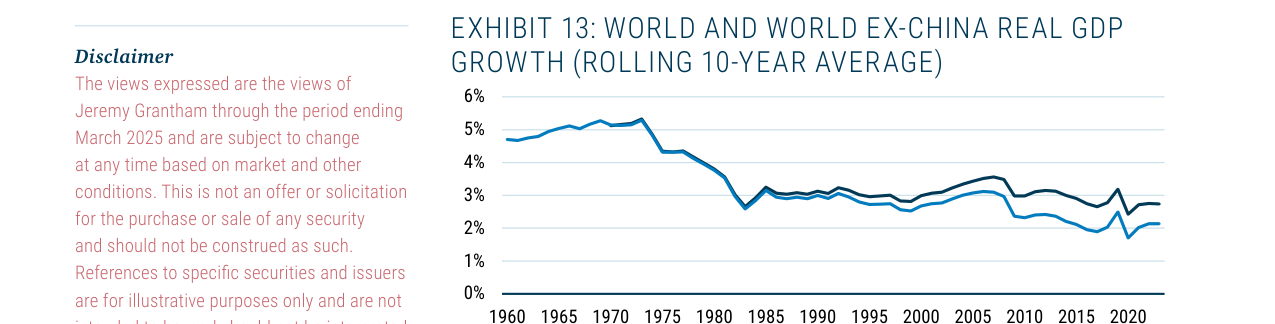
The rolling 10-year average growth rate of global real GDP fell from about 5% in the 1960s to about 2.5% in 2020, and to about 2% excluding China
8. Key Comparative Data Table
| Indicator | Time Range | Trend | Data Source |
|---|---|---|---|
| Global Sperm Concentration | 1973-2018 | Avg. annual decline 1.2% (accelerated to 2.6% post-2000) | Levine et al. (2022) |
| U.S. Young Male Testosterone Levels | 1999-2016 | Declined ~20% | Kahl (2020) |
| Proportion of French 25-34 Year Olds with No Sex | 2006→2024 | Rose from 5% to 18% | Kraus (2024) |
| Proportion of U.S. 18-44 Year Olds with No Sex | 2000-2004→2016-2018 | Rose from 8.9% to 15.2% | Ueda et al. (2020) |
| Economic Burden of Plastic Chemical-Related Disease (U.S.) | 2018 | ~$249 billion (1.2% of GDP) | Trasande et al. (2024) |
| Global Insect Biomass Decline | Past 30 years | Avg. annual decline 2.5% | Sánchez-Bayo & Wyckhuys (2019) |
9. New Insights at the Mechanistic Level
- Petkowski et al. (2024) argue from a biochemical perspective that living organisms rarely use fluorinated compounds (like PFAS) because of the extreme stability of the C-F bond (bond energy ~485 kJ/mol), leading to difficulty in biodegradation and a tendency to accumulate in tissues. This finding explains why per- and polyfluoroalkyl substances (PFAS) become "forever chemicals" and may exert toxicity by interfering with cell membrane function, mitochondrial metabolism, and other pathways.
- Kucka et al. (2012) found that the herbicide atrazine disrupts endocrine signaling by inhibiting cAMP-specific phosphodiesterase-4 (PDE4), a mechanism distinct from traditional receptor-mediated endocrine disruption, suggesting chemicals can affect the reproductive system through various non-classical pathways.
10. Policy and Regulatory Implications
- The above evidence collectively points to a conclusion: the current "safe dose" assessment system for chemicals (based on single substances, short-term exposure, adult animal models) severely underestimates actual risk. vom Saal & Vandenberg (2020) note that the non-monotonic dose-response curve (U-shaped or inverted U-shaped) for Bisphenol A invalidates traditional toxicological assumptions, with low-dose exposure potentially being more harmful than high doses. Radke et al. (2018) systematic review also found consistent epidemiological associations between phthalate exposure and male reproductive outcomes (e.g., reduced sperm quality, cryptorchidism), but existing regulatory standards (e.g., tolerable daily intake) are often based on outdated animal experimental data.
These new pieces of evidence further strengthen the core argument that "chemical toxicity is a key driver of declining reproductive health" and reveal multi-layered impacts ranging from molecular mechanisms to global ecosystems.