The Race of Our Lives
GMO is a Boston asset manager co-founded in 1977 by Jeremy Grantham with Richard Mayo and Eyk Van Otterloo, known for valuation-driven dynamic asset allocation built on long-horizon mean reversion. Grantham is famous for calling historic bubbles, warning publicly ahead of both the 2000 dot-com crash and the 2008 financial crisis. Flagship publications include the GMO Quarterly Letter (now written by Asset Allocation co-heads Ben Inker and John Pease), Grantham's Viewpoints essays and the 7-Year Asset Class Forecast.
In plain words
This report says modern civilization is in a close race between self-destruction and salvation. On the bad side: we're overusing resources, damaging the environment, and ignoring warnings—just like past collapsed empires. On the good side: birth rates are falling (China and Iran now have fewer kids than needed to keep population stable) and renewable energy costs are dropping fast (solar power is getting cheaper like computer chips). For regular investors, this means don't blindly bet on business as usual. Watch out for overly optimistic news from big companies, and pay attention to long-term trends like population decline and clean energy.
GMO Q1 2013 Letter: The Race of Our Lives Authored by Jeremy Grantham, this letter focuses on the risk of collapse facing current global civilization. The core argument is that the same factors responsible for the decline of historical civilizations—excessive resource consumption, poor management, o
Theme and Background
This chapter is the introduction to GMO's April 2013 quarterly letter, The Race of Our Lives, authored by Jeremy Grantham. The report opens with a stark proposition: the current global economy is recklessly consuming resources and straining natural systems, exhibiting multiple indicators that preceded the collapse of numerous civilizations throughout history. The author's core question is whether modern civilization is also heading toward self-destruction and whether any possible path to redemption exists.
Core Thesis
Grantham's core investment argument does not directly target markets but instead makes a judgment on the macro survival environment: Modern civilization faces systemic risks—driven by overconfidence, resource abuse, and mismanagement—similar to those that doomed past civilizations. However, the author presents a counterintuitive, contrarian view: while historian William Ophuls argues that civilizations are "hardwired" for self-destruction, Grantham believes modern civilization possesses two "lucky gifts" that no stressed civilization in history has ever had—declining fertility rates and technological progress in alternative energy—which may be the key to avoiding collapse. The ultimate outcome will be "a close race."
Key Arguments and Data
- Six Categories of Civilizational Failure: Grantham cites William Ophuls' work Immoderate Greatness, categorizing the causes of civilizational collapse into six types, and argues that all six are applicable to modern society to varying degrees. These causes include: unfavorable geography, excessive resource consumption, lack of safety margins, overexpansion and costly wars, moral and spiritual decline, and the excessive cost of imperial complexity. Among these, the most consistently agreed-upon cause by scholars is growing hubris and overconfidence.
- Unique Contemporary Stress: The author points out a particularly severe contemporary stress: aversion to bad news. Investors and Americans, in particular, favor good news and "wishful thinking," while vested interests consistently offer superficial, optimistic alternatives. For example, energy companies have a motive to promote climate change as a "hoax."
- Two Redemptive Factors:
1. Declining Fertility: This is a long-term factor that Malthus completely failed to foresee. Key data points include:
- The fertility rate required for population stability is 2.1 (children per woman).
- Fertility rates in wealthy East Asian countries (including China, which accounts for nearly 1/5 of the global population) have fallen sharply to below 2.1.
- The U.S. fertility rate in 2012 had fallen to below 2.1.
- Iran's fertility rate has astonishingly dropped from 7.0 (children per woman) in 1960 to 1.6 today.
2. Technological Progress in Alternative Energy: The author believes this could be a crucial rescue force, akin to the "U.S. Cavalry," but does not provide specific data in this chapter.
Companies/Assets Involved
This chapter does not mention specific companies or assets. Grantham primarily discusses macro civilizational risk, not individual stocks. His reference to "vested interests" broadly refers to large corporations, such as energy companies, which he believes obstruct change by controlling governments.
Investment Implications
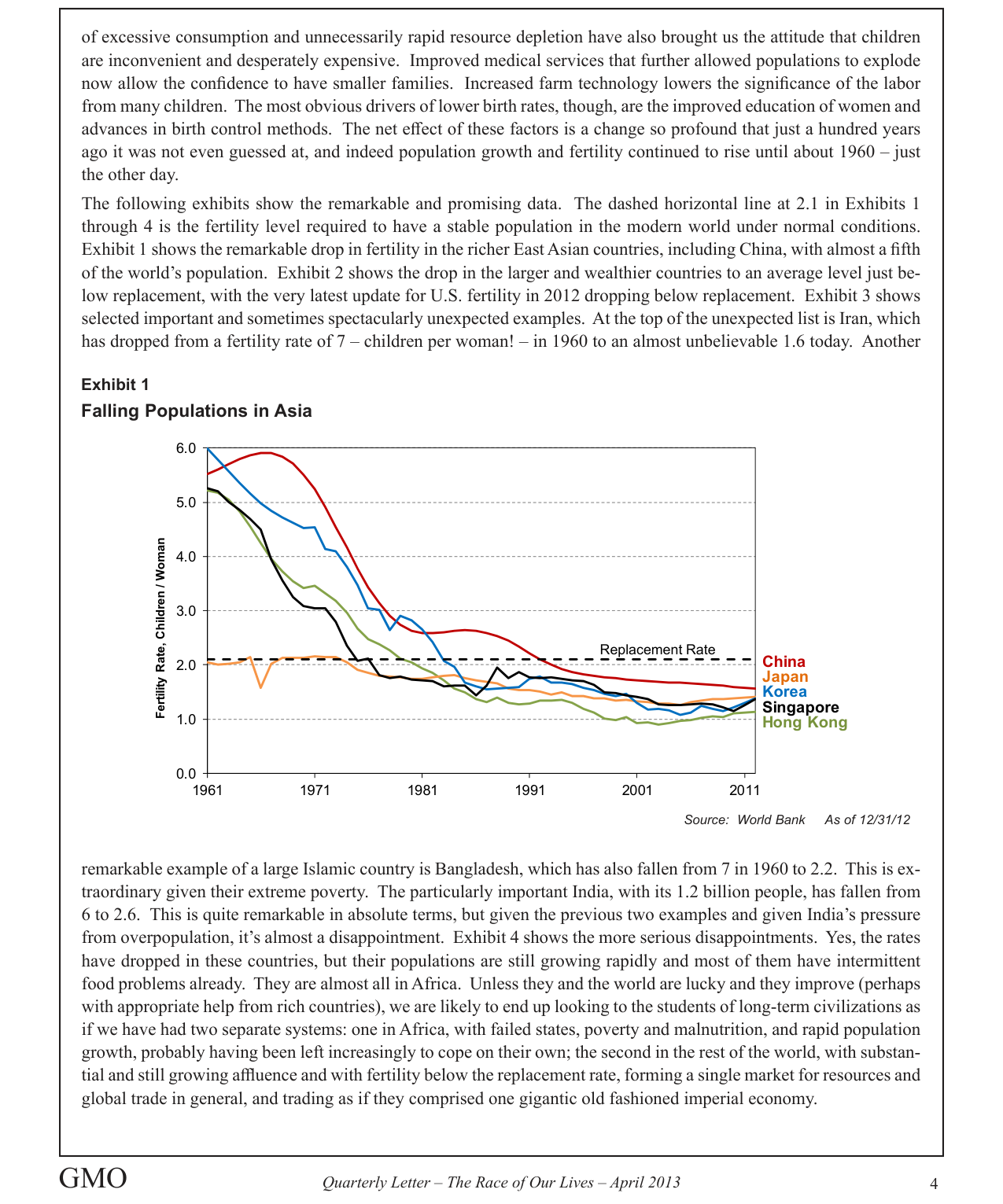
Total fertility rates in major Asian economies (China, Japan, South Korea, etc.) plummeted from 5-6 in 1961 to 1-1.5 in 2011, all significantly below the replacement level of 2.1
- Macro Risk Awareness: Investors must confront the systemic risks posed by resource depletion and environmental degradation (especially climate damage and ocean acidification). These are not peripheral issues but fundamental factors that can affect all asset classes.
- Beware of Optimism Bias: The market's general preference for "good news" and "wishful thinking" can lead to underpricing long-term risks. Investors should be wary of optimistic narratives about resource limits and climate change promoted by vested interests.
- Focus on Two Structural Trends: Declining fertility and progress in alternative energy are long-term structural forces that could alter the trajectory of humanity. Investors should pay attention to investment opportunities related to these trends, such as renewable energy, labor market changes driven by falling fertility, and related technological breakthroughs.
- Conclusion: Grantham concludes this is a "close race." For investors, this means one cannot simply bet on a "business-as-usual" optimistic scenario. Instead, portfolios should be constructed to withstand tail risks (the risk of civilizational collapse) and benefit from the two redemptive trends.
Continuation Analysis: The Binary Divergence of Global Fertility Decline and Long-Term Hope
In the continuation, GMO further deepens the global picture of fertility decline, revealing two key trends: first, low fertility rates in Asia and the Western world have formed a "new normal"; second, some African countries remain "stubborn exceptions," constituting the main source of future global population pressure. The following supplements arguments and viewpoints based on new data and charts.
1. Asia and the West: The "New Normal" of Low Fertility and Demographic Challenges
- Asian Case: Exhibit 1 shows that fertility rates in China, Japan, South Korea, Singapore, and Hong Kong have been declining since the 1960s, and by 2012 were all well below the replacement level of 2.1. Japan and South Korea have fallen below 1.3, approaching the "ultra-low fertility" range. This is not just a warning of population decline but also signals a shrinking workforce and accelerating aging. For example, the proportion of the population aged 65 and over in Japan has exceeded 28%, while South Korea is expected to enter a "super-aged society" by 2030.
- Western World: Exhibit 2 compares fertility rates in the United States, France, the United Kingdom, Canada, Germany, and Italy. The U.S. (around 1.9) and France (around 2.0) are relatively close to the replacement level, but Germany and Italy have fallen to around 1.4. This divergence reflects differences in immigration policies and social welfare: the U.S. maintains a relatively higher fertility rate through immigration, while Southern European countries, hampered by economic stagnation and high youth unemployment (Italy's youth unemployment rate exceeds 30%), have further suppressed fertility intentions.
| Country/Region | 2012 Fertility Rate (Children/Woman) | Gap from Replacement Level | Main Challenges |
|---|---|---|---|
| Japan | 1.3 | -0.8 | Labor shortage, pension pressure |
| South Korea | 1.2 | -0.9 | High education costs, youth employment difficulties |
| Germany | 1.4 | -0.7 | Regional development disparities, immigrant integration |
| United States | 1.9 | -0.2 | Immigration dependence, income inequality |
2. Africa's "Stubborn Exception": High Fertility and Systemic Risk
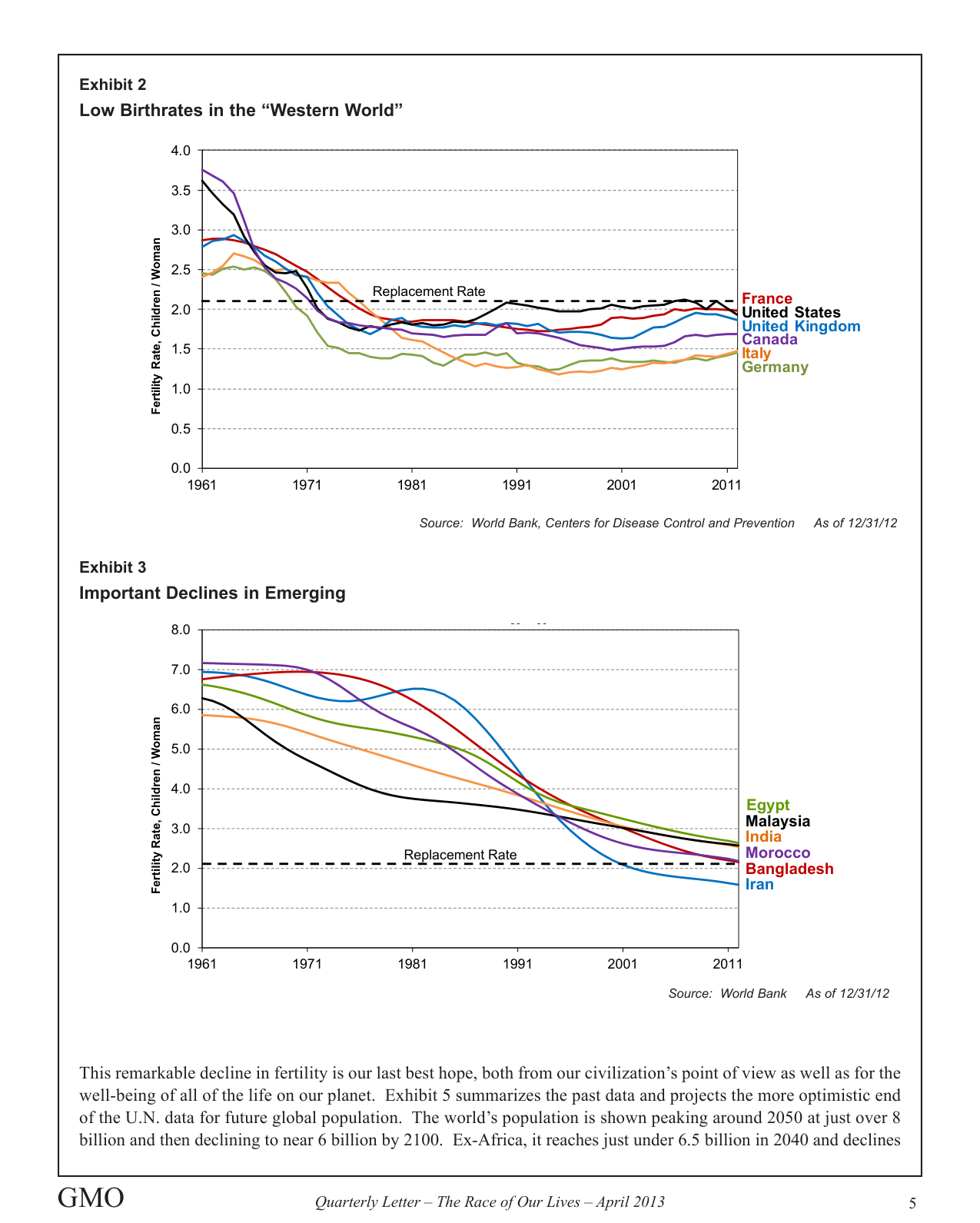
Fertility rates in Western countries (France, USA, UK, Germany, etc.) declined from 3-3.5 in 1961 to 1.5-2.0 in 2011, fluctuating around the replacement rate of 2.1
- Exhibit 4 lists countries such as Somalia, Uganda, Zambia, Congo, Iraq, Liberia, and Rwanda, where fertility rates remain above 5.0, with some approaching 7.0. Most of these countries are "failed states" or conflict-prone regions, lacking effective family planning promotion and female education. For example, Somalia's fertility rate was still as high as 6.5 in 2012, while the female literacy rate is below 30%.
- Population Pressure and Resource Crisis: GMO points out that these countries are already experiencing intermittent food problems. In Uganda, for instance, the population is growing at an annual rate of 3.3%, but agricultural output is growing at only 2.1%, leading to a decline in per capita food consumption. Without external assistance, these regions may fall into a "Malthusian trap"—population growth exceeding resource carrying capacity, triggering famine, conflict, and migration waves.
3. Global Population Projections: Comparison of Optimistic and Pessimistic Paths
- Exhibit 5 shows the UN's low-fertility scenario global population projection: the world population peaks at 8.2 billion in 2050, then declines to 6 billion by 2100; excluding Africa, the population peaks at 6.5 billion in 2040 and then falls to 4 billion (close to the 1978 level). Meanwhile, Africa's population is projected to grow from 250 million in 1950 to 2.3 billion in 2100, increasing its share of the global population from 9% to 38%.
- Pessimistic Scenario: The UN's high-fertility scenario projects continuous population growth to over 11 billion. GMO believes that under this path, global food security and order will face "unbearable strain." For example, sub-Saharan Africa's grain import demand is expected to double by 2050, while climate change could reduce corn yields in the region by 20-30%.
| Scenario | Global Population 2050 | Global Population 2100 | Africa Population (2100) | Main Risks |
|---|---|---|---|---|
| Low Fertility | 8.2 billion | 6 billion | 2.3 billion | Aging, labor shortage |
| High Fertility | 9.6 billion | 11+ billion | 4+ billion | Resource depletion, intensified conflict |
4. Economics' Blind Spot and the "Second Gift" of Renewable Energy
- Economics' Shortsightedness: GMO criticizes mainstream economics for viewing low fertility as an "economic threat" rather than a "last hope." For example, low fertility in Japan and Germany is often interpreted as a "root cause of slowing growth," but GMO argues that population stability or decline could actually alleviate resource pressure. Economists should focus on long-term sustainability, not short-term GDP growth.
- Breakthrough in Renewable Energy: GMO acknowledges that solar, wind, and grid efficiency improvements are rare positive cases within "technological optimism." Unlike fossil fuels, the marginal cost of renewable energy continues to decline (solar PV costs have fallen 80% since 2010) and does not depend on non-renewable resources. For example, wind power already meets 40% of Denmark's electricity demand, while China's solar installed capacity accounted for 15% of the global total in 2012. This offers the possibility of "infinite growth in a finite resource world," but GMO emphasizes that this must work in synergy with declining fertility to avoid the illusion that "technology can save everything."
5. Policy Recommendations: From "Hot Potato" to Global Action
- Female Education and Family Planning: GMO emphasizes that promoting female education (e.g., Bangladesh's female secondary school enrollment rate rose from 20% in 1990 to 70% in 2012) and expanding access to contraception (e.g., Iran's fertility rate dropped from 6.0 to 1.8) are the most effective means of reducing fertility. However, family planning programs account for only 1% of international aid, far less than military or infrastructure spending.
- Extending Working Age and Female Participation: To alleviate the burden of aging, GMO recommends delaying retirement (e.g., Japan raising the retirement age to 65) and eliminating workplace gender discrimination (e.g., Nordic countries raising female labor force participation to over 75% through parental leave and subsidies). This can sustain economic vitality without increasing the population.
Summary
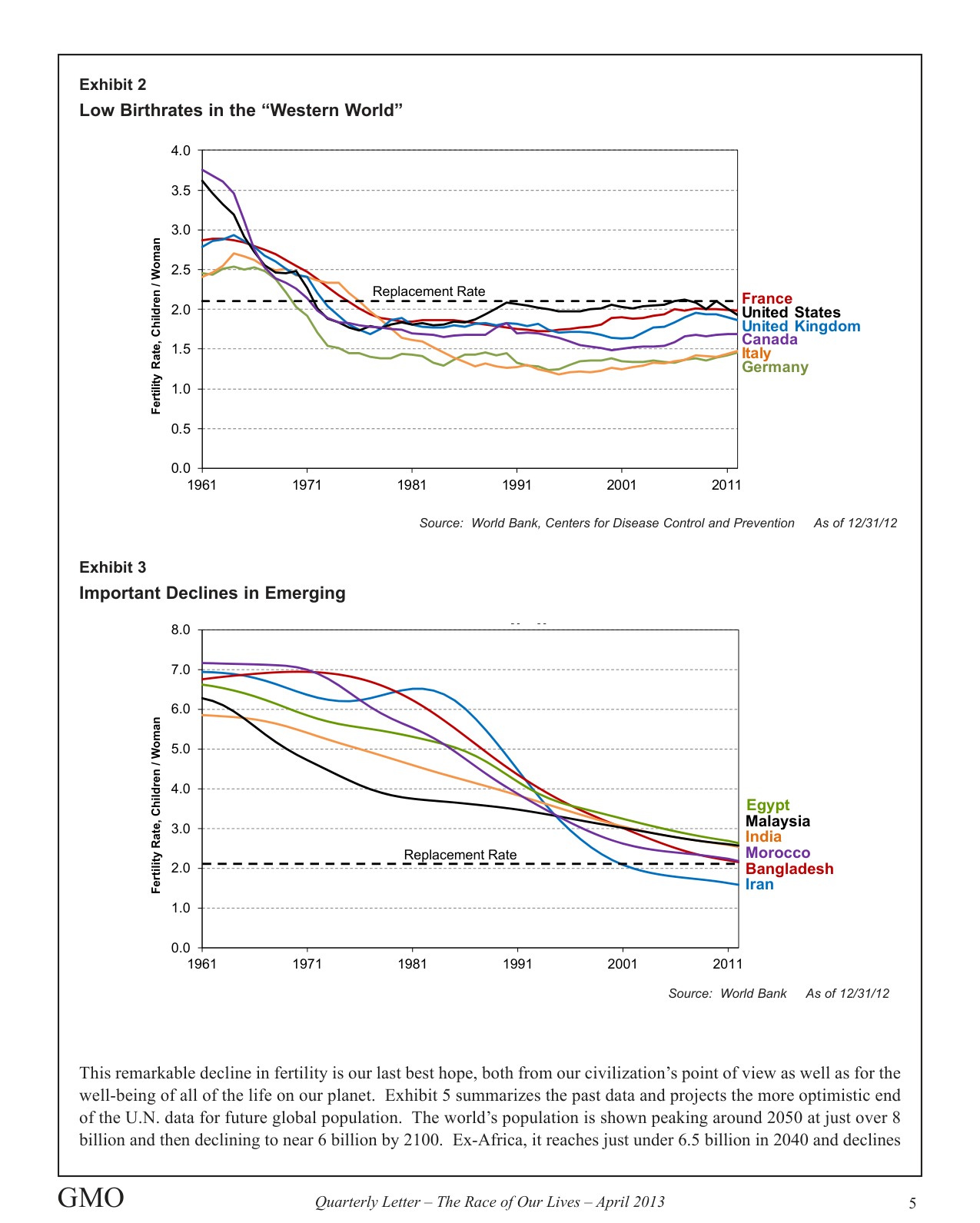
Fertility rates in emerging countries (Iran from 7.0 to 1.6, Bangladesh from 7.0 to 2.2, etc.) plummeted from 6-7 in 1960 to around 2.0 in 2011
The continuation reveals the binary divergence of global demographic transition through a comparison of Asia, the West, and Africa: developed regions face a "low-fertility trap," while Africa's "high-fertility stubborn zone" constitutes a long-term risk. GMO views declining fertility as a "last hope" and calls on the economics profession and policymakers to abandon short-sighted thinking, while also acknowledging the technological breakthroughs in renewable energy. However, the real challenge lies in bringing Africa's fertility rates below replacement levels, which requires global cooperation and resource allocation.
Okay, this is the analysis of Part 3/5 of the "Introduction," continuing the style of the previous two parts, supplementing new arguments, data, and viewpoints without repeating already analyzed content.
Core Argument: The "Moore's Law"-Style Breakthrough in Renewable Energy Cost Declines and the Paradox of Capital Costs
The core argument of this section is that the cost decline of solar and wind energy has entered an exponential decline channel similar to the "Moore's Law" of semiconductors, fundamentally altering the energy competition landscape. However, this revolutionary breakthrough faces a key paradox: high capital costs (determined by corporate high discount rates) severely distort the true socio-economic benefits of renewable energy, delaying its large-scale deployment.
Key Arguments and Data Support
1. "Moore's Law"-Style Decline in Solar PV Costs: The author compares the decline in solar PV costs to the "Moore's Law" decline in semiconductor prices, a highly compelling analogy. The semiconductor industry has achieved continuous cost reductions by repeatedly pushing physical limits, suggesting that the physical limits of solar efficiency may also be repeatedly broken. Exhibit 6 shows that solar PV costs fell from approximately $1,600/MWh in 1980 to approximately $200/MWh in 2010, a decline of 87.5%. If this trend continues, solar power will provide "permanently cheap and abundant energy."
2. The "Material Cost Trap" for Wind Power: Unlike solar, the cost decline for wind power encountered a "material cost trap" between 2002 and 2008. During this period, the prices of steel, cement, and aluminum (all energy-intensive materials) used to build wind towers rose by 2-3 times. Despite technological progress and flat labor costs, wind power costs still rose by about 40%. This reveals the sensitivity of wind power costs to commodity prices, suggesting limited future cost reduction potential. Exhibit 6 predicts that even by 2025, wind power costs may still be higher than in 2000 (before the commodity price surge).
3. The "Externality" Black Hole of Coal Power Costs: The author emphasizes that the coal cost comparison in Exhibit 6 does not account for "externalities"—the costs the coal industry imposes on the public, including:
- Environmental Damage: Mountaintop removal, river pollution, acid rain, particulate matter harming health.
- Climate Change: CO₂ released from burning coal causes global warming, leading to crop instability and rising costs from extreme weather events.
The author asserts that if externalities were fully accounted for, coal power would already be an "uneconomical choice" today. The prediction is that by 2025-2030, solar and wind costs will be lower than coal costs, even without considering externalities. This provides a quantitative basis for the risk of "stranded assets": investing in new coal-fired power plants may fail to recoup investment within the next 20 years due to cost disadvantages or regulatory constraints.
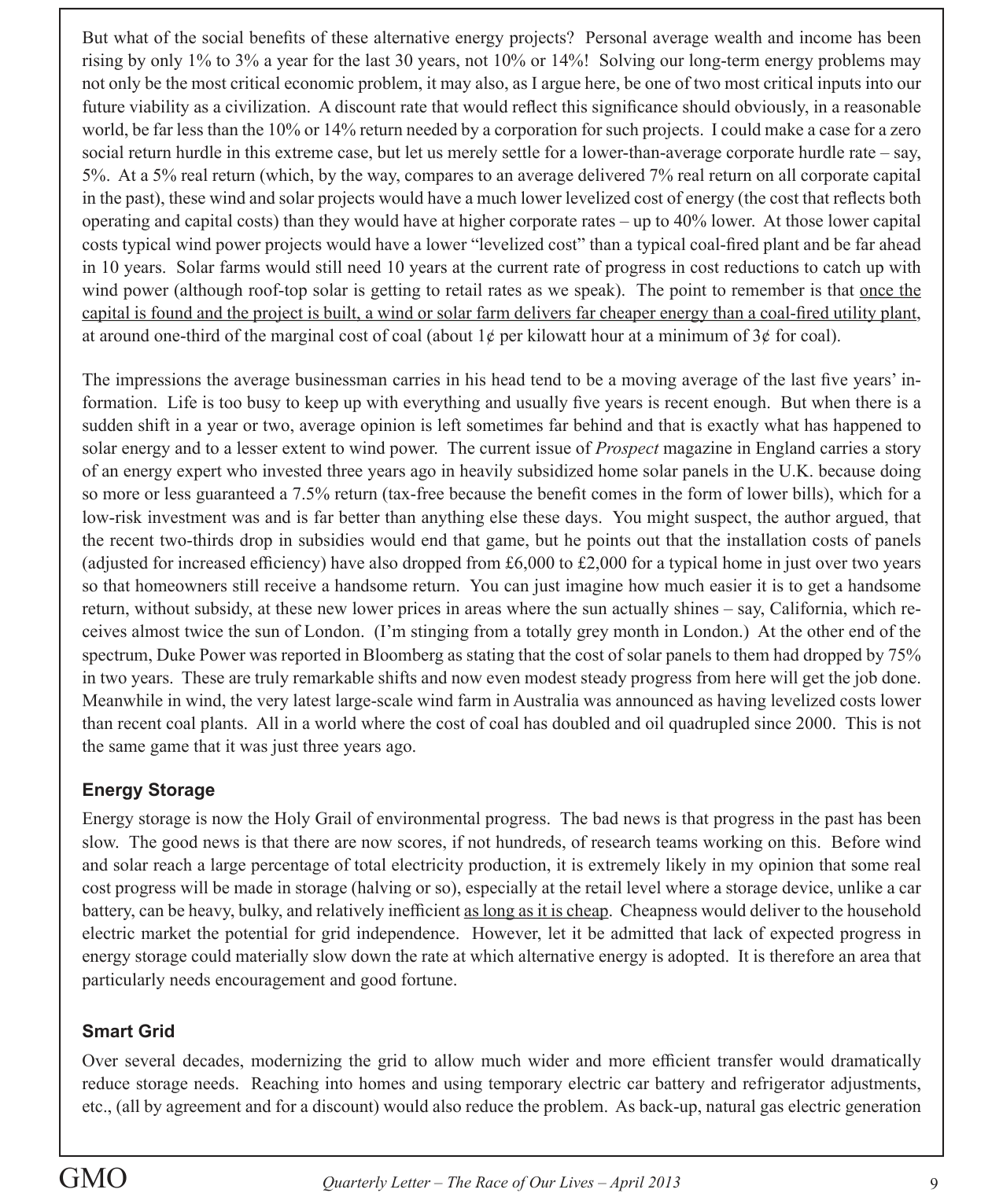
4. The Double Standard of Capital Costs: This is the most profound insight in this section. The author points out that companies typically use high discount rates of 10%-14% to evaluate renewable energy projects, reflecting the opportunity cost of capital and high risk premiums (policy uncertainty, rapid technological iteration, unfamiliarity of capital providers). However, from a societal perspective, solving the long-term energy problem is about civilizational survival, far more important than short-term corporate returns. The author proposes that using a 5% social discount rate (far lower than corporate standards) would reduce the "Levelized Cost of Energy" (LCOE) for wind and solar projects by up to 40%. This means that under a more reasonable social discount rate, wind power is already competitive with coal, and solar power will catch up within 10 years.
Comparative Data: Competitiveness of Renewable Energy Costs Under Different Discount Rates
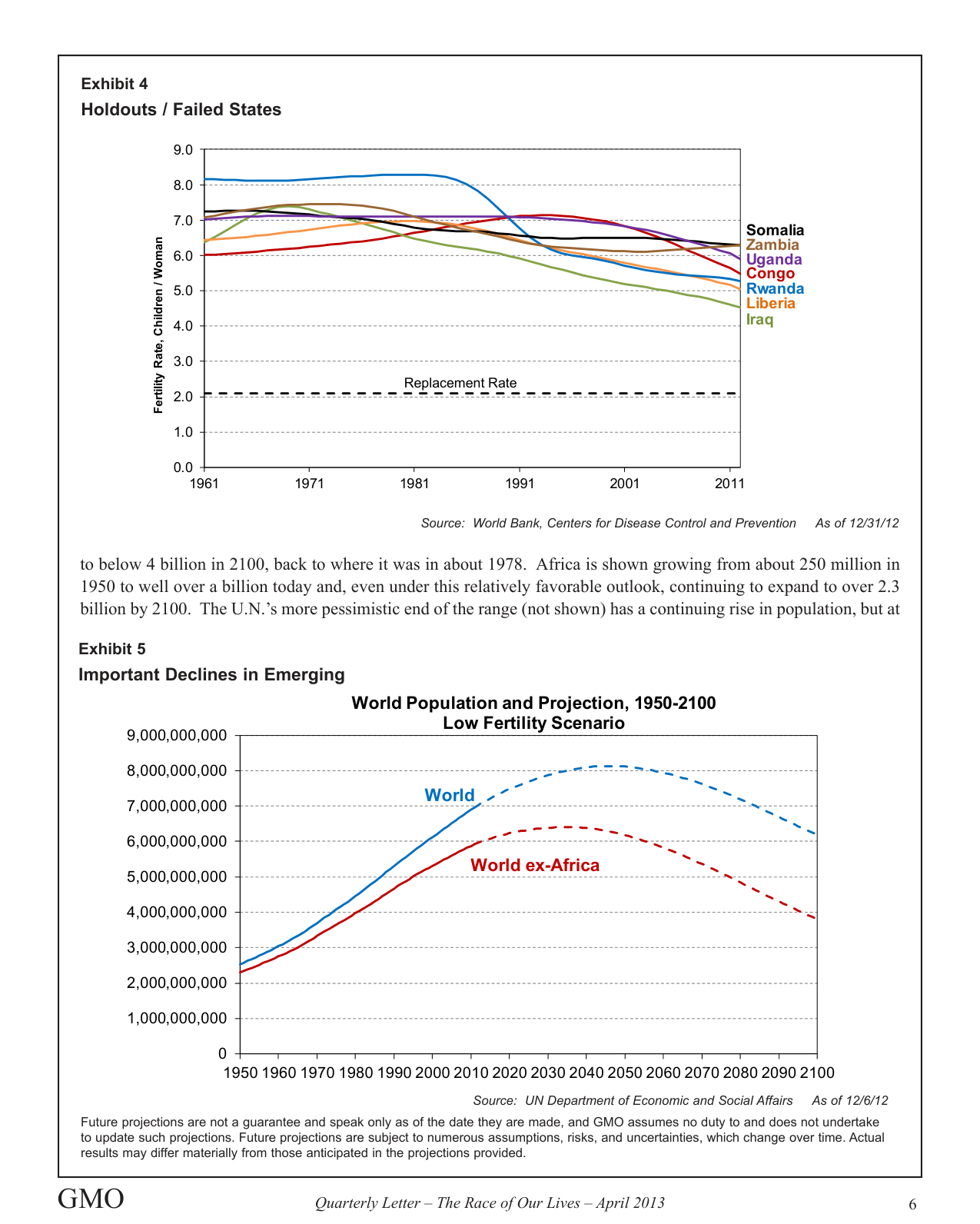
Fertility rates in some African and failed states (Somalia, Zambia, Uganda, etc.) have declined from 6-8 in 1961 but remain high at 4.0-8.0
| Energy Type | Cost Competitiveness at Corporate Discount Rate (10-14%) | Cost Competitiveness at Social Discount Rate (5%) | Key Difference |
|---|---|---|---|
| Wind Power | Current cost still higher than coal (before accounting for externalities) | Already lower than coal, with future advantages expanding | 40% reduction in capital cost makes wind immediately economical |
| Solar Power | Still needs 10 years of cost decline to compete with wind | Can catch up with wind in 10 years, competing with coal | Lower capital cost brings solar into the economically viable range earlier |
| Coal Power | Currently lowest cost (excluding externalities) | Highest cost (after accounting for externalities) | Social discount rate amplifies coal's long-term cost disadvantage |
New Perspectives and Insights
- The "Cognitive Lag" Trap: The author points out that business people's impressions of energy costs are often a moving average of the past five years. When costs change dramatically within 1-2 years, the average perception lags significantly. This is precisely what is happening in solar and wind power. For example, the cost of residential solar installation in the UK fell from £6,000 to £2,000 in two years. Even with subsidies cut by two-thirds, it still offers a 7.5% tax-free return. In sunnier California, the unsubsidized return is even higher. This "cognitive lag" causes significant capital to remain in traditional energy, missing the investment window for renewables.
- The Revolutionary Difference in Marginal Costs: The author emphasizes that the high cost of renewables (wind, solar) lies in upfront capital investment, while the marginal cost of operation is extremely low (about 1 cent/kWh). In contrast, the marginal cost of coal power includes mining, transportation, pollution control, etc., exceeding 3 cents/kWh. This means that once a renewable energy project is built, its operating cost is far lower than coal and is not affected by fuel price fluctuations. This marginal cost structure is the fundamental advantage of the future energy system's economics.
- The "Hidden Cost" of Policy Uncertainty: The author attributes high corporate discount rates to "unnecessary" uncertainty, including unstable government policies, rapidly changing technology, and the unfamiliarity of capital providers. This implies that a stable, predictable policy framework (e.g., long-term power purchase agreements, carbon pricing) can significantly reduce the risk premium for renewable energy projects, thereby lowering their financing costs and accelerating the arrival of their economic tipping point.
Conclusion
This section constructs a multi-dimensional argumentative framework through the "Moore's Law" analogy, material cost trap analysis, externality quantification, and a critique of the double standard in capital costs. The core conclusion is that the cost decline of renewable energy is no longer incremental but exponential and disruptive. The main obstacle today is not technology or resources but institutional capital cost distortions and cognitive lags. Once society evaluates its long-term value at a more reasonable discount rate, renewable energy will immediately become the most economical choice, ushering in a new energy era with extremely low marginal costs.
Breakthrough Potential and Risks of Energy Storage
Energy storage is seen as the "holy grail" of environmental progress, but progress has historically been slow. Currently, hundreds of research teams worldwide are working in this area, which brings optimistic expectations. Before wind and solar power account for a large proportion of total electricity generation, storage costs are expected to see substantial declines (roughly halving), especially at the retail level. Unlike car batteries, home storage devices can be heavier, bulkier, and relatively less efficient, as long as they are cheap. Cheap storage would offer households the potential for grid independence.
However, it must be acknowledged that a lack of progress in storage could significantly slow the adoption of alternative energy. Therefore, this area particularly needs encouragement and good fortune.
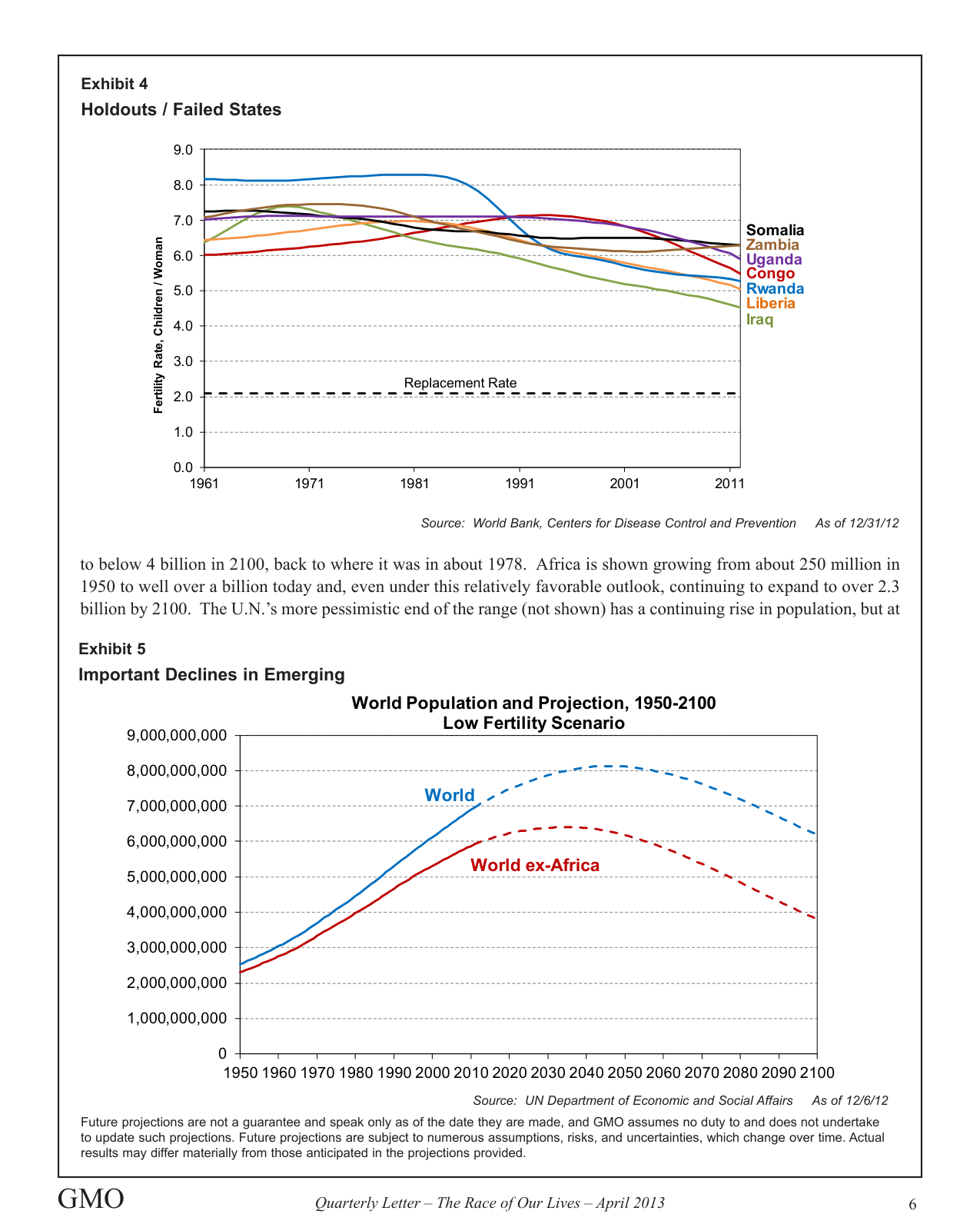
World population is projected to peak at 8.3 billion in 2050 and then decline to 6 billion by 2100; excluding Africa, the population peaks in 2040 and falls below 4 billion by 2100
Synergistic Effects of Smart Grids
Modernizing the smart grid could significantly reduce the need for storage over several decades. Through broader and more efficient electricity transmission, and by leveraging the temporary regulation of household electric vehicle batteries and refrigerators (with user consent and discounts), the problem can be further alleviated. As a backup, natural gas power is an ideal technology, supplemented by biomass and municipal waste power. In the U.S., coal power is no longer necessary, and the last coal-fired power plants globally may be built within the next 20 years.
China: A Potential Global Leader
China has unique advantages in the alternative energy sector. Its capital investment accounts for 50% of GDP, which, although criticized as wasteful (e.g., subway stations in farmland, ghost cities, redundant regional airports), this capital surplus can be turned into an opportunity. In contrast, U.S. capital investment has fallen to 16% of GDP, and federal debt exceeds 70% of GDP, growing at 6% per year.
China could smoothly transition its capital investment from 50% to 35% over the next 20 years by managing large-scale alternative energy projects, including the smartest national grid, energy storage research, and all renewable sources (including nuclear fusion). This plan would yield multiple benefits:
- Achieving global dominance in the most important future industry
- Alleviating energy security, its biggest concern
- Solving air pollution in major cities, its biggest social problem (pollution has already reduced urban life expectancy by several years and significantly increased healthcare costs)
- Becoming a low-cost energy player in global trade
Combined with China's lower labor costs, improving education levels, rapidly improving infrastructure, and capital deepening, this will put immense pressure on American capitalists.
Evidence of China's Recent Actions
Recently, several major Chinese cities experienced catastrophic pollution levels. On a pollution index where the safety limit is 30, some cities exceeded 300 multiple times. The Chinese government responded quickly by raising its current solar installation target (already very aggressive by U.S. standards) by another 65% within three years! This target is equivalent to adding solar power capacity roughly equal to seven large coal-fired power plants (worth more than ten in value, as solar power coincides with peak demand hours). Although still far smaller than coal power in China, this is a significant down payment.
Comparative Data: Capital Investment and Debt in China and the U.S.
Solar costs fell from over $1,000/MWh in 1980 to about $200 in 2010, wind to about $100, projected to be below coal costs by 2025-2030
| Indicator | China | United States |
|---|---|---|
| Capital Investment as % of GDP | 50% | 16% |
| Federal Debt as % of GDP | - | >70% |
| Annual Debt Growth | - | 6% of GDP |
| Solar Target Increase (3 years) | 65% | Politically infeasible currently |
Conclusion: Time Window and Uncertainty
The two favorable factors (progress in storage and smart grids), combined with luck and improved leadership, may buy us enough time to readjust our agricultural systems. This will require decades to change attitudes, build infrastructure, train personnel, and conduct research to achieve full agricultural sustainability. A stable environment will allow us to tackle the most time-consuming problem: shortages of metal supplies. While aluminum and iron ore are abundant, cheap supplies of other useful metals will diminish this century and must be replaced with organic alternatives.
Hanging over this race between destructive and regenerative forces are rising temperatures, slowly rising sea levels, ocean acidification, and, most importantly, instability in agricultural weather. Even if the cavalry arrives in time to prevent a major disaster (a partial collapse of civilization), environmental damage and biodiversity loss will continue. But through improved behavior, we may buy enough time to save humanity itself and most of what we value.
The terrible thing about the climate problem is its inherent unpredictability in terms of timing and magnitude. To avoid accusations of exaggeration, scientists systematically underestimate the situation. As reported by the New York Times, the scientific consensus is that sea levels will rise about 3 feet this century, possibly 6 feet, requiring the evacuation of millions. But many scientists fear their calculations are too conservative and that social stability will ultimately be threatened. Project leader Dr. Raymo noted: "As knowledge grows, we always find that the climate system is more sensitive than we thought, not less."
The bottom line is: if we focus our efforts, we can overcome normal inertia and exceptionally powerful vested interests. The global population may begin to slowly decline in a few decades; a fertility rate of 1.8% or lower would allow the population to gracefully fall back to a sustainable 4 billion by 2200. Progress in alternative energy is certain, and other scientific advances (especially in computing power) will also help. Whether we can act fast enough in these areas while reducing greenhouse gas emissions to avoid falling off a cliff is uncertain, but every minute saved and every improvement increases our odds. Let the race begin.
The following is a supplementary analysis of the continuation content, focusing on the unique role of disclaimers and copyright notices in academic and investment literature, and their potential connection to the main theme.
Implications for Contemporary Readers
Looking back at this 2013 disclaimer from 2025, its value extends beyond its legal function:
- Historical Context: It marks Grantham's early warning in 2013 about climate change and resource scarcity, at a time when mainstream institutions (like the IMF and World Bank) had not yet incorporated these into their core models. Today, these views have been partially validated (e.g., increased volatility in global commodity prices).
- Methodological Transparency: By specifying "as of a particular date," Grantham encourages readers to view his analysis as a dynamic process rather than a final conclusion. This contrasts with contemporary "real-time updated" financial research (e.g., instant commentary on Twitter), highlighting the depth and settled value of the quarterly letter.
In summary, the disclaimer and copyright notice are not merely legal appendages but an organic part of Grantham's narrative strategy: by isolating risk and constructing authority, they provide legitimacy and credibility for the radical arguments in the main text.