Taking Time
Hosking Partners is a London boutique founded in 2013 by Jeremy Hosking, a portfolio manager at Marathon Asset Management for over 25 years. It runs a single global equity strategy built on the capital-cycle, supply-side approach — contrarian, long-term, and unusually diversified (350+ holdings) under a multi-counsellor model, managing around $5.5bn.
In plain words
This piece argues that long-term investing (holding stocks for ~10 years) is a structural advantage, like bamboo that flowers every 120 years to avoid predators. Hosking Partners is optimistic, saying patience reduces competition. They highlight three holdings: Berkshire Hathaway (Warren Buffett's firm; its railroad BNSF ignores short-term industry trends to prepare for growth); 3i Group (bought discount retailer Action for £106m in 2011, now worth £12bn, and has returned £1.7bn to 3i); and Syncona (a biotech investor trading at a ~30% discount to net asset value, as big pharma's R&D returns fell from 6.2% to 1.2%, creating exit opportunities).
At a Glance
One-sentence summary: Hosking Partners reaffirms that long-term investing (approximately 10-year holding period) is its core structural advantage, and highlights how three companies in the portfolio—Berkshire Hathaway, 3i, and Syncona—also possess "permanent capital" characteristics, leveraging this advantage to capture opportunities overlooked by the market. Stance: [Bullish]
- The author draws an analogy from ecological fables (120-year bamboo, 17-year periodical cicadas) to illustrate the "delayed gratification" investment strategy, emphasizing that low-frequency synchronized actions can avoid short-term competition.
- Since 3i invested £106 million in Action in 2011, the stake is now valued at £12 billion, and Action has returned over £1.7 billion to 3i, making it a model of long-term holding.
- Syncona's share price trades at a discount of approximately 30% to net asset value, and when adjusted for cash equivalents, the discount widens to nearly 60%; meanwhile, the R&D return rate for large pharmaceutical companies has fallen from 6.2% to 1.2%, creating exit opportunities for early-stage investments.
- Berkshire Hathaway is currently among Hosking Partners' top 20 holdings. Its long-term perspective allows BNSF Railway to adopt a strategy different from the industry's PSR (Precision Scheduled Railroading), accepting operational redundancy to accommodate growth.
Delayed Gratification Is an Investor’s Structural Advantage
The article opens with a quote from Charlie Munger, emphasizing that waiting is a core skill for investors. The author’s original words: "It’s waiting that helps you as an investor, and a lot of people just can’t stand to wait. If you didn’t get the deferred-gratification gene, you’ve got to work very hard to overcome that." The article then cites Stephen Jay Gould’s ecological examples of bamboo and periodical cicadas, noting that bamboo, which flowers synchronously every 120 years, and cicadas with a 17-year (prime-number) life cycle gain a survival advantage through "predator satiation"—by occurring at extremely low frequencies and in synchrony, they prevent predators from relying on them as a stable food source.
A Seven-Year Investment Horizon Can Drastically Reduce Competition
The article references Jeff Bezos’s view, pointing out that extending the investment horizon effectively filters out competitors. The author writes: "If everything you do needs to work on a three-year time horizon, then you’re competing against a lot of people. But if you’re willing to invest on a seven-year time horizon, you’re now competing against a fraction of those people." The article acknowledges that a seven-year horizon is "easier said than done," but stresses that when a long-term approach does not come with a corresponding increase in risk, the appeal of letting time compound into higher returns is immense.
A Diversified Portfolio Is a Prerequisite for Long-Term Investing
Hosking Partners creates capacity for long-term investing through a diversified portfolio of approximately 350 stocks. The article notes that if a company’s returns are lackluster over three years but substantial over seven, the firm is "very happy to exploit the potential mispricing on offer." Long-term returns are harder to value, but a large number of holdings means the risk of any single stock is more easily absorbed. The report argues that if investors using more concentrated strategies struggle to do this, the likelihood of such stocks being undervalued increases further.
A Long-Term Investor Base and the Capital Cycle Approach Are Both Essential
The article emphasizes that a diversified portfolio is necessary but not sufficient; a high-quality, long-term client base is equally critical. The author notes that "career risk arises from the mismatch between an investment manager’s horizon and their investors’ horizon," so narrowing this gap is crucial—not only to avoid herd behavior among short-sighted investors, but also to exploit the exaggerated short-term price swings caused by their actions. Hosking Partners’ capital cycle approach, which focuses on supply rather than demand and the capital cycle rather than the business cycle, reinforces contrarian thinking and provides a rational basis for "being different." The firm’s current average holding period is approximately 10 years, but not all positions are long-term—it also opportunistically captures short-term return opportunities to enhance portfolio diversification.
Investment Implications
The article points out that one of the biggest risks for long-term investors is being deprived of future compounding by a private equity buyout at a premium. Hosking Partners’ strategies to address this risk include: ① requiring investors to allow continued holding after a stock is delisted; ② co-investing with long-term owners, such as Berkshire Hathaway, that hold sufficiently large stakes to prevent takeovers. Using BNSF Railway as an example, the article illustrates how Berkshire Hathaway’s long-term perspective allows it to adopt a different strategy from the industry’s "Precision Scheduled Railroading" (PSR)—accepting operational redundancy to accommodate long-term growth, while other publicly traded railroads are constrained by short-term analyst scrutiny. The article concludes that Berkshire Hathaway is currently among Hosking Partners’ top 20 holdings, and investing in manager-controlled companies allows it to retain long-term exposure to assets like BNSF while enjoying the liquidity of publicly traded stocks. Institutional perspective bias note: The author uses ecological parables and successful cases to argue for the superiority of long-term strategies, but readers should note this is a holder’s perspective—the article admits that "the jury is out" on which strategy is correct, and the actual losses to long-term investors from private equity buyouts at premiums are downplayed.
3i Shifts from Agent to Principal, Extending Investment Horizon
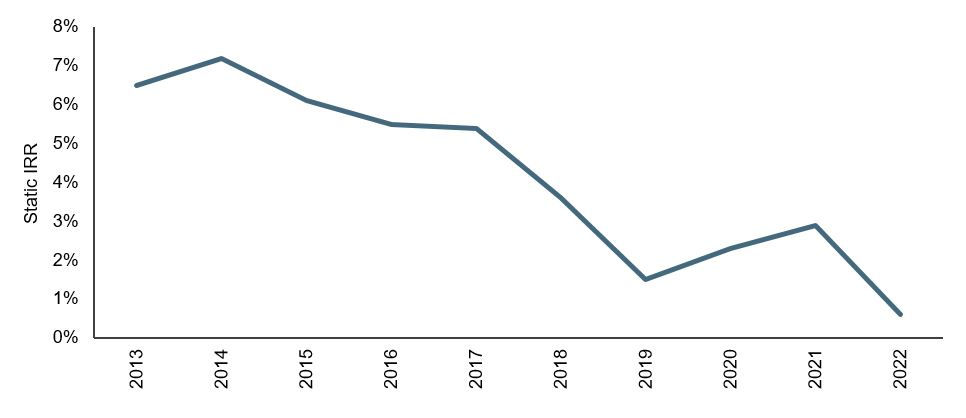
The report notes that 3i has abandoned raising third-party private equity funds and instead uses its own balance sheet for investments, a shift that significantly lengthens its investment horizon, making it more akin to a holding company like Berkshire Hathaway. The author recalls that during a 2016 meeting with 3i CEO Simon Borrows, Borrows stated bluntly that if 3i ever raised another private equity fund, investors should sell their shares, as it would be "a sign the pirates had taken over the ship!" The author argues that the transition from agent to principal brings a critical change in time horizon: pursuing internal rate of return (IRR) encourages short-term holding, while focusing on capital multiples encourages long-term holding. 3i is currently one of the top ten holdings in the Hosking Partners portfolio.
3i's Investment in Action Exemplifies Long-Term Holding
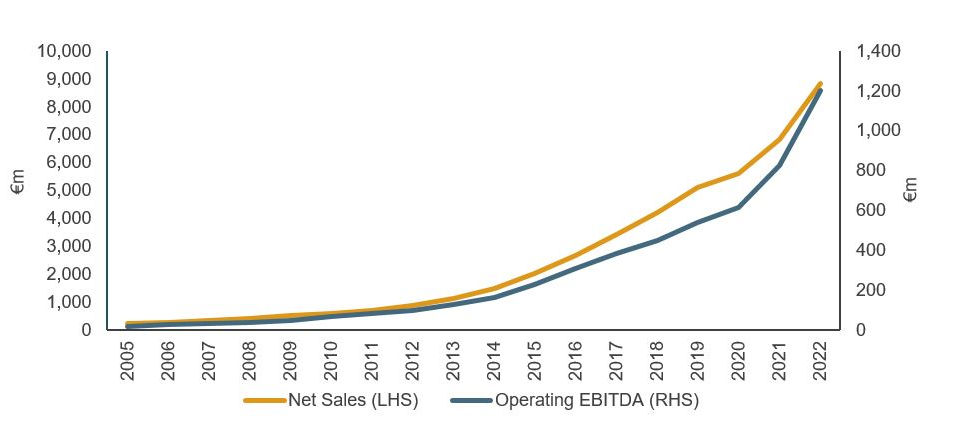
The author uses 3i's investment in Action, a European non-food discount retailer, as an example to demonstrate the structural advantages of permanent capital. 3i invested £106 million in Action in 2011, and the investment is now valued at £12 billion, with Action having returned over £1.7 billion to 3i during this period. The author emphasizes that 3i's indefinite horizon allows it to avoid forced sales at fund maturity, even when the asset still has years of growth potential. Additionally, Action's business model (leasing stores, collecting payments before paying suppliers) requires minimal capital for growth, which exposes it to the risk of being taken private by private equity. 3i's long-term holding not only provides far-sighted management but also allows public market investors continuous access to this asset.
3i's London Listing Offers Arbitrage Opportunities for Global Investors
The report argues that although 3i is listed in London, its main asset Action is one of Europe's fastest-growing retailers, and continental European investors are underweight in this stock, providing additional upside for unconstrained global investors like Hosking Partners. The author notes that Hosking Partners is indifferent to artificial classifications such as geography and is happy to exploit opportunities in the cracks between other investors' "silos."
Syncona's Permanent Capital Offers Structural Advantages in Biopharma Investing
The author views Syncona as another example of a long investment horizon, where permanent capital enables investment in early-stage biopharma projects, avoiding the competitive late-stage arena. Syncona, a holding company investing in healthcare firms, benefits from close ties with top UK research institutions and its major shareholder, the Wellcome Trust. Founded in 1936, the Wellcome Trust's permanent endowment status allows it to bear longer duration risks, such as purchasing property in South Kensington, London, in 1995 and profiting 15 years later. The author points out that successful exits in biopharma mostly occur three years before commercialization, and the typical 10-year venture capital fund structure is ill-suited for this long cycle, leading VCs to crowd into later stages. Syncona's permanent capital enables it to invest in early-stage opportunities with less competition and reasonable valuations, holding them until exit.
Syncona's Discount and Declining Industry Returns Create Investment Opportunity
Despite Syncona's unique advantages, its share price trades at approximately a 30% discount to net asset value; adjusting for its roughly £610 million in cash equivalents, the discount approaches 60%. The author acknowledges that as generalist investors, Hosking Partners has no edge in knowledge of molecules or gene therapies, but as capital cycle investors, it focuses on industry structure, competitive dynamics, and returns on capital. Citing Deloitte data, the author notes that the R&D return on investment for large biopharma companies has fallen from 6.2% to 1.2% over the past decade, prompting large pharma firms to acquire commercialized drugs from early-stage investors. The author concludes that Syncona is well-positioned on both the entry and exit sides.
Long-Term Strategy and Portfolio of Structural Advantage Companies
Hosking Partners employs a long-term, unconstrained investment approach, allocating a group of companies that similarly pursue structural advantages within its portfolio. The report argues that this method relies on client support aligned with similar philosophies, the use of a capital cycle approach, and the ability to construct a diversified portfolio. The author emphasizes that the portfolio includes companies such as Berkshire Hathaway, 3i Group (3i), and Syncona, which are merely part of a broader set of such firms. The author states, "the Hosking Partners portfolio features a number of companies which likewise pursue a structural advantage, allowing them to exploit long-term opportunities neglected by others," meaning: "Hosking Partners' portfolio includes many companies that similarly pursue structural advantages, enabling them to capitalize on long-term opportunities overlooked by others."
Time Validation and Delayed Returns
Successful investing requires waiting for others to eventually agree, and the longer the wait, the better the returns. The report quotes Joe Robillard: "successful investing is about having everyone agree with you … later," meaning: "Successful investing lies in getting everyone to agree with your view… but at a later time." The author uses this to echo the earlier themes of delayed gratification and long-term investing, emphasizing patience for the market to ultimately recognize value.
Investment Implications
By listing specific companies in the portfolio (Berkshire Hathaway, 3i, Syncona), the report demonstrates the practical application of its long-term strategy. Institutional perspective bias: Hosking Partners uses its own portfolio case to argue for the effectiveness of its approach. Readers should note that this is a position-holder's perspective, and the report does not disclose the specific allocation weights or performance of these companies.
Position Moves
| Ticker | Direction | Author's One-Sentence View | Key Data |
|---|---|---|---|
| Berkshire Hathaway | Hold & Observe | Top 20 holdings, co-investing with long-term owners to fend off premium buyout risk from private equity | Top 20 holdings; BNSF railway case shows its long-term perspective differs from industry PSR strategy |
| 3i Group | Hold & Observe | Top 10 holdings, investment horizon significantly extended after shifting from agent to principal, similar to Berkshire | Top 10 holdings; invested £106 million in Action in 2011, now valued at £12 billion, with over £1.7 billion returned |
| Syncona | Hold & Observe | Permanent capital offers structural advantages in early-stage biopharma investing, with discount providing a margin of safety | Share price trades at ~30% discount to NAV, nearly 60% discount after adjusting for cash; large pharma R&D return fell from 6.2% to 1.2% |