Three-Body Problem
Hosking Partners is a London boutique founded in 2013 by Jeremy Hosking, a portfolio manager at Marathon Asset Management for over 25 years. It runs a single global equity strategy built on the capital-cycle, supply-side approach — contrarian, long-term, and unusually diversified (350+ holdings) under a multi-counsellor model, managing around $5.5bn.
In plain words
This report says investing in China is risky because the Taiwan issue is as unpredictable as the 'three-body problem' in physics, and many Chinese industries have overcapacity and low returns. The author is cautious, favoring underweighting China. Key holdings: Alibaba, Tencent, JD, Meituan—online retailers with strong market positions and improving shareholder returns; TSMC, which makes most of the world's advanced chips and is a strategic asset; and indirect exposure via energy, materials, and Southeast Asian markets, though these could suffer if US-China tensions escalate.
At a Glance
One-sentence summary: Hosking Partners argues that the "Three-Body Problem" of the Taiwan issue, combined with capital misallocation across most Chinese industries, makes underweighting China a rational choice. [Cautious]
- The trilateral relationship among China, the US, and Taiwan is as complex and unpredictable as the "Three-Body Problem," making any simple forecast unreliable, with war being "possible" in historical terms.
- China's one-child generation faces high unemployment (20% for ages 16–24) and anti-war sentiment, which may internally constrain the impulse for conflict.
- In most Chinese industries, government-led overcapacity and annual subsidies of $250–400 billion continue to pressure capital returns.
- Online retail (Alibaba, Tencent, JD.com, Meituan) is one of the few direct exposures, given their stable market positions and improving shareholder returns.
- The portfolio maintains indirect exposure to the Chinese economy through energy and materials themes (approximately 25%) and Southeast Asian markets to balance risk.
The Three-Body Problem: The Complex and Unpredictable US-China-Taiwan Relationship, Underweight China as a Rational Choice
The article opens by stating that the triangular relationship among the US, China, and Taiwan resembles the "three-body problem" in classical mechanics, where minuscule changes in initial conditions can lead to wildly different outcomes, rendering any simple prediction unreliable. The author points out that the deep complexity of this geopolitical stalemate makes it difficult for experts to possess expertise in all three domains, and a single perspective (economic, military, or geopolitical) cannot provide actionable predictive advantages. The author's original words: "Much like the phenomenon in classical mechanics from which this note takes its title – whereby in a three-body system, any miniscule change in initial conditions can result in wildly different outcomes – the deep complexities of this three-way strategic impasse resist simplistic forecasting." Therefore, Hosking Partners' conclusion is "uncertainty," and its underweight position in China is a direct reflection of this uncertainty.
From a Realist Perspective, War Seems Inevitable
The article cites a 2015 study from Harvard Kennedy School, noting that out of 16 historical cases where a rising power challenged an incumbent, 12 resulted in war, and the current US-China competition, compounded by ideological divergence, raises the risk of conflict in the Taiwan Strait. The study found that in most scenarios ending in war, competition (over resources, land, or military power) was combined with ideological differences; in cases where war was avoided, the two sides shared similar ideologies (e.g., 15th-century Spain vs. Portugal, early 20th-century US vs. UK). The author argues that in the case of a rising China versus a dominant US, realist competition appears to be combined with distinct ideological disagreement, and while Taiwan is only one of several potential flashpoints, history tells us that war—in some form—is therefore probable. The author's original words: "In the case of rising China versus the dominant US, realist competition appears to be combined with distinct ideological disagreement. And while Taiwan is only one of several possible flashpoints, history tells us that war – in some form – is therefore probable."
Taiwan: A Dual Key in Geostrategy and Semiconductor Technology
The article argues for Taiwan's importance from both geographic and technological dimensions, asserting that its unification is a "geostrategic gem" for China and a key to maintaining regional hegemony for the US.
- Geographic Dimension: Taiwan is the central link in the "island chain" connecting Japan, South Korea, and the Philippines, controlling China's maritime access to the Pacific Ocean. If blockaded by a hostile navy, these critical sea lanes (along with the Malacca Strait) could quickly cut off China's maritime trade routes. The author notes that Chinese leader Xi Jinping's stance on Russia and the development of electric vehicles are both aimed at reducing dependence on imported seaborne oil, thereby mitigating this geographic vulnerability. Unifying Taiwan and controlling the Kaohsiung naval base would break the US-controlled island chain, not only securing China's passage to the Pacific but also potentially blocking US access to the South China Sea, severely undermining US regional competitiveness in Southeast Asia.
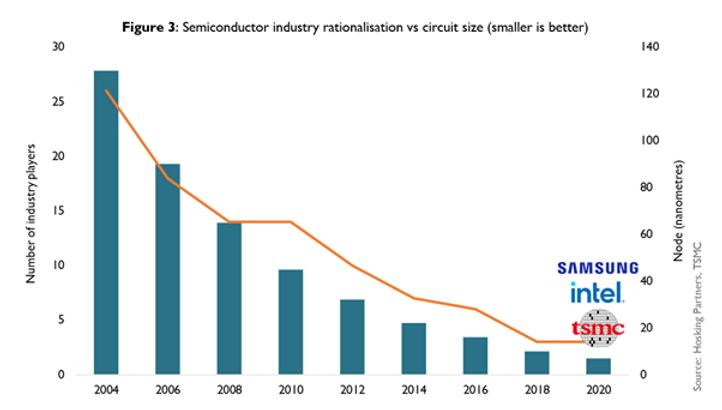
- Technology Dimension: Taiwan is the core of semiconductor manufacturing. TSMC produces approximately 60% of the world's semiconductors and nearly 90% of the most advanced chips. Both China and the US view semiconductor production and supply as critical strategic goals. China imports about $300 billion worth of semiconductors annually, most of which come from the US and its allies, South Korea and Taiwan. The author quotes Chris Miller from Chip War, stating that China is "astonishingly dependent on foreign products." Therefore, unifying Taiwan and controlling its chip industry represents a shortcut for China.
Hard Deterrence and Military Buildup: The Gravity of Conflict
The article points out that the US and its allies counter China's realist motives for unifying Taiwan through a strong military presence (hard deterrence), but the very buildup of military forces itself increases the risk of conflict. The US has deployed nearly 100,000 troops and the Seventh Fleet (50-60 vessels) in the Asia-Pacific region, with plans for significant increases in the future. Japan has committed to raising defense spending to 2% of its GDP, making it the world's third-largest defense spender. The AUKUS pact between the US, UK, and Australia aims to increase the number of nuclear submarines operating in Southeast Asia. These measures are largely intended to deter a Chinese invasion of Taiwan. Meanwhile, the Chinese military has the world's largest standing army, and its naval tonnage increases by the equivalent of the entire British Royal Navy every four years. The author cautions that the buildup of military assets does not necessarily mean they will be used, but Russia's invasion of Ukraine serves as a reminder that the mere presence of military force creates a "gravity toward conflict," especially in the hands of an authoritarian state lacking checks and balances. The author concludes: "If you build for war, war might well come knocking."
Investment Implications
The core investment implication of the article is: Geopolitical uncertainty is a key reason for Hosking Partners maintaining an underweight position in China. Readers should note that this is a perspective from a position-holder; the author provides narrative justification for this investment decision by emphasizing the complexity of the "three-body problem" and historical precedents. The institution judges that until the Taiwan Strait issue is clearly resolved or its risks are significantly reduced, the risk premium for the Chinese market will remain high, which is consistent with its capital cycle investment approach (emphasizing supply side and risk).
At a Glance: Hope from an Idealist Perspective – China's Internal Contradictions May Curb War Impulses
The article argues that despite the seemingly irreconcilable ideological confrontation between the U.S. and China, China's internal social, political, and economic contradictions are forming anti-war forces. The author first acknowledges that the fundamental disagreement between China and the U.S. over the global social order ("a fundamental disagreement about how societies – nationally and internationally – should be organised") does provide an ideological basis for conflict. However, Francis Fukuyama points out that neither China nor the U.S. is a perfect representative of its respective system – American democracy is in decline, and China's authoritarianism also reveals flaws. The author believes that a flawed system can both increase the risk of war through top-level miscalculation and pull the country away from conflict through bottom-up effects.
The One-Child Generation: A Social Force Against War
The one-child generation (aged 10-40) is a key variable for China's future, and its anti-war tendencies may constrain decision-makers. The author cites research by Keyu Jin, noting that this generation grew up under intense exam-oriented education. Despite a large population with advanced degrees, high-tech positions remain unfilled – as of the end of 2022, China's semiconductor industry had 300,000 job vacancies, while many master's and doctoral graduates were engaged in manual labor. The unemployment rate for 16-24 year olds reached 20%. The author's original words: "a remarkable 20% of 16 to 24-year-olds are unemployed." This predicament resonates on social media, with Lu Xun's 1918 short story "Kong Yiji" becoming a symbol for this generation. Keyu Jin notes that anecdotal evidence shows a widespread aversion to all-out war even among those who consider Taiwan part of China, and this sentiment has intensified after the Russia-Ukraine war. The author emphasizes that the 2022 protests against the zero-COVID policy were led precisely by these "overqualified manual laborers," demonstrating that this generation's political influence cannot be ignored.
The Paradox of Authoritarianism: Structural Constraints, Not War Propellants
China's concentration of power may paradoxically inhibit war decisions through its bureaucratic system. The author cites China expert Victor Shih, who argues that the more power is concentrated in the chairman, the more top elites fear retaliation and thus avoid taking operational risks, tending toward "paper implementation" and limiting actual institutional development. The author's original words: "the extreme concentration of power can also have the counter-intuitive effect of limiting meaningful policy action." Shih points out that the way power operates in Beijing is fundamentally different from Moscow – the bureaucracy is larger, and decision-making authority is less delegated, unlike Putin's "mafia-style" model. Therefore, the author believes that the view that China moving toward one-man rule would increase the likelihood of invading Taiwan may be overly simplistic – not only does public opinion still matter, but the structural realities of maintaining a one-man state may hinder rather than grease the path to war by lowering the system's risk appetite. However, the author also warns that this dynamic could increase the risk of bottom-level miscalculation, as seen in recent close encounters between U.S. and Chinese naval vessels.
Economic Woes: Short-Term Constraints on War Options
China's economy, facing deflation, debt, and employment pressures, lacks the leeway for military action against Taiwan in the short term. Key data are as follows:
| Economic Indicator | Current Status |
|---|---|
| GDP Deflator | Recently turned negative (see Figure 4) |
| Local Government Debt Repayment | Over 1 trillion RMB per month, exceeding 100% of local budget revenue and still growing |
| Youth Unemployment | 20% for ages 16-24 |
| Housing Sales and Exports | Both weak |
| Credit Impulse | Starting to decline, indicating actual tightening of monetary conditions |
The author notes that the Chinese government has relatively limited control over its own economic destiny – if U.S.-China relations collapse, exports and employment would deteriorate further. Therefore, despite hostile rhetoric, a stable global macroeconomic outlook and constructive Western trade relations remain in China's interest. This limits China's options on the Taiwan issue in the short to medium term and incentivizes maintaining the status quo.
Investment Implications
The article concludes that the likelihood of full-scale war is low in the short term, but tensions will continue to escalate. The author cites Fred Kagan, noting that "coercion" (war) is just one path to unification, and the most costly one, attempted only as a last resort; other paths include "strong persuasion" and "compellence." The author judges that as economic conditions ease, the scope and intensity of pressure tactics against Taiwan may expand, and the risk of miscalculation will rise accordingly. Financial sanctions (already tested on Russia) may be used more quickly and aggressively by both sides. The key trade-off is: short-term economic recovery may be positive for Chinese stocks, but recovery would enhance China's option space on the Taiwan issue, creating long-term risks. The author states they will closely monitor this dynamic to determine portfolio exposure. Institutional perspective bias note: As a Western asset manager, Hosking Partners' geopolitical analysis naturally carries a Western security perspective, and this article aims to explain the rationale for its underweight position in China. Readers should be aware of this stance.
From a Capital Cycle Perspective, Most Chinese Sectors Remain Unattractive
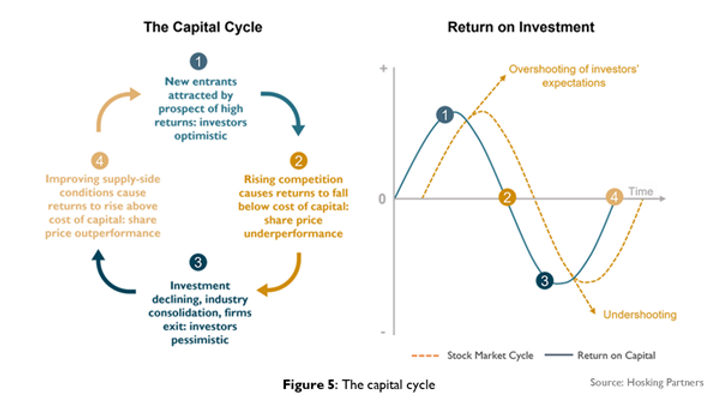
The report argues that from a capital cycle perspective, most Chinese sectors will continue to face pressure on future returns on capital due to government-led overcapacity and capital distortions. The author points out that capital flows into certain Chinese industries and their relationship with future supply are difficult to observe—corporate filings are opaque, national-level data is often altered, and third-party audit quality is consistently poor. The author cites Chinese coal production data as "extremely unreliable," yet even so, directional judgments based on supply remain valuable: directionally, particularly in the extractive industries driving China's growth, there is "state-driven overcapacity." Heavily subsidized coal-fired power and questionable labor practices give China a cost-curve advantage globally, allowing it to dominate market share across a range of upstream and midstream commodities. These industries are "running these industries for share rather than returns," a trend that shows no sign of abating, as the Chinese Communist Party (CCP) consolidates influence through reforms that blur the lines between private and state-owned enterprises. Companies are required to establish formal CCP committees, whose activities are opaque and lack shareholder oversight. Meanwhile, China's industrial subsidies amount to $250–400 billion annually, nearly 2% of GDP—three times that of South Korea, the world's second-largest industrial subsidy economy. These subsidies have fostered an increasingly complex network of joint ventures, and combined with direct CCP involvement, they serve as an additional driver of capital flows. The capital cycle approach tells us that, all else being equal, if the CCP continues to inject capital into these industries and distort free-market competition, future returns will remain compressed.
Online Retail Is One of the Few Areas with Direct Exposure
Hosking Partners' direct exposure to Chinese companies is primarily concentrated in online retail, citing its deeply entrenched market position and high consumer mindshare. The author argues that platforms like Taobao, Tmall, the WeChat super-app, and JD.com's extensive logistics infrastructure act as a "toll road" on the improvement of Chinese living standards—a top priority for the CCP. The author acknowledges underestimating the impact of government regulation and intensifying industry competition in recent years but sees early signs that these headwinds are receding: Ant Group's $1 billion fine was signaled as the final step in the regulatory crackdown; management is increasingly focused on high-quality growth and cost efficiency, which in most cases has improved profitability; and the scale of shareholder returns has been surprising—Alibaba reduced its share count by 4% in 2022, while Tencent returned over 10% of its market capitalization (including distributions of JD.com and Meituan shares). Many investors once believed these companies would never be allowed to return significant capital to Western shareholders, but signs suggest that higher levels of returns will persist. In contrast to the government intervention causing oversupply in extractive industries, capital cycle logic supports investment in this area.
Indirect Exposure Through Energy, Materials, and Southeast Asian Markets
Despite being underweight direct Chinese holdings, Hosking Partners maintains indirect exposure to the Chinese economy through energy and materials themes, as well as Southeast Asian markets. The author acknowledges cracks in the Chinese economy (particularly in real estate) and growing macro concerns over demographic decline but does not question its long-term potential—even if the unprecedented growth rates of the 2000s and 2010s are behind it, China will remain a key global economic and political player in the 21st century and beyond. As such, the portfolio gains indirect exposure to China through energy and materials themes (approximately 25% of the portfolio), where both supply and demand are driven by China. Additionally, the portfolio is overweight markets in Hong Kong, Malaysia, the Philippines, Thailand, and South Korea, where capital cycle dynamics are often linked to China. The author emphasizes that these interconnections cannot be captured by simple attribution metrics but form the core of their global generalist approach—using the capital cycle lens to "look through" industry and geographic differences and capture opportunities beyond the headlines. In the event of a full-scale US-China war, all bets are off, but these indirect exposures should remain resilient across a broader range of sub-threshold scenarios.
Investment Implications
The report clearly advises: Avoid direct holdings in Chinese extractive industries and government-subsidized industrial stocks, as their returns on capital will remain under pressure; online retail (Alibaba, Tencent, JD.com, Meituan) is one of the few direct exposures worth considering due to market positioning and improving shareholder returns; maintain indirect exposure to the Chinese economy through energy, materials, and Southeast Asian markets (Hong Kong, Malaysia, the Philippines, Thailand, South Korea) to balance geopolitical risks. Institutional perspective bias: As a global generalist fund, the author uses the capital cycle framework to justify its underweight China decision, but it is worth noting that the discussion of indirect exposure may downplay actual risks—if US-China tensions escalate, Southeast Asian markets are unlikely to remain insulated.
Conclusion: Geopolitical Risk and Capital Misallocation Overlap — Underweighting China Is a Rational Choice
Hosking Partners argues that the strategic uncertainty surrounding the Taiwan issue, combined with the capital misallocation identified by capital cycle analysis across most of China's markets, together form the core rationale for its underweight position in China. The author believes that maintaining the status quo currently serves the interests of all three parties involved, but war is not inconceivable, and the room for miscalculation is significant. In recent years, confrontational diplomacy between a populist, protectionist West and an increasingly ideological China has eroded the checks and balances that might otherwise mitigate such instability. The author's original words: "This dynamic means that there is a lot that could happen that isn’t war, but which still carries risk for Western investors." This implies: "This dynamic means that many events short of war could still pose risks for Western investors." The West's failure to prevent the invasion of Ukraine suggests that measures such as sanctions and asset freezes will be deployed more quickly in the future, even before military conflict erupts. Capital controls, trade restrictions, and import bans are already in place, and the way China allows foreign investment in A-shares appears to facilitate asset seizure. Although valuations in some markets are attractive, the overall risk-reward profile remains skewed to the downside.
Better to Be Roughly Right Than Precisely Wrong
Citing this adage, the author argues that in China, geopolitical risks and a lack of transparency make the risk of being "precisely wrong" uncomfortably high, especially after reflecting on the Russian experience. However, the firm's unconstrained, holistic investment approach seeks to be "roughly right" overall by maintaining limited exposure to China's online retail sector, focusing on energy and materials, broadly positioning across Southeast Asia, and showing strong interest in the semiconductor capital cycle. The author states: "we are hopeful that our holistic approach to China and the surrounding region strikes a balance that is ‘roughly right’." This means: "We hope that our holistic approach to Greater China and the surrounding region achieves a balance that is 'roughly right'." The fund will continue to test this thesis through research trips and other means.
Investment Implications
This article clearly conveys Hosking Partners' cautious stance on the Chinese market, with the core logic being that geopolitical risks outweigh short-term valuation appeal. Investors should note that this is a long-term judgment based on a "capital cycle" and "geopolitical analysis" framework, not a short-term trading signal. The author explicitly acknowledges that the fund's limited holdings (e.g., in online retail, energy, and materials) are based on conviction in specific areas, but the overall risk-reward remains unfavorable. Institutional Perspective Bias: As a long-term investment institution emphasizing being "roughly right," its narrative naturally leans toward providing theoretical support for an underweight position in China. Readers should be aware that its conclusions may reinforce its own positioning bias.
Position Moves
| Ticker | Direction | Author's One-Sentence View | Key Data |
|---|---|---|---|
| Alibaba | Hold & Observe | Its online retail "toll road" position is solid, regulatory headwinds are fading, and shareholder returns are improving. | Reduced shares by 4% in 2022 |
| Tencent | Hold & Observe | Its super-app moat is deep, and the scale of shareholder returns is surprising. | Returned over 10% of market cap in 2022 (including distribution of JD.com and Meituan shares) |
| JD.com | Hold & Observe | Its extensive logistics infrastructure constitutes a "toll road," and profitability is improving. | No specific data provided |
| Meituan | Hold & Observe | Mentioned as a distribution target from Tencent, with a solid market position. | No specific data provided |
| TSMC | Not explicitly stated | Core to semiconductor manufacturing, producing nearly 90% of the world's most advanced chips, making it a key geopolitical asset. | Approximately 60% of global semiconductors, nearly 90% of the most advanced chips |
| China's Extractive/Industrial Stocks | Reduce position | State-driven overcapacity, operating for market share rather than returns, with future returns under sustained pressure. | Coal production data "extremely unreliable"; industrial subsidies near 2% of GDP |