The Opportunity in Japan
Hosking Partners is a London boutique founded in 2013 by Jeremy Hosking, a portfolio manager at Marathon Asset Management for over 25 years. It runs a single global equity strategy built on the capital-cycle, supply-side approach — contrarian, long-term, and unusually diversified (350+ holdings) under a multi-counsellor model, managing around $5.5bn.
In plain words
This piece says Japan's stock market reforms are working but have a long way to go. The author, hosking_partners, is optimistic, noting the Tokyo Stock Exchange is pushing companies to improve capital efficiency (e.g., price-to-book ratio above 1). Many firms still hoard cash or are too fragmented. Key holdings: ① a bloated paper & packaging firm with a hidden world-class tech division; ② an oligopolistic oil refiner gaining pricing power after industry consolidation; ③ a media company with globally famous IP but negative enterprise value (worth less than its cash), which could unlock value.
At a Glance
One-sentence summary: The author believes Japan's equity market reforms have shifted from policy to execution, with notable short-term effects but even greater long-term potential, maintaining a [bullish] stance.
- The Tokyo Stock Exchange requires companies to raise their price-to-book ratio (PBR) above 1x; currently, over 50% of Japanese stocks have a PBR below 1x, and 40% of Prime market constituents have disclosed "capital improvement plans."
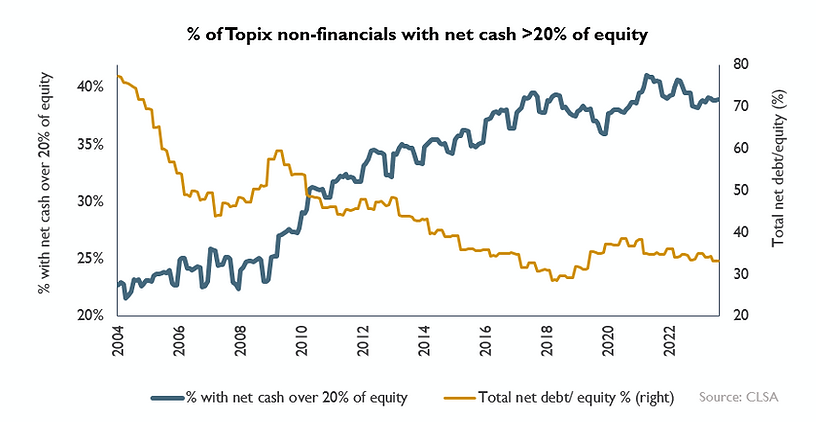
- Total shareholder returns (dividends + buybacks) hit a record high for the third consecutive year, yet 46% of Japanese companies still hold net cash balance sheets (compared to less than 20% in the U.S.).
- Proxy advisory firms ISS/Glass Lewis recommend that institutional investors vote against management when non-operating assets are excessively high; approximately 25% of Japanese companies' net assets are non-operating.
- Japan's industries are highly fragmented (e.g., over 10 listed drugstore chains, hundreds of regional banks), and with 930,000 private company owners aged over 70, there are structural opportunities for M&A-driven industry consolidation.
- Hosking Partners adopts a diversified strategy, holding over 50 stocks in its portfolio, with more than 50% of positions in companies with market caps below $5 billion, avoiding concentrated bets.
Japan's Equity Market Reform Has Shifted from Policy to Execution: Short-Term Results Are Significant, but Long-Term Potential Is Even Greater
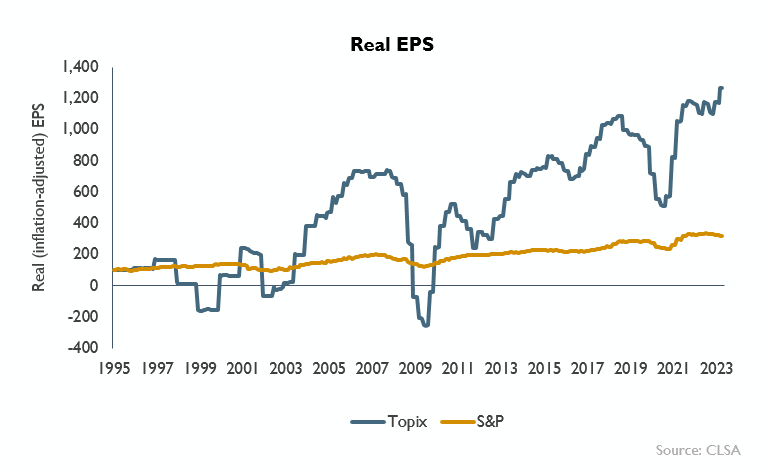
The report argues that the capital efficiency reforms driven by the Tokyo Stock Exchange (TSE) are reshaping Japan's equity market away from its "value trap" label, but the process remains in its early stages. The author notes that the TSE reforms can be traced back to Abe's "three arrows" (2012), with key milestones including the 2015 Corporate Governance Code and the 2021 Guidelines for Investor and Company Engagement. Currently, over 50% of Japanese stocks have a price-to-book ratio (PBR) below 1x, and the TSE requires companies to raise their PBR above 1x. Short-term results include: 40% of Prime Market constituents (approximately 1,600 companies) have disclosed "capital improvement plans," and total shareholder returns (dividends plus buybacks) have hit record highs for the third consecutive year. However, the author emphasizes that 46% of Japanese companies still hold net cash balance sheets (a legacy of the post-bubble economy), compared to less than 20% in the U.S. The author's original words are: "But there is still a long way to go."
Multi-Party Forces Drive Reform in Concert, with Proxy Voting Agencies and Activist Investors Forming a Synergy
The report argues that the TSE is not acting alone; the Ministry of Economy, Trade and Industry (METI), proxy voting agencies such as ISS and Glass Lewis, and overseas activist investors are forming a reform synergy. Specific details include:
- METI's M&A reforms: Aimed at reducing obstacles to mergers and industry consolidation.
- Voting recommendations from ISS and Glass Lewis: The author's original words are: "recommendation that institutional investors vote against Japanese executive teams and their boards if non-operating assets are excessive." On average, about 25% of Japanese companies' net assets consist of non-operating assets such as domestic and foreign stocks. Meanwhile, in 2022, the average proportion of independent directors on Japanese boards was only 35%, compared to over 85% in the U.S.
- Activist investor activity: Overseas activist investor activity is near historical highs, targeting companies with large holdings of non-operating assets (including land valued at historical cost), excessive net cash, or those that could unlock value through spin-offs or divestitures.
Industry Consolidation and the Return of Inflation Provide Additional Levers for Improving Returns on Capital
The report points out that Japan's high degree of industry fragmentation, combined with the aging of small and medium-sized enterprise owners, creates structural opportunities for M&A-driven industry consolidation. For example, Japan has over 10 listed drugstore chains, more than 9 major pharmaceutical companies, and hundreds of regional banks. Meanwhile, the corporate finance firm Nihon M&A estimates that 930,000 private companies in Japan have owners aged 70 or older. The author argues that industry consolidation will free up capital and improve returns, and that consolidated industries find it easier to push through price increases—a factor that had been absent for years before the return of inflation over the past 18 months. The author's original words are: "Companies in consolidated industries can find it easier to push through price increases – a further lever to improve returns on capital."
Investment Implications
Hosking Partners adopts a diversified strategy to capture opportunities in Japan, with a portfolio of over 50 stocks, of which more than 50% have a market capitalization below $5 billion. The author emphasizes avoiding concentrated bets, as the reform process is non-linear and the greatest divergence between price and value exists in less liquid small-cap stocks. The portfolio includes: bloated paper and packaging companies with hidden world-class technology divisions, an oligopolistic refinery, a niche medical technology company under pressure from activist investors, and a media company with globally recognized intellectual property but negative enterprise value. Institutional perspective bias: The author defends the portfolio's holdings by arguing that the "value trap" label is outdated and using narratives such as "this time is different." Readers should note that this is a perspective from a position-holder, and the actual execution of reforms and the sustainability of inflation still require verification.
Position Moves
| Ticker | Direction | Author's One-Sentence View | Key Data |
|---|---|---|---|
| Japan's bloated paper & packaging companies | Hold & Watch | Hides a world-class technology division; reforms could unlock value | Specific data not disclosed |
| Japan's oligopolistic oil refiners | Hold & Watch | Enhanced pricing power after industry consolidation, improving return on capital | Specific data not disclosed |
| Japan's niche medical technology company | Hold & Watch | Under pressure from activist investors to push for asset divestiture or spin-off | Specific data not disclosed |
| Japan's media company with globally renowned IP | Hold & Watch | Enterprise value is negative; reforms could unlock IP value | Enterprise value is negative |