The Gambler
Hosking Partners is a London boutique founded in 2013 by Jeremy Hosking, a portfolio manager at Marathon Asset Management for over 25 years. It runs a single global equity strategy built on the capital-cycle, supply-side approach — contrarian, long-term, and unusually diversified (350+ holdings) under a multi-counsellor model, managing around $5.5bn.
In plain words
This report argues that Russia's invasion of Ukraine is essentially an attempt to slow the global energy transition and protect its fossil fuel exports. The author is cautiously optimistic, believing the war will keep oil prices elevated long-term. Three key holdings are mentioned: Rosneft, whose CEO publicly clashed with Putin over oil pricing; BP, which held significant Russian assets before the war; and Shell, also exposed to Russian assets.
At a Glance
One-sentence summary of the author's market judgment this period: The Russia-Ukraine war is fundamentally an energy geopolitics game, which will systematically raise the price floor for fossil fuels and prolong the commodity supercycle. [Cautiously optimistic]
- Russia's invasion of Ukraine is characterized as "a continuation of energy transition politics by other means," with the core aim of slowing the global energy transition and buying time for itself.
- There is a fundamental conflict of interest between the Russian government and oil companies: high oil prices (>$120/barrel) allow the government's tax share to reach as high as 80%, while lower prices are more favorable for oil companies to maintain production.
- Russia is accelerating the shift of energy exports to Asia (China, India), and is expected to export 210 bcm/y of natural gas to non-European markets by 2025, generating annual revenue of $30–50 billion.
- The Russia-Ukraine war will accelerate "deglobalization." The energy transition supply chain is highly concentrated (China holds 90% of the global market share), and the cost of reshoring will push up transition prices.
- Non-OPEC+ oil-producing countries (especially small African producers) are seeing a revival opportunity, and the institution is exploring related investment ideas.
Russia’s Invasion of Ukraine Is Essentially an Energy Geopolitical Game
The article opens by clearly stating its core thesis: Russia’s actions in Ukraine are essentially a continuation of the politics of the energy transition. The author invokes the framework of Prussian military theorist Carl von Clausewitz, noting that “the war in Ukraine is a continuation of the politics of the energy transition by other means.” The article argues that the key to understanding Russia’s behavior lies in the geopolitical perspective of energy supply: oil and gas exports account for 60% of Russia’s export revenue and 40% of its federal budget, with the vast majority flowing to Europe. As the energy transition forces consolidation in the oil market, Russia’s marginal production costs rise, and its export competitiveness will decline. Russia’s strategy is twofold: on one hand, it encourages a slowdown in the energy transition; on the other, it redirects its export economy toward regions where the transition is slowest.
The “Losers” of the Energy Transition Are Clearer Than the “Winners”
The author judges that in the early stages of the energy transition, “losers” are easier to identify than “winners,” and Russia is the most directly exposed player. The article points out that, unlike previous energy transitions, the current one is not “towards a more efficient substitute” but “away from an unwanted incumbent.” This means the future energy mix is uncertain, making winners hard to discern, but losers are clear—those countries whose economies are heavily dependent on exporting what we are moving away from (especially oil). The author’s original words are: “It is therefore in the geopolitical interest of exposed economies to slow the speed of the transition as much as possible in order to buy time to reposition.” Russia is a quintessential example of such an economy.
The Russia-Germany Energy Relationship Began with the Suez Crisis and Has Continuously Undermined NATO’s Strategic Unity
The article traces the historical roots of Russia as an energy power, emphasizing that the Russia-Germany energy relationship has continuously undermined NATO’s strategic unity since 1963. Key historical milestones include:
| Time | Event | Geopolitical Impact |
|---|---|---|
| 1956 | Suez Crisis | Exposed Middle Eastern oil to threats from Arab nationalism, with the U.S. unwilling to unconditionally rescue Europe |
| 1963 | Druzhba (“Friendship”) pipeline reaches Germany | Birth of the Russia-Germany energy relationship, persistently weakening the strategic unity of NATO and the EU |
| 1970 | U.S. conventional oil production peaks | U.S. domestic output did not surpass this peak until the shale revolution in 2018 |
| 1986 | Saudi Arabia drives down oil prices, triggering a crisis | The Soviet Union, due to economic fragility, technological backwardness, and severe budget deficits, saw its oil production collapse, followed by the dissolution of the USSR |
The article stresses that the Soviet Union’s “geological advantage” was fatally undermined by its “economic disadvantage.” The author notes: “The Soviet command economy was unable to deploy the required technologies or generate the human capital required to maintain such a productive hydrocarbon industry.” When Saudi Arabia drove down oil prices in 1986, the Soviet Union, burdened by severe budget deficits, high sensitivity of government revenue to oil prices, and a lack of technological support, saw its oil production collapse, leading to the dissolution of the USSR. This historical lesson is key context for understanding current Russian behavior.
Putin’s Energy System: A Hybrid of State Control and Private Efficiency
In the early 2000s, Putin reasserted state control over Russia’s oil industry, creating a hybrid system that allows private capital to attract foreign investment and technology while ensuring the state retains effective control over energy assets through licenses, exploration rights, and pipeline infrastructure. The report argues that Putin’s system is not a Soviet-style inefficient command economy but rather “a hybrid system.” On one hand, “a handful of domestic and foreign private interests are permitted to exist to attract foreign capital and Western technologies”; on the other, “their operations remain reliant on the government.” This reliance is secured not only through intangible assets like licenses but also through physical infrastructure, particularly pipelines. At the same time, Putin systematically replaced the early energy oligarchs with loyal allies, many from the intelligence community.
This system achieved notable results between 2000 and 2019: oil production grew by 200%, export revenues rose by 230%, and GDP per capita increased by 230%. Unlike Saudi Arabia, Iran, or Venezuela, Russia cultivated a more sophisticated illusion of free enterprise—foreign direct investment (FDI) into Russia more than doubled between 2005 and 2021, while FDI into Saudi Arabia halved over the same period. Western oil majors (BP, Shell, Total) and ESG funds still held substantial Russian assets before February 2022. The report emphasizes that this “Western-facing corporate landscape” was once believed to constrain excessive state power, but this illusion was shattered in February 2022.
Conflict of Interest Between Government and Oil Companies: High Oil Prices vs. High Output
There is a fundamental conflict of interest between the Russian federal government and oil companies: the government benefits most from high oil prices (even if output declines), while oil companies prefer to maintain high output in exchange for lower prices. The report notes that this conflict “is partly ideological, but it is primarily financial.” When oil prices exceed $120 per barrel, the government’s tax share reaches approximately 80%; when prices are lower, companies retain a larger portion of revenue to sustain production. In May 2022, with an average oil price of $113 per barrel, Russian government revenue from oil reached $20 billion, a 400% increase compared to May 2016 (when oil was $43 per barrel). This allowed the Russian government to spend an additional $10 billion (a 20% increase) on defense in 2022, largely offsetting the impact of sanctions—while the entire EU’s military aid to Ukraine was only $2 billion.
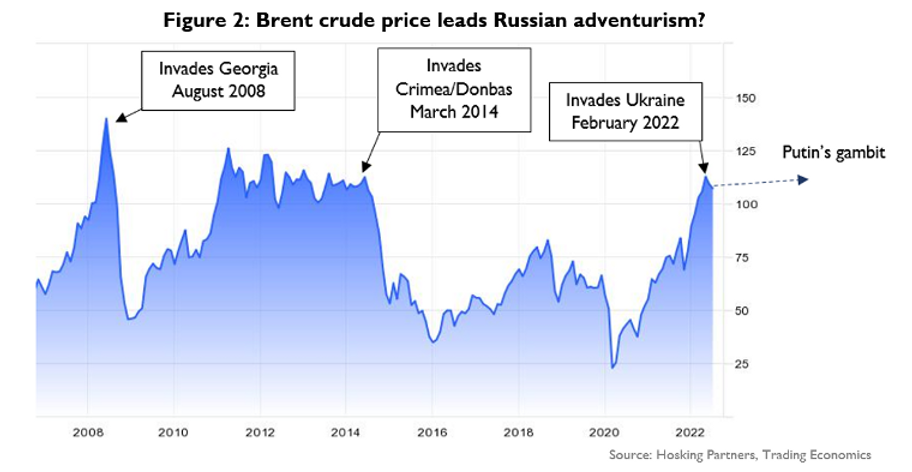
This conflict played out publicly in April 2020, when Putin clashed with Rosneft CEO Igor Sechin over the OPEC+ agreement. The dispute centered on three issues: first, lower oil prices reduce the government’s tax share; second, the operating costs of West Siberian oil have historically been lower than global peers, allowing companies to remain profitable even at low prices; third, low oil prices make Russian crude more competitive against rivals, especially U.S. shale oil with a higher average breakeven point. The report concludes: “high oil prices are more directly advantageous for the Russian government than – as may be assumed – the Russian oil majors.” Conversely, low oil prices severely hurt government revenues. This explains why Putin’s military adventurism coincided with rising global energy prices. Following the invasion of Ukraine, several key figures in Russia’s oil industry resigned, including outspoken Lukoil CEO Vagit Alekperov.
Investment Implications
The article reveals the inherent fragility of Russia’s energy system: the conflict of interest between the government and companies, dependence on high oil prices, and the long-term structural challenge posed by the energy transition. The report suggests that this internal tension—between the government and oil companies, as well as pressures related to climate change and the energy transition—is widening cracks within Putin’s Russian system. Investors should note that this is an analysis from a position-holder’s perspective: the report uses extensive data to argue the contradictions in Russia’s energy system but offers no specific investment advice or direction. The core risk lies in the fact that Russia’s energy strategy serves geopolitical objectives rather than commercial efficiency, exposing it to greater structural uncertainty in the era of energy transition.
Russian Oil Demand to Peak Around 2030
The report notes that Russian authorities have officially acknowledged that oil demand will peak around 2030, breaking two decades of denial regarding the energy transition. Global oil demand currently stands at approximately 100 million barrels per day (mbpd), with Russia supplying about 11 million barrels (12% of the total). The author's original statement reads: "There is general agreement that oil demand is likely to peak in the late 2020s to early 2030s at around 105-110mbpd, before commencing a gradual decline." This translates to: "There is broad consensus that oil demand is likely to peak between the late 2020s and early 2030s at around 105-110 mbpd, before beginning a gradual decline." The International Energy Agency's "Net Zero by 2050" pathway requires demand to fall to 24 mbpd, while more realistic estimates range from 85 to 100 mbpd. Oil's share of total energy consumption is expected to decline from 25% to around 17%.
Russia Faces Structural Pressure in the Energy Transition
The author argues that Russia is structurally disadvantaged in the energy transition due to its heavy fiscal reliance on oil export revenues and persistent competitive pressures. In 2019, oil and gas exports accounted for 60% of Russia's export revenue and 40% of its federal budget. Russia's 2020 "Energy Strategy to 2035" acknowledges that, without significant tax relief, one-third of its proven but undeveloped TRIZ oil fields would be unprofitable at oil prices below $70-75 per barrel—a breakeven point 300% higher than historical levels. If these fields remain undeveloped, Russia's oil production could decline by as much as 40% as output from mature fields decreases. The West Siberian Basin, which accounts for 50-70% of Russia's crude oil production, has seen output decline for over a decade, with less oil and more water being extracted.
Russia Faces Dual Disadvantages in Market Consolidation
The report concludes that during the consolidation of the oil market, Russia not only suffers from insufficient greenfield investment but also remains overly dependent on Western technology and human capital. Russia's imports of manufactured goods and machinery are twice its exports, with an even wider gap in advanced technology sectors such as computers. The author cites a harsh assessment from Dieter Helm, Professor of Energy Policy at the University of Oxford: "as far as new technologies are concerned, Russia is nowhere. Nowhere in robots, 3D printing, solar, or even mainstream software and data." This translates to: "When it comes to new technologies, Russia has achieved nothing. It has achieved nothing in robotics, 3D printing, solar energy, or even mainstream software and data." This has created tension between Putin and energy companies—the latter eager for Western joint ventures, while Putin is reluctant to abandon his anti-Western stance.
Investment Implications
The investment theme highlighted by the report is that the energy transition will lead to long-term consolidation in the oil market, with Russia structurally disadvantaged due to high costs, technological dependence, and fiscal vulnerability. Readers should note that this is a perspective from a position-holder—Hosking Partners, as a capital cycle researcher, may tend to short or avoid Russia-related assets, and its analysis carries a pessimistic bias regarding Russia's outlook.
Russia’s “High-Stakes Gamble”: Using War to Slow the Energy Transition
The report argues that Putin’s invasion of Ukraine is not “irrational” but rather a carefully calculated move based on an “active defense” strategy, with the core aim of slowing the energy transition through manufactured turmoil, buying time for Russia.
- The author notes that approximately 50-55% of Russia’s exports flow to Europe, including over 50% of its oil and nearly all of its natural gas. This physical pipeline network (Figure 1) both solidifies Putin’s control over oil companies and ties the Russian economy to European energy demand. In 2019, Russian imports accounted for about 30% of total European energy demand.
- Since the 1956 Suez Crisis, this supply network has been Russia’s geopolitical “trump card,” providing strong leverage over key EU nations. But Putin has realized that the levers of the energy transition are gradually slipping from Russia’s grasp.
- The author’s original words: “Putin has realised that the levers driving the energy transition are increasingly out of Russia’s grasp.”
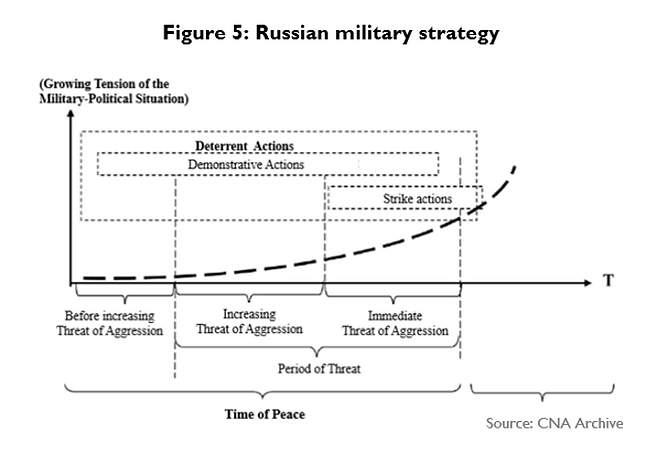
- Russia’s “active defense” strategy includes: powerful deterrence (“the threat of inflicting unacceptable losses”), persistent disruption of an opponent’s advantages, and opportunism in the face of an opponent’s weaknesses. Actions over the past decade—from the poisoning in Sochi, interference in Western elections, the creation of the Syrian refugee crisis, to the annexation of Crimea and the invasion of Ukraine—should all be viewed through this lens.
- The author emphasizes: “The fundamental aim is to internally weaken the Western alliances (NATO and the EU) that Putin considers the primary threat to Russian power projection.”
Inflation and War: The “Putin Put” That Raises the Oil Price Floor
The report argues that Putin is leveraging post-pandemic supply chain strains and inflationary trends, using war to further drive up energy prices and create favorable fiscal conditions for Russia.
- After the pandemic, oil prices rebounded sharply, and Russia’s export revenues surged. Putin appears to have recognized the pandemic’s impact on supply chains and commodity prices and may have welcomed the Fed’s expansionary response.
- As inflation intensified in late 2021 and oil prices neared $100, Russia’s troop buildup on the Ukrainian border “poured fuel on the fire.” Putin’s gamble is that a war in Europe will accelerate inflationary trends, and that inflation and high interest rates will curb the EU’s pursuit of a rapid, renewables-led transition model.
- The author cites Bob Brackett, an analyst at Bernstein Research, who calls this the “Putin put”: “The invasion of Ukraine, combined with the weaponisation of hydrocarbon supply to Europe, has raised the upper floor price for oil in the medium term.”
- Crucially, due to systemic underinvestment shown in Figure 4, Russia has gained some control over the duration of these conditions.
Pivot to Asia: China and India as Long-Term Outlets for Russian Energy Exports
The report argues that the core of Russia’s strategy is to pivot energy exports toward Asia, especially China and India—the two markets with the slowest decarbonization globally—to hedge against declining European demand.
- China consumes approximately 20,000 TWh of useful energy annually (30% of the global total), with 65% coming from coal. China’s reliance on coal is a “feature, not a bug,” as the Chinese Communist Party sets domestic coal prices, keeping them below the cost of renewables. By 2060, China’s energy use could double or even triple, generating 5–20 billion tons of unabated CO₂ emissions annually (compared to the current global total of ~5 billion tons per year).
- India is in a similar position, consuming about 5,000 TWh of useful energy annually, with roughly 50% from coal. The fastest and most cost-effective emission reduction pathway for both countries is “massive coal-to-gas switching.”
- For China alone, natural gas demand is projected to grow from 300 billion cubic meters per year (bcm/y) to 1,000–3,500 bcm/y by 2060. Even under the most aggressive decarbonization scenario, gas demand more than triples. By 2030, China will need to increase its annual LNG supply by more than the total incremental volume currently forecast globally.
- Russia’s natural gas supply potential is sufficient to attract long-term strategic partnerships in Asia. In 2021, Russia produced 762 bcm of natural gas, exporting about one-third. Currently, 75% goes to Europe (accounting for nearly 90% of revenue), with only 6% exported to China.
- Pipeline projects under development include: Power of Siberia 1 (target capacity of 38 bcm/y by 2025) and Power of Siberia 2 (planned capacity of 50 bcm/y). The government has also set an LNG export target of 110–190 bcm/y by 2025 (compared to a current five-year average of 27 bcm).
- The author estimates that by 2025, if 75% of LNG flows to non-European markets like China, combined with the two pipelines, Russia could export 210 bcm/y of natural gas to non-European markets. Western Europe currently imports about 185 bcm/y, and this growth is sufficient to offset the decline in European demand due to sanctions and supply diversification.
- At a price of $4–6 per thousand cubic meters, this export market alone could generate $30–50 billion in annual revenue for Russia, equivalent to 18–30% of its current total revenue from oil and gas exports to Europe.
Investment Implications
The report’s core investment thesis is that Russia, through war and the weaponization of energy, has raised the global floor price for oil and gas in the medium term, while accelerating the restructuring of global energy supply chains toward Asia (especially China and India). Investors should focus on:
- Higher oil and gas price floor: Systemic underinvestment, combined with geopolitical risk, could keep oil prices elevated for a longer period.
- Surge in Asian gas demand: The coal-to-gas transition in China and India will create massive LNG import demand, benefiting global LNG suppliers.
- Institutional perspective bias: As a fund with a long-term bullish view on the energy transition, the author’s analysis is framed by the narrative that “the energy transition is inevitable but its pace is controllable.” Readers should note that Russia’s actual execution capabilities (e.g., pipeline construction, contract performance, geopolitical friction) carry significant uncertainty. The author himself acknowledges that “the odds seem to be against smooth execution.”
At a Glance
The report argues that the Russia-Ukraine war will slow the pace of energy transition in the short term, thereby paving the way for a long-term, self-reinforcing commodity supercycle encompassing both energy and metal mining. The author notes that while European politicians loudly announce bans on internal combustion engine vehicles, "they are quietly reopening coal-fired power stations." Meanwhile, India's coal demand is expected to grow by 20% by 2024, and the U.S. Supreme Court has struck down regulations aimed at strengthening climate oversight. Russia cut Nord Stream gas flows by 60% in June, and the energy crisis is far from over. The author believes that a pragmatic reset on fossil fuels, combined with idealism around certain transition technologies, lays the foundation for a commodity supercycle. Although a recession may weaken demand in the short term, this is merely an "event" rather than a "trend." The author emphasizes that "The 'Putin put' described above is a powerful idea," and average oil prices could remain elevated for years, as while supply will eventually respond, converting capital into energy takes time. The institution continues to favor traditional hydrocarbons and is seeking opportunities to increase exposure to attractively valued companies in this space.
Non-OPEC+ Oil Producers Poised for a Renaissance
The author argues that as Europe seeks to diversify supply away from unreliable regimes, non-OPEC+ oil producers may experience a renaissance. Under a "slower for longer" transition scenario, oil demand will remain robust into the 2030s, but supply will inevitably diversify. Beyond large, low-cost OPEC producers, well-positioned small producers in non-OPEC regions will also benefit. The author cites an example: during a meeting with an African oil producer, the CEO mentioned that the president of a West African country complained his nation was being squeezed out of the market, as liquefied natural gas (LNG) is being diverted to European and Asian consumers willing to pay higher spot prices. This company, which previously treated natural gas as waste, is now exploring a long-term agreement to supply gas to the country at a fixed cost. The author sees this as a "triple win": providing energy security for a developing economy, reducing emissions through gas-for-oil/biomass substitution, and cutting operational flaring and associated methane emissions. As ESG approaches become more nuanced, such companies may benefit further, and the institution is exploring several related ideas.
Deglobalization Accelerates, Making Energy Transition More Costly
The report argues that the Russia-Ukraine war will accelerate "deglobalization" in the medium to long term, further driving up the cost of the energy transition. The war in Ukraine provides a powerful "reality check" for the idea that highly globalized supply chains can ultimately deter military aggression. The author is skeptical that Western sanctions can deter China. Data shows that supply chains related to energy transition technologies are highly concentrated, with approximately 90% of market share held by China: China produces 50% of the world's metals, 60% of wind turbines, 70% of solar panels, and 80% of lithium-iron batteries. The author believes that the Western world's over-reliance on China for critical commodities gives Beijing far greater leverage than Putin. The geopolitical imperative to reshore supply chains has never been clearer, but this is neither easy nor cheap, and such efforts may further inflate the cost of the energy transition. This theme thus circles back to the first conclusion: the energy transition will slow, and the pricing environment is likely to remain inflationary rather than deflationary for longer than expected. The institution is exploring several ideas related to this, including U.S. domestic natural gas (the only viable cost competitor to Chinese coal) and diversified (i.e., non-Chinese) metals.
Investment Implications
The core investment logic of the report is that the energy crisis and geopolitical realignment triggered by the Russia-Ukraine war will systematically raise the price floor for fossil fuels and critical metals, extending their high-cycle duration. Readers should note that this is a position-holder's perspective—Hosking Partners previously misjudged its Russian assets, and this section carries a clear tone of "post-hoc attribution" and "searching for a new narrative" to validate its investment framework. Its recommended themes, such as "non-OPEC+ small producers" and "non-Chinese metals," are essentially a substitute correction for its original Russian energy investment logic.
Position Moves
| Ticker | Direction | Author's One-Sentence View | Key Data |
|---|---|---|---|
| BP | Not specified | Western oil majors still held substantial Russian assets before February 2022, but the illusion of a "Western-facing corporate landscape" has been shattered | Held Russian assets before February 2022 |
| Shell | Not specified | Same as above; the author views Western oil majors' Russian asset exposure as an "illusion" | Held Russian assets before February 2022 |
| Total | Not specified | Same as above; the author views Western oil majors' Russian asset exposure as an "illusion" | Held Russian assets before February 2022 |
| Rosneft | Not specified | Russian state-owned oil company; CEO Igor Sechin publicly clashed with Putin over the OPEC+ deal, highlighting conflicts of interest between the government and oil companies | Clashed with Putin over the OPEC+ deal in April 2020 |
| Lukoil | Not specified | Russian private oil company; CEO Vagit Alekperov resigned after the invasion of Ukraine, reflecting internal tensions | CEO resigned after the invasion |
| U.S. domestic natural gas | Exploring | The author believes U.S. domestic natural gas is "the only viable competitor to Chinese coal on cost" and is exploring related ideas | China's natural gas demand is projected to grow from 3,000 bcm/y to 1,000–3,500 bcm/y by 2060 |
| African oil producers (unnamed) | Exploring | The president of a West African country complained that LNG is being diverted to European and Asian consumers who can pay higher spot prices; the author views such companies as a "triple win" | The company previously treated natural gas as waste, now exploring long-term agreements to supply gas to the country at fixed costs |