Kodachrome (Mar 2026)
In plain words
This report uses Kodak and Polaroid—once must-own stocks that later went bankrupt—to warn that today's hyped assets might face a similar fate. The author sees high risks from record valuations, debt, and deficits, so his fund holds a diversified portfolio with upside potential and inflation protection. Key examples: Kodak and Polaroid, both cautionary tales.
At a Glance
One-sentence summary: The author warns of the current market's high valuations and elevated debt risks, arguing that the media-glamorized "consensus assets" may repeat the fate of Kodak and Polaroid, and advises investors to embrace contrarian thinking and positive asymmetry. [Cautious]
- Drawing on the historical trajectory of Kodak and Polaroid from "must-buy stocks" to bankruptcy, the author suggests that popular assets in 2026 could face similar risks.
- With record valuation multiples, debt levels, high deficits, and shifts in the global order, the author believes positive asymmetry is "indispensable."
- The author questions AI's creativity, emphasizing that analytical capabilities, behavioral traits, and organizational scale are the true long-term competitive advantages.
- The author previews an upcoming report titled Everybody Knows, which will systematically articulate these non-consensus views.
Analysis: Kopernik Opinion Article – "Introduction" Chapter
Chapter Overview
This chapter uses Kodachrome film as a metaphor, with the core argument being that media and narratives distort people's perception of reality, and investors must be wary of consensus assets that "appear perfect." The article begins with the musical legend of Muscle Shoals and ultimately points to the rise and fall of Kodak and Polaroid—suggesting that today's "must-buy" stocks may repeat the same fate.
1. A Classic Case of Contrarian Investing: Muscle Shoals Creating Musical Miracles in the Era of Segregation
In 1960s Alabama, Rick Hall went against the mainstream by inviting Black musicians into the recording studio, ultimately building two legendary studios: FAME Studios and Muscle Shoals Sound Studio. The author's original words: "This was not a common or popular thing to do in the early 1960s, especially in Alabama."
Key evidence chain:
- Early success: Arthur Alexander's "You Better Move On" and Jimmy Hughes' "Steal Away" became early hit songs
- Subsequent collaborating artists: Otis Redding, Solomon Burke, Wilson Pickett, Clarence Carter
- Jerry Wexler of Atlantic Records (who produced records for Led Zeppelin and coined the term "Rhythm & Blues") sent Aretha Franklin to Alabama
- Franklin recorded "I Never Loved a Man (the Way I Love You)" with the Muscle Shoals Rhythm Section, and later publicly thanked Hall for "taking her from struggling artist to a major music star"
- After Hall and Wexler parted ways, Wexler funded Hall's former band to establish the competing studio, Muscle Shoals Sound Studio
Top-tier artists attracted by the two studios include: Duane Allman, Rolling Stones, Bob Dylan, Lynyrd Skynyrd, Cher, Joe Cocker, Rod Stewart, Staple Singers, Bob Seger, George Michael, Jimmy Cliff, and others. The Rolling Stones recorded "Brown Sugar" and "Wild Horses" there, and Bob Seger completed a substantial body of work at the studio.
2. The Kodachrome Metaphor: Media Beautifies Reality, Distorts Public Perception
Paul Simon's song "Kodachrome" ostensibly talks about film, but in reality explores the gap between perception and reality—the media and social networks are editing and beautifying reality, making young people live in a fictional, perfect version. The author quotes the lyrics, "They give us those nice bright colors, they give us the greens of summers, makes you think all the world's a sunny day," and notes that the song "uses nostalgia, fantasy, and humor to question how we see the past."
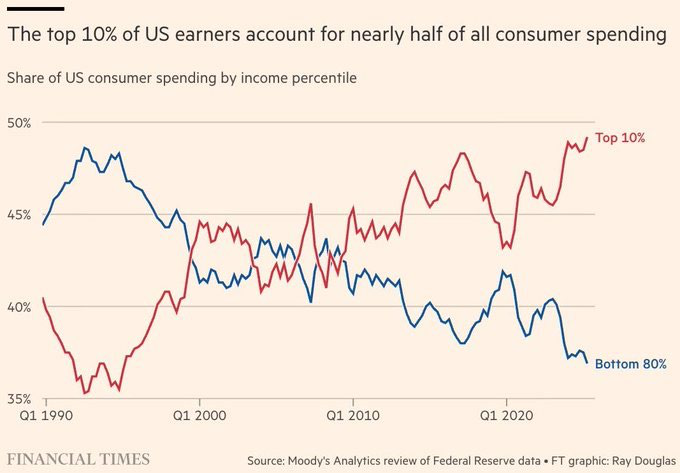
The author further cites David Halberstam's book The Fifties, pointing out that television media in the 1950s was "sowing the seeds of social upheaval during the late 60s / early 70s." People watched the tightly knit families in The Adventures of Ozzie and Harriet or Leave It to Beaver and wondered if they were the only unhappy people in the country. The author extends this logic to the present: "Nowadays, the media consistently tells us that the economy is humming along, but many people feel they've been left out."
The author raises an open-ended question: Is this a major factor behind the rise of global populism, nationalism, and widespread discontent?
3. Historical Lessons: The Trajectory of Kodak and Polaroid from "Must-Own Stocks" to Bankruptcy
In the 1970s, Kodak and Polaroid were highly sought-after "Nifty Fifty" star stocks, but both ultimately went bankrupt—the author suggests that today's "must-own stocks" may face the same fate. The author's original words: "Kodak and Polaroid were must-own stocks which performed spectacularly … until they didn't." Meaning: "Kodak and Polaroid were must-own stocks that performed spectacularly… until they no longer did."
Key data:
- Polaroid: Stock price fell from $140 to $14 over two years
- Kodak: Found a second wind after the 1974 crash, but still went bankrupt decades later
The author points out that Kodak was a near-monopoly, but faced competition from Polaroid's instant imaging. Polaroid's instant cameras allowed users to avoid waiting days for film development, leading to booming sales. The author uses "Plus ça change, plus c'est la même chose" (the more things change, the more they stay the same) to emphasize that despite different eras, human nature remains unchanged.
| Company | Peak Status | Outcome | Time Span |
|---|---|---|---|
| Kodak | Nifty Fifty member, near-monopoly | Bankruptcy | Decades |
| Polaroid | Star stock, $140/share | Fell to $14, later bankrupt | 2 years |

The author leaves a clear hint at the end of the chapter: "Whether there's a message here pertaining to the must-own stocks of 2026, we'll leave to the reader to discern."
Investment Implications
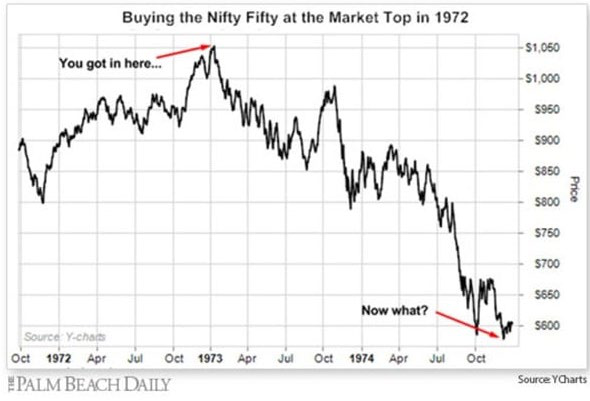
The author uses the rise and fall of Kodak/Polaroid as a cautionary tale: the "consensus assets" currently pursued by the market may harbor significant risks, and contrarian investors should be wary of investment targets glamorized by media and narratives. Institutional perspective bias: As a contrarian value investment firm, Kopernik has an incentive to emphasize the fragility of mainstream consensus. Readers should note that this is a perspective from their own portfolio holdings—the author uses historical cases to justify their contrarian strategy but does not specify which current "must-buy" stocks are at risk.
1. Current Market Risk Is Extremely High, but the Portfolio Has Built Positive Asymmetry
The author believes that while the current market faces multiple risks—including record-high valuation multiples, record debt levels, high deficits, and a changing world order—a sense of security is achieved by constructing a diversified portfolio with positive asymmetry and inherent inflation protection.
The article points out that concerns about "record high valuation multiples in conjunction with record debt levels, high deficits, and a changing world order" may be well-founded, presenting significant risk. The author states: "The fact that concerns about record high valuation multiples in conjunction with record debt levels, high deficits, and a changing world order could be well-founded, presents an inordinate amount of risk." Therefore, they find comfort in "owning a highly diversified portfolio of equities that are full of positive optionality and significant built-in inflation protection." The author judges that in the current market, "positive asymmetry seems essential."
2. Reflections on AI: Creativity and Humanity as Long-Term Competitive Advantages
The author questions AI's "imagination" and creativity, arguing that learning to think, create, and remain human is the best path for young students—traits that will also serve as Kopernik's long-term competitive advantage.
The author raises a thought-provoking question: "AI famously hallucinates, but do they imagine? Do they create?" The author believes that those who try to outperform technology in computation, data collection, and task execution "seem destined to fail." Instead, they believe young students are "best served by learning to think, create, be human, make connections, and stay curious." The author acknowledges being inferior to AI in data collection and information processing but argues that "analytical ability, behavioral traits, and organizational scale and structure" are "far more important" and will continue to provide Kopernik with a competitive edge.
3. Investment Philosophy: Contrarianism, Continuous Learning, and "Reading the Writing on the Wall"
The author's core investment philosophy is "contrarianism," emphasizing the ability to learn, unlearn, and relearn, and hints that an upcoming report will systematically articulate Kopernik's non-consensus views.
The author recalls a speech delivered in Tuscaloosa titled "Going Against the Wisdom of the Crowd," quoting Albert Einstein and Alvin Toffler. The author's original words: "'There is no failure in learning, but there can be in refusing to unlearn' (Einstein) and 'The illiterate of the 21st century will not be those who cannot read and write, but those who cannot learn, unlearn, and relearn' (Alvin Toffler)." The author previews an upcoming report titled Everybody Knows, which will explore a series of issues where Kopernik holds distinctly contrarian views. The core message to students is: "Beyond your coursework, take the time to 'read the writing on the wall.'"
Investment Implications
Through market risk warnings, critical thinking on AI, and an emphasis on contrarian views and continuous learning, the author outlines Kopernik's investment philosophy framework. The core implication is that in the current market environment, investors should be wary of high valuations and high debt risks, avoid chasing popular technology narratives (such as AI), and instead focus on assets with positive asymmetry, inflation protection, and long-term competitive advantages. The author hints that the forthcoming report will provide more specific contrarian investment directions. Institutional perspective bias: By emphasizing "contrarian views" and "independent thinking," the author reinforces the uniqueness and rationale of the strategy. Readers should note that this serves as a marketing narrative for the active management strategy.
Position Moves
| Ticker | Direction | Author’s One-Sentence View | Key Data |
|---|---|---|---|
| Kodak | Hold for Observation | Historical case warning: quasi-monopoly eventually went bankrupt, implying risks in current “must-buy” stocks | Found a second wind after the 1974 crash, only to go bankrupt decades later |
| Polaroid | Hold for Observation | Historical case warning: star stock fell from $140 to $14 in two years, then went bankrupt | Stock price dropped from $140 to $14 over two years |