A Part of the Main
Hosking Partners is a London boutique founded in 2013 by Jeremy Hosking, a portfolio manager at Marathon Asset Management for over 25 years. It runs a single global equity strategy built on the capital-cycle, supply-side approach — contrarian, long-term, and unusually diversified (350+ holdings) under a multi-counsellor model, managing around $5.5bn.
In plain words
This report argues that traditional ESG investing focuses too much on environment and governance, ignoring the 'social' factor—things like community relations and AI safety—which are becoming key to profits. The author is cautious on energy transition and big tech, saying they face underestimated social risks. Key holdings: Cobra Panama copper mine is stalled due to community opposition; Sibanye-Stillwater relies on community ties to keep mining; Nvidia lost $600 billion in one day on AI safety concerns, showing high risk.
At a Glance
One-sentence summary of the author’s market view this period: The energy transition and tech giants are facing “social factor” risks that are systematically underestimated by traditional ESG frameworks. Contrarian investors should uncover value by combining capital cycles with social issues. (Stance: [Cautious])
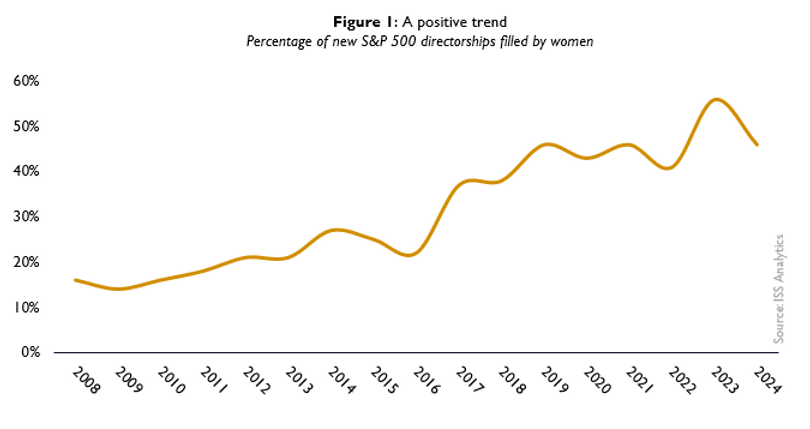
- The “S” (social factors) in traditional ESG frameworks is marginalized due to difficulty in quantification, yet social issues such as community relations and AI safety are becoming core drivers of operational stability and shareholder returns.
- The energy transition is essentially a localized social negotiation. Cases like the Cobra Panama copper mine deadlock show that “social license” is key to the operational stability of mining companies, with its costs underestimated by mainstream discussions.
- Although tech giants score highly in ESG ratings, they face social risks including labor disputes, data privacy, antitrust issues, and AI safety. CEOs “flocking to Washington” is a defensive move rather than a signal of confidence.
- The capital cycle in AI shows worrying returns: approximately $600 billion in investment in 2024 chasing a mere $6 billion LLM market. Capital returns may not reach 10% until the 2030s, and market concentration amplifies nonlinear stock price risks.
- The counterintuitive phenomenon of both coal and solar exceeding expectations highlights a disconnect between top-down narratives and bottom-up realities (economic, technological, geopolitical, and socio-political dynamics).
The "S" in Traditional ESG Frameworks Is Systematically Underestimated, as It Is Difficult to Quantify and Lacks Standardization
The article opens by noting that in recent years, "E" and "G" have dominated ESG discussions, while "S" has been marginalized due to its difficulty in measurement and definition. The author quotes John Donne's poem "No man is an island" to emphasize the interconnectedness of social factors. The article argues that environmental and governance issues have taken center stage because they are "media-friendly, (until recently) generally uncontroversial, and importantly easy-to-quantify." This means these issues are easy to gain attention, generate little controversy, and have readily available data. In contrast, social issues "have hovered on the sidelines, overlooked and unloved," meaning they have consistently remained in a secondary position, receiving little attention.
The author further criticizes the structural flaws of the ESG framework itself: "'ESG' has always been a group of awkward bedfellows: some things which should be there are missing (geopolitics), others which are there arguably don’t belong (governance)." This implies that the classification framework itself is inherently flawed. The author's core argument is that it is ultimately the social impact of governance and environmental policies that determines value creation.
Quantitatively Driven Metrics Like DEI Have Driven Reforms, but Rigid Application May Backfire
The article acknowledges that quantitative social metrics, represented by DEI (Diversity, Equity, and Inclusion) statistics, have indeed addressed real issues and driven directional reforms. For example, many boards are more diverse than a decade ago, and pay gaps have narrowed in some cases. However, the author warns that a rigid "one-size-fits-all" approach can lead to perverse outcomes. The author states: "rejecting a well-conceived pay plan that incentivises strategic risk-taking at precisely the moment a company may need it most could harm returns." This means that vetoing a well-designed incentive plan could hurt performance precisely when a company needs it most.
Similarly, the author argues that removing a highly qualified board member solely due to insufficient diversity metrics, without considering their unique contributions, could cause the company to lose critical expertise. The institution's stance is to "approach these issues on a case-by-case basis," reserving the right to disagree with proxy voting agencies in specific contexts. The article attributes part of the recent backlash against "ESG 1.0" to this standardized application that bypasses case-by-case due diligence.
Investment Implications
The article suggests that investors focusing solely on easily quantifiable E and G metrics will miss the deep risks and opportunities arising from emerging social issues such as community relations and AI safety. The author believes that these neglected "S" factors will increasingly become the focus of debate in the future. Readers should note that this is the perspective of a position-holder—the institution may be using this differentiated positioning to identify assets that the market has undervalued.
At a Glance
The article argues that the tension between global decarbonization goals and local community interests is the most underestimated source of risk in the energy transition. The author emphasizes that while molecules in the atmosphere do not recognize borders, the effects of the energy transition are "disparate, uneven, and bottom up," making it inherently "a local, and therefore intensely social, affair." This tension is most evident in the mining and natural resource extraction industries, where the "licence to operate" depends entirely on maintaining goodwill with nearby communities. The author cites the ongoing stalemate at the Cobra Panama copper mine as an example of how community opposition can plunge a well-funded project into a "costly stalemate."
The "Social Cost" of Clean Energy Is Systematically Underestimated
The extraction of critical minerals is not only energy-intensive but also fraught with social conflict, yet this aspect is often overlooked in mainstream ESG discussions. The article lists the copper, nickel, lithium, cobalt, and platinum group metals (PGMs) needed for solar panels, batteries, and electric vehicles, noting that multinational mining companies often operate far from their shareholder bases, leading to "a mismatch between local and global priorities." The author argues that balancing shareholder returns with community well-being in jurisdictions with weak governance frameworks or complex socio-political histories is "no small feat."
Real-World "Bottom-Up" Forces Are Reshaping the Transition Path
The article uses the counterintuitive phenomenon of "both coal and solar exceeding expectations simultaneously" to illustrate the disconnect between narrative and reality. The author points out that five years ago, experts would have scoffed at the idea that "both coal and solar would exceed expectations by 2030," yet this is precisely what is happening (see Figure 2). The reasons: renewable energy requires stable baseload power, as well as heavy equipment and logistics for building infrastructure—these "bottom-up realities" are shaping the top-down energy transition. The author states: "Such results seem shocking compared to ‘the narrative’, but inevitable once you consider the real-world interaction of economics, technology, geopolitics, and socio-political dynamics."
Social Media Amplifies "Expectation Gaps," Fueling Political Resistance to the Transition
The author argues that a lack of public support is the biggest political risk for the energy transition, and social media algorithms are systematically amplifying this risk. The article notes that when the simplified narrative of "clean energy being inherently cheap (or even 'free')" collapses under the pressure of real-world costs from accelerated transitions and poor execution, low-income communities bear the brunt. The rise of "transition-skeptic" governments in the West stems partly from this simple economic impulse. Social media algorithms, driven by emotions like "disgust and anger" to boost engagement, exacerbate polarization—benefiting big tech in the short term but proving "terrible" for building the social consensus needed for the energy transition.
Investment Implications: Resilience and "Social Licence" Will Become Core Themes
The article explicitly defines "climate adaptation" as a social endeavor and notes that its investment implications are extending from physical capital to human capital. The author argues that as global emission targets are likely to be missed or delayed, supply chains need to "harden critical infrastructure against climate volatility." More importantly, this adaptation requirement applies not only to physical capital like factories and power infrastructure but also to the human capital on which companies depend. The author concludes: "The energy transition is primarily a technological feat… but climate adaptation is first and foremost a social endeavour," requiring local stakeholder buy-in, robust negotiation, and fair distribution of benefits.
At the portfolio level, the article uses Sibanye-Stillwater (South Africa) as an example to illustrate that a mining company's right to develop local mineral resources depends on building strong relationships with communities. The author notes that this logic applies equally to energy, metals, and shipping: "social licence is not a peripheral concern but a core driver of operational stability and, by extension, long-term shareholder returns."
Institutional Bias Note: As a deep-value fund heavily weighted in mining and natural resource stocks, Hosking Partners has an incentive to emphasize "social licence" and "community relations" as justifications for its holdings. Readers should note that the institution frames "local resistance" as an investment opportunity rather than a systemic risk, a stance closely aligned with its portfolio structure.
Tech Giants Face Social Risks and Regulatory Shifts, Not a "Golden Age"
The report argues that while large tech companies score highly in traditional ESG ratings, this masks a series of social controversies—including labor disputes, data privacy, monopoly allegations, and AI safety—which are the core risks investors should focus on. The author points out that rating agencies struggle to measure these "social" factors, and AI safety is rapidly becoming a critical priority. The author states: "AI safety, in particular, is fast emerging as a critical priority." The report emphasizes that while AI tools enhance efficiency, they also introduce risks such as bias, diminished autonomy, and amplified misinformation, which traditional responsible investment frameworks have yet to incorporate.
CEOs "Flooding to Washington" Is a Defensive Move, Not a Signal of Confidence
The author questions the narrative that "AI and Trump's deregulation will usher in a golden age for tech oligarchs," arguing that CEOs' overtures are more akin to a defensive retreat. The report cites Trump's first-term crackdowns on big tech: public criticism of Amazon (tax avoidance), Google and Meta (search and content bias), and the initiation of the most significant antitrust investigations since the 1990s. The author notes that Trump has indicated he will revisit and expand these matters in a second term. Additionally, the rapid iteration of AI is spawning new regulatory scrutiny. The report analyzes that AI-driven search could alter the advertising ecosystem, leading to a "walled garden" model or stricter ad regulations—social impacts that cannot be understood merely by adjusting financial models.
Capital Cycle Indicates Poor AI Investment Returns, with Market Concentration Amplifying Risks
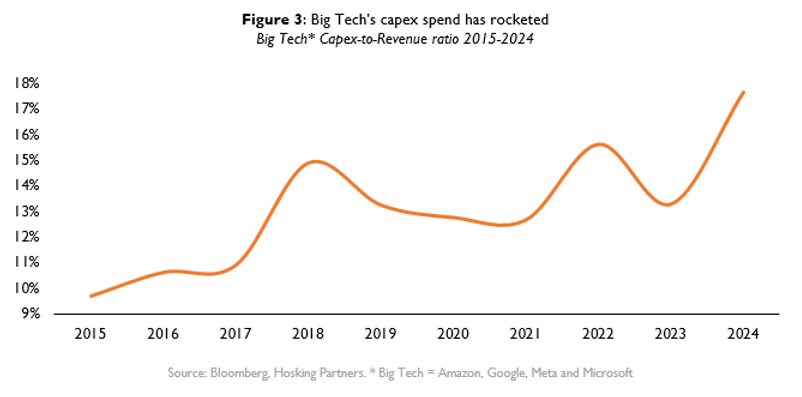
Applying capital cycle logic, the report argues that massive capital inflows into AI will depress average returns, while high market concentration makes stock prices extremely sensitive to expectation shifts. The author estimates that in 2024, large tech companies have approximately $600 billion in AI-related invested capital chasing a current LLM market of just $6 billion. Even under aggressive assumptions for revenue and margin growth, the return on capital may not reach 10% until the 2030s. The author states: "When a company is priced to perfection, the marginal effects of underperforming expectations can prove non-linear…" The report cites Nvidia as an example, noting that news about DeepSeek triggered a single-day market cap loss of approximately $600 billion (equivalent to Sweden's GDP). The author believes the DeepSeek incident demonstrates how socio-political issues (e.g., open source, US-China geopolitics) can amplify financial impacts and may spawn a new generation of competitors, shifting the market from concentration to dispersion.
Investment Implications
The implied operational takeaway is that investors should be wary of current highly concentrated tech stock holdings and focus on the non-linear impact of social and regulatory risks on valuations. The author argues that Hosking Partners' contrarian, diversified global strategy is better positioned in a dispersing market. Note that this is from a position-holder's perspective, and the report's positioning of its own strategy carries a marketing element.
Conclusion: Combining Social Factors with the Capital Cycle to Identify True Value and Risk
The author emphasizes that incorporating the "forgotten S" into the capital cycle analysis framework is key to identifying long-term value creation. The article points out that traditional ESG scores rely too heavily on simplified metrics, ignoring local context, supply chain complexity, and long-term social impacts. The author argues that examining social issues through a contrarian lens can more accurately gauge inflection points in market sentiment and regulatory shifts, thereby uncovering undervalued opportunities or unrecognized risks.
The author states: "By looking at social issues through the same contrarian lens that we apply to industries and companies, we aim to identify where sentiment and regulation may be poised to shift, and where undervalued opportunities or unrecognised risks lie." This means: "By applying the same contrarian perspective we use for industries and companies to social issues, we aim to identify where sentiment and regulation may be on the verge of change, and where undervalued opportunities or unrecognized risks reside."
The article further explains that the advantage of this approach lies in "seeing the wood for the trees." While many observers are distracted by short-term headlines or uniform scoring frameworks, the author chooses to dig deeper into the patterns that truly drive long-term value creation. The author believes that combining capital cycle principles with a comprehensive consideration of social factors can more accurately assess a company's upside potential and practical feasibility.
Investment Implications
This section serves as the conclusion of the full text, introducing no new specific companies or data, but rather reiterating the core logic of the methodology. Institutional perspective bias: The author positions themselves as a "contrarian investor," emphasizing that their methodology can uncover opportunities and risks beyond market consensus. Readers should note that this stance of "embracing complexity" may make the institution's investment decision-making process difficult to replicate or verify externally, and the accuracy of its judgments is highly dependent on deep research capabilities into specific social issues.
Position Moves
| Ticker | Direction | Author's One-Sentence View | Key Data |
|---|---|---|---|
| Cobra Panama (Copper Mine) | Hold & Observe | Serves as a case study of a "costly stalemate" caused by community resistance, illustrating social license risk | Project remains in a prolonged deadlock, well-funded but unable to advance |
| Sibanye-Stillwater | Hold & Observe | Serves as a positive example of a mining company relying on community relations to secure operating permits | The right to develop mineral resources depends on building strong relationships with local communities |
| NVIDIA | Not Explicitly Stated | Serves as a typical example of market concentration risk and the amplified socio-political impact of AI | DeepSeek news triggered a single-day market cap loss of approximately $600 billion (equivalent to Sweden's GDP) |