Robotti & Company Advisors Q3 2018 Letter
Robotti & Company is a New York deep-value boutique founded by Bob Robotti in 1983, specializing in left-for-dead cyclical industries — energy services, building products, shipping — with multi-year holding periods and occasional activist letters. It manages about $650m; Bob is regarded as one of the most steadfast Graham-tradition cyclical value hunters.
In plain words
This letter explains how short-term market sentiment and computer-driven trading are ignoring real improvements in certain industries. The author highlights two sectors: energy services (where oil prices are up but stocks haven't moved) and homebuilding (where a slowdown in new home starts caused panic, even though housing supply is actually very low). For regular investors, this means there may be opportunities in companies with low price-to-earnings ratios (like under 10) and strong market positions—such as Builders FirstSource, Cavco, and Norbord. These businesses are fundamentally sound but temporarily overlooked, which could lead to long-term gains.
Robotti Research Report notes that the current market is dominated by passive investment strategies and quantitative models, leading capital to concentrate on prior winners, posing challenges for value investors. The report’s core argument is that prices in the energy services and homebuilding secto
Theme and Background
This section is the opening of Robotti's Q3 2018 client letter, primarily discussing the challenges current market conditions pose for value investors. The report notes that passive investing and quantitative models dominate the market, with capital continuously flowing into prior winners, leading to a severe divergence between "winners" and "losers." Against this backdrop, the author focuses on analyzing the divergence between fundamentals and prices in two heavily weighted sectors—energy services and homebuilding.
Core Thesis
The author's core investment argument is: Current market pricing has deviated from fundamentals, creating significant value opportunities in the energy services and homebuilding sectors. Counterintuitive judgments include:
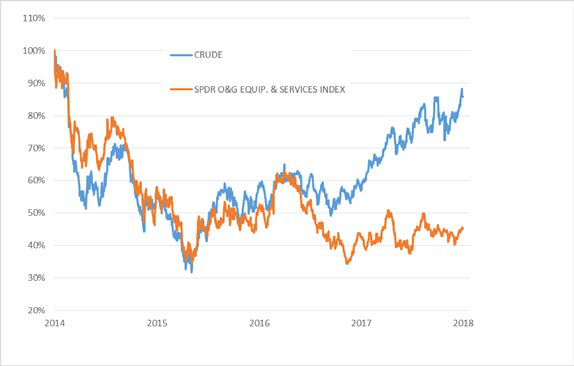
- Despite oil prices hitting four-year highs, declining industry costs, and improving supply-demand dynamics, energy service company stocks have not rebounded, and the market remains oblivious.
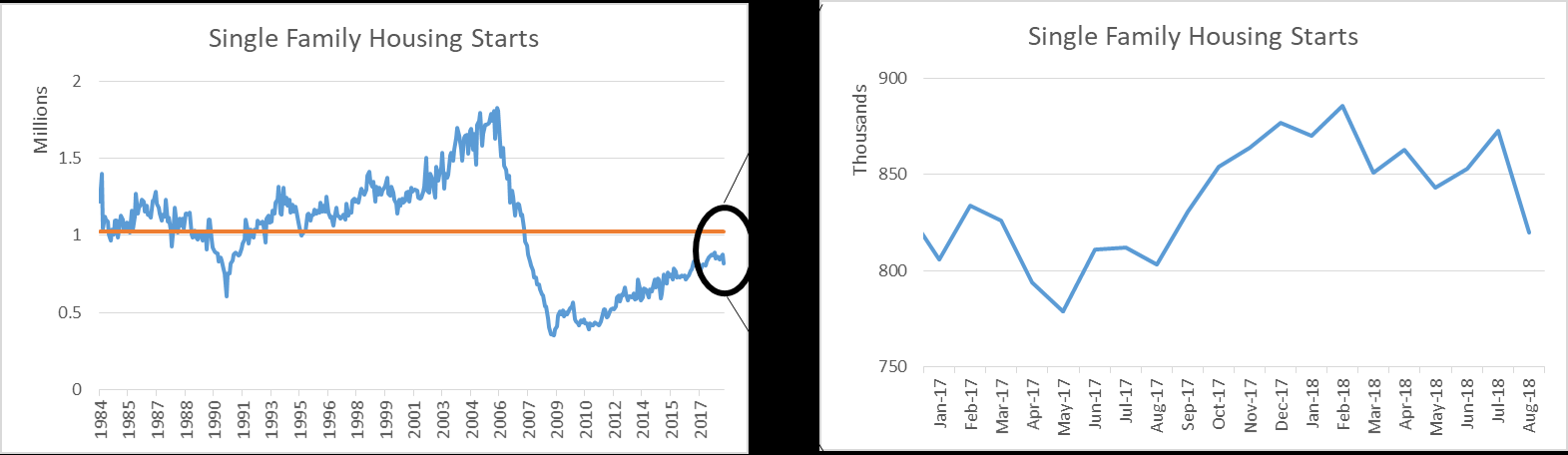
- In the homebuilding sector, the market panicked over a slowdown in single-family housing starts ("taper tantrum"), yet actual financial data has not deteriorated, and there is a severe long-term housing supply shortage.
- The author emphasizes that the market is a "voting machine" (driven by sentiment) in the short term and a "weighing machine" (returning to intrinsic value) in the long term. The companies in the portfolio generally trade at P/E ratios below 10x, while the 10-year Treasury yield of 3.2% implies a P/E of 31x, highlighting extreme cheapness in current valuations.
Key Arguments and Data
1. Market Environment:
- The 10-year Treasury yield of 3.2% implies a P/E of 31x, while companies in the author's portfolio generally trade at P/E ratios below 10x.
- Cites Benjamin Graham's "voting machine vs. weighing machine" theory, emphasizing long-term value reversion.
2. Energy Services Sector:
- Oil prices have reached four-year highs, the industry has consolidated, costs have declined, and supply-demand dynamics have improved, yet energy service company stocks have not rebounded.
- The author believes that "capital discipline" (due to painful experiences from peak investments in 2013-2014) has suppressed capital expenditure, thereby exacerbating the current opportunity.
3. Homebuilding Sector:
- Builders FirstSource (BLDR): Single-family housing starts have been rising since the crisis, but growth slowed in 2018 ("tapering"), causing market panic and a stock price decline. However, BLDR's financial results continue to improve, and the number of new homes built annually over the past 12 years is the lowest in 35 years, while the population continues to grow.
- Cavco (CVCO): The manufactured housing (MH) industry has recovered from a prolonged downturn, with the top three producers controlling 78% of the market (due to industry consolidation). Although financing conditions are stricter than for site-built homes, MH has rebounded strongly thanks to its low-cost advantage. Recent announcements by Fannie Mae and Freddie Mac to support the MH industry may further accelerate the recovery.
- Norbord (OSB): Oriented strand board (OSB) prices are volatile, but supply-demand dynamics remain favorable. The company has paid a special dividend of C$4.50 (approximately $300 million), exceeding all capital needs. North American industry capacity utilization is near 90%, new capacity additions take years, and the company is expected to continue generating strong free cash flow.
4. Industry Consolidation Trends:
- OSB industry: Five companies control nearly 80% of capacity and all incremental capacity.
- MH industry: The top three producers account for 78% of the market.
- Energy services: Tidewater/GulfMark merger, Atwood/Ensco transaction, etc.
- Other industries: Radnet (medical center consolidation), Westlake (merger with Axiall).
Companies/Assets Involved
| Company | Role | Key Data | Bullish/Bearish |
|---|---|---|---|
| Builders FirstSource (BLDR) | Homebuilding supplier, one of the largest holdings, but stock decline dragged performance | Single-family housing starts growth slowed, but financial results continue to improve; valuations cheaper | Bullish |
| Cavco (CVCO) | Manufactured housing producer, best performer this year | Top three producers control 78% of the market; strong recovery despite strict financing; Fannie Mae/Freddie Mac support imminent | Bullish |
| Norbord (OSB) | OSB producer, stock slightly down | Special dividend of C$4.50 (~$300M); capacity utilization near 90%; strong free cash flow | Bullish |
| Tidewater (TDW) | Energy services, benefiting from industry consolidation | Merger with GulfMark | Bullish |
| Ensco (ESV) | Energy services, benefiting from industry consolidation | Merger with Atwood | Bullish |
| Radnet (RDNT) | Medical center consolidation | Years of ongoing consolidation | Bullish |
| Westlake (WLK) | Chemicals, benefiting from industry consolidation | Merger with Axiall | Bullish |
Investment Implications
- Energy Services Sector: The market currently ignores fundamental improvements, but an earnings inflection point is approaching. Investors should focus on survivors of industry consolidation (e.g., Tidewater, Ensco), which are likely to generate significant cash during a rebound.
- Homebuilding Sector: Panic triggered by short-term growth slowdowns presents buying opportunities. Over the long term, severe housing supply shortages (lowest starts in 12 years) and population growth will support recovery. Key focuses include:
- BLDR: Cheaper valuations and no deterioration in fundamentals, suitable for contrarian positioning.
- CVCO: Accelerating recovery in the manufactured housing sector, with potential easing of financing conditions, making it the biggest beneficiary of industry consolidation.
- Norbord: Tight OSB supply-demand dynamics, strong free cash flow, and management's focus on shareholder returns (dividends + buybacks), suitable for long-term holding.
- Industry Consolidation Theme: In cyclical downturns, consolidated companies (e.g., Norbord, Cavco) have stronger competitive positions, lower costs, and greater earnings elasticity during rebounds. Investors should prioritize such companies.