Nickel For Your Thoughts? — Rule Investment Newsletter #16
Rick Rule is a veteran natural-resource investor who began in 1974, built Global Resource Investments (sold to Sprott in 2011), and led Sprott U.S. Holdings until retiring in 2021 to found Rule Investment Media. His free Substack covers contrarian speculation in mining, energy and critical minerals — gold, silver, copper, nickel, royalty and streaming companies — framed by geopolitical risk.
In plain words
This is about nickel, a metal used in stainless steel and electric vehicle batteries. Indonesia, the world's biggest nickel producer, is now cutting production and raising costs, which could flip the market from oversupply to shortage. Combined with rising acid costs from the Iran conflict, this may push nickel prices higher. That's good news for nickel projects in Canada and Brazil (outside Indonesia, with lower costs). Investors should watch these companies, but be aware of battery tech shifts like LFP batteries that don't need nickel.
Rick Rule's research article points out that the nickel industry is experiencing a cyclical trough but is approaching an inflection point. The core argument is that despite sharp fluctuations in nickel prices, with giants like BHP (LSE:BHP) seeking to exit nickel operations (e.g., Nickel West), the
Theme and Background
This chapter focuses on the cyclical trough and potential inflection point in the nickel industry. The report notes that nickel is a typical strongly cyclical metal, with price volatility that is both severe and difficult to predict, forcing mining companies to struggle balancing peaks and troughs. The industry is currently in a cyclical trough, but signs of a turnaround have emerged.
Core Thesis
The author's core judgment is that the nickel industry is emerging from its trough and is about to present an investment opportunity. The counterintuitive point is that although giants like BHP are seeking to exit the nickel business due to prolonged losses, the author believes this is precisely a signal that the industry has bottomed out. Additionally, market concerns about nickel's demand outlook in electric vehicle batteries (such as competition from LFP batteries) may be overblown, as nickel's energy density advantage in high-end batteries remains solid.
Key Arguments and Data
- Supply-Demand Inflection Point: The International Nickel Study Group (INSG) forecasts a global nickel market surplus of 283,000 tonnes in 2025, but a shift to a supply deficit of 32,000 tonnes in 2026, the first in years. Specific data are as follows:
| Indicator | 2025 | 2026 (Forecast) |
|---|---|---|
| Global Primary Nickel Production | 3.88 million tonnes | 3.72 million tonnes |
| Global Primary Nickel Consumption | 3.57 million tonnes | 3.75 million tonnes |
| Supply-Demand Balance | Surplus 283,000 tonnes | Deficit 32,000 tonnes |
- Demand Structure: Stainless steel remains the largest end market, accounting for approximately 70% of total nickel consumption. Electric vehicle battery demand fluctuates in 2025 due to competition from LFP batteries and consumers shifting to plug-in hybrid electric vehicles (PHEVs), but nickel's energy density advantage in long-range, high-performance batteries remains a long-term driver.
- Dominance of China and Indonesia: China controls nearly 80% of global nickel sulfate refining capacity, while Indonesia, by replicating China's model and expanding rapidly, has become the world's second-largest nickel consumer and developed its stainless steel industry.
Companies/Assets Involved
- BHP (LSE:BHP): A diversified miner seeking to exit its Nickel West business (including mines, smelters, and refineries), which has weighed on the company's performance for years. The report implicitly takes a bearish view on BHP's nickel assets but considers its exit a signal of industry bottoming.
- Centaurus Metals (ASX:CTM): Scheduled to present at the Rule Natural Resources Investment Symposium; no specific data or views provided.
- Bravo Mining (TSXV:BRVO): Also scheduled to present at the symposium; no specific data or views provided.
Investment Implications
Investors should focus on the inflection point in the nickel industry's supply-demand dynamics. The projected supply deficit of 32,000 tonnes in 2026, the first in years, could drive a recovery in nickel prices. Key areas of focus include upstream nickel mine projects (especially sulfide nickel mines, which produce high-purity Class 1 nickel used in batteries and high-end alloys), as well as beneficiaries of downstream refining capacity expansion in Indonesia and China. At the same time, investors should be wary of short-term risks from fluctuations in stainless steel demand (70% of total) and changes in EV battery technology pathways (such as LFP replacing nickel).
Theme and Background
This chapter focuses on the strategic shift in Indonesia's nickel industry—moving from the "Chinese model" of aggressive capacity expansion and price suppression over the past decade to a strategy of maximizing resource value by restricting supply and raising costs. The report argues that this shift, combined with geopolitical conflicts (the Iran situation) driving up energy and sulfuric acid costs, is reshaping the global nickel market's supply-demand dynamics.
Core Thesis
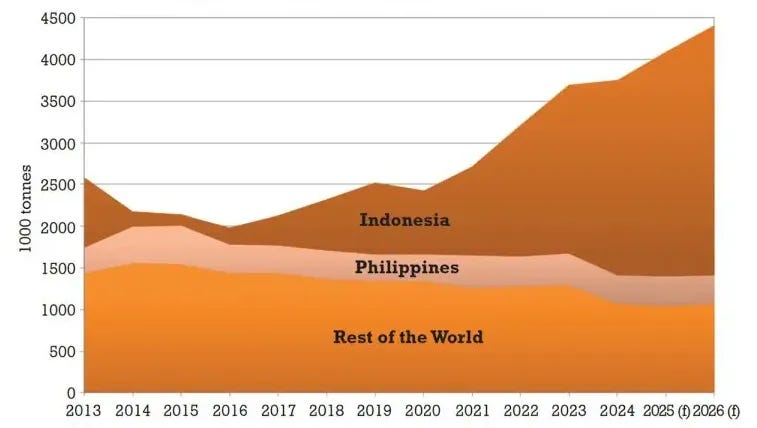
The author's central judgment is: The nickel market is transitioning from an "Indonesia-led" phase of oversupply to a structural inflection point driven by Indonesia's active supply tightening and cost escalation. The counterintuitive aspect is that Indonesia, as the world's largest nickel producer (60% share), is no longer pursuing maximum output. Instead, it is actively curbing supply through quota cuts, banning new projects, and raising royalty fees. This will push nickel prices higher in the medium to long term and make sulfide nickel projects in regions like Canada economically viable again.
Key Arguments and Data
1. Indonesia's Supply Tightening Policies:
- Implemented a raw nickel export ban in 2020, forcing companies to build smelters in Indonesia.
- Production quotas for January 2026 are cut by 46% year-over-year.
- No new HPAL (High-Pressure Acid Leach) or NPI (Nickel Pig Iron) projects are being approved.
- Introduced a tiered royalty rate linked to nickel prices ($18,000, $21,000, $24,000, $31,000).
- Mining license validity shortened from three years to one year.
2. Declining Ore Grades and Rising Costs:
- Indonesia's marginal nickel ore grade has fallen from 2% 15 years ago to 1.4% currently, and is still declining.
- The grade of saprolite ore used for NPI in 2025 is 8% lower than in 2024.
- The Iran conflict has tightened sulfur supply, causing a surge in sulfuric acid (a key reagent in the HPAL process) costs: producing 1 ton of nickel requires approximately 10 tons of sulfur (equivalent to 25-30 tons of sulfuric acid). The Middle East supplies 75-80% of Indonesia's sulfur.
- China will ban sulfuric acid exports from May 2026, and other exporting countries may follow suit.
- Sulfuric acid shortages have already forced several Indonesian nickel processors to cut production (per Reuters).
- Rising sulfuric acid and fuel costs have increased Indonesia's HPAL operating costs by approximately $4,000/ton; average production costs have risen by $2,000-4,000/ton over the past six months (per FPX Nickel's CEO).
3. Demand-Side Constraints:
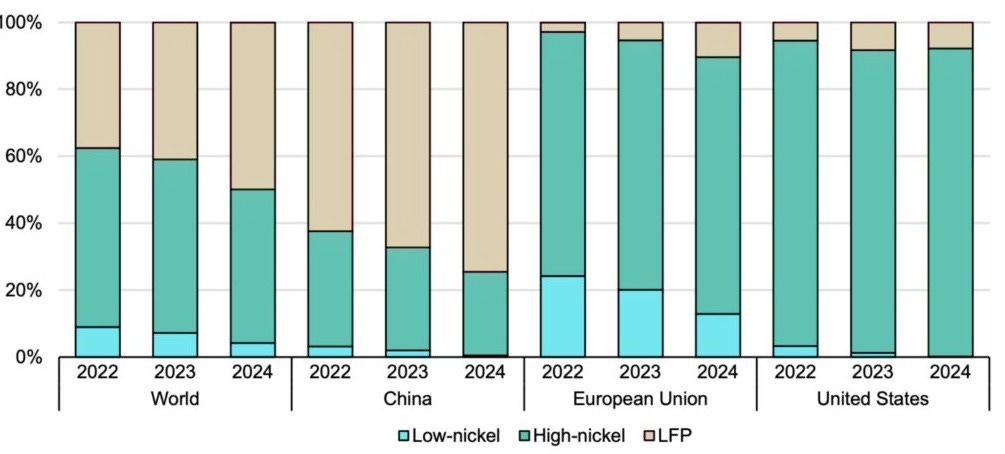
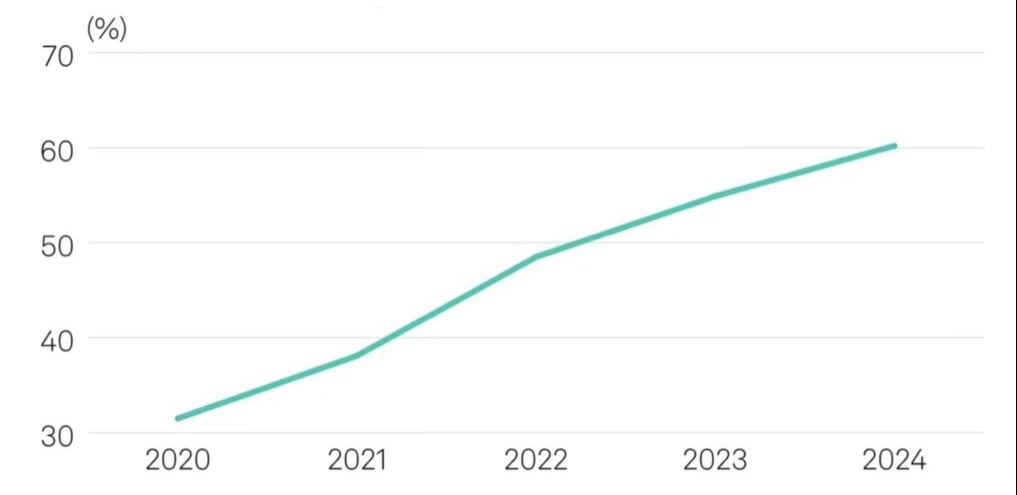
- Growth in nickel demand from EV batteries has fallen short of expectations, as China's mass-market vehicles shift toward LFP (Lithium Iron Phosphate) batteries rather than high-nickel NMC (Nickel Manganese Cobalt) batteries.
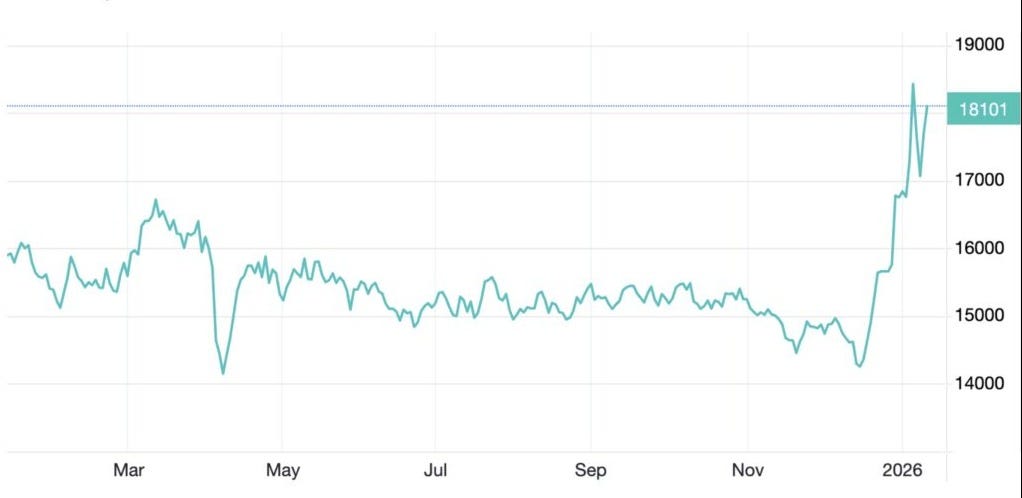
- Nickel price trends (2025-2026) are shown in Exhibit 4, indicating a recent recovery.
Companies/Entities Involved
| Company/Person | Role and Key Data | Bullish/Bearish |
|---|---|---|
| Canada Nickel (CEO Mark Selby) | Provides industry insights on declining Indonesian ore grades and policy tightening; its sulfide nickel project may benefit from constrained Indonesian supply. | Bullish (beneficiary of supply tightening) |
| FPX Nickel (CEO Martin Turenne) | Points out that Indonesia is raising the global cost curve through environmental enforcement and hefty fines; its project may benefit from cost advantages. | Bullish (beneficiary of rising cost curve) |
| Battery Materials Review / RK Equity (Matt Fernley) | Analyzes the Indonesian government's intent to "maximize value" rather than "maximize supply," as well as shifts in EV demand structure. | Neutral (emphasizes demand-side constraints) |
| Indonesian Nickel Miners Association (FINI) | Provides sulfur supply data (Middle East accounts for 75-80% of Indonesia's sulfur supply). | Neutral (industry data source) |
Investment Implications
- Go long on sulfide nickel projects: Indonesia's supply tightening, declining ore grades, and rising costs make sulfide nickel deposits in Canada, Australia (e.g., Voisey's Bay) economically viable again. Focus on related exploration and development companies.
- Go short on high-cost Indonesian NPI/HPAL projects: Cost surges ($2,000-4,000/ton) and quota cuts will squeeze profit margins for local small and medium-sized Indonesian producers, especially those reliant on imported sulfur and coal.
- Monitor battery technology divergence: The structural suppression of nickel demand by LFP batteries means that nickel price increases are more supply-driven than demand-driven. Investors should be wary of the risk of demand falling short of expectations.
Theme & Background
This chapter focuses on the nickel industry approaching the "incentive price" inflection point, while geopolitical conflicts (the Iran conflict) are prompting the West to reassess critical mineral supply chain security. The report argues that although Indonesia dominates nickel supply growth, the market is shifting from a supply surplus to value management, creating new opportunities for nickel sulfide projects in regions such as Canada.
Core Thesis
The author's core investment thesis is that nickel prices have rebounded from LME's $15,000/ton to the $18,000–$19,000/ton range, signaling the market has entered incentive price levels. The counterintuitive judgment is that Indonesia is shifting from "pursuing supply growth" to "maximizing the value of limited resources through price management," which harms Chinese processors while allowing Indonesian miners to capture more value. Additionally, Western governments (particularly in North America) have "hit the snooze button" on critical mineral supply chain security, with actions far less proactive than Japan's.
Key Arguments & Data
- Price Signals: Nickel prices have risen from $15,000/ton to $18,000–$19,000/ton, forming a new price floor of $17,000–$19,000/ton.
- Supply Dynamics: Indonesia's production has surged from 6–7 million tons/year in 2005 to the current 200 million tons/year, but Chinese processors, harmed by Indonesia replicating the Chinese model, are turning to Africa (Tsingshan Group is eyeing Madagascar, and Lygend Resources is focusing on Tanzania and New Caledonia).
- Geopolitical Impact: The Iran conflict has once again exposed the Western supply chain's dependence on external factors, drawing more attention to Canadian nickel sulfide projects.
- Japan vs. North America: Japan, due to its own lack of raw materials, is actively financing the upstream mining supply chain; while North American governments have funding programs (e.g., the U.S. Project Vault), investments remain fragmented (e.g., the 2025 investment in MP Materials).
Companies/Assets Covered
| Company/Project | Role & Key Data | Bullish/Bearish |
|---|---|---|
| Centaurus Metals (ASX:CTM) | Developing the Jaguar nickel sulfide project in Brazil: Reserves of 132Mt @ 0.87% Ni (containing 1.2Mt nickel), average annual production of 22,600 tons in the first 7 years, AISC $4.43/lb. After-tax NPV $735M, IRR 34%, payback period 1.8 years, initial capital $380M (Brazil's BNDES provides half in non-binding financing). All key permits obtained, a 5-year $450M offtake agreement signed with Glencore, targeting a final investment decision in Q3 2026. | Bullish (excellent project economics, clear financing path) |
| Bravo Mining (TSXV:BRVO) | The Luanga project in Brazil, involving platinum group metals, nickel, copper, and gold. Raised C$28.5M from Orion Mine Finance in February 2026, increasing cash to $134M. Plans to complete a pre-feasibility study in Q3 2026 and advance a feasibility study in 2027. Executing a 28,000-meter drilling program. Selected as the first anchor tenant of the Barcarena export processing zone, able to utilize smelter by-product sulfuric acid for the local market (the Iran conflict impacts the sulfur market). | Bullish (multi-metal leverage, strategic location advantage) |
| FPX Nickel (TSXV:FPX) | The Baptiste nickel sulfide project in Canada: A 2023 pre-feasibility study shows annual production of 59,100 tons of nickel (29 years), initial capital $2.2B (based on a nickel price of $19,300/ton). Options include building a refinery to produce 40,000 tons/year of battery-grade nickel sulfate (additional capital $448M). Initiated the formal permitting process in January 2026, expected to take 4 years. Received a $3.5M critical minerals infrastructure fund in 2025. | Bullish (large project scale but capital-intensive; battery-grade nickel path offers higher value-add) |
| Canada Nickel (TSXV:CNC) | The Crawford nickel sulfide project in Quebec, Canada: Capital expenditure C$1.9B, annual production of 48,000 tons of nickel, 800 tons of cobalt, 13,000 oz of PGMs, 1.6Mt of iron, and 76,000 tons of chromium (first 27 years of a 41-year mine life). Targeting a 60:40 debt/equity financing structure, with the equity portion completed through government loans and industry partnerships (no new equity financing required). Samsung SDI holds an offtake option. Benefits from Canada's carbon capture and clean technology manufacturing investment tax credits of $600M (refundable, not deductible). | Bullish (innovative financing structure, strong government support) |
| Norilsk Nickel | Q1 2026 nickel production fell 28% year-over-year, continuing a declining trend since 2010. | Neutral to Bearish (persistent production decline) |
Investment Implications
- Focus on nickel sulfide projects in Canada and Brazil: These regions benefit from Western supply chain diversification needs, and project economics are attractive at nickel prices of $17,000–$19,000/ton.
- Watch for companies with government financing support: Such as Centaurus (BNDES), Canada Nickel (Canadian tax credits), and FPX (critical minerals fund); these companies face lower financing risk.
- Be wary of Indonesia's policy shift risk: Indonesia's move from "increasing production" to "value management" could push nickel prices higher, but Chinese processors are harmed; monitor changes in related offtake agreements and partnerships.
- Japan's supply chain actions are worth tracking: Japan's active financing of upstream mining could provide additional capital sources for specific projects, especially those with Japanese corporate partnerships.
Theme & Background
This chapter focuses on the Kabanga nickel project in Tanzania, advanced by Lifezone Metals (NYSE:LZM). As one of the world’s largest and highest-grade undeveloped sulfide nickel deposits, the project is at a critical stage of seeking strategic partners amid a cyclical downturn. The backdrop is BHP’s exit in July 2025 after investing $100 million, with the company now searching for a new partner through Standard Chartered Bank, while facing interest from potential buyers such as Indonesia’s Lygend Resources.
Core Thesis
The author argues that the Kabanga project holds scarce strategic value, with its core appeal lying in the fact that it is not in Indonesia—making it a key alternative for Western governments seeking to diversify nickel supply chains. Although BHP’s exit introduces uncertainty, the project’s high-grade, low-cost structure and broad support (from Glencore, Taurus Mining Finance, Harry Lundin, etc.) form a solid foundation. The counterintuitive view is that BHP’s exit is not a negative, but rather a continuation of the industry giant’s systematic retreat from nickel, creating an opportunity for new entrants to acquire a high-quality asset at a low price.
Key Arguments & Data
- Resource Scale & Grade: Kabanga is one of the world’s largest and highest-grade undeveloped sulfide nickel deposits, with plans for an underground mine, concentrator, and processing plant producing 3.4 million tonnes of ore per year.
- Production & Costs: Upon commissioning, annual nickel production will exceed 50,000 tonnes, alongside copper and cobalt, with an 18-year mine life and an all-in sustaining cost (AISC) of just $3.36/lb.
- Economics: Initial capital expenditure of $942 million, based on long-term consensus metal prices (nickel $8.49/lb, copper $4.30/lb, cobalt $18.31/lb), yields an after-tax NPV8 of $1.58 billion, an IRR of 23.3%, and a payback period of 4.5 years.
- Financing & Progress: In 2025, $75 million was raised for pre-final investment decision (FID) activities, including underground and surface geotechnical drilling and site preparation, with FID expected in 2026.
- Political Stability: The Tanzanian government holds a 16% free carried interest, providing some political assurance.
- BHP Exit Details: BHP exited in July 2025 after investing $100 million, and the company is working with Standard Chartered Bank to find a new partner.
| Metric | Data |
|---|---|
| Annual Nickel Production | >50,000 tonnes |
| Mine Life | 18 years |
| AISC | $3.36/lb |
| Initial Capex | $942 million |
| After-tax NPV8 | $1.58 billion |
| IRR | 23.3% |
| Payback Period | 4.5 years |
| Government Stake | 16% (free carried interest) |
| 2025 Financing | $75 million |
| Expected FID | 2026 |
Companies/Assets Involved
- Lifezone Metals (NYSE:LZM): Project operator, currently working with Standard Chartered Bank to find new strategic investors. CEO Chris Showalter emphasizes the project’s strategic importance to Western governments.
- Glencore, Taurus Mining Finance, Harry Lundin (Bromma Asset Management), Rick Rule: Existing supporters providing capital and industry endorsement.
- BHP (LSE:BHP): Former partner that exited in July 2025 after investing $100 million, systematically retreating from nickel. The author views this neutrally to slightly positively, seeing the exit as creating an opportunity for others.
- Lygend Resources: According to Reuters, seeking to acquire an interest in LZM or the Kabanga project. The company declined to comment but confirmed receiving multiple offers. The author hints this could be a potential strategic buyer.
- Standard Chartered Bank: Assisting in finding a new partner.
Investment Implications
- Bullish on Lifezone Metals: The Kabanga project possesses scarce high-quality asset attributes (high grade, low cost, non-Indonesian origin) amid a nickel industry cyclical trough. Current valuations may not fully reflect its strategic value. The uncertainty from BHP’s exit is partly priced into the stock, while the involvement of potential strategic investors (such as Lygend or Western government-related entities) could act as a catalyst.
- Monitor Partner Developments: Finding a new partner before the 2026 FID is a key risk, but multiple offers indicate the asset’s appeal. Successfully attracting a Western government or major mining company would significantly enhance project certainty.
- Compare with Indonesia Risk: The project’s location outside Indonesia avoids geopolitical and ESG risks, aligns with Western supply chain diversification trends, and may command a valuation premium.