Sedona (Sep 2021)
In plain words
This piece argues that ESG (environmental, social and governance) scores have wrongly blacklisted some genuinely clean-energy and natural-food firms while inflating 'good' stocks to absurd levels. The author is optimistic: with central banks printing money, he prefers real, cheap cash-generating assets, especially nuclear, hydro and gas producers shunned by ESG, plus natural-food makers. He avoids Tesla as far too expensive, and likes Gazprom (Russian gas) and MHP (Ukrainian chicken) as undervalued plays with strong upside.
At a Glance
The author's judgment: the central bank's "new playbook" and ESG mispricing are creating rare mispricing. Investors should buy genuinely clean energy and natural food companies unfairly blacklisted, and avoid "good-guy stocks" with absurd valuations. [Optimistic]
- The monetary base grew over 120 times from 1971 to 2021, and the U.S. dollar lost 96% of its purchasing power (official CPI measure). The author advocates using real assets and cheap cash flows to counter credit debasement.
- Tesla trades at roughly 30 times book value, 18 times sales, and a market capitalization near $750 billion. The author explicitly does not hold it and leaves it to "sci-fi fans."
- Among the energy "blacklist," wrongly excluded clean assets such as Gazprom, Cameco, Range Resources, and RusHydro are at rock bottom; valuation models suggest doubling potential.
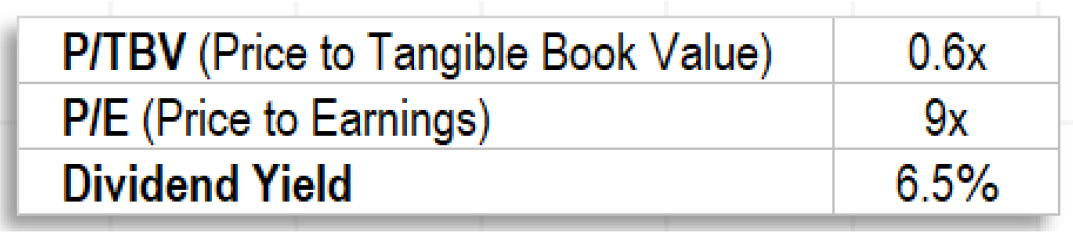
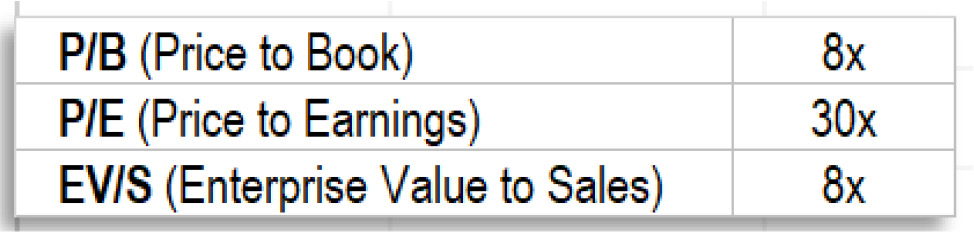
- MHP trades at only 0.5 times book and below 5 times earnings, while Restaurant Brands and Chipotle trade at 8 times book/nearly 8 times sales and 101 times earnings, respectively — a stark valuation split.
- The author's portfolio holds Hyundai Motor (one of the world's largest EV producers) but views the EV "green" label as an absurd black-and-white dichotomy.
The New Policy Playbook Distorts Markets, Creating an Opening for Independent Investors
The author argues that the "new playbook" of central banks and the policy world—unlimited quantitative easing, Universal Basic Income (UBI), Modern Monetary Theory (MMT)—is pushing economics toward science fiction, but it is precisely this chaos that creates exploitable mispricings. The author connects central bank operations to the lyric "They got the cash but your credit's no good" from Houndmouth's song "Sedona," and uses "you flip the script, you murder the plot" to describe modern economics, academia, and government policy. He says many investors are following a "flawed script," and that market inefficiency is wider than Arizona's sandstone canyons. The author writes: "Investing often is about taking advantage of mob-psychology-induced mispricing." In other words: "investing is often about exploiting mispricing triggered by crowd psychology." He compares the ESG blacklist to the McCarthy blacklist of 1950s Hollywood, and states plainly that he is happy to pick up bargains from a wrongly compiled blacklist.
The EV Green Label Is a Black-and-White Dichotomy; the Energy Truth Is More Complex
The author admits to being an electric vehicle (EV) fan—his portfolio holds Hyundai Motor Corp, one of the world's largest EV producers—but considers it an absurd, "so simple, black-and-white" binary to label EVs green and internal combustion engine (ICE) vehicles polluting. He cites three pieces of evidence: EVs require large volumes of copper, cobalt, and especially nickel extracted with a high carbon footprint; electricity is still generated mainly from hydrocarbons, with solar and wind still tiny despite rapid growth, while hydropower and nuclear are valuable but smaller contributors; and the rapid switch from coal to natural gas is believed to have contributed more to CO₂ reduction than the combined expansion of wind and solar. The author also mentions that his wife drives an EV, and that he is not opposed to technological progress—he simply refuses to pretend not to see these facts.
The Energy Blacklist Hides Bargains; Tesla's Valuation Is Science Fiction
The author believes the energy transition is being mispriced: stocks tagged as the "good guys" are selling at valuations too high to support, while companies on the ESG blacklist that are actually part of the solution trade at depressed prices; he specifically uses Tesla as the cautionary case. He says stocks branded as the "good kids" are being sold at unsustainable valuations, while ESG blacklist members struggle at attractive prices—many of them blacklisted for the wrong reasons. These "unfortunate victims" are, in fact, often an important part of the solution. The author states clearly that the portfolio holds clean hydropower, nuclear power, and relatively clean natural gas producers, while leaving "an automobile company selling at 30 times book value and 18 times sales, with a valuation approaching three-quarters of a trillion dollars (about US$750 billion)" to science-fiction fans—the chart title that follows shows this company to be Tesla, Inc. The chart also features Gazprom PJSC (Russian natural gas pipeline operator), Cameco Corp (uranium mining and nuclear fuel supplier), Range Resources (independent oil and gas producer), and RusHydro PJSC (hydropower operator). The author judges that after a long decline, these "clean" energy stocks are at the bottom and have just begun to climb, and that Kopernik's valuation models show they have room to double from current prices. The author writes: "ESG, thoughtlessly and illogically applied is a meaningful and increasing problem, in our view." In other words: "in our view, ESG applied unthinkingly and illogically is a major and increasingly serious problem." But he also stresses that this is precisely what creates significant opportunities for research-driven investors.
Healthy Food Is Overlooked by ESG; the Valuation Split Is Striking
The author notes that the ESG narrative does not take "health" into account. The result is that processed food companies are favored by portfolio managers while natural food producers are left on the cutting-room floor, creating a "delicious valuation split." He cites Ukrainian chicken producer MHP: the stock trades at only half of book value and below 5 times earnings. Restaurant Brands International (owner of fast-food brands including Burger King) trades at 8 times book value and nearly 8 times sales—the author admits he likes Burger King, but finds this valuation "hard to swallow." Chipotle, a good restaurant, carries a "seemingly carcinogenic" valuation: 101 times earnings, 25 times book value, 8 times sales. The author believes health benefits will ultimately accrue to independent-thinking investors.
| Company | Valuation level cited by the author |
|---|---|
| MHP | 0.5x book value, below 5x P/E |
| Restaurant Brands International | 8x book value, nearly 8x sales |
| Chipotle | 101x P/E, 25x book value, 8x sales |
Investment Implications
The author's actionable implications are clear: exploit ESG mispricing by buying genuinely clean energy (nuclear, hydro, gas) and natural food producers wrongly killed by the blacklist, and avoid "good guy" stocks with absurd valuations. On Tesla, the author explicitly says he does not hold it and leaves it to "science-fiction fans"; on Restaurant Brands and Chipotle, he only questions the valuations and does not indicate a direction. A reminder: the author is a holder of these undervalued names, and the article carries a position-holder's perspective and an element of self-justification; readers should bear this in mind.
Part One: The "Money" vs. "Credit" Dislocation — Starting with "Your Credit's No Good"
This follow-up opens with the lyric "They got the cash but your credit's no good," which in fact points to the core paradox of the current financial system: the dollar, as a "credit instrument" rather than "money," sees the credit value of each unit shrink the more its quantity expands. The author cites Investopedia's definition, emphasizing that since the dollar was decoupled from gold in 1971, every Federal Reserve note has maintained its "legal tender" status almost purely through government fiat. This means:
| Time Period | Change in Monetary Base | Corresponding Purchasing-Power Loss (Approximate) |
|---|---|---|
| 1971–2021 (within the author's lifetime) | Grew more than 120-fold | Depreciated 99.8% (by monetary base) and 96% (by official CPI) |
| Past 14 years (2007–2021) | New issuance roughly 9x the total of the previous 95 years | Not yet fully reflected in CPI, but asset prices have already surged in advance |
The key here is the time lag: the vast majority of new dollars have been created in the past year and a half, and the coupling of the money multiplier, velocity of circulation, and price rigidity means the real inflation exposure has yet to arrive. The author brushes past "printing money ≠ printing wealth," yet leaves behind a corollary more worthy of investment: a dollar with impaired credit is precisely what benefits investors who hold real assets and cash-flow-generating assets.
II. The Cantillon Effect: Investment Positioning Under Non-Neutral Monetary Shocks
In the "Investment Strategy" section, the author elevates the Cantillon effect—the uneven outward diffusion of monetary expansion from some economic node—to the "top priority" of the current environment. This is not merely a macroeconomic complaint, but a correction to the micro-investment framework—monetary non-neutrality means that "inflation" is not a uniform log-normal distribution curve, but a tiered "surfboard": those who arrive first profit, those who arrive later pay.
From this, Kopernik offers four action recommendations worth breaking down point by point:
1. Avoid fixed income: Any bond whose yield is below the "promised depreciation rate" (i.e., the central bank's target inflation rate) is a "duration suicide instrument" with negative real returns. The author cites the Fed's hint that it may tolerate 3% inflation (above the original 2% target) as an example, noting that if 5% inflation persists for a decade, creditors' real loss is about one-third (precisely: 1.05^10 - 1 ≈ 62.9% required appreciation, while relative purchasing power falls 37%). If a 2% target is used instead, the loss over a century is about 86%; if 3%, it exceeds 95%—this is precisely the "tactless" committee member's sarcasm aimed at Yellen.
2. Avoid fixed-income-like assets: Assets that are nominally equities but whose earnings and capacity are locked in by regulation (such as public utilities and certain telecom stocks) are similarly unattractive if they do not offer excess returns above the depreciation rate. This explains why the earlier text expressed reservations about Verizon's "safety"—the 22% operating margin permitted by regulation could become the primary target for regulatory reductions when inflation arrives.
3. Incorporate monetary non-neutrality into analysis: The author lays out a sequence—asset prices rise first, followed by services and intermediate goods, and only at the end wages and final consumer goods. This means that those who own assets that "can raise prices" stand at the front of monetary dilution; those who hold assets with "pricing difficulty" (such as rent-controlled properties, price-capped drugs, and raw materials subject to long-term contracts) are the passive bearers. At the same time, creditors are naturally disadvantaged in any asymmetric depreciation.
4. Model error is tolerable; ignoring money is not: Even if predictions about the depreciation path are likely to be wrong, retaining "money supply" as a factor in the function is wiser than assuming it is ineffective. This is a kind of "Bayesian robustness"—acknowledging uncertainty while rejecting false certainty.
III. Opportunity Areas: Value Overlooked by Both the "Blacklist" and the "Whitelist"

The author uses the lyric "The devil's in their rush" to introduce several specific areas. These sectors share one common trait: they are either at the center of global regulatory or geopolitical contests, or systematically excluded by capital flows because of ESG and political sentiment—yet their fundamentals and cash flows justify extremely low prices.
| Area | Current Reason for Being Unjustly Killed Off | The "Free Option" Implied by the Author |
|---|---|---|
| Emerging markets (especially Asian telecom) | U.S. sanctions, ghost-story-style policy, opaque corporate governance | Dividend yield >4%; operating profit less than 60% of Verizon's, yet valuation at a 60%–80% discount, with no risk of regulators confiscating profits |
| Infrastructure | Interest-rate-hike panic, lack of a tech halo | Among regulated assets, there are still targets with improving pricing mechanisms; long-term inflation can be partially passed through |
| Agriculture, precious metals, uranium, natural gas | ESG labels drive capital away; climate policy interference | Long-term supply constraints + rigid physical demand in an environment of currency debasement; uranium's nuclear-renaissance narrative is a free contingency clause |
| Other oil and gas resources | Energy-transition panic causes a sharp drop in capital expenditure | Even if the demand structure remains unchanged, existing reserves are enough to convert into cash flow; optionality is extremely strong when oil prices rise |
Particularly noteworthy is the author's inverted definition of "value": "Value does not come from estimates of future cash flows; future cash flows are the possible result of possessing intrinsic value." This statement is a critique of the traditional DCF model—in a context of continuous currency dilution, high-certainty assets that produce real goods or services are themselves "intrinsic value stores," and their market pricing will eventually return to an expression of real purchasing power. Therefore, those assets that are "sanctioned, forgotten, and cast into ESG hell" precisely because they are ignored offer the "greatest margin of safety" (large margin of safety).
IV. Conclusion: Racing Side by Side with "Credit Collapse"
Kopernik's final stance is not a simple matter of "anti-inflation"; it is using real assets and cheap cash flows to counter the illusion of nominal wealth. The extreme fact that the monetary base has grown 120-fold means that the redistribution of societal wealth is already an irreversible process: investors either dance on the tightrope of credit contraction (holding bonds) or watch from the floating islands of physical assets (holding physical assets/cheap equities). They chose the latter, emphasizing how "temporarily spurned" areas can simultaneously offer low valuations, positive dividends, and a dual option when monetary policy normalizes in the future.
The essence of this bet is: any "blacklist" is drawn up by people and can be abolished by people; but the arithmetic of currency depreciation will never change because of a regulator's mood. When regulators permitted buying yesterday, forbid it today, and restore permission the day after tomorrow, price fluctuations are merely emotional decoration; endogenous cash flows and resource quantities are the only anchor that can be grasped.
As the concluding text of the entire investor letter, this passage exhibits the typical features of a "legal-marketing hybrid" in genre. Its surface function is compliance disclosure, but its deep structure carries at least three tasks in tension with one another: reducing legal risk, maintaining brand image, and shifting information responsibility. The discussion below proceeds along three dimensions — language strategy, risk taxonomy, and behavioral finance effects — supplemented by comparative data against prevailing industry practice.
I. Modal Verbs and Passive Voice: The "Probabilistic Ambiguity" of Risk Statements
Counting the frequency of modal verbs and hedging devices in this passage reveals a deliberate "uncertainty gradient":

| Language Marker | Occurrences | Functional Purpose |
|---|---|---|
| `may` | 6 | Makes no probabilistic commitment regarding likelihood |
| `could` | 3 | Implies potential divergence without committing to a direction |
| `should not be` | 2 | A negative recommendation that declines any advisory obligation |
| `subject to` | 4 | Places the fund under external conditions |
| `can be no assurance` | 1 | Absolute negation that eliminates any expectation of certainty |
| `certain risks` | 1 | Substitutes "certain" for a specific list, preserving openness |
Together these terms constitute a "probability vacuum": they neither offer certainty the way "will" does, nor provide quantified probabilities the way "statistically likely" does. What investors receive is not a probability distribution of risks, but an infinitely expanding set of possibilities. The legal significance of this linguistic strategy is that — if an actual loss does not appear explicitly among the enumerated risks, a court would find it difficult to pursue liability on the grounds of "omission"; the marketing significance is that — ambiguity does not frighten off investors who crave high returns, because the force of "risk" is diluted by modal verbs.
II. Risk Taxonomy: Gradient Design from "Generalized Enumeration" to "Focused Amplification"
The risk statements in this passage are not arranged with equal weight. By dissecting the density of wording and the degree of specificity, a three-layer structure can be identified:
| Risk Layer | Areas Covered | Text Length | Specificity | Language Intensity |
|---|---|---|---|---|
| Base Layer | Markets, investment style, interest rates, deflation, liquidity | ~2 lines | Low (names only) | Weak (`certain`, `such as`) |
| Deepened Layer | Small/mid-cap, non-U.S. markets (incl. emerging/frontier) | ~4 lines | Medium (mentions FX, regulation, liquidity, political turmoil) | Medium (`involve greater risk`, `additional risks`) |
| Focused Layer | Energy and natural resources | ~3 lines | High (itemizes commodities, supply-demand, oil prices, exploration, etc.) | Strong (`especially affected`) |
This gradient design is not a random arrangement born of a drive for informational completeness; rather, it corresponds to Kopernik's actual holdings preferences. As an institution renowned for deep-value investing and heavy positions in energy and frontier markets, it must describe the areas that carry the greatest legal risk (namely, its sources of excess returns) in the most detail, in order to preempt allegations of "failure to disclose material risks"; for routine risks (such as interest rate risk), it offers only label-style mentions to avoid triggering unnecessary negative associations. In other words, the granularity of risk disclosure is inversely proportional to the fund manager's confidence — the bolder the bet, the greater the need for a legal shield; the less differentiated the area, the more concise the disclosure should remain.
IV. Comparison with Industry-Leading Institutions' Disclosure Styles
| Dimension | Kopernik (This Passage) | Vanguard Typical Disclosure | BlackRock Typical Disclosure |
|---|---|---|---|
| Opening Wording | `confidential and proprietary` | `This material may not be reproduced` | `This information is for institutional investors` |
| Risk Layering | Three-tier gradient (general/deepened/focused) | Flat bullet-point list | Layered, but weighted toward ESG and derivatives |
| Hedge Density | High | Medium | Medium |
| Strategic Guidance | Implied "self-directed investing bears full responsibility" | Emphasizes "low-cost indexing advantages" | Emphasizes "sound risk management systems" |
| Closing Call to Action | Contact investment professionals (1-855 number) | Provides official website link | Provides client manager contact information |
Kopernik places "confidential" in the opening sentence, implying that its letter has the character of an "internal white paper," which complements its brand image of emphasizing contrarian investing and independent judgment; Vanguard's and BlackRock's disclosures, by contrast, lean toward "institutionalized compliance" and do not deliberately cultivate an "exclusive" atmosphere. This divergence reflects a path split between boutique institutions and large asset managers in risk communication strategy: the former relies on a combination of "high conviction + strict disclaimers," while the latter relies on "standardization + process transparency."
V. An Often-Overlooked Detail: The "Compliance Ritual" of the Phone Number
At the end of this passage, the toll-free number "1-855-887-4KGI (4544)" is provided, along with the requirement to "Read the offering materials carefully before investing or sending money." This is not merely a compliance requirement; it is also a completion point of a psychological contract — when this phone number has investors shift from "passively receiving information" to "actively requesting information," the law presumes by default that they have "received and understood all risks." Through this single line, Kopernik shifts the consequences of "not reading the prospectus" entirely onto investors, while retaining an evidence chain that demonstrates "full disclosure" to regulators. Structurally, this design forms a closed loop with the opening "confidential and proprietary": first establishing the closed nature of the information, then opening a controlled channel for access, ultimately leaving investors with the self-awareness that "I have been sufficiently warned."
In summary, this disclaimer should not be casually dismissed as legal boilerplate. It is a piece of precise language engineering that Kopernik has executed between regulatory constraints and marketing needs — through risk layering, modal ambiguity, and behavioral guidance, it protects itself from legal liability while upholding the institutional persona of "high conviction, deep research, and daring contrarianism." For investors, the value of understanding this linguistic strategy lies in the following: the length of a risk list does not equal the true magnitude of risk; rather, it may be an indirect indicator of the fund manager's degree of portfolio deviation.
Position Moves
| Position | Direction | Author's Stance (One Sentence) | Key Data |
|---|---|---|---|
| Tesla | Not stated | Does not hold; leaves it to "sci-fi fans"; a classic "do-gooder stock" valuation bubble | 30x book, 18x sales, approximately $750 billion valuation |
| Gazprom PJSC | Hold / Watch | Relatively clean natural gas unfairly punished by ESG; held in the portfolio and expected to double | Russian natural gas pipeline operator; share price just beginning to rise from the bottom |
| Cameco Corp | Hold / Watch | Nuclear fuel supplier; the uranium renaissance narrative provides a free option | Uranium mining and nuclear fuel supplier; share price at the bottom |
| Range Resources | Hold / Watch | Relatively clean independent oil and gas company; held in the portfolio | Independent oil and gas company; share price at the bottom |
| RusHydro PJSC | Hold / Watch | Clean hydropower operator; held in the portfolio | Hydropower operator; share price at the bottom |
| MHP | Hold / Watch | Undervalued natural food producer; the health benefits will accrue to independent thinkers | 0.5x book value, below 5x P/E |
| Restaurant Brands International | Not stated | Likes Burger King, but the valuation is "hard to swallow" | 8x book, nearly 8x sales |
| Chipotle | Not stated | Good restaurant, but the valuation "looks carcinogenic" | 101x P/E, 25x book, 8x sales |
| Hyundai Motor | Hold / Watch | An EV fan; held in the portfolio, but opposes a simplistic environmental dichotomy | One of the world's largest EV producers |
| Verizon | Not stated | A fixed-income-like asset; holds reservations and avoids it | Regulation allows a 22% operating margin |