The Schiehallion Fund Articles of Association
In plain words
This article explains the articles of association of the Schiehallion Fund, a legal document that sets out how the company issues new shares and protects existing shareholders. It focuses on a special class of shares called C shares: holders get voting rights, but conversion terms are set by the board and unconverted shares can be redeemed with unclear amounts. The document also requires that cash share offers must first go to existing shareholders on terms no worse than outsiders' terms, though directors have broad discretion to exclude some. No specific stocks or market outlook are discussed.
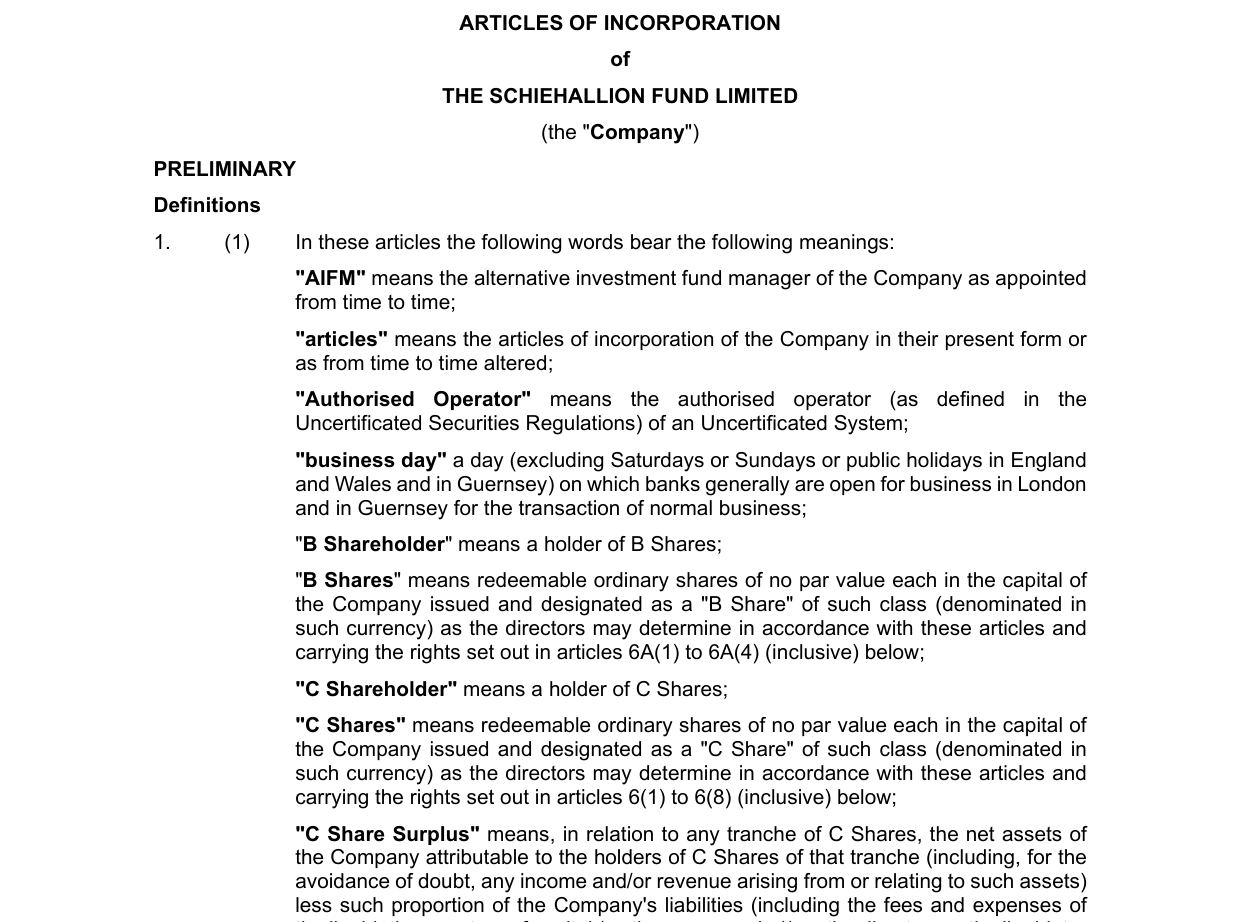
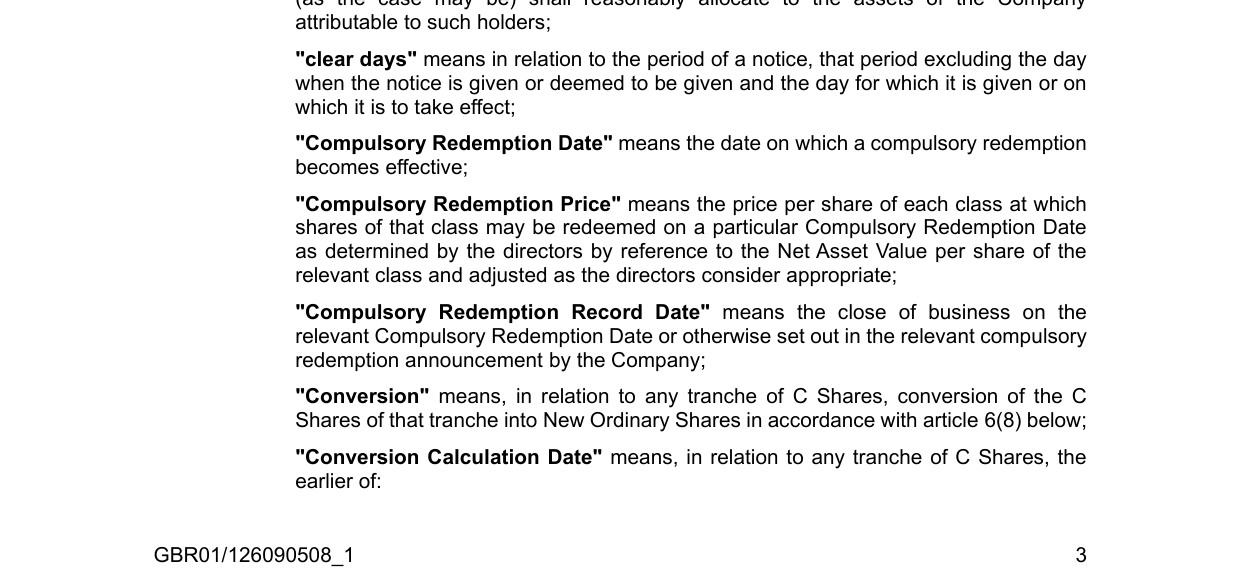
This report is a summary of the articles of association of The Schiehallion Fund Limited, primarily defining the key terms of corporate governance and share structure. The core content includes: the company appoints an AIFM (Alternative Investment Fund Manager) to manage its affairs; the shares are
1. Layered Depth of the Definition Clauses: From Foundational Concepts to Computational Definitions
The latter half of the definitions exhibits a clear hierarchical structure, moving beyond "label-style" simple definitions to incorporate computational rules and derived variables:
- The definition of `"Net Asset Value"` does not set out a calculation method directly, but instead relies on "accounting principles adopted by the Company from time to time." This is a dynamic reference — the board (or management) may adjust the accounting principles over time without amending the Articles. Such a design is common in fund or special purpose acquisition company (SPAC) charters, providing a flexible benchmark for pricing the conversion of `C Shares`. Its legal effect resembles a "fair market value" clause under International Financial Reporting Standards (IFRS) or US GAAP, but anchored to "book net assets" to avoid market valuation disputes.
- `"Ordinary Share Surplus"` is a derived definition, whose calculation depends on another definition — `C Share Surplus`. More critically, this definition presupposes the existence of multiple tranches of C Shares, and addresses scenarios in which several tranches circulate concurrently through "attributable to each of such tranches." This indicates that the Articles are designed not merely around a single capital event, but as an extensible formula for staged financing or different classes of holders. From a legal drafting perspective, this is a "cascading definition" — the reader must consult the definition of `C Share Surplus` before fully understanding `Ordinary Share Surplus`.
- The definition of `"member"` is consistent with The Companies (Guernsey) Law, 2008, expressly adopting the register of members maintained by the company as the sole standard. This parallels Section 112 of the UK Companies Act 2006, but Guernsey permits no-par-value shares (see `"Ordinary Shares"` below), so "member" and "holder of shares" may create subtle differences in a paperless environment — does a person entitled to be registered but not yet registered (e.g., a beneficial owner) count as a "member"? By strictly requiring that one's "name is entered in the register," the Articles eliminate such ambiguity, constituting a closed definition.
2. Cross-Border Compliance Clauses: Embedded References to US Securities Law and Tax Law
This section features dense appearances of US legal terms, forming a complete compliance matrix:
- `"Securities Act"`, `"US Person"`, `"US Resident"`, `"US Shareholding Percentage"` and `"US Tax Code"` do not exist in isolation; they are interlinked and point to two core purposes:
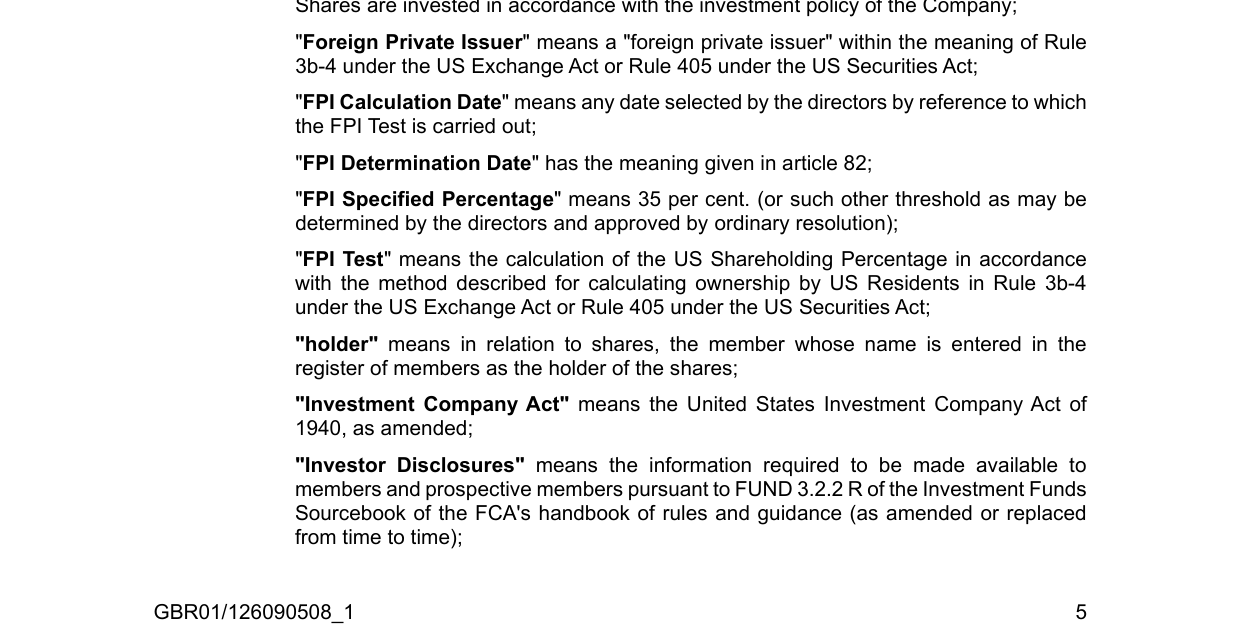
1. Establishing foreign private issuer (FPI) status: `"US Resident"` references Rule 405 under the Securities Act and Rule 3b-4(c) under the Exchange Act of 1934, while `"US Shareholding Percentage"` further incorporates the `"FPI Test"` (i.e., the foreign private issuer test) to calculate the proportion of ordinary shares held by US residents. If that proportion exceeds the threshold, the company could lose its FPI qualification and thereby face stricter US SEC reporting obligations.
2. Applying the US Tax Code: The definition of `"US Tax Code"` expressly points to the Internal Revenue Code of 1986, as amended, but does not enumerate specific provisions. This referencing approach allows the Articles to automatically accommodate future tax reforms, though in practice a supporting analysis is typically needed to determine whether the PFIC (passive foreign investment company) rules are triggered.
To visually present the mapping between these definitions and external regulations, the table below is illustrative:
Global market composite index and major equity markets all rose more than 25%, with earnings expectation upgrades driving the bull market
| Articles Term | Referenced Source | Legal Function |
|---|---|---|
| `US Person` | Regulation S under the Securities Act | Defines buyers and sellers of restricted securities, affecting Regulation S exemption |
| `US Resident` | Rule 405 under the Securities Act; Rule 3b-4(c) under the Exchange Act | Establishes US person status, used for shareholding percentage statistics |
| `US Shareholding Percentage` | FPI Test | Determines whether the company remains a foreign private issuer |
| `US Tax Code` | Internal Revenue Code of 1986, as amended | Triggers tax compliance mechanisms (e.g., withholding tax, PFIC reporting) |
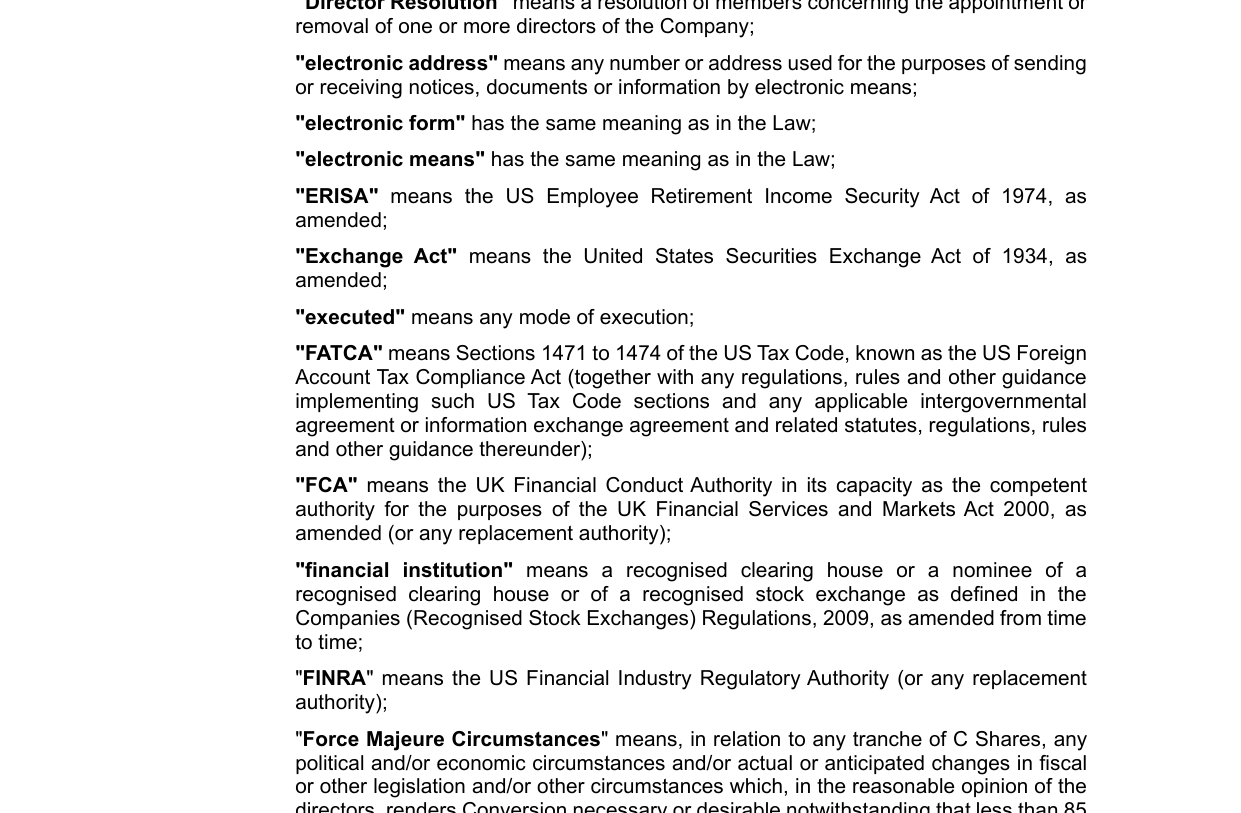
This "US law definition cluster" is common among offshore companies listed in the US or with US institutional investors. Notably, the Articles do not cite the Investment Company Act of 1940, indicating that the company may deliberately avoid classification as an investment company. Combined with the conversion mechanism for `C Shares`, this defines the compliance boundary of its capital operations.
3. Special Governance Mechanisms: Purpose Trust and No-Par-Value Shares
- The definition of `"Purpose Trust"` reveals a special vehicle under Guernsey law: a non-charitable purpose trust. The trust holds `B Share` (possibly shares carrying special voting rights), and its trustee must exercise rights "in the manner which it considers to be in the best interests of the Company and the members of the Company as a whole." This effectively creates a trust-based "golden share", which can be used for anti-takeover purposes (e.g., controlling major transactions) or protecting corporate culture. Unlike English law, which generally does not recognize non-charitable purpose trusts, the Trusts (Guernsey) Law, 2007 expressly permits them. The definition also distinguishes the `Trustee` from company directors, avoiding any conflation of powers.
- In the definition of `"Ordinary Shares"`, the phrase "of no par value" reflects offshore jurisdictions such as Guernsey and the Cayman Islands, whereas UK company law (Section 542 of the Companies Act 2006) still requires shares to have a par value. No-par-value shares relieve the company of strict share premium accounting, facilitating flexible pricing in conversions or issuance. `"New Ordinary Shares"` are explicitly stated to be created by conversion from `C Shares`; this wording treats "conversion" as the source of shares rather than the usual "issuance," which in accounting treatment may be viewed as a share exchange rather than the raising of new capital.
4. Modern Definitions of Paperless Securities and Meeting Attendance
- `"Rules"`, `"Uncertificated Securities Regulations"` and `"Uncertificated System"` together form a "three-tier infrastructure" for electronic securities operations. Among them, `Rules` are issued by the `Authorised Operator`, governing securities admission and system operations, while `Uncertificated System` is the computer system actually in operation. Clause (2) further provides that only share classes constituting a "participating security" may be held in uncertificated form. This wording is directly transplanted from the UK Uncertificated Securities Regulations 2001 and their Guernsey counterpart, ensuring seamless interoperability outside the jurisdiction (e.g., via CREST).
- The definition of `"present"` or `"present in person"` is highly inclusive, covering attendance "by attorney or by proxy," and even corporate members may be represented by a "representative." This avoids the controversy under English law of drawing a strict distinction between "present in person" and "present by proxy" — in the UK, certain resolutions (e.g., those requiring a poll vote) may require members to attend in person, but the Articles directly merge the definitions, simplifying the procedural requirements of general meetings.
5. Drafting Techniques of Interpretation Rules (2)–(7): Comparison with UK/Offshore Jurisdictions
The interpretation provisions themselves are the "meta-rules" of the definition clauses, and their drafting quality directly affects the enforceability of the entire Articles.
PMI data across major global economies are all in expansion territory, with economic momentum rising
- (3) The catch-all provision assigns the interpretation of undefined terms in the Articles to the `Law` (i.e., the Guernsey Companies Law) or the `Uncertificated Securities Regulations` — a legislative referencing technique. In contrast, the Cayman Islands Companies Law lacks a similarly unified code, so Cayman Islands articles typically contain extensive self-contained definitions; Guernsey articles, by comparison, need not re-define basic terms such as "director" or "company."
- (4) Adopts the dynamic reference of "modification or re-enactment," ensuring that future legislative amendments automatically take effect without requiring a shareholder resolution to amend the Articles. A similar principle exists in the UK Interpretation Act 1978, but writing it directly into the Articles enhances certainty.
- (5)(a)–(c) Govern singular/plural, gender, and the scope of "person," constituting a textual replication of the "Interpretation Act" of the English legal tradition. Note, however, that the scope of application is limited by "unless the context otherwise requires," thereby preserving interpretive flexibility.
- (6)(b) Clarifies that words such as "including" "shall not limit the generality of any preceding words" and shall not "be construed as being limited to the same class as the preceding words where a wider construction is possible." This is an anti-ejusdem generis clause, designed to prevent courts from restricting listed items to the same class. English case law (e.g., Quilliot v. Hildred) has occasionally leaned in the opposite direction, so this clause can be seen as a "tamper-proof" design.
- (7) Headings do not affect interpretation, echoing the House of Lords' view in Wickman Machine Tools v. Schuler that headings serve only as indexing tools and carry no normative force.
Below is a rough comparison of the differences in interpretation rules across jurisdictions:
| Feature | These Articles | UK Companies Act 2006 Default Articles | Cayman Islands Standard Articles |
|---|---|---|---|
| No-par-value shares | Expressly permitted | Not permitted (par value required) | Permitted |
| Non-charitable purpose trusts | Expressly supported | Not supported (unless specially authorized) | Supported (STAR trust) |
| Dynamic legislative reference | Express "modification/re-enactment" | Relies on Interpretation Act | Must be separately agreed in the articles |
| Anti-ejusdem generis clause | Yes, with strong wording | None (relies on court interpretation) | Partial, but weaker |
| Effect of headings | Expressly does not affect interpretation | Reference only | Reference only |
6. Pragmatism in Cross-References and Definition Ordering
- The definition of `"Non-Qualified Holder"` points to article 42(3) rather than providing the content directly. Such cross-references, while common in large articles, add to the reading burden. To its credit, the definition clauses are broadly alphabetically ordered (from `member` to `US Tax Code`), consistent with dictionary-style retrieval habits. At the same time, the ordering is not strictly mechanical — for example, `"Ordinary Shares"` precedes `"Ordinary Shareholder"`, but `"Ordinary Share Surplus"` is inserted between them, a sequencing that leans toward "foundational before derived" logic.
- The term "participating security" in clause (2) originates from the `Uncertificated Securities Regulations`, yet it does not appear in the current definition list; one must trace back to the regulation's original text through the catch-all rule in clause (3). This funnel-shaped definition matrix renders the entire Articles as a kind of "legal protocol stack," with each layer referencing more fundamental legal documents below.
7. Summary: From Supplementary Definitions to a Rule System
2024-2026 EPS growth rate estimates for major markets, with US technology and India leading
This section is not an isolated glossary; rather, through computational definitions, external legal references, interpretive meta-rules, and cross-references, it constructs a complete legal operating system. The cluster of US law terms provides clear compliance coordinates for cross-border market participants; the `Purpose Trust` and no-par-value share design are concrete implementations of Guernsey's legal advantages in the Articles; and the interpretation clauses reflect modern commercial documents' extreme pursuit of judicial certainty. These subsequent clauses work in tandem with the earlier definitions to collectively shape the complete framework of the company's capital operations, governance, and compliance.
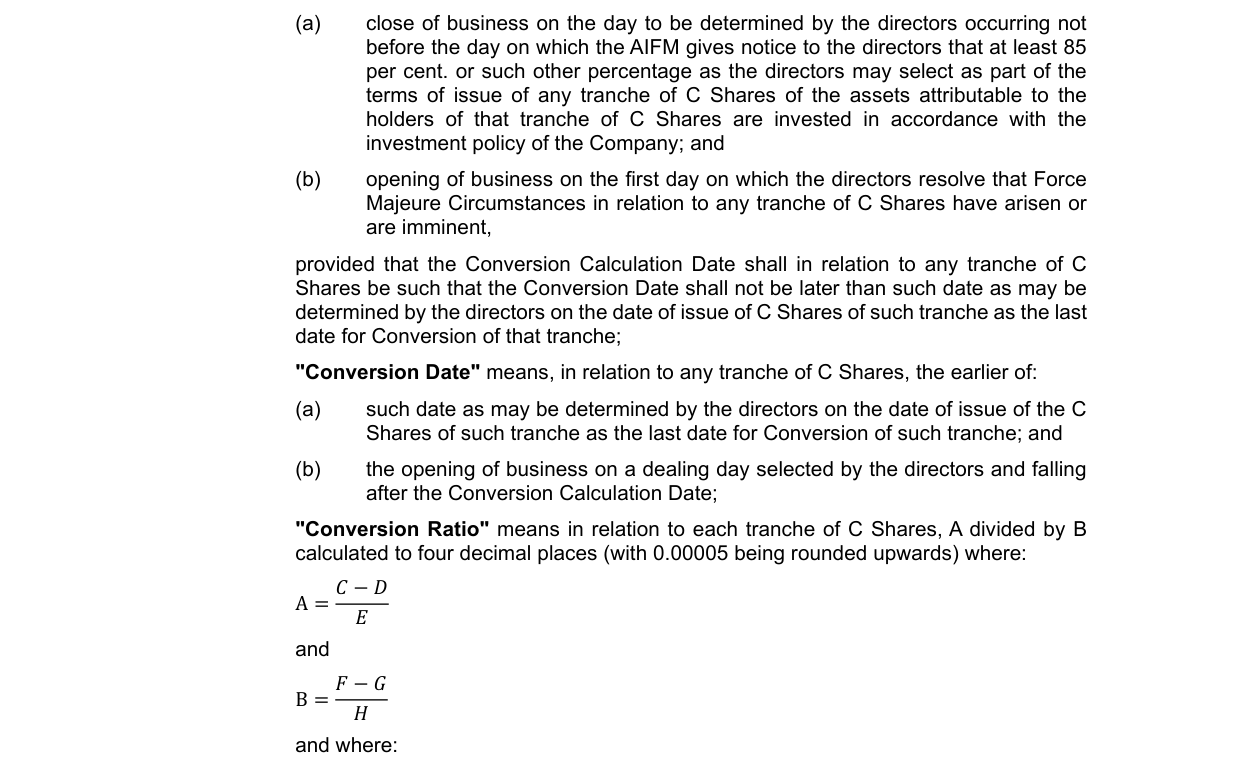
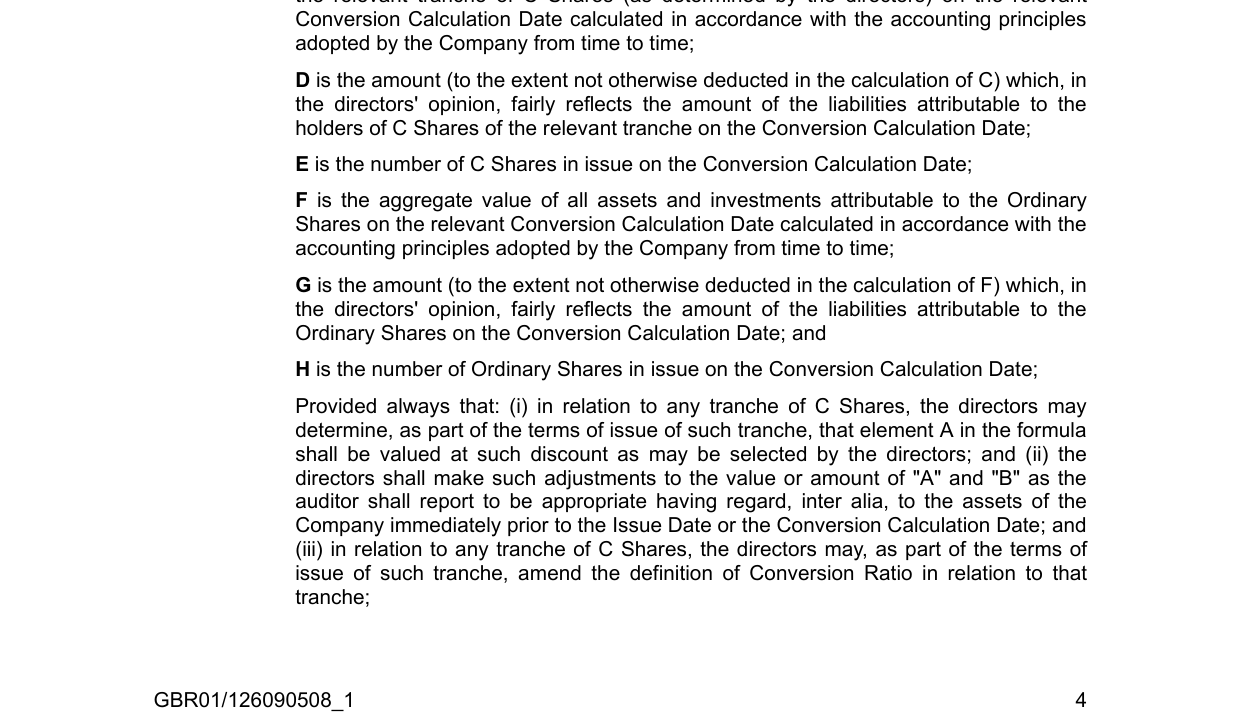
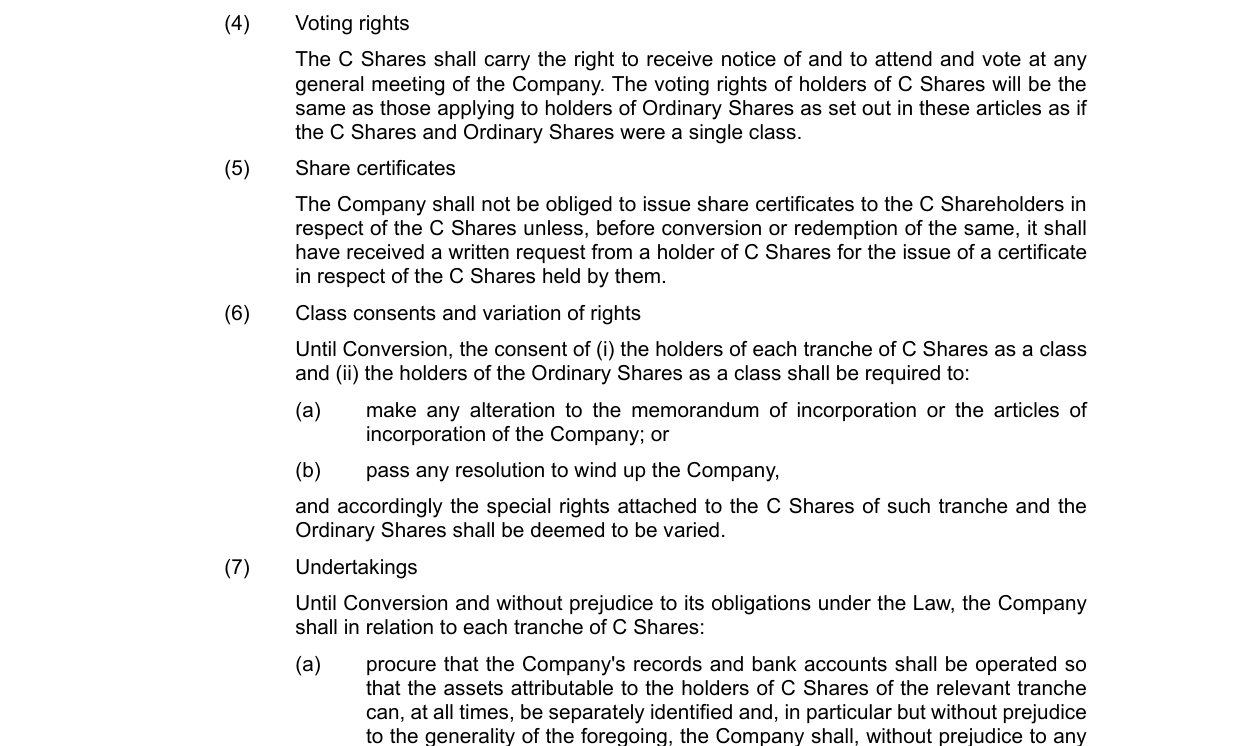
本章节实际涵盖公司章程第6条C股全部条款((1)发行至(8)转换):董事会获授权无限量、分批发C股,每批独立设类;C股在转换前享有与普通股近似的经济与投票权利;但转换参数由董事会单方设定,且未转换C股将被以“无面值对价”赎回、公司无说明义务——持有人与普通股的权利并不完全对称。
发行与类别划分
董事可在普通决议授权下,以“无限期限、无限数量”分批发C股,发行条款(含转换计算日、转换比率、投票权等)全部由董事决定,仅须与第6条一致。转换计算日可以包含“计算转换比率前应投资资产比例”这一条件,即董事有权决定资产配置进度与转换时点的挂钩方式。同时存续的每一批C股被视为独立类别,董事可自行指定命名区分。
持有人权利:股息、资本、投票
- 股息:C股持有人有权获得董事决议派发的股息,来源限于该批C股应占资产。转换后产生的新普通股自转换日起参与所有股息,但董事可在发行条款中规定不参与记录日在转换日或之前的股息。
- 资本:清算或资本返还(均在转换前)时,普通股盈余按持股比例分给普通股持有人;各批C股盈余按其持股比例分给该批C股持有人。原文使用“first/secondly”表述,但两类盈余分别对应各自类别,不构成普通股对C股的优先清偿安排。
- 投票:C股与普通股视作单一类别,C股持有人享有出席股东大会、接收通知及投票的同等权利。
- 证书:除非持有人事先书面要求,公司无义务签发C股凭证。
类别保护与公司隔离承诺
转换前,修改公司章程或通过清盘决议,须同时获得每批C股持有人类别同意和普通股持有人类别同意。公司须为每批C股设立独立现金账户、经纪/结算账户和投资台账,确保该批资产可随时单独识别;相关费用按董事合理判断分摊给对应C股资产;并向AIFM下达指令,确保上述隔离要求被遵守。
转换机制:计算、认证、自动转换与赎回
全球主要股市PE估值分位,多数处于历史偏高位置
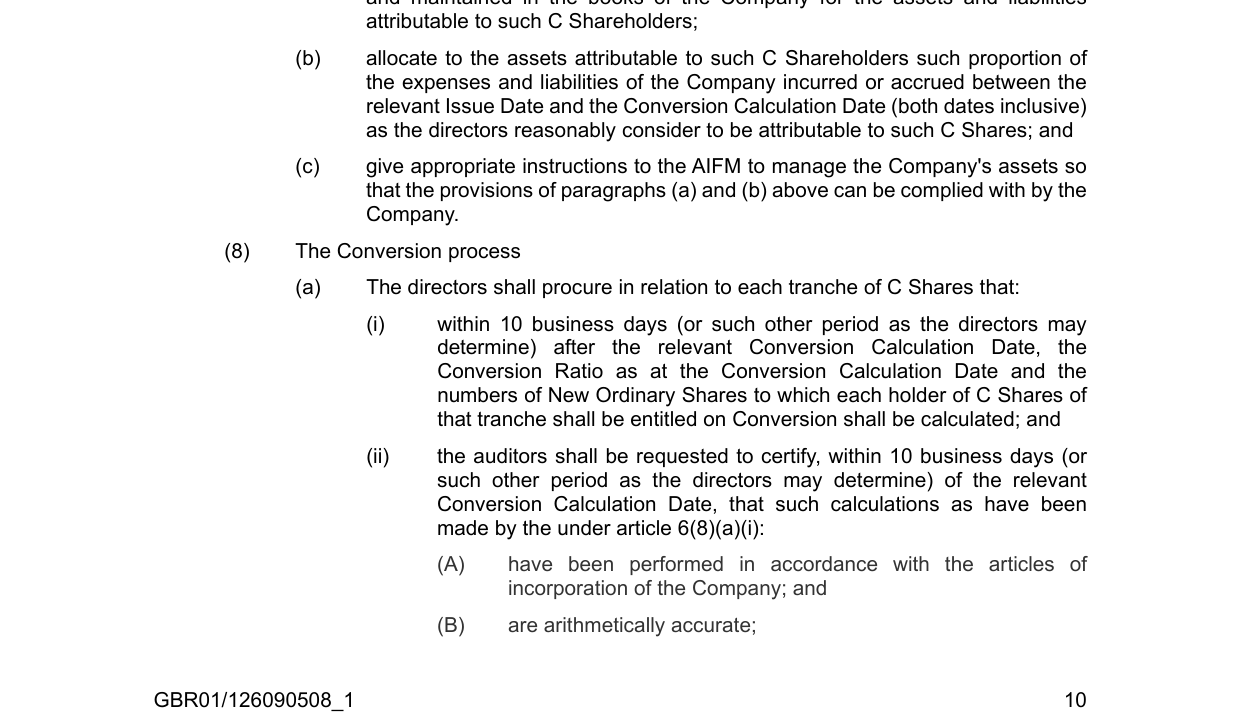
- 计算与认证:转换计算日后10个工作日(或董事另定期间)内,董事须计算转换比率及每持有人应得新普通股数量;审计师须在此后10个工作日(或另定期间)内认证该计算符合章程且算术准确。认证后计算即最终确定,对公司及全体成员有约束力。
- 通知:认证后,公司须尽快向每名C股持有人发送转换日期、转换比率及应得新普通股数。
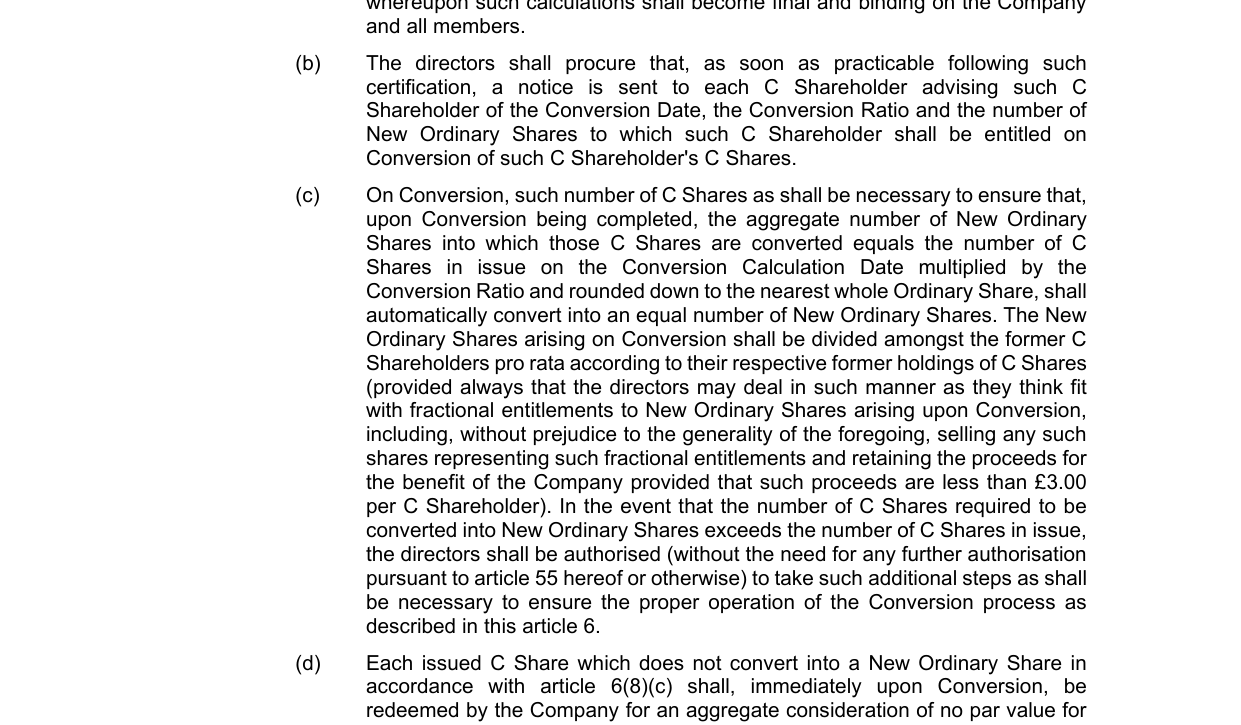
- 自动转换:转换时,只有使新普通股总数等于“转换计算日已发行C股数 × 转换比率(向下取整)”所需数量的C股,会自动转换为等量新普通股;新普通股按原C股持股比例分配。零股可由董事处置,例如出售后收益留存公司,前提是每名C股持有人所得低于£3.00。
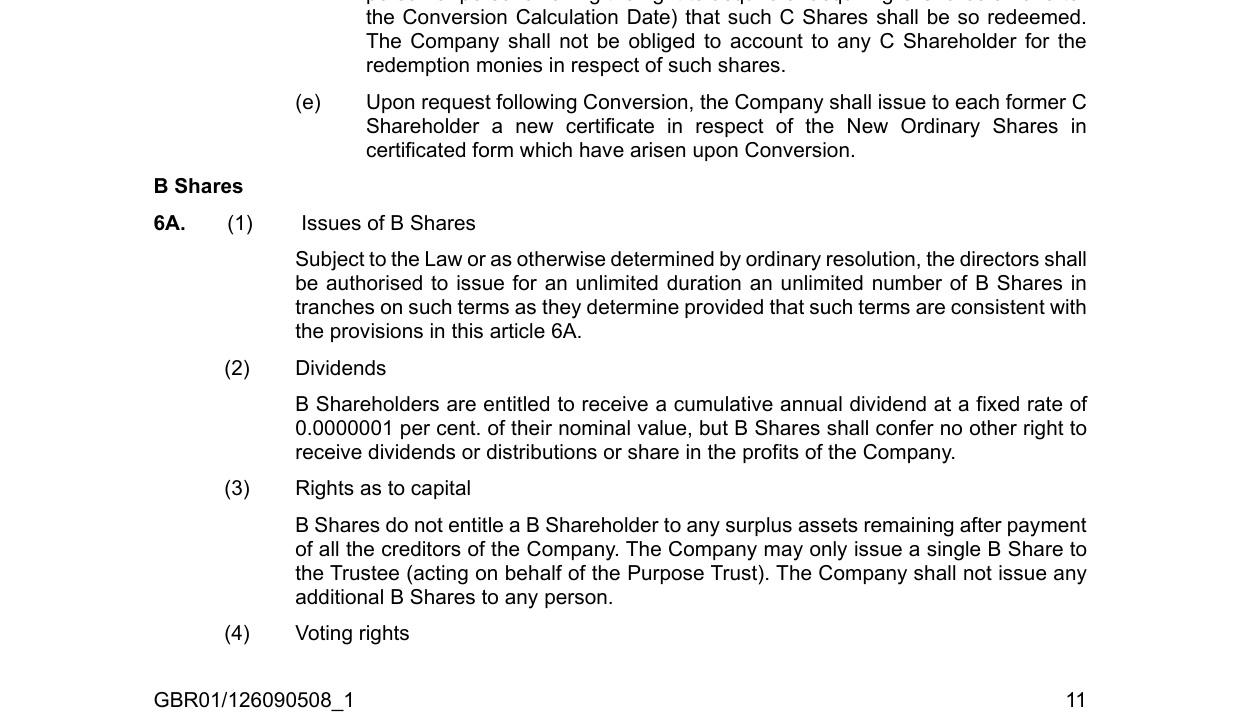
- 未转换C股赎回:所有未转换为新普通股的C股,在转换时立即被公司赎回,总对价为“无面值”(原文未明确具体金额);该通知即视为赎回通知,且公司无义务向持有人说明赎回款项——这是对持有人保护较弱的一环。
- 证书补发:转换后应原C股持有人请求,公司须发放对应新普通股凭证。
小结
C股的核心功能是作为转换前的阶段性融资工具:持有人拥有与普通股同等的投票权和按类别的资本索取权,但转换参数(计算日、比率、投票权)由董事会单方确定;转换时部分股份被自动转换、剩余股份被以无明确金额的方式赎回,零股收益在低于£3.00时归公司。这些细节决定C股持有人的实际回报与普通股并不完全对称。
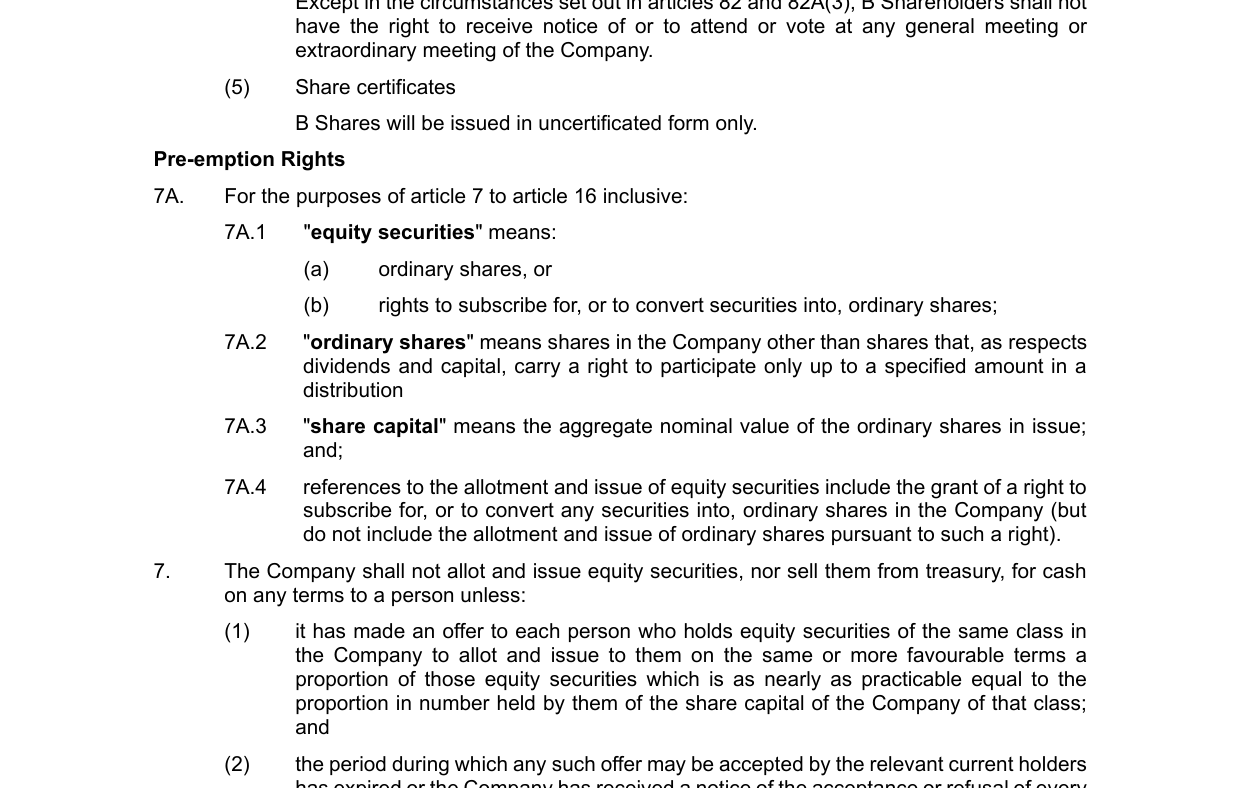
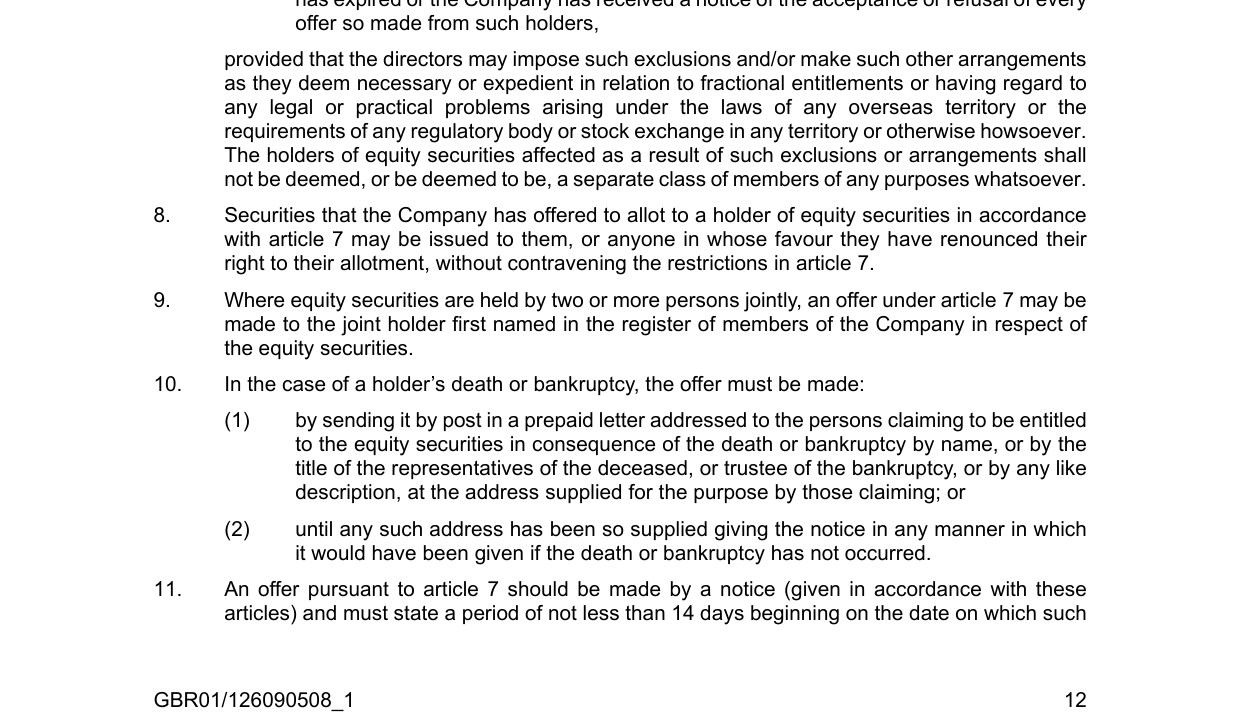
This chapter covers Articles 7-9 of Schiehallion's articles of association, establishing the preemptive rights mechanism applicable when the company issues equity securities for cash: making pro-rata offers to existing shareholders of the same class on terms no less favorable than those offered to third parties, and awaiting the completion of the acceptance period, are mandatory preliminary procedures — but the directors simultaneously hold broad discretion to exclude certain shareholders simply by deeming it "necessary or expedient."
Mechanism Key Points
Scope of application: Applies only to allotments/issuances for cash consideration and sales of treasury shares; non-cash consideration (e.g., share exchanges, bonus shares) does not trigger the procedures under this chapter.
Article 7 two-step preliminary procedure:
| Step | Content | Key constraint |
|---|---|---|
| 1. Pro-rata offer to existing shareholders | Make an allotment offer to each holder of equity securities of the same class | The allotment ratio must be as nearly as possible equal to the holder's proportionate interest in that class; the terms must be no less favorable than those offered to third parties |
| 2. Completion of the acceptance period | The acceptance period expires, or the company has received acceptance/refusal notices from all offerees | Satisfaction of either condition completes this step |
U.S. and European economic surprise indices vs. PMI trends: activity decoupled from confidence
Directors' exclusion right (proviso): The directors may impose exclusions or make alternative arrangements for reasons "they deem necessary or expedient" (as they deem necessary or expedient), with applicable circumstances including fractional entitlements, legal/practical difficulties in any overseas territory, and requirements of any regulatory authority or stock exchange; shareholders excluded on this basis shall not be deemed members of a separate class.
Supplemental provisions under Articles 8-9:
- A holder receiving an offer may renounce the allotment right and assign it to a third party;
- For jointly held shares, service of an offer on the first-named joint holder in the register is deemed to complete notice.
Investment Implications
- Existing shareholders have a dilution buffer: Article 7 ensures that when Schiehallion subsequently issues shares for cash, shareholders can subscribe pro rata according to their holdings, preserving ownership percentages — this is the most central shareholder-protection mechanism at the articles level.
- Protection is segregated by class: The preemptive right operates within the "same class" (given the company's overall structure, Class B and Class C shares are independent of each other), so an offer for a Class C issuance need not be made to Class B holders; investors must first confirm their own share class.
- The directors' discretion is the biggest variable: The proviso's "necessary or expedient" wording is broad and is often used in practice to address securities-law obstacles that prevent offshore shareholders from participating in placings (e.g., U.S. registration requirements). For affected shareholders, the preemptive right may not actually be exercisable; the "not a separate class" formulation further narrows their room to challenge the directors' arrangements on class-right grounds.
- Protects proportion, not price: The benchmark for "same or more favorable terms" is the placing terms offered to third parties, not the secondary-market price — the articles do not guarantee that the subscription price will be set below the market price.
Relayer's Note
This chapter consists of governance provisions in the company's articles of association, not the fund manager's judgment on markets or positions. The provisions nominally protect shareholders from dilution, but the "as they deem necessary or expedient" authorization leaves the directors broad latitude; the actual degree of protection depends on whether the directors exercise restraint in using the exclusion right. Readers should note that this is a corporate governance framework, not an investment commitment.
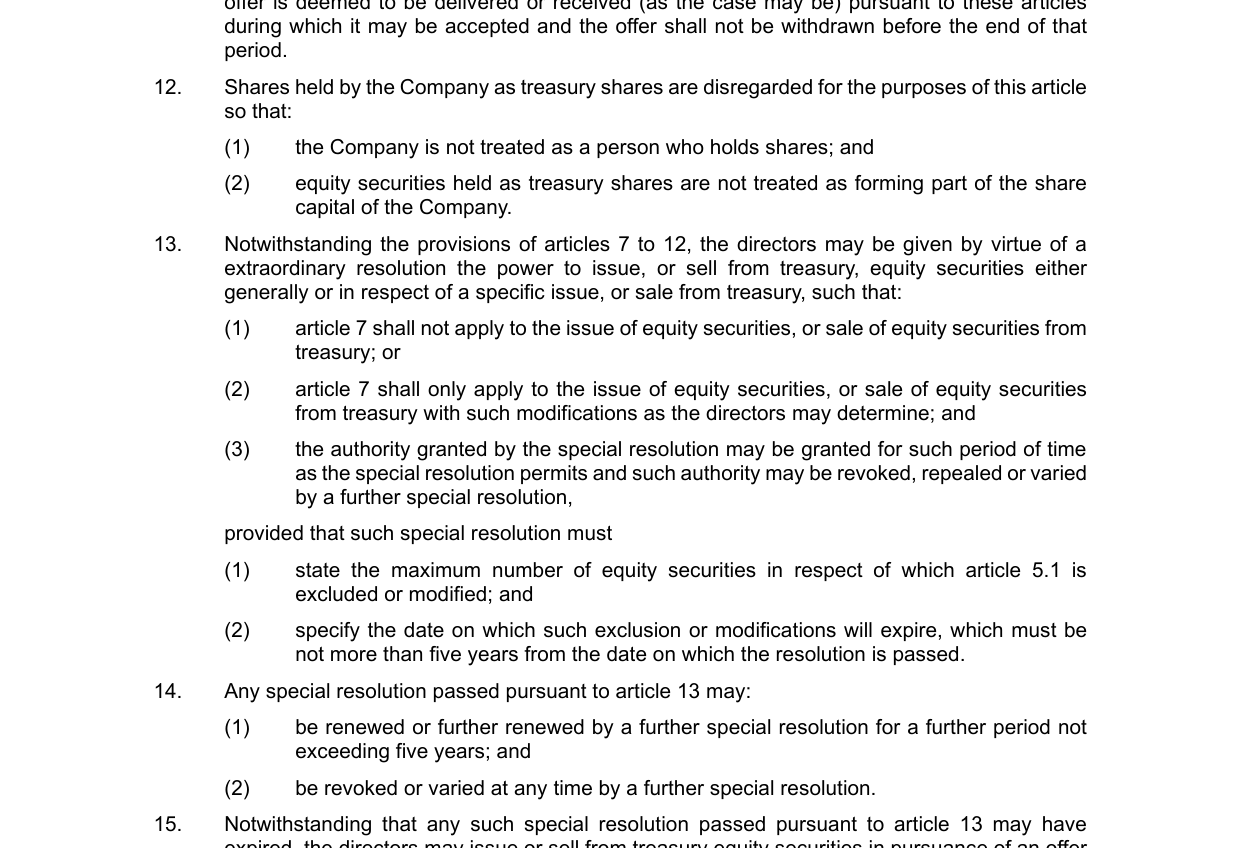
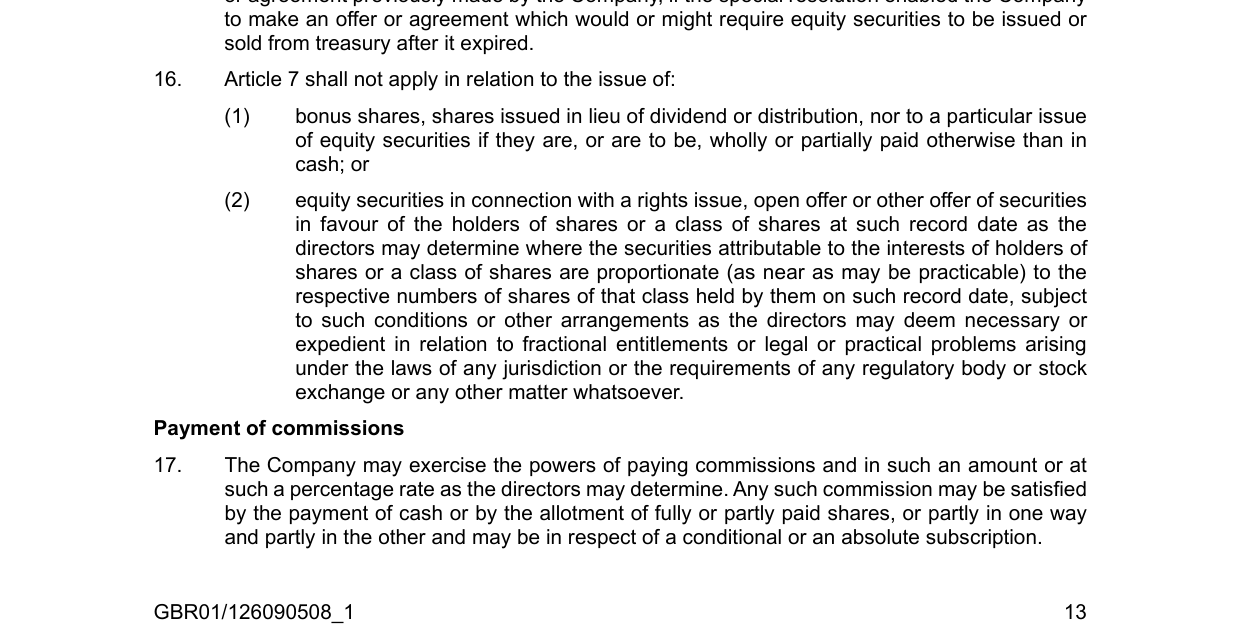
该章节规范的是董事会发行或出售库存股的特别决议授权机制:授权可续期、可撤销/变更;且决议即使过期,也不影响此前已作出协议项下的发行义务。
US personal consumption expenditure (PCE) year-over-year growth remains positive, underscoring consumer resilience
- Point (1): A special resolution passed under Article 13 may be renewed by another special resolution, with each renewal not exceeding five years. This means the authorization granted to the board to issue/sell treasury shares is not a one-off tool but can be rolled forward, allowing the company to retain financing flexibility over the long term.
- Point (2): The special resolution may be revoked or amended at any time by a subsequent special resolution. Shareholders can reclaim or modify the board's issuance authority through a new special resolution; however, such revocation/amendment itself must still satisfy the pass threshold for special resolutions and cannot be triggered lightly.
- Article 15: Even if the relevant special resolution has expired, if the company has made an "offer or agreement" for the issuance or sale of treasury shares during the resolution's validity period, the directors may continue to perform such issuance obligations. This is a transitional protection clause that prevents signed transactions from falling through due to authorization expiry, but it also means that additional shares may still enter the market under legacy agreements after the authorization lapses.
From an investment perspective, these provisions are directly relevant to equity dilution and capital structure. The authorization's renewability suggests the company may retain the ability to issue shares at any time over the long term; Article 15 ensures committed share issuances are not affected by authorization expiry. The original text does not disclose the company's actual plans to exercise the authorization, the issue size, or the timeline, so no speculation is made regarding specific dilution impact.
Continuation
Continuing from the preceding analysis, this document proceeds with an in-depth examination of paragraphs (f) and (g) and Articles 43 and 44 from three dimensions: structural risk, procedural legitimacy, and international compliance conflicts.
I. Section (f): The Subject Mismatch and Identification Dilemma of FINRA Rules
1. Subject Mismatch: Non-Member Companies Held to Member Standards
FINRA Rules 5130 and 5131, on their face, govern FINRA member firms and their participation in the allocation of new shares. The Company, however, directly converts these rules into shareholder eligibility restrictions in its own charter, creating a threefold mismatch:
Global equity positioning is near previous highs, with institutional allocation leaning optimistic
| Dimension of Mismatch | Original FINRA Rule Design | After Conversion in the Company's Charter |
|---|---|---|
| Regulated subject | Allocation conduct of underwriters/dealers (broker-dealers) | Ownership eligibility of the Company's shareholders |
| Compliance obligor | FINRA member firms | The Company (a non-member) |
| Consequence of restriction | Underwriters may not allocate new shares to restricted persons | The Company may refuse to register or forcibly remove restricted shareholders |
Key risk: The Company is not a FINRA member. Its proactive use of FINRA rules as the standard for shareholder eligibility review is, in substance, an exercise of corporate self-governance by voluntarily referencing regulatory standards. However, the evolution of FINRA rules (e.g., rule amendments and interpretive letter updates) is beyond the Company's control, exposing the Company to standard drift risk—should FINRA adjust definitions in the future, the scope of application of the Company's charter provisions will become uncertain.
2. Indirect Holding Issues in Identifying "Beneficial Interest"
Section (f) repeatedly uses the concept of `beneficial interest`. Under the indirect holding system (e.g., where shareholders hold shares through custodian banks, brokers, or intermediary holding platforms), the Company faces nominee registered holders, not the ultimate beneficial owners. In this context:
- The Company has no way to ascertain the true beneficial owners behind the nominee holders;
- Nominee holders may hold through multiple layers of custodians, making look-through identification extremely costly;
- If nominee holders do not proactively disclose, it is nearly impossible for the Company to complete its review within a reasonable timeframe.
This causes enforcement of Section (f) in practice to rely heavily on shareholders' voluntary disclosure, lacking mandatory look-through tools, thereby creating an institutional identification blind spot.
3. Impracticality of FINRA 5131's "Three-Layer Time Window"
The "covered person" determination under FINRA Rule 5131(b) depends on three time dimensions:
Both U.S. retail and professional investor sentiment are at relatively optimistic levels
- Whether the person was an investment banking services client in the past 12 months;
- Whether the person expects to retain a FINRA member within the next 3 months;
- Whether the person has entered into an express or implied obligation to retain a FINRA member in the future.
Among these, item 3, `implied obligation`, is highly subjective and almost impossible to verify objectively in commercial practice. If the Company attempts to enforce this item strictly, it will be drawn into an endless inquiry into shareholders' business intentions and will ultimately settle for formalistic review.
2. Clause (g): The "Circular Dilemma" of CRS/FATCA Compliance
1. The Logical Circularity of Using "Non-Compliance" as a Negative Condition
The core provision of clause (g) states:
> `non-compliance by such person with any information request made by the Company`
That is, as long as a shareholder fails to respond to the company's information request, they may be deemed a Non-Qualified Holder. This design has the following logical problems:
- Circular reasoning: The company requests information → the shareholder does not provide it → the shareholder is deemed to be a Non-Qualified Holder → triggering the expulsion procedure under Section 44. In this chain, "non-compliance" itself is both the basis for the determination and the trigger for expulsion, lacking an independent substantive review standard;
- Reversal of the burden of proof: The shareholder must prove their own innocence, rather than the company proving their disqualification. This is in tension with the general common law principle of `innocent until proven guilty`;
- Unlimited scope of information requests: The clause does not limit the content boundaries, number, or frequency of information the company may request. Theoretically, the company can send information requests repeatedly and without limitation until the shareholder loses their status by failing to satisfy them.
2. Potential Compliance Crisis from Data Protection Jurisdictional Conflicts
Distribution of global GDP growth and one-year-ahead growth expectations for major economies
Information required to be collected under CRS/FATCA (tax residency status, tax identification numbers, account balances, etc.) constitutes sensitive personal information in multiple jurisdictions. If the company's articles of association mandate shareholders to provide the above information, it may come into direct conflict with the following laws:
- EU GDPR (General Data Protection Regulation): The principles of data minimization and purpose limitation may restrict the company from collecting information unrelated to tax purposes;
- China's Personal Information Protection Law: Processing sensitive personal information requires separate consent, and refusal to provide such information may not be made a condition for maintaining shareholder status;
- Hong Kong's Personal Data (Privacy) Ordinance: If the company is located in Hong Kong and the Ordinance applies, an information request that does not state the purpose of collection may constitute unlawful collection.
Therefore, at the implementation level, clause (g) faces not only constraints on corporate power under domestic law, but may also be separately pursued under foreign data protection laws, creating a stacking of dual legal risks.
3. Interface Gap with the Definition of "Ultimate Beneficial Owner"
The articles of association do not, in clause (g), define whether the recipient of an "information request" is the registered holder or the ultimate beneficial owner. If the registered holder ≠ the beneficial owner (e.g., a nominee arrangement), a request issued by the company to the registered holder cannot reach the actual controlling person. Whether such a request is valid in law, and whether it counts as a request that has been "made", leaves room for interpretation.
III. Section 43: Time Limits and Recipient Obligations for Refusal of Transfer Notice
1. Differences in the Commencement Rules for the "Two-Month" Period
Section 43 sets out two commencement points for different forms of transfer:
U.S. S&P 500 companies' domestic vs. overseas sales ratio is approximately 60% to 40%
| Transfer Form | Commencement Point | Potential Disputes |
|---|---|---|
| Registered shares (certificated form) | Transfer document lodged with the Company | Whether "lodged" means "submitted" vs. "actually received by the Company" |
| Uncertificated shares (uncertificated form) | operator-instruction received by the Company | Whether "system instruction" vs. "Company's awareness" |
In practice, both `lodged` and `received` may give rise to timing disputes. For example, a transfer document may be delivered to the Company but not immediately signed for by the receiving department, or a system instruction may arrive but be automatically filtered by the Company's mailbox. Such a time lag directly affects whether the Company constitutes a late refusal, and consequently whether it bears liability for damages.
2. The Gap: Notice Obligation Runs Only to the Transferee
Section 43 only requires a refusal notice to be sent to the transferee, and does not grant the transferor the right to object or be informed. However, in the performance of an equity sale and purchase contract:
- The transferee is the new prospective shareholder; the transferor is the seller of the shares;
- After the Company refuses registration, the transfer contract may lapse because the `condition precedent` is not satisfied, and the transferor will re-hold the shares;
- Throughout the process, the transferor is deprived of the right to object and cannot learn the reasons for refusal, creating a procedural blind spot.
In certain jurisdictions (such as England and Wales, Singapore), courts may find that the Company owes a reasonable care duty to the transferor. If the Company fails to notify the transferor, causing the transferor to dispose of or pledge the relevant shares during a period of ignorance, this may constitute a tort.
3. The Ambiguity of "As Soon as Practicable" and Compensation Risk
`as soon as practicable` in the common law context can be interpreted as `within a reasonable time under the circumstances`. If the Company delays beyond two months due to internal review, a court may uphold the transferee's claim in the following circumstances:
- The share price falls sharply during the delay;
- The transferee loses shareholder rights (such as dividends and voting) because registration is not completed;
- The transferee incurs liability to a third party for breach of contract due to reliance on the Company's undertaking to register.
The top ten constituents' weight in the MSCI Global Index has retreated from highs, improving market breadth.
For the Company, this provision is not merely a procedural obligation but also a potential trigger of civil liability.
IV. Article 44: The High-Pressure "30-Day Eviction" Procedure
1. The Practical Infeasibility of the 30-Day Deadline for Cross-Border Shareholders
Article 44 requires shareholders to provide evidence or complete share transfers within 30 days of receiving notice. For the following scenarios, 30 days is clearly insufficient:
- Beneficial owner disclosure under multi-tiered indirect shareholding structures requires layer-by-layer look-through, which can take more than 90 days;
- Document legalization, translation, and notarization procedures under cross-border jurisdictions;
- If the shareholder is a trust, fund, or estate, disposal of shares requires internal procedural resolutions by the trustee/administrator.
In such cases, the 30-day limit is in fact not a "reasonable procedural timeframe" but rather a functional compulsory eviction deadline: failure to comply results in automatic loss of rights.
2. The "Deprivation vs. Suspension" Debate over Three Suspended Rights
Article 44(2) provides that during the period pending transfer, the following may be suspended:
Median annual return distribution for developed market equities is approximately 8–10%
1. Voting or consent rights;
2. The right to receive meeting notices and attend meetings;
3. The right to receive dividends or other distributions.
Under common law, restrictions on shareholder rights in a company's articles require explicit authorization. This provision sets the trigger for suspending the above rights as the shareholder's failure to self-certify eligibility, rather than confirmed disqualification — i.e., punishment prior to conviction. This is a procedural impropriety that may give rise to a shareholder's `unfair prejudice` (unfair prejudice) action.
3. The Danger of Finality with No Available Remedy
Article 44 provides shareholders with no avenue for objection, hearing, arbitration, or judicial review. Compared with Article 43, which grants the transferee the right to request further information, Article 44 does not reserve any channel for appeal for shareholders who fail to meet the 30-day requirement. Such shareholders are deprived of all shareholder rights without a hearing, constituting a potential ground for `denial of natural justice`.
V. Summary Comparison: Intensity and Imbalance of Charter Power Restrictions
| Provision | Company Power | Shareholder Protections | Balance Assessment |
|---|---|---|---|
| Subsection (f) FINRA restriction | Refusal to register, expulsion | No appeal mechanism | Structural imbalance |
| Subsection (g) FATCA/CRS | Unlimited information requests + expulsion | Failure to respond results in loss of eligibility | Circular inversion |
| Article 43 Refusal Notice | Upon refusal, only the transferee is notified | The transferee may only request "further information" | Incomplete procedure |
| Article 44 Expulsion | Dispose of shares within 30 days or lose rights | No hearing, no review, no remedy | Overwhelming power |
Together, the above provisions constitute a set of shareholder admission and exit mechanisms that are in the name of compliance, with power as the foundation. Between the values of regulatory compliance and procedural justice, the company must seek a more balanced institutional arrangement at the charter design stage; otherwise, the purpose of compliance will not only be defeated, but will instead become a new source of legal disputes.
Comparison of U.S. effective tariff rates and S&P 500 corporate earnings changes
[SKIP]
4. Coupling of "Director Authorization" and "Holder Obligations" in the Forced Sale Implementation Mechanism
The core of subsequent clauses (a) and (b) lies in granting the board full authority to initiate share transfers while compelling the holder to cooperate. This design has four details worth examining in depth:
- “authorise any person to execute an instrument of transfer”: The authorized party is not necessarily the company secretary or counsel; it can be any person designated by the directors. This effectively achieves the “agency-ization” of the transfer signature right, circumventing the deadlock in which the original holder refuses to sign the transfer instrument. In common law jurisdictions (such as the United Kingdom, Hong Kong, and the Cayman Islands), the company is irrevocably deemed to be the holder’s agent (agency by statute), and the directors’ authorization is deemed to be the holder’s expression of intent. Legally, this constitutes statutory agency rather than contractual agency, and is thus more robust.
- “giving of directions to or on behalf of the holder, who shall be bound by them”: This is a unilateral order clause; the holder must comply. For a non-qualified holder, the obligation is not triggered by “voluntariness” but by objectively being (or potentially being) a non-qualified holder, forcing the holder into the procedure. From the perspective of privity of contract, the articles of association constitute a statutory contract between the company and its shareholders; this clause amounts to pre-installing an “automatic execution order” for a forced sale within the articles.
- In the case of uncertificated form, clause (b)(i) requires the holder to “convert the share into certificated form”. This is not a mere administrative process, but a legal “conversion of the form of property rights.” In electronic settlement systems (such as Euroclear/CREST in Europe and DTCC in the United States), forcibly converting electronic shares into paper certificates means suspending the normal circulation of those shares in the system until the transfer is completed. This is akin to a “freeze” measure, preventing the holder from transferring or pledging the shares ahead of the formal registration once they have been identified as non-qualified.
- “take such other steps ... to effect the transfer” is a catch-all authorization, allowing the directors to take all necessary actions, including but not limited to applying for court orders and initiating compulsory transfer registration. In substance, this grants the directors administrative enforcement powers, rather than merely a right to seek judicial relief.
5. The Legal Nature of Sale Proceeds: Downgrading from "Trust" to "Ordinary Debt"
Clause (5) is the part of the entire section that most significantly allocates legal risk. It expressly excludes any trust obligation of the company over the sale proceeds:
> “no trust or duty to account shall arise and no interest shall be payable”
U.S. vs. global trade exposure: the U.S. is relatively low
This means that from the moment the company receives the sale proceeds, the original holder is merely an unsecured creditor, rather than a trust beneficiary. In the context of company law, the distinction is critical:
- If it were a trust relationship: The company would be required to hold the proceeds separately, manage them in isolation, and refrain from misappropriation; any income generated by the funds (for example, bank deposit interest) would accrue to the original holder. If the company commingles the funds or uses them for its own operations, it would constitute a breach of trust and be liable for restitution or compensation.
- If it were an ordinary debt: The company can commingle the funds into its own capital pool, using them for working capital, investment, or even risk-taking, as long as it can ultimately repay the equivalent amount when the debt becomes due. Moreover, no interest is payable, and any investment returns accrue to the company.
This is clearly a design favorable to the company, reducing the financial and compliance costs arising from the forced sale. However, it also raises fairness concerns: the original holder did not voluntarily sell his or her shares, yet is forced to accept the status of an unsecured creditor and must wait for the company to pay on its own initiative. If the company falls into financial distress, this claim will rank alongside other unsecured claims, significantly increasing the original holder’s recovery risk.
6. The Three-Year "Use-It-or-Lose-It" Clause: A Comparative Law Analysis of Forfeiture Limitation Periods
Clause (5) establishes a three-year limitation period for claims: from the date of the forced sale, if the original holder fails to make a valid claim within three years, the net proceeds become the property of the company, and the original holder loses the status of creditor. This is a typical “forfeiture provision.”
This clause can be compared with common statutory limitation periods in other jurisdictions:
| Jurisdiction / Scenario | Legal limitation period for unclaimed property | Company forfeiture permitted? | Typical legal basis |
|---|---|---|---|
| This clause (common in Cayman Islands articles) | 3 years | Yes | As stipulated in the articles of association |
| UK Companies Act: unclaimed proceeds from share buybacks | Confiscated by the state after 12 years (Bona Vacantia) | No (vests in the state) | Companies Act 2006, s. 643 |
| U.S. Delaware unclaimed property law | 3 years (unpaid dividends) | Yes (remitted to the state government) | Delaware Code Title 12, Ch. 12 |
| Hong Kong Companies Ordinance: unclaimed dividends | 6 years (limitation statute) | No (only extinguishes the claim; funds belong to the company) | Limitation Ordinance (Cap. 347) |
As the table above shows, the 3-year period in this clause is significantly shorter than the limitation periods for ordinary debts in many jurisdictions (typically 6 years), and even shorter than the 12 years before the UK state steps in. This is a contractual shortening of the limitation period; it is generally valid under Cayman Islands law, but it highlights a highly unfavorable position for the original holder.
Global AI capex is expected to rise from about $250 billion in 2024 to over $500 billion in 2027
- Data/Evidence: According to the annual report of the UK’s National Savings and Investments (NS&I), approximately 0.3% of fiscal payments are eventually deemed unclaimed (after several years). In the private fund/SPV context, because non-qualified holders often lose contact due to changes in status (such as triggering U.S. taxpayer status), the probability of forfeiture after 3 years is not negligible. If the original holder is the heir of a deceased member’s estate, inheritance formalities may take more than 3 years—particularly in cross-border successions or when probate is time-consuming—making it easy to trigger the forfeiture clause.
- Viewpoint: This 3-year limitation clause is essentially an accelerated forfeiture mechanism, allowing the company to quickly clean up its balance sheet without bearing long-term liabilities. It is consistent with operational efficiency, but runs counter to modern investor protection trends (for example, many jurisdictions require unclaimed funds to be remitted to the government rather than to private companies). If the articles also permit the company to retain investment returns generated during the 3-year period, the company has an even greater incentive to delay payment in order to earn additional returns on the funds.
7. The "Self-Reporting" Mechanism of the Non-Qualified Holder Notification Obligation: Linkage with Follow-On Procedures
Recalling the notification obligation in the opening sentence, this part reveals a complete “monitoring → notification → forced sale” chain:
1. When the holder becomes aware that they may constitute a Non-Qualified Holder, they must give written notice to the company “forthwith”;
2. Such notice triggers the disposal right of the company’s directors;
3. The directors may choose to force the sale without waiting for the company to discover the issue on its own.
In this chain, the “prompt notice” required in the original sentence and the “compulsory cooperation” in this part support each other. It can further be noted that:
- Risk of non-detection: If the holder does not notify, the company may not learn of the issue in time, harming the company’s interests (such as violating applicable laws or tax requirements). Thus, the notification obligation is essentially transferring legal compliance responsibility to the individual; through the articles, the company allocates the duty of identification and reporting to shareholders, reducing its own compliance costs.
- Consequences of notification: Once notice is given, the forced sale is triggered, and there is almost no room to reverse it. This effectively creates a “self-executing irreversible trigger”, which may prompt some rational shareholders to reduce their holdings before learning of a potential status problem, so as to avoid procedural losses and legal consequences arising from a passive sale.
8. Supplementary Note on Operational Risks and Practical Implications
- For certificated shares, when the directors authorize another person to execute the transfer instrument, a standard instrument of transfer is required. This typically involves stamp duty (if applicable) and registration procedures. If the original holder does not cooperate in delivering the share certificate, the directors also have the power to authorize another person to execute a “substitute signature” through “take such other steps,” ensuring the procedure is not interrupted.
- For uncertificated shares, the conversion process itself requires cooperation from the system operator and may incur trading system fees and time delays. If the company cannot unilaterally compel conversion in an electronic settlement system (such as CREST), it may need to rely on a court order or system rules. In practice, this may increase the difficulty of enforcement, but the clause already grants the directors maximum flexibility in advance.
- Sale counterparty: The clause permits transfer to a “purchaser” or “purchaser nominated person.” This means the company can find a buyer itself (such as an existing shareholder or a third party) without a public market auction. The company might transfer the shares to a related party at below-market value, further harming the original holder’s interests. However, from the perspective of company law, courts generally do not intervene as long as the directors act in good faith and in the best interests of the company.
9. Concluding View: The Clause's "Efficiency-Fairness" Balance Is Heavily Tilted Toward the Former
Semiconductor vs. software sector relative performance chart
Looking at the overall design, the subsequent clauses in this section are typical of Cayman Islands/offshore corporate governance style: they give management maximum enforcement power while imposing strict restrictions on shareholder rights. They not only allow the forced transfer, but also minimize the original holder’s legal status through designs such as the “no trust obligation” and “3-year forfeiture.” Although in commercial practice such clauses are commonly used to meet U.S. tax compliance requirements (for example, preventing U.S. persons from holding shares in certain investment entities), investors should fully appreciate the stringent nature of these clauses when subscribing for shares in such companies:
- Once flagged as a Non-Qualified Holder, voluntary notification amounts to passive expulsion;
- The sale price is determined at the company’s sole discretion, with no interest compensation;
- If no claim is made within three years, principal and returns will be permanently forfeited.
Therefore, the clause is not merely for compliance; it also constitutes a deterrent mechanism, effectively steering investors away from holding structures that could result in Non-Qualified Holder status, thereby safeguarding the company’s tax/legal position at the source. Although this design is lawful under the principle of freedom of contract, it does carry a hint of “law of the jungle” when set against the international trend of increasingly stronger investor protection.
1. Legislative Drafting Risks of Erroneous Cross-References and Interpretive Rules
Article 69(2) contains an evident drafting flaw: it cites the criteria for judging inadequate facilities as “articles 69(1)(a) and 69(1)(a) above,” whereas the contextual logic clearly indicates that the two parallel elements should be 69(1)(a) and 69(1)(b). This kind of “duplicate citation of the same sub-paragraph” is not uncommon in long-standing articles of association, but it creates substantial interpretive difficulties.
- Consequences: If applied strictly on a literal basis, the chair would only need to verify that participants can “participate in the business” without ensuring they can “see and hear the speaker,” which is clearly at odds with the legislative purpose of Article 69(1) (ensuring substantive equality in remote participation).
- Judicial Remedy Path: When interpreting articles of association, English courts apply the “business common sense” principle (Manual Investments v Eagle Star Life Assurance [1997]), allowing correction based on context where the text contains an obvious clerical error. However, if the clause remains uncorrected through multiple amendments and a dispute later arises, the litigation costs cannot be ignored.
- Practical Advice: The company should correct this cross-reference error promptly by special resolution, so that the chair’s exercise of the power to adjourn will not lack a lawful basis if a general meeting is halted due to inadequate facilities.
2. The “One-Person Quorum” in the Article 70 Adjournment Mechanism and Minority Shareholder Dynamics
Schematic of AI chip design trends and computing power demand growth
Article 70(2) provides that at an adjourned meeting a single member (in person or by proxy) constitutes a quorum, regardless of shareholding. This provision is consistent with the Model Articles under the UK Companies Act 2006 (Article 41(2)), but it carries the potential for abusive exploitation:
| Element | Model Articles (Default) | This Provision (Article 70) | Analysis of Differences |
|---|---|---|---|
| Adjournment if the initial meeting lacks a quorum | Automatic adjournment after 7 days, with time and place determined by the board | Adjournment after 10-28 “clear days”, with written notice at least 7 days in advance | This provision allows a broader preparation period, but requires “clear days” (excluding the day of notice and the day of the meeting), making the calculation stricter |
| Quorum at the adjourned meeting | 2 members (entitled to vote) | 1 member (regardless of shareholding) | This provision further lowers the threshold, effectively allowing a “one-share shareholder” to pass an adjournment resolution alone |
| Scope of business at the adjourned meeting | Only the business that should have been transacted at the original meeting | Same as left | Consistent, preventing the adjournment from being abused as a “reshuffle” |
Core View: The design intent of the one-person quorum is to prevent corporate decision-making deadlocks caused by the absence of a few members (see Re Hartley Baird Ltd [1955]). However, in contexts involving related-party transactions or where a controlling shareholder intends to suppress minority shareholders, this provision may be used as a tool for “technical passage”. For example, if the original meeting is adjourned for lack of a quorum, and the only member present is the proxy of the controlling shareholder, that proxy could unilaterally pass a special resolution without notifying other shareholders (provided that the 7-day advance notice requirement has been satisfied). While this conforms to legal form, it weakens the opportunity for minority shareholders to amend draft resolutions at the adjourned meeting.
Supporting Data: According to a 2022 survey by a governance research institution of the articles of association of 100 UK listed companies, approximately 68% of companies retain the default “two-person quorum” rule, and only a minority have adopted the simplified “one-person suffices” model. This reflects market concerns that this provision may harm shareholder participation.
3. AMENDMENTS TO RESOLUTIONS: Systemic Integration Issues Behind the Missing Provision
The original text merely lists the heading “Amendments to special and ordinary resolutions” without elaborating its content, suggesting an omission or a pending continuation. Yet the heading itself points to an important gap under the Companies Act: procedural regulation by articles of association of amendments to general meeting resolutions.
- Statutory Background: Sections 283 (definition of special resolution) and 301 (notice of general meeting resolutions) of the Companies Act 2006 do not expressly specify whether shareholders may propose amendments, leaving the matter to the articles of association.
- Common Practice: In accordance with corporate governance codes, most UK listed companies’ articles of association adopt the following restrictions:
- An amendment must be submitted in writing to the chair in advance and must not “materially alter” the substance of the original resolution;
- The chair has the authority to reject amendments that are “meaningless, repetitive, or abusive”;
- An amendment to a special resolution must ensure that the amended resolution still satisfies the 75% majority threshold.
- Impact of the Omission: If this provision is not ultimately supplemented, the default rules of common law and company law will apply (companies may adopt implied amendments), which could allow amendments to be proposed on the spot at the meeting, increasing the risk of disorder. A better approach is to expressly authorise the chair to accept or reject amendments in accordance with principles of fairness.
Global data center investment amount and growth forecast (2024-2028)
4. Overall Assessment of Articles 68-70: Imbalance Between the “Safety Valve” and “Adjudicative Power” in Hybrid Meeting Governance
Article 68 allows the directors to set the electronic participation mechanism at their discretion (including limiting the number of attendees). Article 69 gives the chair the power to determine the adequacy of facilities based on his or her “subjective satisfaction” (without objective standards). Article 70 further grants the chair the right to adjourn unconditionally in cases of disorderly conduct, safety hazards, and similar circumstances. The stacking of these three layers of power effectively creates absolute control by the board-chair over the physical process of the general meeting.
Although these arrangements are intended to address pandemics, extreme events, or extreme shareholder behaviour (such as Greenpeace protests), the boundaries of this power warrant scrutiny:
- Advantages: They provide the company with the flexibility to respond to unexpected circumstances, preventing the meeting from being rendered invalid by technical failures or inadequate premises.
- Risks: The chair may, based on his or her own judgment (for example, believing that a certain agenda item may provoke controversy), adjourn the meeting on grounds of “disorderly conduct”, effectively depriving shareholders of their on-site right to speak. Although the decision can be challenged afterwards, litigation costs are high and the burden of proof is difficult to discharge.
- Suggested Balance: Drawing on Appendix 3 of the Hong Kong Listing Rules, require the chair, when exercising the power of adjournment, to state the reasons on the spot at the meeting and record them in the minutes; at the same time, provide shareholder representatives (such as shareholders holding more than 10% of the equity) with a rapid review mechanism to “object and continue the meeting”.
Final Conclusion: This set of provisions reflects a prioritisation of efficiency and safety, but the implementing rules should introduce transparency requirements (such as objective standards for inadequate facilities and written reasons for the chair’s decisions) to mitigate the structural tension with shareholders’ right to participate.
Section Overview
This chapter covers the voting rights provisions in Schiehallion's Articles of Association. The bulk of it is boilerplate corporate governance procedure; the most investment-relevant element is the B-share FPI dilution voting mechanism under Article 82/82A.
Basic Voting Rights Rules
Voting at general meetings follows a dual-track system — one person, one vote on a show of hands; one vote per share on a poll — with procedural hurdles including a record date and suspension of voting rights for unpaid amounts.
Global natural gas supply is ample, with LNG export capacity expanding
- Show of hands: each member present in person has one vote; a proxy formally appointed by more than one member who receives conflicting voting instructions may cast one vote in favor and one vote against; a duly authorized representative of a company has the same voting rights as the company it represents.
- Poll: each member present in person, by proxy, or by corporate representative has one vote for each share held.
- A member entitled to more than one vote is not obliged to use all of them, nor to cast them in the same direction.
- Record date: the meeting notice may require members to be entered on the register no later than 48 hours (excluding non-business days) before the meeting in order to attend or vote.
- Unpaid amounts: a member may not vote while any sum remains due and unpaid on the shares held by it.
- Any objection to a vote must be raised at the meeting or on the spot during the count; the decision of the chairman of the meeting is final.
B-Share Special Voting Rights: The FPI Test
B shares do not automatically carry voting rights. Only when the FPI test confirms that the US Shareholding Percentage exceeds the FPI Specified Percentage do B shares carry additional voting rights on "director resolutions," diluting the proportion of voting rights exercisable by US residents back within the limit.
- The directors must carry out the FPI test whenever they consider it appropriate, and at least once a year; in any calendar year, the FPI Determination Date must fall on or before the last business day of the company's second fiscal quarter.
- If on an FPI Determination Date the US Shareholding Percentage exceeds the FPI Specified Percentage, then with effect from the date of the directors' determination, B shares (excluding treasury shares) carry positive voting rights on director resolutions, calculated as:
B = ((USP − SP) / SP) × A
| Variable | Meaning |
|---|---|
| A | Total voting rights of all registered ordinary shares (excluding treasury shares) on general meeting matters |
| B | Total voting rights of all registered B shares (excluding treasury shares) on director resolutions (rounded up) |
| SP | FPI Specified Percentage |
| USP | US Shareholding Percentage on the relevant FPI Determination Date |
AI data center electricity demand growth forecasts are boosting natural gas and renewable energy
- The objective of B-share voting rights is to dilute the proportion of voting rights held by US residents on any director resolution to no more than the FPI Specified Percentage.
- B-share voting rights take effect from the FPI Determination Date and continue until the next FPI Determination Date; the directors must notify ordinary shareholders via a RIS announcement as soon as practicable after making the determination.
- The company may not take any action that adversely affects the rights of B shareholders without the prior approval of B shareholders by ordinary resolution at a separate class meeting.
Fund Matters
The Articles require the FPI test to be performed at least once a year, and any adverse change to the rights of B shareholders must be approved at a B-share class meeting.
- When B shareholders are entitled to vote, the number of votes per B share on a director resolution = total voting rights of all B shares ÷ total number of registered B shares.
- This section comes from the company's Articles of Association rather than the fund manager's market judgment; for investors, the genuinely informative point is that B-share voting rights act as an "automatic diluter when the US shareholding percentage exceeds the limit" — affecting only the voting structure, with no bearing on economic rights arrangements such as dividends or liquidation.
Chapter Positioning
This chapter is a collection of governance provisions from the company's articles of association, covering alternate directors, director powers, borrowing limits, delegation, and remuneration. Among these, Article 114 on borrowing restrictions is the most binding provision on the fund's investment operations, directly framing Schiehallion's structural leverage headroom.
Leverage Ceiling (Article 114) — Core Investment Constraint
The fund group's total borrowings are capped at 50% of the aggregate of "issued and paid-up share capital + capital reserves (including reserves for unrealised appreciation on investments) + share premium"; any breach requires prior approval by ordinary resolution. In addition, temporary borrowings of up to 20% of the company's issued and paid-up share capital are permitted.
| Borrowing Type | Ceiling | Calculation Base |
|---|---|---|
| Conventional borrowings | 50% | Issued and paid-up share capital + capital reserves (including unrealised appreciation) + share premium (per latest audited balance sheet) |
| Temporary borrowings | 20% | The company's issued and paid-up share capital |
US defence spending as a share of GDP, historical and forecast (1960-2035)
Key rules on the calculation basis:
- Debentures are counted toward total borrowings even if issued for non-cash consideration.
- Cash balances on the group's latest audited consolidated balance sheet may be offset against total borrowings; new borrowings taken out to refinance existing debt and applied to repayment within six months are temporarily excluded while held pending use.
- Borrowings of non-wholly-owned subsidiaries are excluded to the extent of the minority interest; share capital classified as debt on the group's books is likewise counted as borrowings.
- Foreign-currency borrowings are translated at the rate used in the audited financial statements; if the amount translated at that rate is higher than the amount translated at the London mid-market exchange rate on the last business day before the calculation date, the latter (the lower figure) is used.
- Consequences of exceeding the limit: borrowings or guarantees exceeding the limit are not automatically void unless the lender received express notice at the time the borrowing was made; third parties are under no obligation to verify that the limit has been observed.
Implications for investors: This is a hard governance constraint on the fund's leverage. With net assets unchanged, conventional borrowings can lever up to roughly 50% of asset size, plus an additional 20% temporary facility; any over-limit operation requires the endorsement of an ordinary resolution of shareholders — the provision gives shareholders a verifiable leverage ceiling.
Director Powers and Delegation (Articles 113, 115)
The board is granted the full management and operational authority of the company, and may further delegate powers to individuals or committees (including sub-delegation), provided that a majority of the members of any committee/sub-committee must be directors.
- Instructions given by amendments to the articles or by special resolution do not have retrospective effect and do not affect actions previously taken by directors.
- Delegation may be effected by power of attorney, revocable in whole or in part, with terms subject to variation; the power to determine director remuneration may itself be delegated.
- Committee procedure is governed by the board's meeting rules, but the directors may adopt separate rules, and in the event of conflict, the rules adopted by the directors prevail.
Director Remuneration (Article 116)
Unless the company decides otherwise by ordinary resolution, the aggregate annual fee for directors (excluding alternate directors) is capped at £473,000, accruing on a daily basis, and is separate from, and calculated independently of, any remuneration or benefits payable under other provisions.
Non-Investment Content at a Glance
The alternate director provisions (deemed directors, bearing their own responsibility, subject to the same restrictions as the appointor, and not deemed agents of the appointor) are purely boilerplate governance language; Article 114(6), which defines "consolidated balance sheet" in the three cases of no subsidiaries, no consolidated statements, and partial exclusion of subsidiaries from consolidation, is a technical supplement and does not alter the leverage ceiling itself.
Continued Analysis: Director Remuneration, Conflicts of Interest, and Meeting Procedure Provisions
Trends in global military expenditure and major countries' shares
This section continues the preceding discussion, focusing on the core provisions of the articles of association concerning directors' pecuniary interests, performance of duties, handling of conflicts of interest, and board meeting procedures. These provisions bear directly on directors' incentive mechanisms, the boundaries of fiduciary duties, and the operating efficiency of corporate governance, and in application must be reconciled with the mandatory rules under UK and Guernsey company law.
1. Additional Remuneration for Directors Holding Other Positions (Article 116(2))
This provision states that where a director also holds another position in the company (including the chairmanship), or provides services beyond the ordinary scope of a director's duties, the board of directors may, at its discretion, pay additional remuneration in the form of a fixed salary, bonus, commission, profit sharing, or other arrangements.
Legal Basis and Boundaries
- Under English law, the authority for director remuneration is typically derived from the company's articles of association and determined by board resolution. Section 171 of the Companies (Guernsey) Law, 2008 likewise permits companies to provide for director remuneration in their articles.
- Particular attention should be paid to Section 188 of the Companies Act 2006: where a director's service contract guarantees a term exceeding two years, it must be approved by member resolution. This provision confers on the board the power to pay additional remuneration "at its discretion," but if the contract actually entered into falls within a guaranteed term of more than two years, that mandatory procedure must still be followed.
- Case law has consistently required that director remuneration decisions be made in good faith and in the interests of the company (Re Halt Garage (1964) Ltd [1982] 3 All ER 1016). Even where the articles expressly authorize payment, remuneration that is clearly excessive or made without consideration may still be held by the court to be ultra vires or a breach of fiduciary duty.
Practical Tips
When the board decides on additional remuneration, it should pass a written resolution and record the reasons for its deliberation. This is particularly important where the remunerated director participates in the vote, in which case the common law duty of fair dealing must be satisfied. In addition, listed companies adopting such a provision should consider the regulatory requirements under the Listing Rules regarding remuneration committees and shareholder voting rights.
II. Director Expense Reimbursement (Clause 117)
Comparison of the US consumer confidence index with year-over-year retail sales growth
This clause authorizes the company to reimburse directors for expenses reasonably incurred in attending board meetings, committee meetings, general meetings, meetings of holders of any class of shares, or meetings of bondholders, as well as other reasonable expenses necessarily incurred in the performance of their duties.
Analysis Points
- The dual qualifiers "reasonable expenses" and "properly incurred" set objective standards for reimbursement. In practice, courts typically require that expenses bear a sufficient connection to the purpose of corporate decision-making and that the amounts be reasonable (Mars UK Ltd v Small [2013] EWHC 2023).
- This clause has broad coverage, explicitly including "meetings of holders of any class of shares or bondholders" as reimbursement scenarios, which helps encourage directors to participate in communications with specific interest groups and reflects respect for shareholder democracy.
- Compared with Article 2 of the UK Model Articles (MA), this clause refines the miscellaneous expenses "otherwise in connection with the exercise of their powers" beyond "attendances," offering greater flexibility. However, in terms of tax treatment, the company must distinguish between expenses eligible for reimbursement and items that should be taxed as director benefits.
3. Director Remuneration and Benefit Plans (Article 118)
This article authorizes the board of directors to establish or maintain plans providing allowances, pensions, insurance, and death/illness/disability benefits to current or former directors, their family members (including spouses, civil partners, former spouses, etc.), or persons who were formerly dependent on them.
Key Legal Conflicts
- This clause is in tension with Section 217 of the UK Companies Act 2006. Section 217 requires that, except in specified exceptions (see Section 222), a company must obtain member approval before providing a "benefit" to a director. Even if the articles authorize the board to establish pension plans, implementing them directly without seeking member approval may still be deemed unlawful.
- Accordingly, this clause should be read as an enabling power, not as a substitute for the statutory approval process. In practice, when establishing executive pension plans, the feasibility of obtaining a member resolution must be considered in parallel, with particular caution required for "unfunded" plans that lack actual funding arrangements.
Comparative Perspective
Trends in the US savings rate and household net worth as a percentage of disposable income
Compared with the UK Model Articles, this clause is far more detailed. The Model Articles contain no similar authorization for benefit plans and typically rely on Section 217 of the Companies Act and common law principles. This reflects that these articles are designed for large private groups or pre-IPO companies with complex compensation structures that require a more explicit legal foundation.
| Dimension | This Clause | UK Model Articles | Notes |
|---|---|---|---|
| Scope of benefits | Explicitly covers family members, former directors, and dependents | No provisions | This clause broadens the beneficiary base |
| Shareholder approval requirement | Not mentioned | Not mentioned | Both require application of CA 2006 s217 |
| Plan establishment method | Authorizes the board to "establish/maintain" | None | This clause provides flexibility for corporate governance |
4. Appointment and Termination of Executive Directors (Clause 119)
This clause authorises the board of directors to appoint one or more directors to serve as managing director or hold other executive positions, with the term, remuneration, and other conditions to be determined by the board. Such appointment automatically terminates when the director ceases to hold office as a director, without prejudice to any right to claim damages for breach of contract under the service contract.
Structural Analysis
- The service contract between an executive director and the company sits at the intersection of contract law and company law. The automatic termination clause reflects the convention that directorship and executive authority are inseparable (see Southern Foundries (1926) Ltd v Shirlaw [1940] AC 701).
- However, the phrase "without prejudice to any claim for damages" preserves the director's right to claim for breach of contract — which in effect confirms that the board cannot freely terminate the executive contract merely by terminating the directorship, unless the contract provides otherwise.
- Under CA 2006 s188, where the term of an executive contract exceeds two years, member approval remains required. The phrase "Subject to the provisions of the Law" in this clause expressly acknowledges this jurisdictional limitation.
Practical Advice
US high-yield spreads are at historical lows, reflecting high credit risk appetite
When issuing an appointment letter to an executive director, the company should expressly agree whether the termination payment mechanism constitutes reasonable damages for breach of contract; otherwise, there may be a risk of double compensation. Unfair dismissal protection under Guernsey law applies to employees, but whether an executive director, as a director, enjoys such protection requires analysis on a case-by-case basis.
V. Conflicts of Interest: Disclosure, Authorisation and Exemption (Clauses 120–121)
These two clauses are the most legally complex part of the entire supplement, directly engaging the rules on fiduciary duties and conflicts of interest under sections 175–180 of CA 2006.
5.1 Clause 120: Automatic Exemption After Disclosure?
Clause 120(1) provides that, as long as a director discloses the nature and extent of his or her material interest in accordance with the law, the director may:
- become a party to a transaction with the company or have an interest in it;
- serve as a director, officer, or employee of any other legal entity in which the company is interested.
Clause 120(2) further declares that a transaction or arrangement shall not be liable to be avoided merely because of such an interest; the director is neither in breach of the “duty to avoid conflicts of interest” nor required to account to the company for any profits, and may refrain from disclosing relevant information on grounds of confidentiality and may abstain from relevant discussions.
Analysis of legal effect
- CA 2006 s232 expressly prohibits articles from exempting directors from liability for breach of duty. However, s175(4)(b) permits authorisation of conflicted matters by directors where the articles so provide.
- On its face, Clause 120 omits the “authorisation” procedure and requires only “disclosure” to trigger automatic exemption, which may be seen as a form of “advance authorisation” in the articles. Yet the law requires the authorisation to be actually given by disinterested directors (s175(5)(6)), not merely derived from an abstract statement in the articles.
- A more robust interpretation is that Clause 120 effectively defines an “interest properly disclosed” as not a “conflict” within the meaning of s175—a form of articles-based interpretation of the scope of statutory duties. At common law, where a director has made full disclosure and there is no fraud, the transaction is not void but merely voidable (sections 177 and 182 of the Companies Act 2006 require disclosure only, not approval). The phrase “not be liable to be avoided” in Clause 120(2) may therefore simply confirm that common law rule.
Historical and expected US corporate default rates (2000–2026)
Important judicial signal
In Smithton Ltd v Naggar [2014] EWCA Civ 905, the Court of Appeal emphasised that whether a director’s interest amounts to a conflict must be determined on the facts and cannot be swept aside by a generic disclosure statement. Accordingly, Clause 120 cannot be applied without regard to the specific context; disclosure must be sufficiently specific to enable other directors genuinely to understand the nature and scope of the conflict.
5.2 Clause 121: A Standard Board Authorisation Mechanism
Clause 121 provides a set of authorisation procedures fully compliant with CA 2006 s175(4)(b):
- The board may authorise matters that would otherwise constitute a conflict (including conflicts of interest and conflicts of duties), may authorise a director to hold other positions, and may decide how such conflicts are to be handled;
- The authorisation is valid only if the relevant director is not counted in the quorum and the resolution is passed excluding his or her vote;
- Once authorised, the director automatically obtains four-fold exemptions similar to those under Clause 120.
Advantages and comparison
This clause is a standard provision in the articles of UK listed companies (e.g., ICSA’s Model Articles for Public Companies with modifications). Its advantages are:
- It embeds statutory floor requirements—expressly requiring a “quorum” and “agreement,” which makes the authorisation amenable to judicial review.
- It allows the board to attach conditions and subsequently vary or terminate the authorisation, making it more controllable than the “automatic exemption” under Clause 120.
Accordingly, it is recommended that companies use Clause 121 as the primary tool for dealing with conflict matters in practice, while treating Clause 120 as a supplementary “safe harbour” that should not be over-relied upon.
Comparative law observations
Composite soft-landing indicators for the US economy: GDP growth, employment, inflation, etc.
| Jurisdiction | Conflict-of-interest authorisation mechanism | Whether automatic exemption in articles is valid |
|---|---|---|
| UK | Requires board authorisation under the articles (s175(4)) | Unclear; vulnerable to challenge |
| Hong Kong (Cap. 622) | Section 579 requires disclosure and approval by qualified directors | Often combined with a “disclosure + no objection” mechanism |
| Cayman Islands (CIMA) | Similar to English common law, but articles may grant broad authorisation | More permissive in practice, but subject to whether the company is exempt |
Thus, the drafting style of these provisions is common in British offshore jurisdictions; however, in companies strictly subject to CA 2006, Clause 120 may be regarded as overly broad, whereas Clause 121 is the true cornerstone of compliance.
VI. Board Meeting Procedures (Article 122)
This article covers decision-making rules, convening of meetings, notice methods, and exemptions, drawing on the UK MA Article 5 and the authorization of procedural autonomy under Guernsey company law.
6.1 Flexibility of Decision-Making Rules
- “The directors may make any rule which they think fit about how they take decisions” means the board may adopt pre-agreed written resolution procedures, conference calls, or hybrid meetings, and even make decisions via instant messaging tools, going beyond the traditional concept of a "meeting."
- This aligns with modern corporate governance trends, particularly the normalization of remote work after the COVID-19 pandemic.
6.2 Modern Adaptation of Notice Methods
Market expectations for the Fed's rate path (dot plot and futures)
This article allows notices to be sent by the following methods:
- in person or by telephone;
- by paper mail sent to a postal address in the UK or Guernsey;
- by electronic means to the electronic address designated by the director.
A noteworthy detail is that, for directors temporarily not in the UK or Guernsey, the company is not required to send notice unless the director actively requests it. This means overseas directors may not be aware of meetings, but this does not deprive them of their rights; rather, it is because they have not actively requested notice. If a director wishes to receive notice, they must register a postal or electronic address with the company in advance.
6.3 Retrospective Waiver of Notice
“A director may waive notice of any board meeting and any such waiver may be retrospective.” This provision allows directors to ratify after the fact, helping to cure procedural defects. However, if a director claims not to have received notice and does not ratify, the meeting resolution may be deemed invalid. Therefore, it is recommended that the secretariat retain written records of notice waivers to address potential challenges.
7. Comprehensive Review and Recommendations
The above clauses together constitute a set of "board-friendly" articles of association, designed to maximize the board's operational flexibility while establishing a compliance baseline through Clause 121. However, the following overall risks should be noted:
1. Conflict with statutory provisions: The provisions on remuneration, benefits, and contract duration in Clauses 116(2), 118, and 119 may inadvertently trigger the member approval procedures under CA 2006 s188 and s217. A statutory compliance review should be conducted each time they are implemented.
2. Unreliability of automatic exemption: The "disclosure-as-exemption" model in Clause 120 is contested under UK law. A better approach is to use the formal authorization procedure in Clause 121 and attach specific conditions when granting authorization.
3. Geographic limitations of the notice mechanism: Clause 122 only accepts postal addresses in the UK or Guernsey. For companies incorporated in Guernsey with directors spread globally, a default mechanism accepting international addresses or electronic service should be supplemented.
Practical Operational Checklist:
Historical and forecast year-on-year EPS growth for the Euro Stoxx 600 index
- Obtain member resolution approval, or draft a potential disapproval contingency plan, before establishing director benefit plans or long-term service contracts;
- Maintain an internal "Register of Conflicts of Interest" to ensure that every disclosure, authorization, and additional condition is fully recorded;
- Clarify the board notice strategy, requiring overseas directors to proactively register electronic contact details;
- Periodically review the alignment between the articles of association and local law (including Guernsey company law) to avoid invalidation due to legal amendments.
The above analysis is a continuation of this section. Subsequent content will cover specific voting methods for board decisions, written resolutions, director performance and indemnification, and can be further explored on this basis.
The following provides a continuation analysis of paragraphs (4)–(5) and related subsequent clauses, focusing on the interaction between alternate directors and the voting mechanism, the legal fiction of remote meetings, and the application of conflict-of-interest rules to alternate directors. The appointment, qualifications, and general authority of alternate directors have already been discussed above and will not be repeated here.
I. Paragraph (4): The Boundary of "Dual Voting" between Voting Rights and Alternate Directors
1. The Alternate Director's Voting Rights Are Independent of the Appointor — But Subject to an "Absence" Prerequisite
The provisions make clear that, when the appointor is absent, an alternate director may cast a separate vote on the appointor's matters, and that vote may be added to the alternate director's own vote; if acting for two or more directors, the alternate may cast one vote for each absent appointor. In substance, this grants the alternate director multiple voting rights, but subject to strict conditions:
| Scenario | Own Vote | Alternate Vote | Total Votes |
|---|---|---|---|
| Ordinary director (not an alternate) | 1 vote | 0 | 1 vote |
| Director and alternate director (appointor present) | 1 vote | 0 (appointor present, alternate right not activated) | 1 vote |
| Director and alternate director (appointor absent) | 1 vote | 1 vote (for the appointor) | 2 votes |
| Non-director alternate director (appointor absent) | 0 | 1 vote | 1 vote |
| Non-director alternate director (acting for two appointors, both absent) | 0 | 2 votes | 2 votes |
Relative performance comparison of European growth versus value styles
Key question: If the alternate director is herself a director and also acts for two absent appointors, she may cast 3 votes (her own plus one for each of the two appointors). In similar circumstances, however, if that director is herself an interested party in the matter being voted on, would those multiple votes be curtailed by conflict-of-interest rules? — See Part IV of this report.
2. The Chairman's "Casting Vote" and the Alternate Director's Conflict of Identity
The original provisions state that the chairman has a second or casting vote in the event of a tie, unless the chairman is not entitled to vote on the resolution. It is worth noting here:
- If the chairman is also an alternate director and the appointor is absent, may the chairman simultaneously exercise both the "appointor's vote" and the "chairman's casting vote" in a tie? The provisions do not expressly exclude this.
- From a legal-doctrinal standpoint, the casting vote is a right attached to the chairman's office and differs in nature from ordinary voting rights; even if the appointor is absent, the chairman may still exercise the casting vote. But if the appointor is present, the chairman can only vote in his own capacity, while the casting vote is retained.
- In practice, to avoid disputes, the articles should usually include a supplementary rule: the casting vote may not be exercised by an alternate director on behalf of the chairman; it may be exercised only personally by the person actually serving as chairman. No such provision is made here, which constitutes a potential loophole.
3. Criteria for Determining "Absence"
The provisions do not define "absent". In light of the remote-meeting provisions (below), if the appointor is "present" by telephone or video, he or she is deemed to be in attendance, and the alternate director may not vote on the appointor's behalf. However, if the appointor leaves the meeting midway, or communications are interrupted, is that deemed "absence"? It is recommended to determine this by reference to the "continuous communication" requirement in Paragraph (5). If the appointor can neither hear nor be heard, the appointor is deemed absent, and the alternate director is entitled to vote.
II. Paragraph (5): Deemed Location and Quorum for Remote Meetings
1. Technical Requirements: Synchronous Two-Way Communication
Illustration of the gap in German fiscal spending and infrastructure investment
This paragraph allows directors to attend meetings by telephone, video, or “any subsequently developed device,” but two core conditions must be satisfied:
- (a) Ability to hear and read: able to hear other directors speak, or read their written/electronic messages;
- (b) Ability to speak simultaneously: able to speak to other directors at the same time.
In substance, this is a full-duplex real-time interaction standard. Compared with the “telephone conference” commonly seen in company law, this standard is broader (it includes “reading”) but also stricter (it requires simultaneity). For example, conveying opinions by email does not satisfy paragraph (b), because it is not “simultaneous”; nor does participation via a conference system in which a party can only listen one-way.
2. Presumption of “Virtual Presence” for Quorum
The provision states: if the number of persons satisfying the above conditions reaches quorum, quorum is deemed to exist. This means that even if the number of people physically present in the same room is insufficient, the meeting can still be lawfully convened as long as the number of online participants is sufficient. This design effectively avoids deadlocks caused by geographical dispersion, but it carries two risks:
- Fictitious attendance: If a director merely connects but does not speak or interact, does that count as “participation”?
- Voting legitimacy: The anonymity of online voting or technical failures could cause voting results to be challenged.
It is recommended that supplementary provisions be added through other clauses (such as written resolutions) or operational rules: directors must confirm their online presence at the start of the meeting and remain connected; otherwise they are not counted toward quorum.
3. “Complete Discretion” over the Deemed Meeting Location
The meeting location is determined at the directors’ “complete discretion” (entire discretion). This deemed location affects many legal aspects: calculation of notice periods, the competent court, director residency requirements, and so on. But is this discretion subject to a reasonableness limitation? Under UK law, “entire discretion” generally excludes court review, except in cases of bad faith. The flexibility implied here is a double-edged sword: on the one hand, it facilitates cross-border boards; on the other, it may be used to circumvent certain territorial regulatory requirements.
4. Impact on Alternate Directors
Change in major European defense spending as a share of GDP
- If the appointor personally attends the meeting remotely, he or she is “present,” and the alternate director has no right to vote on their behalf;
- An alternate director may fully attend remotely and exercise voting rights;
- If both the alternate director and the appointor are online simultaneously, but the appointor cannot interact effectively due to technical problems, the appointor may be deemed “absent,” in which case the alternate director may vote on their behalf—but evidence is required to support this.
III. Articles 123–126: Continuing Governance Mechanisms and Seat Counting for Alternate Directors
1. "Caretaker Powers" When Director Numbers Fall Below the Minimum
Article 123 allows continuing directors (or a sole continuing director) to act for the purpose of filling vacancies or convening a shareholders' meeting even when the number of directors falls below the quorum required for board meetings. This rule is consistent in spirit with Section 161 of the UK Companies Act 2006. However, this power does not extend to decisions other than filling vacancies or convening meetings. If an alternate director is among the "continuing directors," can that alternate participate in such emergency actions?
- If the alternate director is also a substantive director in their own right, they fall within the "continuing directors" and may act;
- If the alternate director acts solely in an alternate capacity (not as a substantive director), they are not a "director" and cannot act alone, unless the company's articles expressly confer such authority.
Article 123 does not confer any additional power on alternate directors; therefore, a non-substantive alternate director has no authority to act in this situation.
2. "Seniority First" Rule for Election of the Chair
Under Article 124, if multiple vice-chairs are present and they cannot agree on who should chair the meeting, the chair shall be taken by the director with the longest tenure in office. How is "longest tenure" calculated? The provision does not specify whether continuous service or aggregate tenure is counted. For alternate directors:
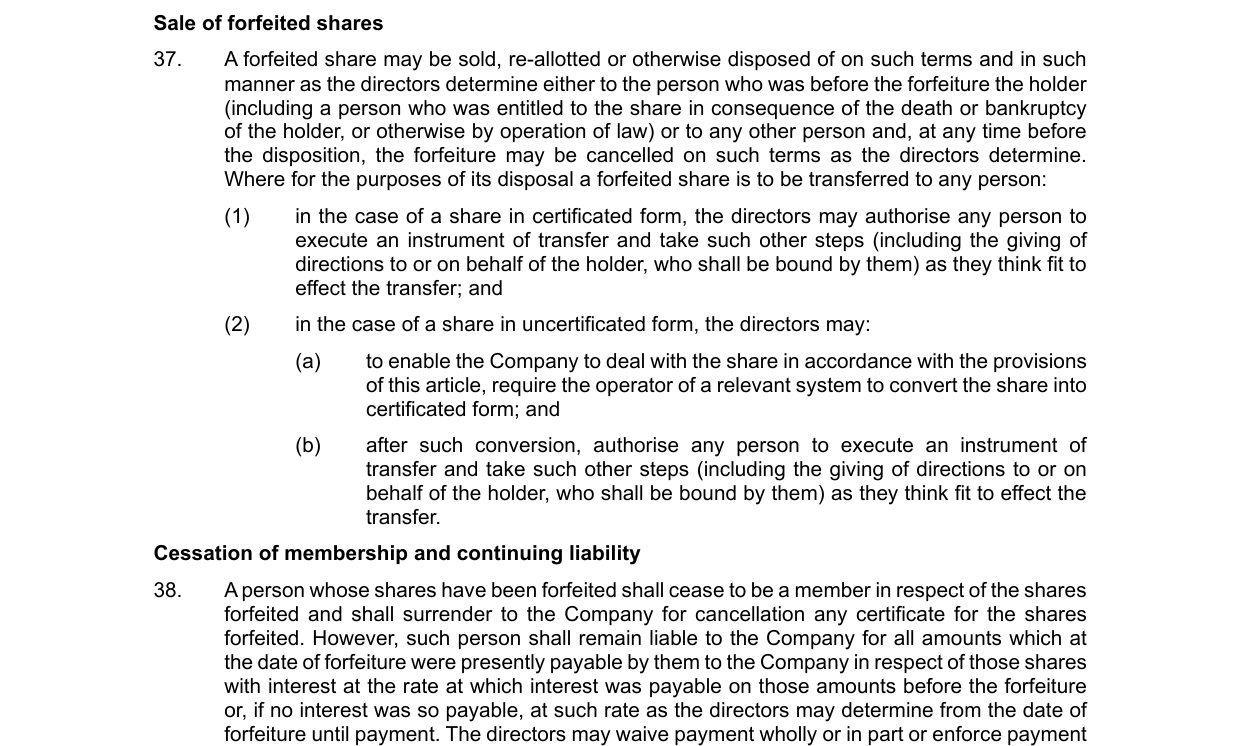
UK FTSE 100 Index valuation versus earnings expectations
- If a vice-chair is an alternate director, how should their "tenure as a director" be calculated? If the appointor previously served as a director, does the alternate's subsequent succession continue the same period? It is generally calculated from the date the alternate themselves is appointed as a director, not the appointor's tenure. But if the alternate's appointment is interrupted when the appointor resumes, and then the alternate is reappointed later, does the clock restart? The articles are silent on this, leaving room for interpretation.
3. Written Resolutions: The Signing Effect of an Alternate Director
Article 125 establishes the equivalence of unanimous written resolutions. The key points are:
- If an alternate director agrees to a resolution, the appointor's separate agreement is not required;
- If the appointor (who is themselves a director) has already agreed, the alternate director is not required to agree in an alternate capacity.
This effectively avoids the problem of "double consent." Note, however: do "all directors entitled to receive notice and vote" on a written resolution include alternate directors? Generally yes, because an alternate director is one of the "directors" in this context. Therefore, if both the appointor and the alternate are in office, both are entitled to sign, but only one signature is needed to satisfy "his own agreement." Nevertheless, if the appointor is absent, the alternate's signature can represent the appointor's wishes — which in practice allows the alternate to approve a resolution unilaterally without seeking the appointor's views.
For comparison, relevant legislative examples include Section 100 of Schedule 1 to the Hong Kong Companies Ordinance and Section 191 of the Singapore Companies Act, both of which contain similar but simpler provisions. In the English-style articles, this clause is already quite detailed, but it still leaves one question unresolved: if the appointor has died or lost capacity, is the alternate director's consent still valid? Typically, an alternate appointment terminates upon the appointor's termination, so there is an implicit premise here.
4. The "Double Counting" Prohibition for Quorum
Article 126 specifically provides the quorum counting rules for alternate directors:
- An alternate director who is not otherwise a director: if the appointor is absent, the alternate may be counted toward the quorum;
- An alternate director who is also a director: counted only once (in their own capacity as a director), even if they represent multiple absent appointors.
This rule contrasts with the voting provision in paragraph (4): in voting, an alternate director may cast votes on behalf of multiple persons, but for quorum purposes they count as only one person. This is logical: the quorum is intended to ensure a sufficient number of "physical persons" are present, rather than a weight of votes.
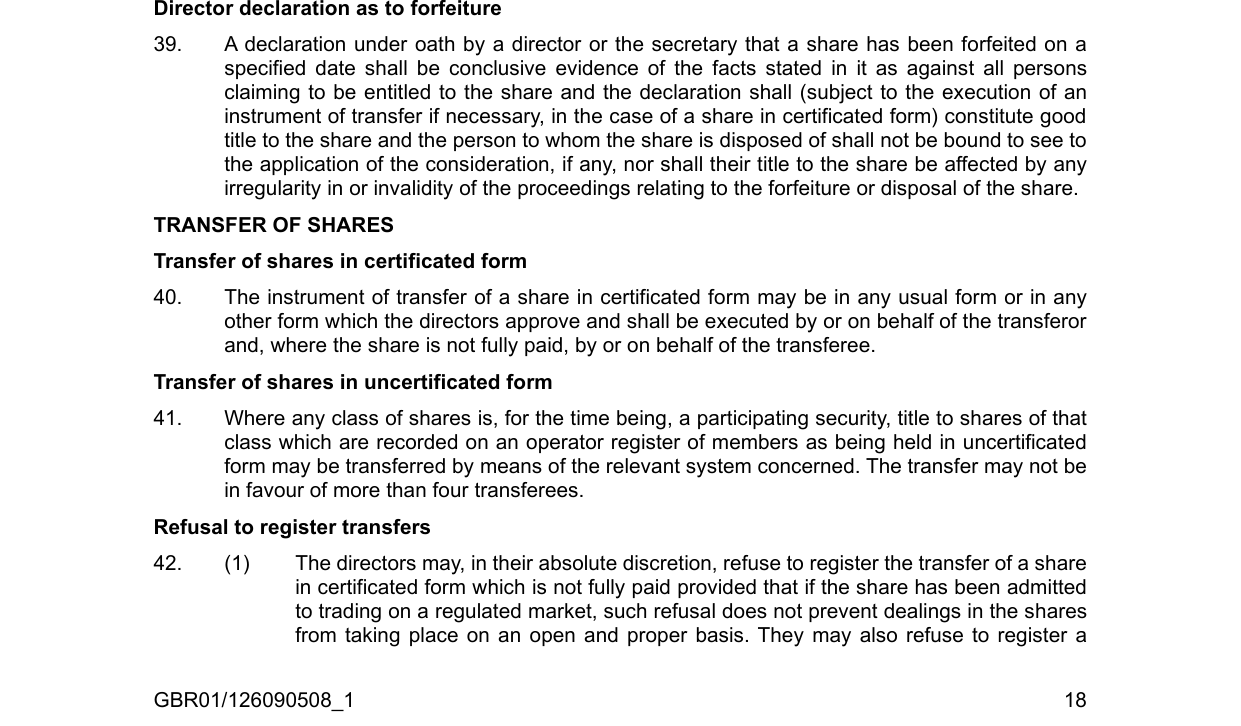
UK inflation rate and central bank policy rate projections
There is, however, a loophole: if a non-director alternate represents two appointors, and both appointors are absent, the alternate counts as only one person. If the quorum is 2, another director present would satisfy it. If the alternate is also a director, then even if both appointors are absent, only the director himself is counted. For example, if the board quorum is 2, and A is a director and also the alternate for B and C, if both B and C are absent but A is present, another director D must also be present to reach a quorum, even though A could cast additional votes on behalf of B and C. This ensures that the actual number of participants at the meeting is sufficient.
IV. Sections 127–129: Substitute Directors' Voting Rights in Conflicts of Interest
1. Does the scope of the voting prohibition extend to substitute directors?
Section 127(1) prohibits a "director" from voting on matters in which he has a material interest. Does "director" here include a substitute director? In context, when a substitute director exercises the appointor's voting rights, he should be regarded as acting on behalf of the appointor, not on his own behalf. However, if the substitute director himself has a conflict of interest with the matter, is his vote prohibited?
- If the substitute director votes only in a substitute capacity, the vote belongs to the appointor, and the conflict of interest should be assessed by reference to the appointor's interest, not the substitute director's.
- But if the substitute director is also a director and casts his own vote, his own conflict of interest will restrict his vote on his own behalf.
The provision does not clarify how "indirect interests" are to be attributed to the appointor. For example, if a substitute director is a major shareholder of a company, and the resolution concerns that company, would the vote he casts on behalf of the appointor be restricted? On legal principle, the vote ought to be exercised by the appointor; in exercising it, however, the substitute director should discharge his fiduciary duty to consider the appointor's interests, not his own. Nevertheless, the legal rules do not require the substitute director to abstain, because that interest is not attributable to the appointor.
2. Multiple application of the exceptions
Section 127(1) lists exceptions (a)–(g) that exempt common situations (guarantees, insurance, employee benefit plans, holdings of no more than 1% in other companies, etc.). Points worth noting:
- Item (c) "compensation arrangements equivalent to those of other directors" — if a substitute director is also a director, he may receive the same compensation as other directors; however, a substitute director who is not himself a director is not within the scope of "other directors" and may not qualify for the exemption, unless he is construed as falling within "director". This may be controversial in interpretation.
- Item (e) "underwriting or sub-underwriting" — if a substitute director participates in underwriting, even if he is not an actual director, he should still enjoy the exemption, because the provision uses "a participant" without restricting it to "as director".
3. "Split voting" on director appointments and self-appointment of substitute directors
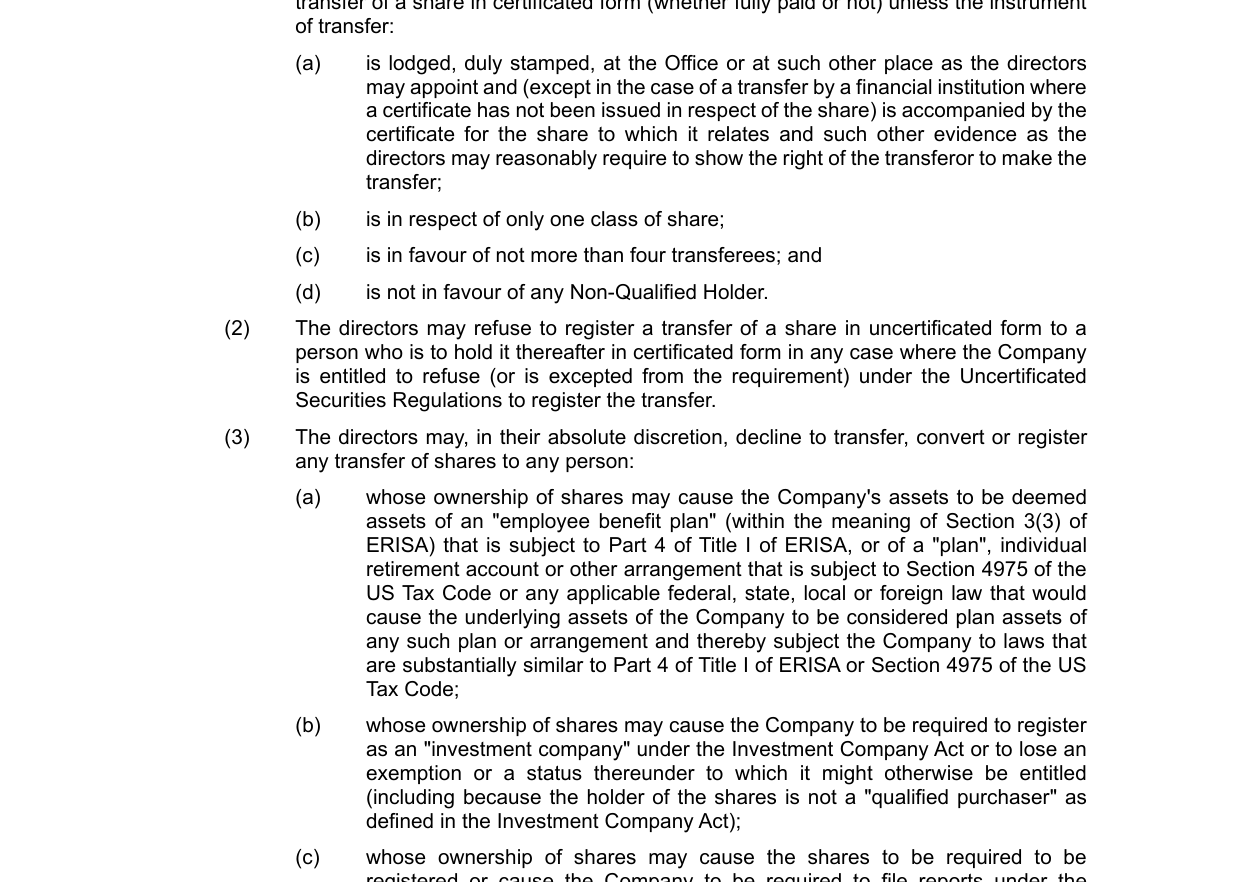
Comparison of India's Nifty 50 index gains and EPS growth
Section 127(2) allows resolutions on the appointment of multiple directors to be split, so that each director may vote on appointments other than his own. This applies equally to the appointment of substitute directors — if the resolution concerns the appointment of a person as a substitute director, and that appointee is another director, that director cannot vote to support his own appointment, but may participate in other appointments. If a substitute director is also a director, he is likewise entitled to vote when other appointments are considered, as long as his own appointment is not involved.
4. The chair's ruling on voting questions
Section 129 leaves voting disputes to be adjudicated by the chair of the meeting (or a majority of the other directors, excluding the chair), and that ruling is final. This rule quickly resolves disputes, but it may also be abused. Whether a substitute director's multiple voting is lawful is likely to provoke controversy at the meeting, and the chair's ruling may favor a particular party. It is suggested that Section 128 (which allows the general meeting to relax voting restrictions by ordinary resolution) be invoked as a remedial path.
V. Summary and Outlook
| Dimension | Paragraphs (4)-(5) | Articles 123-126 | Articles 127-129 |
|---|---|---|---|
| Additional voting rights of alternate directors | ✅ Explicitly conferred, with the voting multiple tied to the number of absent appointors | Decoupled from quorum calculation | Subject to conflict-of-interest rules, but attributed to the appointor |
| Remote meetings | Only synchronous two-way communication counts as attendance | Together with written resolutions and quorum, constitutes a flexible governance tool | Remote presence does not affect conflict determination |
| Risk points | Vague definition of "absence"; casting-vote loophole | Informal alternate directors lack emergency action powers | Unclear scope of exemption for non-director alternate directors |
The subsequent sections (such as the dividend distribution provisions beginning with Article 130) do not directly involve alternate directors. However, it should be noted that: the remuneration and expenses of alternate directors typically involve company expenditures and may constitute related-party transactions under the heading of "conflicts of interest". When deliberating such resolutions, particular attention should be given to the interface between Article 127 and the corresponding disclosure obligations. Where subsequent provisions contain rules on director remuneration, pensions, or share option schemes, it is recommended that their applicability be verified item by item against the aforementioned exemption list, so as to ensure governance integrity.
Continuing from the preceding analysis of the corporate governance provisions in the articles of association, this section focuses on the rules in Articles 131 to 133 concerning dividends and distributions. Together, these three articles constitute the substantive and procedural framework for the company's profit distribution, and are of significant practical importance, particularly with respect to directors' discretion, the balancing of rights among different classes of shareholders, and non-cash distribution mechanisms. The discussion below proceeds along four dimensions: textual logic, legal issues, comparative law perspectives, and data trends.
I. Overview of the Provisions' Logic
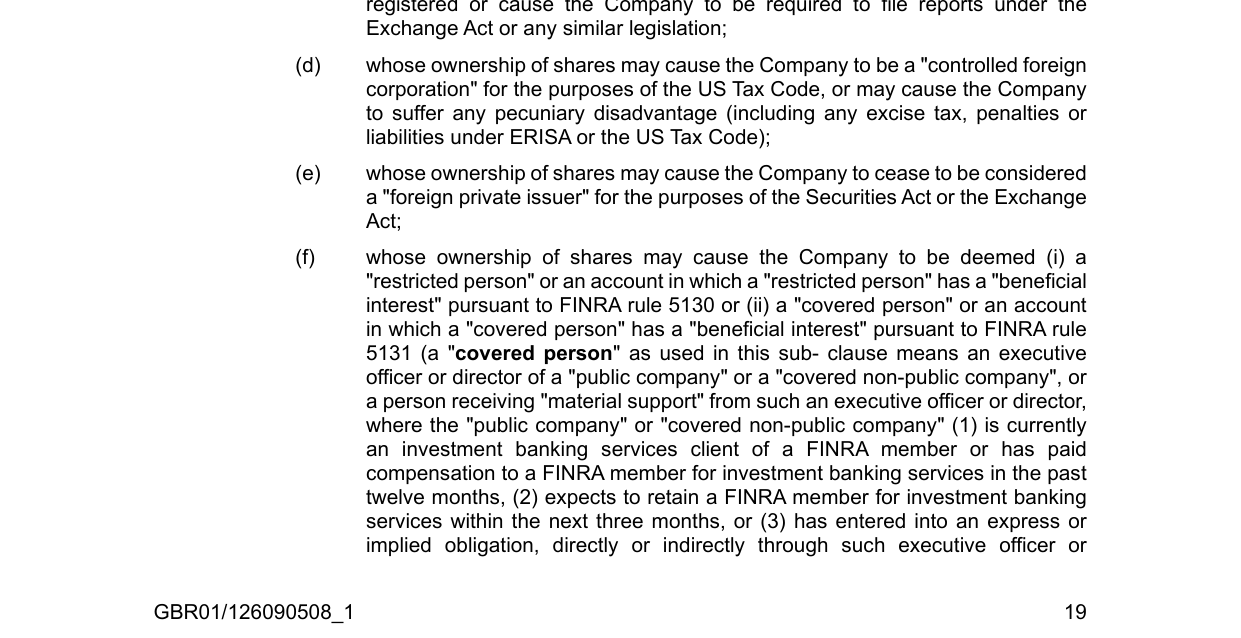
India: corporate profits as a share of GDP — history and forecast
Articles 131 to 133 are typically positioned immediately after the provisions on directors' powers in the articles of association, forming part of the "profit distribution" chapter. Their logical structure is as follows:
- Article 131 establishes the authority, conditions, and liability exemptions for directors to pay interim dividends and make distributions;
- Article 132 sets forth the general measurement principle for dividend distribution (in proportion to paid-up share capital), while providing for exceptions;
- Article 133 authorizes the general meeting, upon the recommendation of the directors, to distribute dividends in the form of non-cash assets, and confers on the directors flexible powers to resolve distribution difficulties.
Taken together, the three articles not only safeguard management's flexibility in profit distribution but also preserve space for the general meeting's ultimate decision-making authority and the protection of class shares. From a drafting perspective, the provisions make extensive use of subjective standards such as "if they appear to them" (as they think fit) and "in good faith", reflecting the respect of the common law system for commercial judgment.
II. Article 131: The Discretionary Framework for Interim Dividends and Distributions
(1) Directors' Discretion and the Assets Constraint
The provision permits directors to pay interim dividends and make distributions on the premise that "assets" are sufficient. Here, the phrase "appears to them that they are justified by the assets of the Company" does not require directors to base their determination on a formal audit report, but rather on reasonable financial judgment. This grants directors a high degree of autonomy, but at the same time implies that directors bear an ongoing duty to monitor the company's solvency and net asset position. If directors make a distribution while knowing that the company is insolvent, this would constitute a breach of fiduciary duties and could expose them to personal liability.
(2) Conflicts of Rights Among Different Classes of Shares
The end of this article specifically protects the interests of preference shareholders: where preference dividends are in arrears, no interim dividend may be paid on deferred shares or non-preference shares. However, directors are permitted to pay both classes simultaneously (provided that preference dividends are not in arrears). This arrangement eliminates the risk of relative loss to preference shareholders arising from deferred shares receiving dividends first. It is worth noting that the provision does not prohibit making a "distribution" (as opposed to a "dividend") to deferred shares while preference dividends are in arrears, which may constitute a means of circumvention and must be assessed in light of the specific definitions in the articles and applicable local law.
(3) Directors' Liability Exemption and the "Good Faith" Threshold
The provision states that "If the directors act in good faith they shall not incur any liability…" — even if the directors' lawful payment objectively causes losses to preference shareholders, they are exempt from liability provided they acted in good faith. This provision effectively narrows the scope of directors' liability, focusing judicial review on "good faith" rather than the reasonableness of outcomes. In Hong Kong and English case law, a finding of "good faith" typically requires that directors honestly believe their actions are in the company's interests, and that there be no fraud or conflict of interest. This provides a degree of protection for directors; however, if directors fail to exercise reasonable diligence (for example, by ignoring obvious evidence of financial deterioration), a court may find that they have breached their duties even if their subjective intent was in good faith.
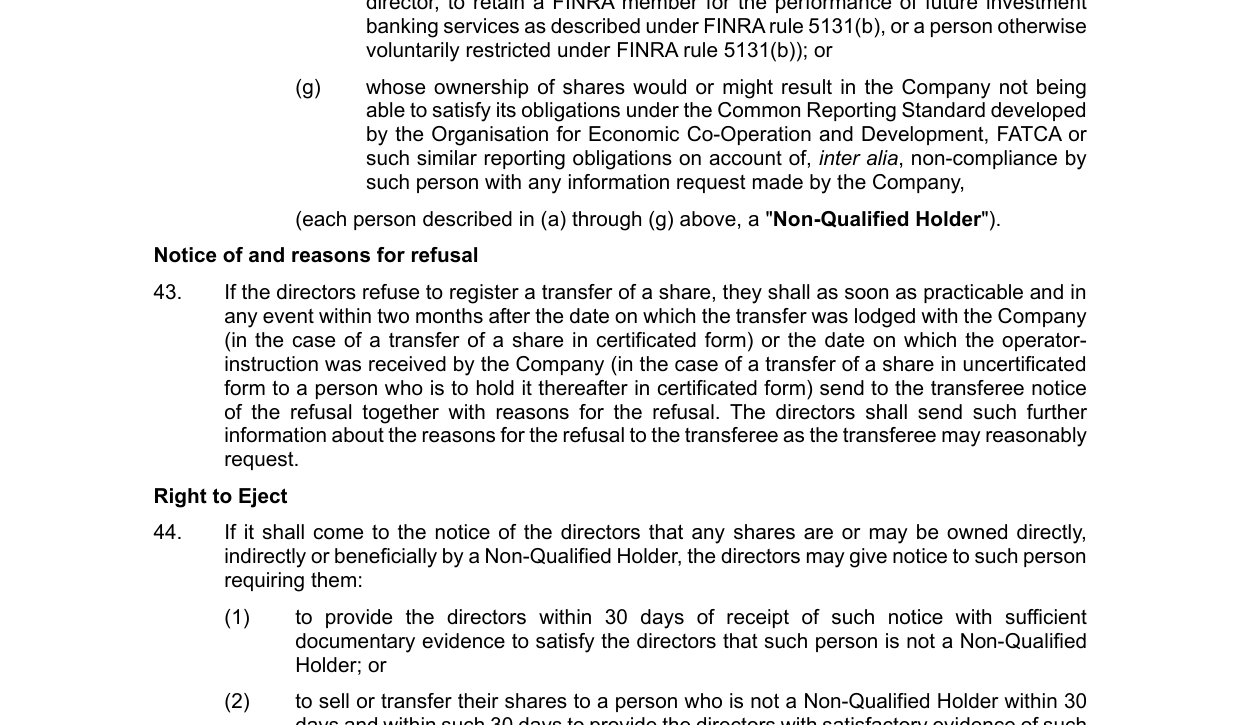
Japan: GDP growth, inflation, and wage growth forecasts
III. Article 132: The Principle of, and Exceptions to, Distribution by Paid-up Share Capital Proportion
(1) The "Exception" Principle: Priority of Share Terms
Article 132 states at the outset "Except as otherwise provided by these articles or the rights attached to shares" — reflecting the core concept of contractual freedom in equity distribution. Where the articles or terms of issue of a particular class of shares (such as preference shares) provide for distribution at a fixed rate or participation ahead of other shares, those special provisions apply and the proportional principle need not be followed. In practice, this is commonly seen in the design of convertible preference shares and participating preference shares.
(2) Treatment of Advance Payments on Shares
The provision makes clear that, in calculating "paid-up amounts", amounts paid in advance by shareholders are not included in the distribution base. This is to ensure fairness: an advance payment by a shareholder is not made out of the company's operational needs, but represents an arrangement for the time value of money; if such amounts were included in the distribution ratio, it would dilute the entitlements of other shareholders. However, if the articles provide otherwise (for example, the payment of interest on advance payments), then the matter is treated differently.
(3) Comparison with Other Jurisdictions
| Jurisdiction | Primary Legal Basis | Default Distribution Principle | Treatment of Advance Payments | Can Directors Pay Interim Dividends? |
|---|---|---|---|---|
| Hong Kong | Section 296, Companies Ordinance (Cap. 622) | In proportion to shares held | No express provision; generally governed by the articles | With authorization in the articles |
| United Kingdom | Sections 830-832, Companies Act 2006 | In proportion to shareholdings (unless class rights provide otherwise) | No express provision; governed by the articles | Must be permitted by the articles |
| Delaware | Sections 170-174, DGCL | No mandatory proportion; directors determine distributions to preference and common shares | No special treatment | Must be within capital surplus or net profits |
The comparison shows that Hong Kong and the United Kingdom are similar, both using the articles of association as the primary coordinating instrument; Delaware is more flexible, but is subject to stricter solvency tests.
IV. Article 133: Mechanisms and Practice of Non-Cash Distributions
(1) Powers of the General Meeting
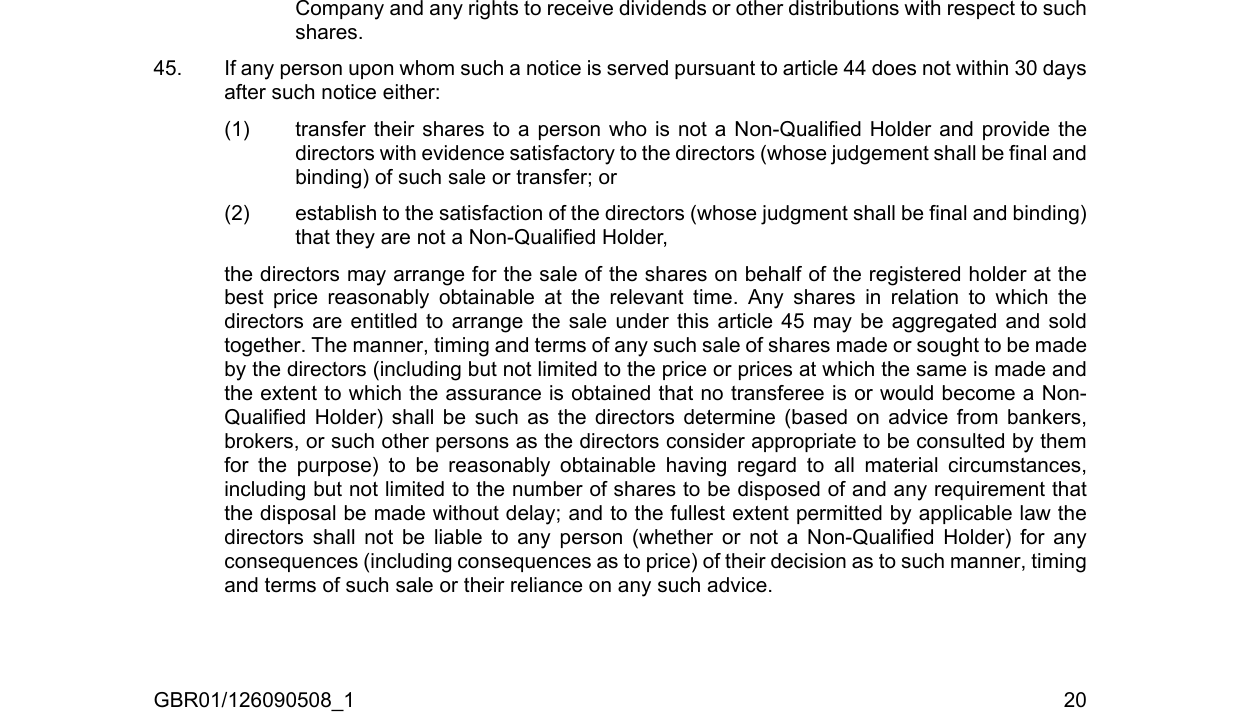
Japan: data on corporate ROE and shareholder return reform outcomes
This article provides that the meeting declaring a dividend may "direct that it shall be satisfied wholly or partly by the distribution of specific assets". This grants the general meeting powers that may go beyond the scope of the directors' recommendations, but subject to the precondition that it be "upon the recommendation of the directors" — the directors' recommendation is a prerequisite. This design ensures that non-cash distributions must obtain the consent of both management and shareholders, preventing directors from forcing a distribution priced in assets that is disadvantageous to minority shareholders.
(2) Directors' Flexibility Powers
Where practical difficulties arise in distributing assets, the directors may take three measures:
1. Issue fractional entitlement certificates or disregard fractional entitlements: Indivisible small entitlements may be evidenced by certificates, or simply rounded up or down, so as to avoid disputes among shareholders over fractional rights.
2. Pay cash at a valuation to adjust entitlements: Where certain shareholders are unable to receive specific assets (for example, due to legal restrictions or mismatched holding proportions), the directors may instead make a cash payment based on a fixed value, thereby achieving fairness for all shareholders.
3. Place the assets in trust with trustees: The assets are held in trust, with the trustees realizing or managing them over time. This is particularly suitable where the assets are illiquid or where the distribution needs to be completed over an extended period.
These powers may appear broad, but directors must still exercise them in accordance with the principle of good faith and in compliance with fiduciary duties under the Trustee Ordinance or the common law. If the distribution of assets causes harm to the interests of individual shareholders, the court may intervene upon the application of minority shareholders.
(3) Practical Challenges
Non-cash distributions are commonly seen in cases of corporate spin-offs, the distribution of subsidiary shares, or where the company holds securities of other companies. For example, a holding company that distributes the equity it holds in a subsidiary as a dividend in kind may achieve tax optimization; however, attention must be paid to the fairness of the valuation and compliance with securities transfer requirements. Where the assets are not listed on an exchange, valuation is considerably more difficult, and directors should engage independent appraisers to issue a report, so as to avoid subsequent disputes.
V. Trends and Data: Global and Hong Kong Dividend Practices
In recent years, total dividend payments by listed companies globally have continued to grow. According to the Janus Henderson Global Dividend Index, global dividends reached US$1.66 trillion in 2023, up 5.1% year-on-year, a record high. Dividend distributions by Hong Kong-listed companies have also remained active, particularly among banking stocks (such as HSBC and Hang Seng) and utility stocks (such as CLP and HK Electric), whose dividend policies are mostly characterized by "stable, high payouts".
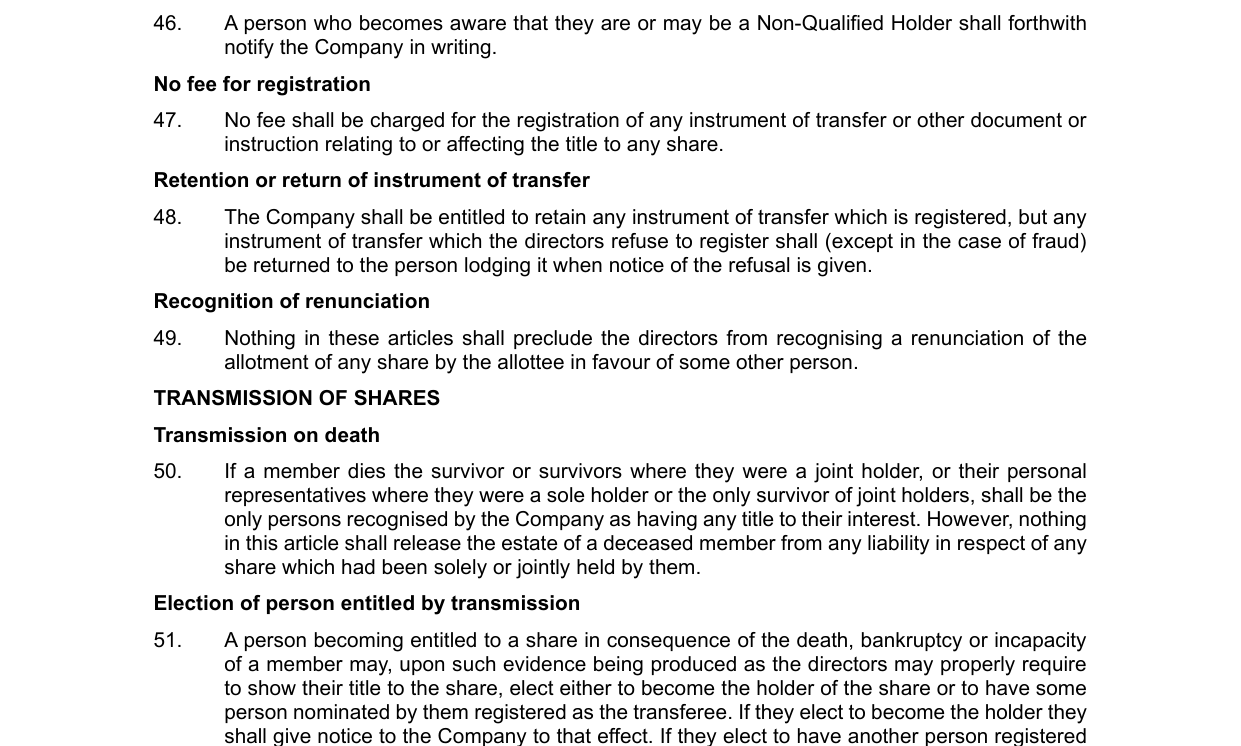
Emerging markets: GDP growth versus capital inflows
| Year | Global Dividends (US$ trillion) | YoY Change | Asia-Pacific Share |
|---|---|---|---|
| 2021 | 1.47 | +17.8% | Approx. 20% |
| 2022 | 1.58 | +7.5% | Approx. 21% |
| 2023 | 1.66 | +5.1% | Approx. 22% |
Source: Janus Henderson Global Dividend Index (2023)
At the level of capital market regulation, although the Listing Rules and the Corporate Governance Code of the Hong Kong Stock Exchange do not mandate a specific dividend ratio, they do require companies to disclose their dividend policies. Some companies have, through provisions in their articles, set hard requirements such as "distributable profits of not less than a specified percentage of net assets", which resemble the "sufficiency of assets" test in Article 131 but are more quantitative. This trend indicates that the traditional flexible provisions in articles of association are increasingly complementing regulatory disclosure requirements.
VI. Conclusions and Recommendations
As an integral part of the articles of association, Articles 131 to 133 embody three core principles of the corporate distribution system under the common law: the primacy of directors' commercial judgment, the protection of class shareholder rights, and the flexibility of distribution methods. However, several grey areas exist in these provisions (such as the specific standard for "sufficiency of assets" and the burden of proof for "good faith"), which may give rise to controversy in application.
For companies intending to amend their articles, the following are recommended:
1. Clarify an objective testing method for "sufficiency of assets" (for example, by reference to net assets, current ratio, or a solvency statement);
2. With respect to class shareholder protection provisions, add a definition of "preference dividends in arrears" and a mechanism for making good any arrears;
3. In the non-cash distribution provisions, add requirements for the valuation of related assets and approval by independent directors;
4. Draw on the "distributable profits" rules in Section 296 of the Hong Kong Companies Ordinance, and coordinate localization with, among others, Article 210 of the PRC Company Law.
In summary, these three articles are not merely rules for profit distribution; they are also an institutional safeguard for the internal balance of power within the company and the realization of shareholder value. In a dynamic economic environment, timely review and revision of such provisions will help companies deploy capital more prudently and reward shareholders.
Emerging markets: net revisions to EPS estimates (upgrades minus downgrades)
Dividend and Distribution Payment Rules (Excerpt from Schiehallion Fund Limited Articles)
This section covers the purely legal clauses in the fund's articles governing the payment mechanism for dividends and other distributions. It does not address investment strategy, position changes, or market views. The following distills the key rules that have practical impact for holders.
Payees and Payment Methods (Article 134)
Dividends are payable only to registered holders or their legal successors; the payment method is determined by the Board and may include mailing instruments, bank transfer, electronic systems, or a third party designated in writing. Specific rules:
- Payees: the holder himself; all joint holders; persons entitled through the death/bankruptcy of a holder or through operation of law, collectively referred to as “payees” or “persons entitled.”
- Payment methods (the Board may determine to use all or some of the following):
- Mailing cheques, money orders, or other similar financial instruments to the registered address (for joint holders, to the address of the first-named holder on the register);
- Interbank transfer or electronic means to a suitable account designated in writing by the payee (for joint holders, the designation must be by all joint holders);
- For uncertificated shares, payment may be made through the relevant system (subject to the Company being authorized);
- Any other method requested in writing by the payee and agreed to by the Company;
- Payment to a third party in accordance with the payee’s written instructions (in which case the methods under Article 134(2)(a)–(d) apply).
- The Board may choose among three modes and notify holders: (a) notify several methods and let the holder select one; (b) default to a certain method, with the holder able to elect a change; (c) directly decide on a method, with the holder having no right to choose. Different payees or groups of payees may be paid by different methods.
- Risk and responsibility: the risk of sending and payment is borne by the person entitled; the Company is not responsible for loss, refusal, or delay. Receipt by any one joint holder is deemed receipt by all. Payment of the instrument or completion of the electronic payment is deemed payment by the Company.
Suspension of Payments and Treatment of Unclaimed Amounts (Articles 135–138)
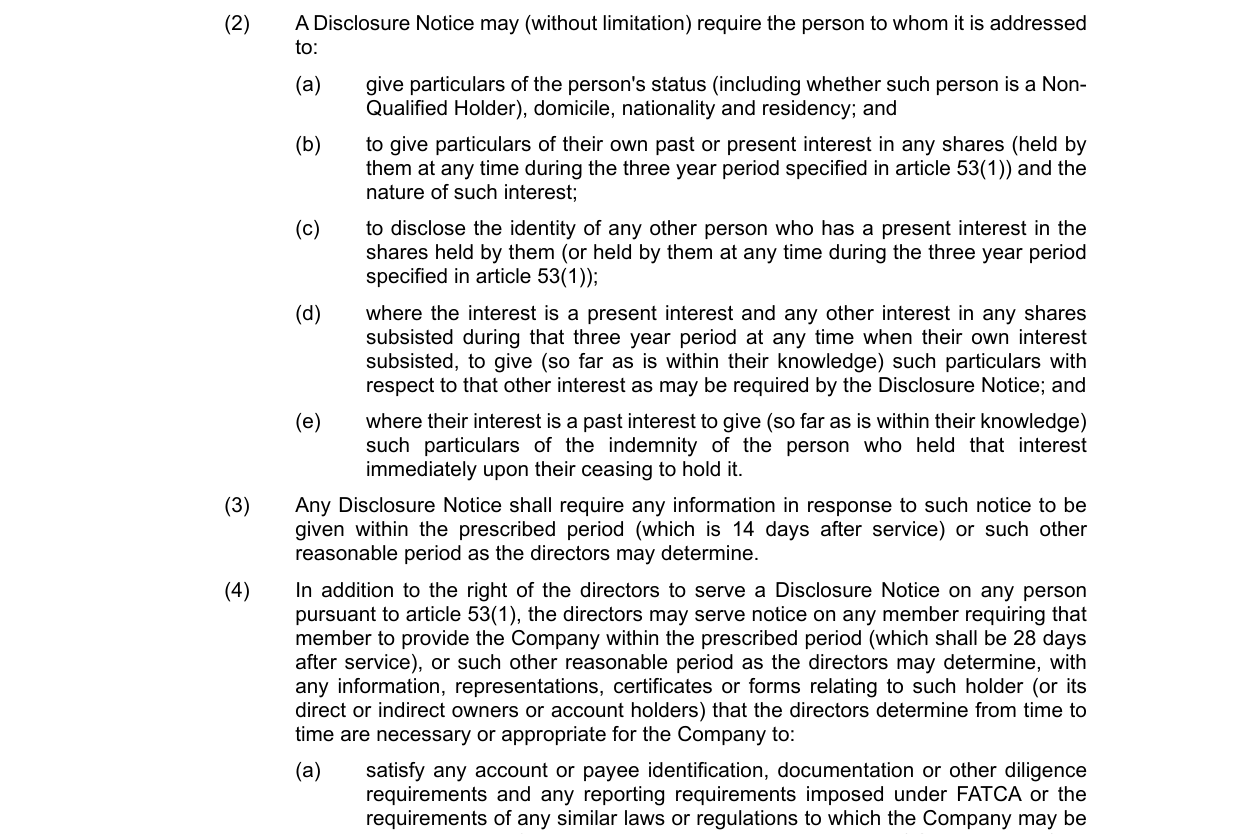
China CPI, PPI and policy rate trends
If dividends are uncashed for two consecutive payments, or uncashed once with no response to inquiries, the Company may stop sending payments; returned amounts may be deposited into the Company’s account without interest and without constituting a trust; dividends unclaimed for 12 years will be forfeited. Key points:
- Conditions for stopping payment (any one is sufficient): two consecutive dividends for which the instrument has been returned/uncashed or payment has failed; one uncashed payment where reasonable inquiries have not produced a new address/account; or the holder has not provided the necessary address or suitable account information. The holder may later provide a new address/account in writing, and payments may resume upon request.
- Rejected or returned payments: the Company may deposit the cash into its own account and hold it until the payee provides a valid address/account; the Company does not act as trustee and pays no interest; deposit is deemed payment.
- No interest: unless otherwise provided by the rights attached to the shares, no dividend or distribution carries any right to interest from the Company.
- Forfeiture clause: dividends unclaimed for 12 years from the date payable shall be forfeited (the Board may decide otherwise); unpaid dividends arising from the sale of shares under Article 54 shall be forfeited after 3 years from the sale, and the Company will no longer be under any obligation to pay them.
Scrip Dividend Arrangements (Article 139)
The Board, if authorized by an ordinary resolution, may offer the option of new shares instead of a cash dividend, with the conversion price calculated as the average of the middle-market quotations on the London Stock Exchange on the ex-dividend date and the following four trading days. Key clauses:
- Scope of authorization: the ordinary resolution may specify one or more particular dividends, or some or all dividends within a period (not extending beyond the third annual general meeting following the meeting at which the resolution was passed).
- Elected period: either only the next proposed dividend, or that dividend and all subsequent dividends until the Company revokes the election.
- Valuation: the value of the new shares is to be as nearly as possible equal to (but not exceed) the amount of the cash dividend (excluding any tax credit). Value is calculated as the average of the middle-market quotations from the London Stock Exchange’s official daily list for the ex-dividend date and the following four trading days, with an auditors’ certificate as conclusive evidence.
- Fractional shares: no fractional shares will be allotted. The Board may, at its discretion, ignore fractions, retain them for the Company, or accumulate them for members (without interest) to be applied against future scrip dividend payments.
Compliance Note: The original text contains multiple cross-references to numbered provisions (e.g., Article 143(4) on address-supply obligations, Article 54 on share disposal scenarios) that should be read in the context of the full articles of association. Such provisions are model corporate governance texts and contain no investment judgment; they are cited here solely to facilitate understanding of the rule framework relevant to holder interests.
The sequel begins at paragraph (5), extending the “basic payment rules” established in paragraph (1) to the operational level of scrip dividends. The analysis below focuses on the new procedural mechanisms, boundaries of authority, and practical implications for shareholders and the company introduced in paragraphs (5) through (13).
I. Paragraph (5): The Hidden Costs of the Standing Election Mechanism and Notification Simplification
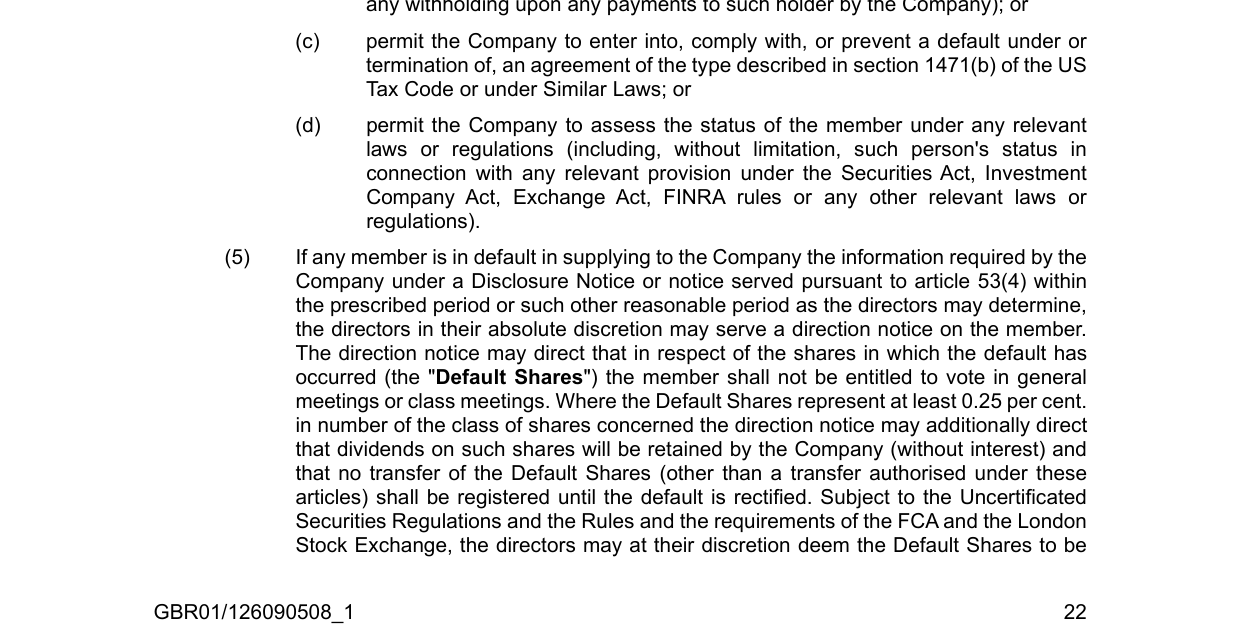
Historical comparison of China equity valuations and foreign capital flows
Paragraph (5) introduces a key mechanism: the standing election. A shareholder may submit a single written notice that “all future dividends be satisfied by new shares instead of cash,” after which the company need not send election forms for each dividend period unless the shareholder revokes the election. This design is fairly common in common-law jurisdictions, and its advantages are:
- Lower administrative costs for the company: It eliminates the need to ascertain shareholder intent each period, reducing mailings and processing workflows;
- Greater capital efficiency for shareholders: Long-term holders (e.g., institutional investors) can avoid short-term cash idleness;
- Enhanced capital retention: The company improves cash liquidity by continuously issuing new shares rather than paying cash.
However, the system also carries a neglected opportunistic risk. Because paragraph (5) does not require the company to send periodic reminders to standing-election shareholders, minority shareholders may forget their election after long periods without notice, passively receiving new shares rather than cash during a market downturn. By contrast, an election-per-dividend system (requiring an affirmative choice each time) is more transparent but entails higher administrative costs.
| Mode | Notification frequency | Shareholder participation | Company cash management | Potential bias |
|---|---|---|---|---|
| Standing election | One-time | Low (unless actively revoked) | Continuous reduction in cash outflows | Shareholders may forget and be unable to return to cash |
| Election per dividend | Each period | High | Reassessment required each period | High administrative costs; participation may be low |
II. Paragraph (6): Compliance Boundaries of Directors’ Absolute Discretion and Shareholder Equality Concerns
Paragraph (6) grants directors the power, “in their absolute discretion,” to impose exclusions, restrictions, or other arrangements to address legal or practical problems in any jurisdiction or to satisfy regulatory and exchange requirements. This power carries significant compliance necessity:
- For example, under U.S. law, new shares may constitute a securities offering under the Securities Act of 1933, requiring registration or an exemption; some countries impose foreign-exchange controls; and listed-company rules in certain jurisdictions require shareholder approval for new share issuances.
- Directors may accordingly exclude shareholders in certain jurisdictions from the scrip dividend arrangement to avoid unlawful conduct.
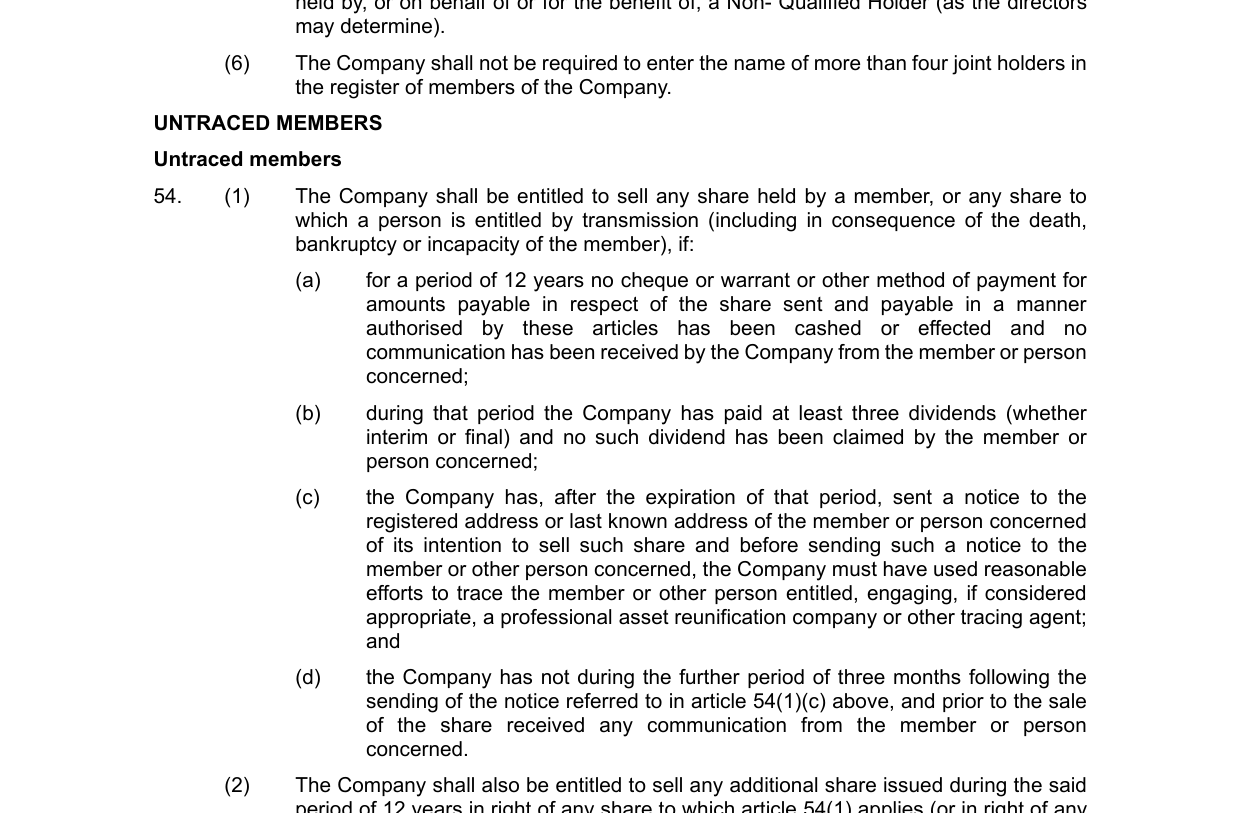
Global asset class return and correlation matrix
However, the phrase “absolute discretion” may raise challenges under the principle of equal treatment. Section 584 of the Hong Kong Companies Ordinance (Cap. 622) permits differentiated rights, but shareholders in the same class should be fairly treated. If directors exercise the exclusion power without transparently explaining the reasons, minority shareholders may challenge the decision. In practice, companies should generally disclose the reasons for exclusion in annual reports or announcements and should base exclusions on objective criteria (such as the jurisdiction of the registered address) rather than targeting specific individual shareholders.
III. Paragraphs (7)–(8): The “Profit Transfer” of the Capitalization Mechanism and Sources of Reserves
These two paragraphs form the technical core of the entire scrip dividend arrangement. When a shareholder elects new shares, the company does not pay cash; instead, it capitalizes an amount from “any reserve or fund (including the share premium account or capital redemption reserve)” or from “profits that would otherwise have been available for cash dividends” to satisfy the new shares in full.
This means:
- The capitalization sources are broad: They include not only distributable profits but also reserves not distributable by way of profit, such as the share premium account and the capital redemption reserve. Under common law, the capitalization operation itself is treated as “issuing fully paid shares among members” and does not constitute a “distribution.”
- Profit reversibility: Paragraph (7) permits the use of “profits that could have been paid in cash,” indicating that the company has not altered the substantive nature of the distribution; only the form of distribution has changed from “cash” to “shares.” Accordingly, the stricter distribution tests under company law (such as the balance-sheet test) need not be satisfied.
However, it should be noted that paragraph (8) confirms that the capitalized amount equals the “total nominal value of the new shares” (or the corresponding premium, depending on the terms) to ensure the shares are “fully paid.” If the new shares carry a premium and the reserves are insufficient to cover it, implementation may be impossible — precisely the limitation addressed in paragraph (9).
IV. Paragraph (9): The Capital Adequacy Precondition — Protection for Creditors
Paragraph (9) is an easily overlooked but important safety valve: “Unless the company has sufficient reserves or funds, the directors shall not proceed with the election.” This provision is designed to prevent a company from manufacturing nominally “fully paid shares” through capitalization when it is already over-indebted or has severely inadequate capital.
This reflects the continuity of the capital maintenance doctrine under common-law systems — even a scrip dividend may not undermine the company’s legal capital. Although capitalization differs from distribution, drawing on the capital redemption reserve or share premium account could erode the legitimate creditor buffer. Therefore, the provision effectively requires directors to perform an internal feasibility check before advancing subsequent steps after the share capital base is established.
V. Paragraph (10): Interaction with Article 140 of the Articles — The Basis for Procedural Simplification
Paragraph (10) provides that, solely for the scrip dividend authorized under this article, a directors’ resolution to capitalize the company’s profits or reserves is deemed equivalent to an ordinary resolution passed under Article 140 of the articles. This avoids the cumbersome procedure of convening a general meeting for every dividend distribution.
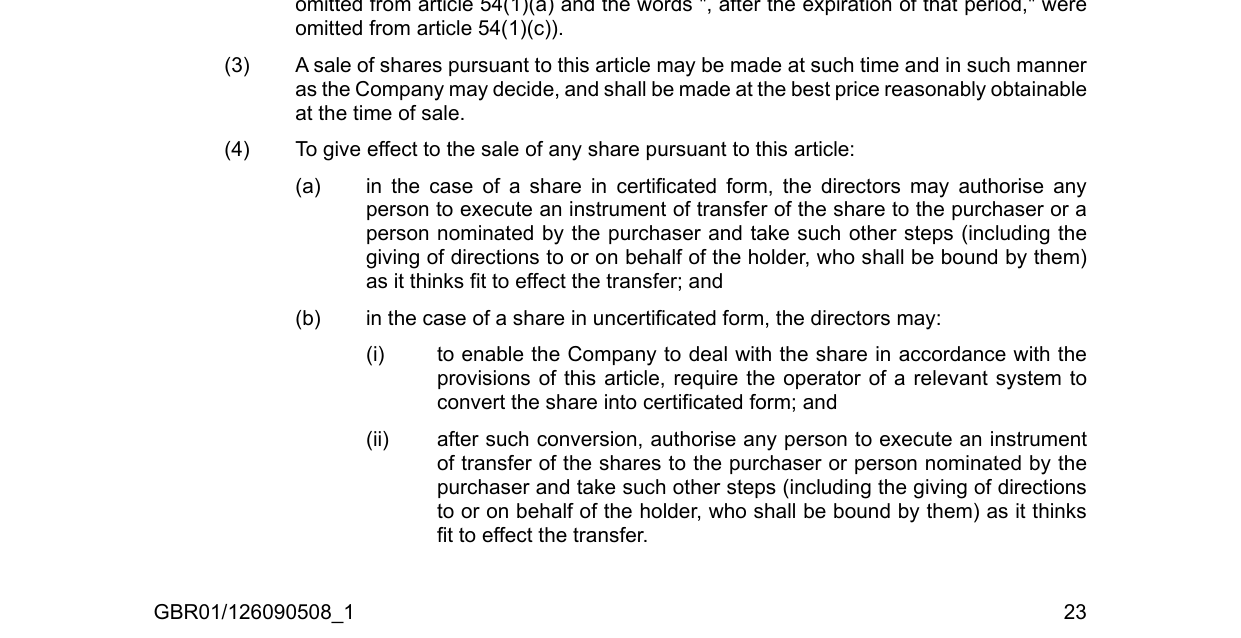
Reduction in portfolio volatility after adding assets such as gold and commodities
However, there is a procedural flexibility and expansion of authority issue here: paragraph (10) effectively transfers the ultimate decision over “shareholder approval” to the board of directors. Although the articles of association generally permit shareholders to amend the provision by special resolution, the directors obtain considerable discretion under the existing provision. In practice, many companies adopt a “prior shareholder authorization” model — for example, approving a “buyback/scrip dividend plan” in one resolution at the annual general meeting, with the board then deciding whether and when to implement it for each period.
The provision also permits the use of a “merger reserve” or “revaluation reserve,” further expanding the arsenal available for capitalization. However, a revaluation reserve represents “unrealized profits.” Distributing new shares to shareholders out of unrealized profits, while not directly violating general Hong Kong/jurisdictional distribution rules, could be subject to restrictions if used to pay cash dividends. The broad authorization here must be read in conjunction with the applicable companies legislation to avoid ultra vires conduct.
VI. Paragraph (11): Correspondence between Electronic and Non-Electronic Forms — Alignment with Securities Market Practice
Paragraph (11) addresses the hybrid state of uncertificated shares and certificated shares. The logic is straightforward: if the original shares were in uncertificated form (e.g., held in the Central Clearing and Settlement System) on the record date, the newly allotted shares should also be in uncertificated form; conversely, the same applies in the opposite case.
This ensures continuity in the form of shareholders’ assets, avoiding a situation where, due to the scrip dividend, a shareholder’s holdings are partially left in a naked short position or require re-custody. This is especially relevant for companies in the Hong Kong market, such as HSBC and Hang Seng Bank, whose scrip dividend plans commonly adopt this rule to comply with the operational requirements of the Central Clearing and Settlement System (CCASS).
The provision specifically notes “unless the directors decide otherwise or the applicable system rules require otherwise,” indicating that if the new shares cannot be included in the existing system (e.g., due to temporary market restrictions), the directors have the power to adjust. However, such adjustments remain subject to securities laws and system rules and are not entirely unrestricted.
VII. Paragraph (12): The Academic Logic of “Pari Passu but Ex-Dividend” with Existing Shares
After allotment, the new shares rank pari passu with the issued and fully paid shares, but they do not carry the right to participate in the current dividend that constitutes the consideration. This condition is logically necessary; otherwise, there would be a circular amplification of “dividends begetting shares and shares begetting dividends.”
This “quasi-equal rights” arrangement has two legal effects:
- With respect to dividends, holders of new shares can participate only in the next dividend cycle;
- With respect to all other shareholder rights — return of capital on liquidation, voting rights, veto rights, etc. — they are fully equivalent to existing shares.
Thus, paragraph (12) is in substance an explicit statement of “ex-dividend entitlement,” rather than the creation of any special right. This avoids future disputes — particularly over whether new shares may participate in this dividend, or in two or more subsequent dividends.
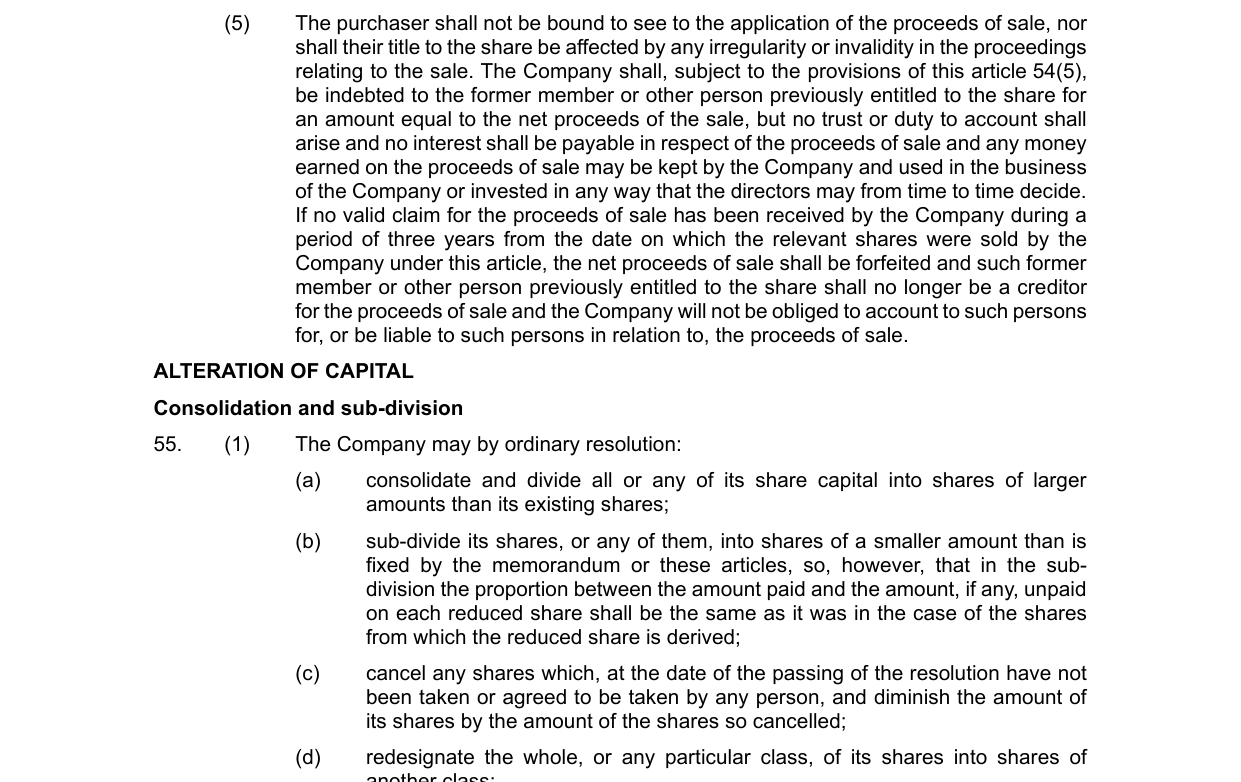
Evolution of the negative correlation between gold price trends and real rates/U.S. dollar
VIII. Paragraph (13): The Directors’ “Catch-All” Authorization and Binding of Shareholders
Paragraph (13) allows the board to do everything “necessary or appropriate” and authorizes any person to execute agreements on behalf of all interested shareholders with the company. Such agreements typically contain the terms of capitalization and incidental matters.
Notably, this authorization has a “locking-in” effect: even if an individual shareholder has not executed the agreement, once it is signed under directors’ authorization it remains binding on “all parties concerned.” Here, “all parties concerned” includes shareholders who have elected the scrip dividend and shareholders affected by the capitalization. Legally, this is a classic “agency action,” derived from the implied contractual effect of the articles — analogous to shareholders having given prior consent to the amendment mechanism of the articles.
However, paragraph (13) does not require that the “authorized person” be independent of the directors; in theory, a director or an officer could be authorized. In practice, the company secretary or a director is usually authorized to sign, to ensure efficiency. In practice, such agreements are standard operational procedure and rarely give rise to disputes.
Summary: A Closed System from “Payment” to “Capitalization”
Paragraph (1) establishes the general obligation to pay dividends, while paragraphs (5) through (13) construct an alternative performance pathway running parallel to cash dividends — the scrip dividend. Its core characteristics can be summarized as:
- Procedurally: A standing election is permitted, but the directors retain the ultimate power to initiate each period’s dividend;
- Compliance-wise: Regulatory exclusions and reserve-adequacy checks are combined;
- Effectively: Paragraph (10) simplifies the approval process for capitalization to a board resolution;
- Rights protection-wise: New shares are ensured to rank equally with existing shares but do not participate in the current dividend.
This design enables the company to return value to shareholders without consuming cash, while the shares received by shareholders retain full voting rights and future income rights. For the “bonus share” or scrip dividend mechanisms in mainland China’s capital markets, these provisions provide a more refined reference model, particularly in the standing election mechanism, the scope of capitalization reserves, and the corresponding rules for paperless settlement.
资本化条款:以股代息与红股分配的法定框架
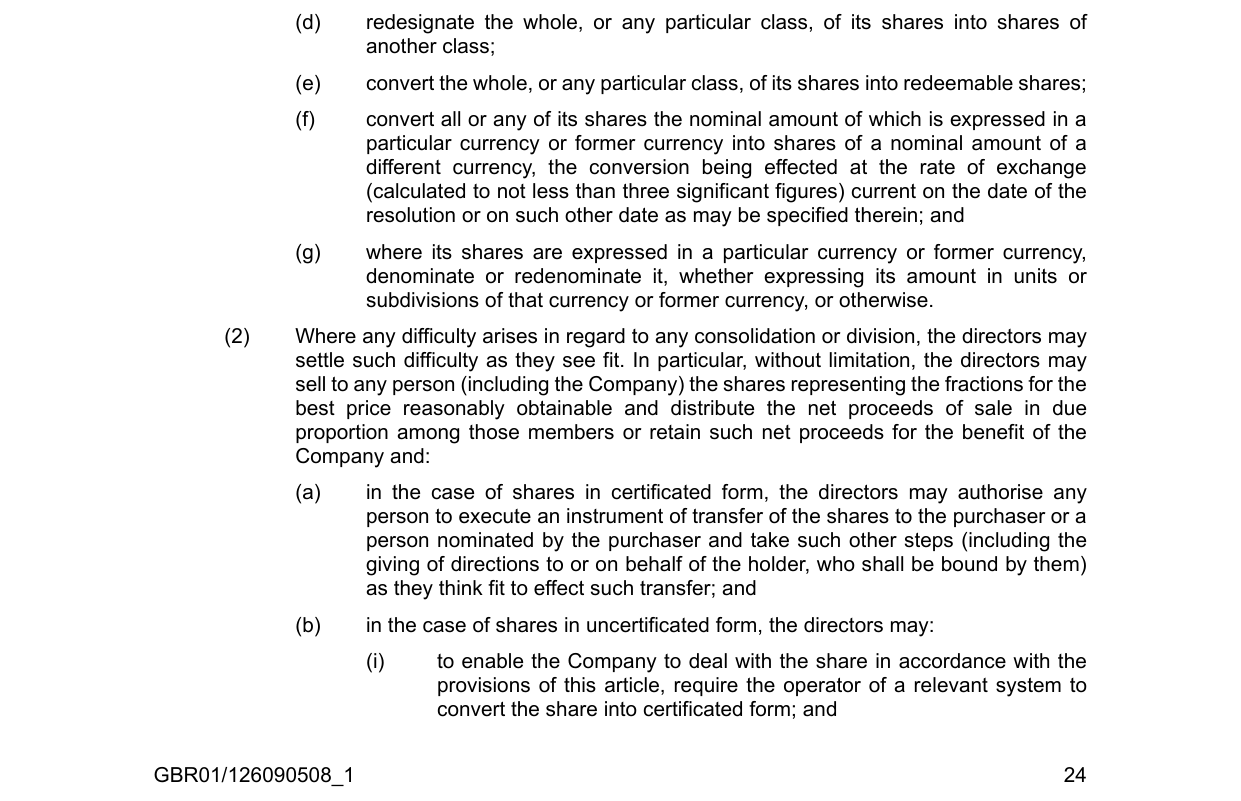
全球央行黄金净购量历史数据(2010-2024)
本章 (1)-(5) 款授权董事会在股东普通决议授权下,将未分配资产资本化并按持股比例向股东配发入账列为缴足的股份或债券,实质是“以股代息/转增股本”机制。
- 第(1)款界定资本化范围:只能动用公司未分配资产中“无需用于支付优先股息”的部分,即自由储备。
- 第(2)款明确分配基准:按股东持股的名义金额比例分配,不论该股份是否已缴足;资金用于代股东缴清未缴股款,或全额缴足等额的新股/债券并配发给股东。股东可按比例选择直接获得股份或按指示分配。
- 第(3)款处理零股问题:出现分数股份或债券时,董事可发行分数证书、支付现金或采取其他安排,零碎权益不会被自动放弃。
- 第(4)款允许董事授权任何人代表全体相关股东与公司签订配发协议,该协议对全体成员有约束力,相当于简化集体执行程序。
- 第(5)款为兜底条款,授权董事会采取一切必要行动落实该决议。
投资含义:该机制使基金可以在不支付现金的情况下向股东传导收益,同时保持股东相对持股比例不变。但新增股份会扩大总股本,若基金净资产未同步增加,每股资产净值将相应摊薄。此类资本化操作须经普通决议批准,并非董事单方面可决定。
记录日期:分红/配股权利归属的时点确认
第141条允许公司或董事会在分红、分配、配发或发行的宣布日、支付日或作出日之前、当日或之后设定“记录日期”,以该日期在册的成员作为权利归属方。
记录日期一旦确定,章程中所有对“股份持有人”或“成员”的引用均按该日期解释。这为基金提供了操作弹性:即使实际支付日晚于记录日,分红/配股权利也能锁定在指定日期之前的持有人名下。对投资者而言,买入时点与记录日期的关系决定是否享有本次权益;由于记录日期可以后置,公司理论上可在宣派后再追认登记日,因此实际权益归属须以公司正式公告为准,不能仅凭宣派日推断。
通知方式:书面形式的底线要求
第142条规定章程项下的任何通知均须以书面形式发出,但董事会议通知除外(可非书面),原文未继续展开“发送或提供”的具体方式。
该条属于通知程序的基础规则,后续通常会有专门条款规定邮寄、电子通讯或公告等具体送达方式。股东需要确保向公司登记最新联系方式,否则可能无法及时收到表决、分红或公司行动通知。由于本章摘要未提供具体发送方式细节,目前只能确认“书面形式”这一强制底线。